Why Jezioro Pogubie Wielkie Nature Reserve stands out
The reserve is best known as a breeding and staging area for wetland and water birds along the edge of the Pisz Forest. Its shallow lake basin, dotted with submerged charophyte meadows and ringed by reed belts, produces the kind of calm, productive habitat that waterfowl require during the breeding season. It is also recognized for Ostrów Wielki, the forested island that forms part of the protected area. The island's mature tree cover, combined with the surrounding open water and reedbeds, gives the site a layered habitat structure that supports a diverse bird community. Species of particular interest include the common crane and the mute swan, both of which are highlighted in the reserve's conservation rationale.
Jezioro Pogubie Wielkie Nature Reserve history and protected-area timeline
The reserve has a fairly compact administrative history, as is typical of Polish faunistic reserves. Its modern form dates to 10 December 1971, when the Minister of Forestry and the Wood Industry issued the founding order. The reserve's legal designation was published the following year, in the official Polish legal gazette.
The purpose of the reserve, as defined at its creation, has always been centered on the protection of water bird habitats and natural spawning grounds, rather than on landscape aesthetics or strict wilderness preservation. Over time, the boundary of the reserve has been described with slightly different area figures, with the founding act listing around 691 hectares and later descriptions recording about 715 hectares, reflecting ongoing refinement of the protected perimeter.
Today the reserve continues to function as a faunistic protection area, with the forested island managed by the Pisz Forest District and the lake itself under the administration of the Polish Angling Association, reflecting its dual identity as both an ecological sanctuary and a managed water body within one of Poland's most important forest regions.
Jezioro Pogubie Wielkie Nature Reserve landscape and geographic character
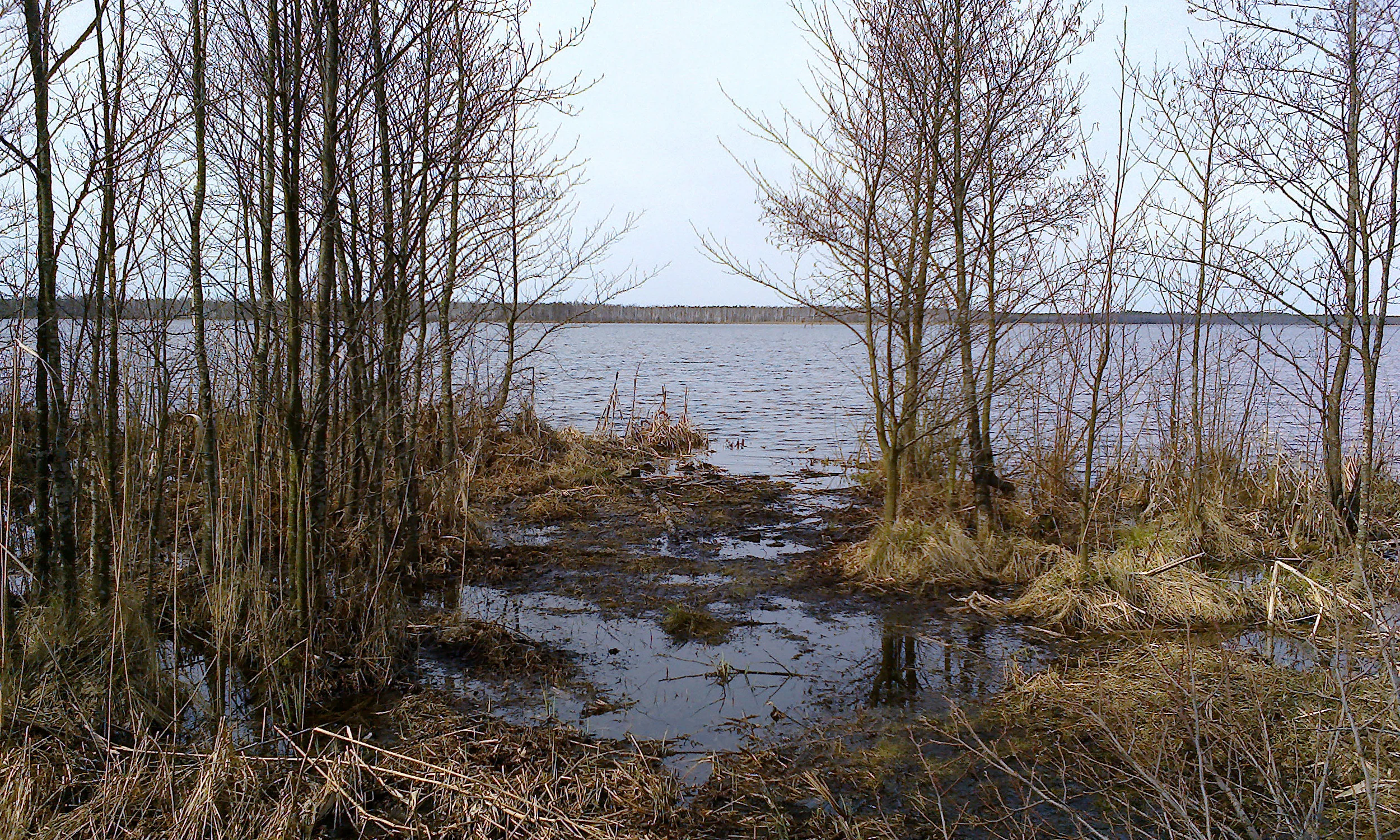
The landscape of the reserve is shaped first and foremost by the lake itself. Pogubie Wielkie is a shallow lake, with average depths on the order of one meter, giving it the character of a broad, slow-moving sheet of water rather than a deep basin. This shallow profile allows light to reach most of the lakebed, which in turn supports dense submerged charophyte meadows, one of the defining visual and ecological features of the site.
Around the open water, the shoreline is softened by wide belts of reed. These reedbeds, known locally as szuwary, frame the lake and create a transitional zone between water, marsh, and upland forest. Ostrów Wielki, the reserve's central wooded island, occupies the northern part of the lake. Its tree cover is approximately a century old, lending the island a distinctly mature, slightly dark character compared with the brighter open water and reed expanses around it.
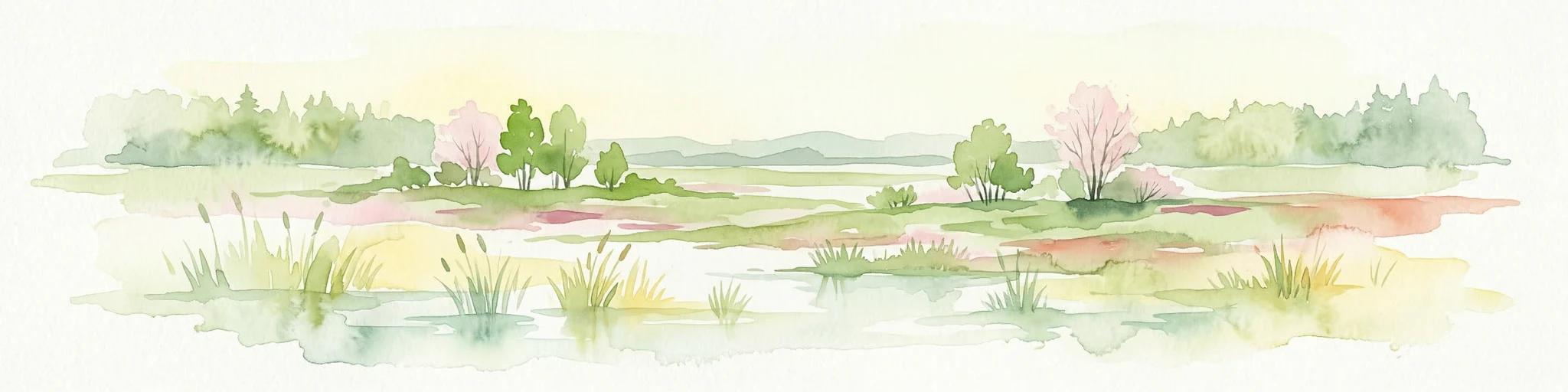
Seen from the southern shore, as traditional vantage points for the site suggest, the landscape reads as a layered scene: bright open water crossed by reedbeds, the darker mass of the island in the middle distance, and the forests of Puszcza Piska rising further inland. It is a quiet, mazurian-type scene rather than a dramatic one, with the visual interest coming from habitat diversity rather than elevation or exposure.
Jezioro Pogubie Wielkie Nature Reserve ecosystems, habitats, and plant life
Ecologically, the reserve is defined by the interplay between shallow open water, submerged vegetation, reed margins, and forested island cover. The shallow basin and clear conditions create the conditions for thriving charophyte communities, a group of macroalgae that are particularly sensitive to water quality and contribute to the lake's overall ecological integrity. These submerged meadows are a foundation for the aquatic food web and shape feeding conditions for fish and diving birds.
The reed beds that line the lake are a second ecological pillar. They provide nesting cover, shelter from wind and predators, and a rich invertebrate community that supports many bird species. Where the reedbelts meet the forested island, the habitat mosaic becomes even more complex, with birds able to move among open water, vertical marsh structure, and mature canopy.
Ostrów Wielki itself contributes a third ecological layer. As a forested landmass within an otherwise open lake, it offers elevated nesting sites, roosting cover, and a stable habitat for species that prefer tree-level nesting or resting. The combination of these three habitats, submerged charophyte beds, emergent reeds, and mature island forest, gives the reserve a richer ecological identity than its modest size might suggest.
Jezioro Pogubie Wielkie Nature Reserve wildlife and species highlights
The wildlife profile of the reserve is strongly oriented toward water birds and wetland species, consistent with its faunistic designation. Roughly sixty bird species have been recorded in and around the reserve, with water birds making up a particularly significant share of that total.
Among the species highlighted in the reserve's conservation rationale, the common crane is one of the most recognizable, using the area as part of its broader habitat network of marshes, reedbeds, and open water within Puszcza Piska. The mute swan is also a notable presence, with the lake offering the kind of calm, productive shallow water that swans prefer for feeding and raising young.
Beyond these flagship species, the reserve supports a wider community of waterfowl, waders, and passerines typical of large forest-lake complexes in the Masurian region. The combination of open water, reedbeds, and island forest offers both nesting habitat and seasonal feeding opportunities, making the reserve an important node for bird life well beyond its immediate boundaries.
Jezioro Pogubie Wielkie Nature Reserve conservation status and protection priorities
From a conservation perspective, the reserve's value lies not in dramatic scale but in the careful alignment of protected habitat and specific ecological functions. Its formal designation specifically prioritizes protection of water bird habitats, natural spawning grounds, and the ongoing ecological processes of a shallow lake system, rather than simply drawing a boundary around scenic land.
The presence of dense charophyte communities is itself a conservation signal: such communities only persist where water quality and clarity remain high. Their protection, alongside the reedbelts and the forested island, helps maintain the shoreline integrity, oxygen dynamics, and primary productivity of the lake.
The reserve also plays a supporting role in the broader conservation framework of Puszcza Piska and the Masurian Lakeland. Although modest in area, its combination of lake, island, and reed marsh provides habitat continuity with surrounding protected forests and wetlands, reinforcing ecological connectivity across the region rather than functioning as an isolated patch.
Jezioro Pogubie Wielkie Nature Reserve cultural meaning and human context
The reserve is closely tied to the cultural and ecological identity of the Masurian region. Puszcza Piska has long been a defining element of this part of northeastern Poland, shaping local settlement patterns, traditional land use, and the broader sense of the Masurian landscape as a forested, lake-dotted country.
The lake itself carries this identity forward. Its inclusion among protected sites reflects a regional tradition of valuing the relationship between forest, water, and birdlife, a theme deeply embedded in Masurian local culture. The reserve's administration, partly by the Polish Angling Association, also reflects a long-standing cultural connection between inland waters and community angling, embedded in regional recreation and tradition.
Together, these elements frame the reserve not just as a biological site but as a piece of the wider Masurian cultural landscape, where natural heritage and regional identity are tightly interwoven.
Top sights and standout views in Jezioro Pogubie Wielkie Nature Reserve
A faunistic reserve centered on a shallow, charophyte-rich lake and its forested island Ostrów Wielki, with around sixty recorded bird species including common crane and mute swan. The site exemplifies how small, layered wetland-forest complexes can carry significant regional conservation weight within the larger Pisz Forest.
The combination of protected water bird habitats, natural spawning areas, and an early 1970s formal designation gives the reserve both an ecological presence and a clear administrative purpose in Poland's network of nature reserves.
Best time to visit Jezioro Pogubie Wielkie Nature Reserve
The reserve is best experienced during the warmer months, when the lake's open water is most active ecologically and the reedbeds and forests are in full seasonal development. Late spring and early summer are particularly favorable for birdwatching, as this is when many water bird species are nesting, feeding young, and most vocal across the wetland mosaic.
Late spring also tends to coincide with attractive water clarity, when the shallow basin shows its submerged charophyte meadows most clearly. Summer offers broad visibility of the lake's structure and the layered view of open water, reeds, and the forested island. Autumn brings quieter atmosphere and richer forest color around Ostrów Wielki, while winter tends to mute the landscape's activity, with much of the birdlife reduced or absent and the lake's shallow character less visually expressive.