Mori Atlas logo
Nature reserveRezerwat przyrody Jezioro Siedmiu Wysp

Discover the geographic boundaries, marshland terrain, and protected river valley ecosystems of this Masurian reserve.

Rezerwat przyrody Jezioro Siedmiu Wysp: Mapping the Wetland Landscapes of Northeast Poland

Rezerwat przyrody Jezioro Siedmiu Wysp represents a critical faunistic nature reserve situated in the Warmian-Masurian Voivodeship. This protected landscape centers on Lake Oświn and its surrounding wetlands, including complex mosaics of peat bogs, floodplains, and reedbeds. The reserve preserves vital breeding environments for waterbirds and provides a sanctuary for semi-wild konik polski horses within a sprawling, border-region river valley corridor.

wetland reservefaunistic reserveRamsar siteNatura 2000waterbird breeding groundpeat bogs
A flat-style digital illustration showing a waterfall flowing into a calm lake, with coniferous and deciduous trees, rolling hills, and a pale sun in the sky.

Rezerwat przyrody Jezioro Siedmiu Wysp

Nature reserve

Park overview

Structured park overview, official facts, and landscape profile for Jezioro Siedmiu Wysp Nature Reserve

Jezioro Siedmiu Wysp Nature Reserve park facts, protected area profile, and essential visitor context

Review the core facts for Jezioro Siedmiu Wysp Nature Reserve, including designation, size, terrain, visitor scale, habitats, and operating context in one park-focused overview.

About Jezioro Siedmiu Wysp Nature Reserve

Jezioro Siedmiu Wysp is a faunistic nature reserve in the Masurian lake district of northeastern Poland, occupying a strategic position along the Polish-Russian border in the Warmian-Masurian Voivodeship. Spread across the territories of Węgorzewo and Srokowo gminas and administered within the Borki and Srokowo forest districts, the reserve protects a complex of wetlands centered on Lake Oświn, which gives the reserve its better-known alternate name.

The protected area encompasses far more than the lake itself. Surrounding the shallow, island-dotted waters of Oświn are extensive peat bogs, dense reedbeds, river floodplains, wet alder forests, marshy grasslands, and meadows. A key part of the reserve follows the Oświnka River from its outflow of Lake Oświn all the way to the state border, capturing a complete valley system rather than just the lake basin. This mosaic of aquatic and terrestrial habitats forms the ecological core of the reserve and explains its importance for biodiversity.

Created in 1956 with an initial area of under 1,000 hectares, the reserve has been progressively enlarged, first to about 1,618 hectares in 2004 and then to roughly 1,763 hectares in 2016. Its original mission, to safeguard the natural breeding environment of waterbirds and marsh birds, has been broadened to include the conservation of the lake ecosystem, the Oświnka River corridor, and the surrounding terrestrial mosaic. Management follows an active protection regime, with ongoing interventions to maintain ecological balance.

The reserve's significance extends well beyond Poland. It is inscribed on the Ramsar list of internationally important wetlands and forms part of the Natura 2000 network. The site overlaps with the Special Protection Area for birds known as "Jezioro Oświn i okolice" and the Special Area of Conservation "Ostoja nad Oświnem," and it corresponds to the Important Bird Area "Ostoja Oświn." Together these designations position Jezioro Siedmiu Wysp as one of the most important wetland bird sites in the country.

A defining and somewhat unusual feature of the reserve is its herd of konik polski horses, descendants of the tarpan and introduced to the former agricultural lands around the abandoned village of Zielony Ostrów in 1990. Living in a semi-wild state across two harems, these horses graze open habitats and help slow the natural succession that would otherwise turn the meadows and reed edges into shrub and forest, maintaining the open wetland mosaic on which breeding birds depend.

Quick facts and research context for Jezioro Siedmiu Wysp Nature Reserve

Jezioro Siedmiu Wysp is a faunistic nature reserve located in the Warmian-Masurian Voivodeship of northeastern Poland, within the gminas of Węgorzewo and Srokowo, near the Polish-Russian border. It lies in the Sępopolska Plain mesoregion and covers an area that has grown over time to roughly 1,763 hectares.

The reserve was established in 1956 under active protection, with later expansions in 2004 and 2016 adding surrounding peatland, river valley, and forest habitats. It is listed as a Ramsar wetland site and forms part of both the Natura 2000 Special Protection Area "Jezioro Oświn i okolice" and the Special Area of Conservation "Ostoja nad Oświnem."

Protection and recognition

Documented terrestrial protection scope, designation context, and recognition sources

Rezerwat przyrody Jezioro Siedmiu Wysp Protection Status and Recognition

Rezerwat przyrody Jezioro Siedmiu Wysp maintains a documented terrestrial protection scope within regional conservation records. Structured records compile available designation history, management scope, and international recognition sources for detailed geographic review.

Protection details

Protection scope
Terrestrial
Transboundary protection
No
Park context

Deeper park guide and search-rich context for Jezioro Siedmiu Wysp Nature Reserve

Jezioro Siedmiu Wysp Nature Reserve history, landscape, wildlife, and travel context

Explore Jezioro Siedmiu Wysp Nature Reserve through its history, landscape character, ecosystems, wildlife, conservation priorities, cultural context, and seasonal travel timing in a structured park guide built for atlas discovery and search intent.

Why Jezioro Siedmiu Wysp Nature Reserve stands out

The reserve is best known for its outstanding wetland birdlife, with around 110 bird species recorded in and around Lake Oświn. The lake and its surrounding reedbeds, peat bogs, and floodplains host breeding populations of grebes, bitterns, ducks, harriers, white-tailed eagles, and corncrakes, and serve as a staging and resting area for thousands of migrating geese. Equally distinctive is the large, semi-wild herd of konik polski horses that has lived in the reserve since 1990, particularly in the area of the former village of Zielony Ostrów. These hardy horses graze former agricultural land and help slow the natural encroachment of trees and shrubs onto the open wetland margins.
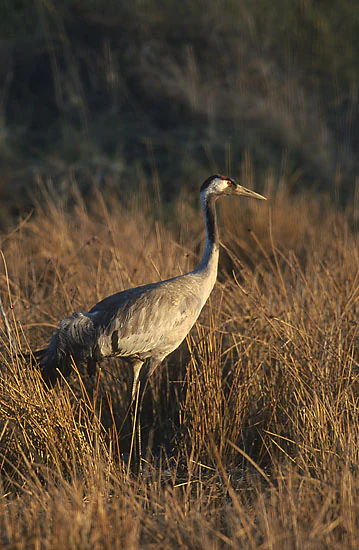
A common crane with grey feathers and a distinct black and white head pattern standing profile in a field of dry, amber-colored tall grass.
A common crane standing in the tall, dry grasses of the Jezioro Siedmiu Wysp nature reserve.

Jezioro Siedmiu Wysp Nature Reserve history and protected-area timeline

Jezioro Siedmiu Wysp was formally established as a nature reserve in 1956, with the original legal designation published in the Polish official gazette (Monitor Polski) that year. Its creation reflected a conservation priority of the period: preserving, for scientific reasons, the natural breeding environment of waterbirds and marsh birds around the then little-known Lake Oświn in northeastern Poland. The initial reserve covered just under 1,000 hectares and focused on the lake and its most immediate surroundings.

In the decades following its establishment, the reserve was recognized as a wetland of much greater ecological value than the original perimeter suggested. In 2004 the protected area was expanded significantly to roughly 1,618 hectares, and in 2016 a further expansion raised the total to approximately 1,763 hectares. These enlargements incorporated additional peatland, river valley, and forest habitats, ensuring that the broader ecosystem mosaic around the lake could be managed as a single coherent unit.

A parallel chapter in the reserve's history involves the former agricultural village of Zielony Ostrów. Its lands had been farmed by the state agricultural enterprise PGR Pasternak until 1987, after which they were left to natural processes. To prevent these open habitats from being lost to forest succession, konik polski horses were introduced to the area in 1990. By 1991 the herd numbered seven animals, growing to seventeen by 1994 and thirty-five by 2000, organized into two harems led by the stallions Namorzyniec and Morus. Today the horses are a defining cultural and ecological element of the reserve, supplementing traditional reserve management with natural grazing.

Jezioro Siedmiu Wysp Nature Reserve landscape and geographic character

The landscape of Jezioro Siedmiu Wysp is dominated by a shallow, island-rich lowland lake set within a broad, flat wetland plain characteristic of the Masurian lake district. Lake Oświn, the centerpiece of the reserve, is a relatively shallow body of water dotted with small islands, around which the reserve's name "Lake of Seven Islands" revolves. The shoreline is irregular and fringed by extensive soft, marshy margins rather than sandy beaches or cliffs.

Surrounding the lake is a continuous belt of peatforming wetlands. Sphagnum and sedge peat bogs give way to broad stands of reeds and other emergent aquatic vegetation, while periodic floodwaters create seasonal shallow floodplains and open-water areas. To the north and east, the Oświnka River extends the reserve in a linear corridor, its slow, meandering course crossing floodplain meadows and wet willow and alder thickets as it travels toward the Polish-Russian border.

Beyond the strictly aquatic zone, the reserve includes drier ground in the form of mixed and boggy forests, brushy transitional areas, and patches of species-rich meadows. The former farmland around Zielony Ostrów forms a distinct open-grassland element within this otherwise wet landscape. The combination of open water, treeless bog, reeded marsh, wet forest, and grazed meadow produces a finely textured landscape mosaic unusual even within the generally lake-rich Masurian region.

Jezioro Siedmiu Wysp Nature Reserve ecosystems, habitats, and plant life

The reserve protects a rare and ecologically rich mosaic of freshwater, wetland, and terrestrial habitats tightly interwoven across a relatively compact area. Core habitats include the open waters and emergent vegetation of Lake Oświn, transitional peatlands, extensive reedbeds, sedge and sphagnum mires, riverside floodplains along the Oświnka, patches of wet alder and willow woodland, and fragments of mixed forest on slightly higher ground. Former agricultural land around Zielony Ostrów adds a maintained grassland component to the habitat mix.

This habitat diversity directly supports the reserve's high overall biodiversity. The lake and its fringing mires sustain populations of aquatic invertebrates, including rare species such as the caddisfly Limnephilus externus, while the wetland mosaic supports breeding, feeding, and resting conditions for a wide community of waterbirds. Although succession pressure from shrubs and trees remains a concern, the grazing activities of konik polski horses help maintain an open character in parts of the reserve, reinforcing the contrast between aquatic, marsh, and dry-ground habitats.

Jezioro Siedmiu Wysp Nature Reserve wildlife and species highlights

Wildlife is the heart of this reserve, which was created specifically to protect breeding waterbirds and continues to be defined by the richness of its birdlife. Approximately 110 bird species have been recorded in and around Lake Oświn. Breeding species of note include great crested grebe, red-necked grebe, Eurasian bittern, greylag goose, garganey, shoveler, black kite, marsh harrier, lesser spotted eagle, white-tailed eagle, corncrake, and bearded reedling.

In addition to breeding birds, the reserve serves as a major staging and resting area for migrating geese. At peak passage, several thousand geese have been observed using the area, particularly white-fronted and bean geese. The site is historically notable for the presence of the glossy ibis, once observed here, and remains an important reference location for wetland avifauna in Poland.

Mammals are not the primary focus, but the reserve is well known for its semi-wild konik polski horses, which roam the open habitats in two harems. Aquatic invertebrate life is also significant, with rare wetland specialists such as the caddisfly Limnephilus externus recorded in the lake and surrounding waters.

Jezioro Siedmiu Wysp Nature Reserve conservation status and protection priorities

Conservation is the primary reason for the reserve's existence. It was established in 1956 to safeguard, on scientific grounds, the natural breeding environment of waterbirds and marsh birds, and its modern mandate expands this goal to include preserving the lake ecosystem, the Oświnka River valley to the state border, and the broader terrestrial mosaic.

The reserve is managed under active protection, which permits interventions aimed at maintaining or restoring desired ecological conditions. Such interventions include ongoing measures to control vegetation succession on former farmland, partly using konik polski horses as natural grazers. Persistent threats include eutrophication and chemical contamination of the lake, both of which can degrade water quality and the food chains on which breeding birds depend.

The reserve's importance is formally recognized at the international level. It appears on the Ramsar list of wetlands of international importance and overlaps with the Polish Natura 2000 network through the Special Protection Area (Birds Directive) "Jezioro Oświn i okolice" and the Special Area of Conservation (Habitats Directive) "Ostoja nad Oświnem." The territory also corresponds to the Important Bird and Biodiversity Area "Ostoja Oświn," reinforcing its profile as a key wetland conservation site in northern Poland.

Jezioro Siedmiu Wysp Nature Reserve cultural meaning and human context

The cultural context of the reserve is shaped primarily by rural Masurian heritage rather than large-scale human history. The most distinctive human element is the abandoned agricultural landscape around the former village of Zielony Ostrów, whose fields were cultivated by the state farm PGR Pasternak until 1987 and were later repurposed as conservation grazing land for konik polski horses.

The introduction of konik polski, a hardy primitive horse breed linked to the extinct tarpan, reflects a wider conservation tradition in Poland of using large herbivores to maintain open wetland and meadow landscapes. The horses themselves are a living cultural symbol of this approach, and the reserve has become a reference site for studies of semi-wild horse management as a conservation tool.

Regional literature reflects the broader Masurian context: the area appears in guidebooks on the Masurian lake district and is the subject of a dedicated monograph, Jezioro Oświn i okolice, a natural and cultural study of the lake and its surroundings.

Top sights and standout views in Jezioro Siedmiu Wysp Nature Reserve

Jezioro Siedmiu Wysp stands out for the combination of a shallow, island-dotted lake with one of the richest, most intact wetland bird communities in northern Poland. Its designation as a Ramsar site and its integration into the Natura 2000 network reflect international recognition of its importance for waterfowl, marsh birds, and migrating geese.

Equally notable is the reserve's living conservation experiment with semi-wild konik polski horses, which graze former farmland to maintain open wetland meadows in a way that few other Polish reserves can demonstrate. The integration of active management, traditional grazing, peatland protection, and a complete river valley corridor makes Jezioro Siedmiu Wysp a particularly well-rounded example of wetland conservation in the Masurian region.

Best time to visit Jezioro Siedmiu Wysp Nature Reserve

As a protected wetland bird reserve with significant breeding and migratory bird populations, Jezioro Siedmiu Wysp is most rewarding for nature-focused visitors during the warmer months of the year. Late spring and early summer offer the chance to observe breeding waterbirds in and around the reedbeds, while the open-grassland areas around the former village of Zielony Ostrów can be especially interesting for viewing grazing konik polski horses and the mosaic of meadows, bogs, and wet forest that surrounds them.

The passage of large flocks of geese through the reserve during migration brings additional seasonal character, although the timing of these movements varies year to year. Cooler seasons highlight the wetland character of the landscape, with mist over the peat bogs, frost-edged reeds, and quieter bird activity, but conditions for extended nature observation become more demanding. Visitors should generally expect a remote, weather-dependent Masurian climate rather than predictable tourist conditions at any time of year.
Monthly climate preview

Long-term representative monthly temperature and precipitation data for Warmian-Masurian Voivodeship

Rezerwat przyrody Jezioro Siedmiu Wysp Climate Normals and Annual Temperature Rhythm

Representative coordinate measurements reveal a distinct annual temperature and precipitation rhythm spanning sub-zero winter lows and warm summer peaks. Examining the complete twelve-month climate profile provides deeper context on long-term averages and multi-season patterns.
Annual mean7 °C
-4 °C18 °C
Jan-4°
Feb-3°
Mar
Apr
May12°
Jun16°
Jul18°
Aug18°
Sep13°
Oct
Nov
Dec-2°
Warmest month
July

18.2 °C

Coolest month
January

-4.2 °C

Wettest month
July

2.7 mm/day

Driest month
April

1.5 mm/day

Park location guide

Geography guide, regional context, and park location map for Jezioro Siedmiu Wysp Nature Reserve

Jezioro Siedmiu Wysp Nature Reserve park geography, regions, and map view in Poland

Understand where Jezioro Siedmiu Wysp Nature Reserve sits in Poland through a broader geographic reading of the surrounding landscape, nearby location context, and its mapped position within the national park landscape.

How Jezioro Siedmiu Wysp Nature Reserve fits into Poland

Poland, officially the Republic of Poland, is a Central European country spanning from the Baltic Sea in the north to the Carpathian Mountains in the south. It borders Germany, Czech Republic, Slovakia, Ukraine, Belarus, Lithuania, and Kaliningrad Oblast. The country has a temperate climate, diverse landscapes, and is known for its rich history, cultural heritage, and strong economic position within the EU.

Wider geography shaping Jezioro Siedmiu Wysp Nature Reserve in Poland

Poland occupies 312,696 km2 in Central Europe, extending from the Baltic Sea coast in the north to the Sudetes and Carpathian Mountains in the south. It borders Germany to the west, Czech Republic and Slovakia to the south, Ukraine and Belarus to the east, and Lithuania and Kaliningrad Oblast to the northeast. The landscape includes lowland plains, uplands, and mountain ranges.

Map view of Jezioro Siedmiu Wysp Nature Reserve

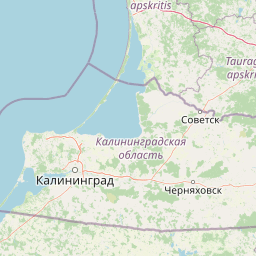
Use this park location map to pinpoint Jezioro Siedmiu Wysp Nature Reserve in Poland, understand its exact geographic position, and read its mapped placement within the surrounding landscape more clearly.

Pigeon | © OpenStreetMap contributors

Location context for Jezioro Siedmiu Wysp Nature Reserve

Warmian-Masurian Voivodeship

Visual exploration of Lake Oświn reedbeds, peat bogs, and protected wildlife habitats.

Rezerwat przyrody Jezioro Siedmiu Wysp Photos and Wetland Landscape Scenery

Photographic documentation reveals the intricate mosaic of shallow waters, floating islands, and expansive wetlands defining Rezerwat przyrody Jezioro Siedmiu Wysp. Visual records offer clear insight into the complex lowland terrain, bird nesting grounds, and grazed meadow environments of this northern Polish reserve.

A common crane with grey feathers and a distinct black and white head pattern standing profile in a field of dry, amber-colored tall grass.

A wide view of a calm lake surrounded by marshy reeds and a dense forest in the distance.

Park atlas

Compare surrounding regional geography and connected wetland landscapes

Parks Near Rezerwat przyrody Jezioro Siedmiu Wysp and Protected Areas

Browsing other parks near Rezerwat przyrody Jezioro Siedmiu Wysp reveals the broader ecological spread of the Masurian lake district. Regional protected areas offer valuable context for comparing lowland wetland habitats, river valleys, and wildlife reserves.
Nature reserveWarmian-Masurian Voivodeship
About 45 km away#1 closest

Southeast

Rezerwat przyrody Mazury Nature Reserve: A Protected Lake and Forest Landscape in Poland

Regional geography of the Ełk Lake District and Masurian water landscapes.

This nature reserve safeguards a 388-hectare water and forest mosaic in the Warmian-Masurian Voivodeship. It offers a detailed look at glacial lake ecosystems, forested islands on Lake Piłwąg, and mature mixed deciduous forest stands that represent the classic character of the Masurian landscape.

Area
3.887 km²
Established
1981
Relief
Lowland
Scope
Terrestrial
Nature reserveWarmian-Masurian Voivodeship
About 56 km away#2 closest

East

Mechacz Wielki Nature Reserve: Geographic Records of Protected Peatlands in Northeastern Poland

Mapping the raised bog and forest ecosystems of the Romincka Forest.

Mechacz Wielki Nature Reserve represents a critical example of raised bog geography and peat-forming processes in Poland. This record details the reserve as a core feature of the Romincka Forest, focusing on its transition from open moss-dominated surfaces to complex boggy pine forests and wetland habitats. Gain insight into the regional landscape characteristics that shape this unique northeastern protected area.

Area
1.467 km²
Established
1974
Relief
Lowland
Scope
Terrestrial
Nature reserveWarmian-Masurian Voivodeship
About 56 km away#3 closest

Southwest

Rezerwat przyrody Dębowo Nature Reserve: Geography and Forest Protected Area Overview

A preserved lowland beech woodland within the Warmian-Masurian Voivodeship

Rezerwat przyrody Dębowo stands as a vital representative of mixed lowland forest ecosystems at the eastern edge of their natural range. The reserve protects a complex, multi-layered canopy and a rich herb layer including species like the Martagon lily and wild garlic. By safeguarding these veteran beech stands, the site provides a primary reference for understanding forest development and biogeographical boundaries within the broader Mrągowski Lakeland landscape.

Area
0.258 km²
Established
1954
Relief
Lowland
Scope
Terrestrial
Nature reserveWarmian-Masurian Voivodeship
About 65 km away#4 closest

Southwest

Rezerwat przyrody Mokradła Żegockie: Nature Reserve Map and Protected Landscape Overview

Lowland marshland habitat in the Warmian-Masurian Voivodeship of Poland

This nature reserve preserves a shallow, boggy depression surrounded by agricultural plains. It is recognized for its bird-rich ecosystem, containing open water, reedbeds, and willow shrubs that returned after the collapse of historic drainage works. Use this atlas resource to understand the park's terrain, mapped boundaries, and environmental role within the local geography.

Area
0.336 km²
Established
1991
Relief
Lowland
Scope
Terrestrial
Nature reserveWarmian-Masurian Voivodeship
About 71 km away#5 closest

Southeast

Rezerwat przyrody Jezioro Zdedy Nature Reserve: Protected Wetland and Migratory Habitat

Geography and landscape of the Masurian Plain, Poland

Rezerwat przyrody Jezioro Zdedy protects a diverse wetland ecosystem characterized by sedge meadows, emergent reedbeds, and rare swamp forest communities. Positioned on the Masurian Plain, this reserve acts as a sanctuary for migratory birds and large mammals, providing an essential look at the post-glacial geography and active conservation landscapes of northeastern Poland.

Area
1.816 km²
Established
2003
Relief
Lowland
Scope
Terrestrial
Protected areaWarmian-Masurian Voivodeship
About 79 km away#6 closest

Southwest

Puszcza Napiwodzko-Ramucka Protected Forest and Glacial Geography in Northeast Poland

An expansive lowland wilderness featuring unique sinkhole terrain.

Spanning over 117,000 hectares, Puszcza Napiwodzko-Ramucka stands as a massive pine-dominated forest complex in the Warmian-Masurian Voivodeship. The terrain is a masterclass in glacial history, defined by sandr plains, moraine hills, and a dense network of post-glacial lakes. This protected area functions as a critical sanctuary for raptor species and large mammals, while its distinct geology, marked by active suffosion processes, distinguishes it as a key subject for landscape-level study.

Area
1,173.2 km²
Relief
Lowland
Climate
Temperate
Access
Access unknown
A watercolor painting showing a soft, muted landscape of wetlands, grasses, and distant trees with a white background.
Nature reserveWarmian-Masurian Voivodeship
About 81 km away#7 closest

South

Rezerwat przyrody Jezioro Pogubie Wielkie Nature Reserve Geographic and Wetland Atlas

Mapping wetland habitats in the Warmian-Masurian Voivodeship region

Examine the protected boundaries and layered ecosystem of Rezerwat przyrody Jezioro Pogubie Wielkie. This reserve serves as an important refuge for water birds, defined by its shallow lake basin, charophyte meadows, and the distinctive forested island of Ostrów Wielki within the Pisz Forest complex.

Area
7.158 km²
Established
1971
Relief
Lowland
Scope
Terrestrial
A soft watercolor painting showing a green marshy landscape with tall grasses, calm water, and gentle rolling hills in the background.
Nature reserveWarmian-Masurian Voivodeship
About 81 km away#8 closest

South

Rezerwat przyrody Jezioro Nidzkie: Protected Area and Regional Landscape Geography

Mapping the forest and lake terrain of the Mazurian Plain

Examine the geographic characteristics of Rezerwat przyrody Jezioro Nidzkie, a protected nature reserve nestled within the Piska Forest. This profile tracks the spatial distribution of alder swamps, pine forests, and postglacial waters that create a distinct ecological mosaic across the Warmian-Masurian landscape.

Area
29.509 km²
Established
1972
Relief
Lowland
Climate
Temperate

Common questions about visiting, size, designation, and location context for Jezioro Siedmiu Wysp Nature Reserve

Jezioro Siedmiu Wysp Nature Reserve FAQs for park facts, access, geography, and protected area context

Find quick answers about Jezioro Siedmiu Wysp Nature Reserve, including protected-area facts, park geography, trail and visitor context, and how the park fits into its surrounding country and regional landscape.
MoriAtlas Explorer

Continue Your Protected Areas Search Across the Global Atlas

Deepen your exploration by continuing the structured search for national parks and protected areas worldwide. Utilize the comprehensive filtering capabilities to compare different conservation landscapes and refine your understanding of global park geography. Discover more about the distribution and characteristics of protected natural areas.

Global natural geography