Mori Atlas logo
Nature reserveJezioro Szare Nature Reserve

Examining the ecological boundaries and terrain characteristics of this unique Polish water reserve

Jezioro Szare Nature Reserve: Protected Lobelia Lake Geography and Forest Basin Landscapes

(Rezerwat przyrody „Jezioro Szare”)

Jezioro Szare Nature Reserve represents a focused conservation landscape in the West Pomeranian Voivodeship of Poland. The site is centered on a classic oligotrophic lobelia lake, set within a deep basin defined by steep slopes and mixed deciduous forest cover. By preserving the water quality and shoreline integrity of this rare aquatic habitat, the reserve serves as a vital component in the wider regional network of protected freshwater ecosystems.

water nature reservelobelia lakeoligotrophic lakerelict aquatic plantsWest PomeraniaPomeranian lake district

Jezioro Szare Nature Reserve

Nature reserve

Park overview

Structured park overview, official facts, and landscape profile for Jezioro Szare Nature Reserve

Jezioro Szare Nature Reserve park facts, protected area profile, and essential visitor context

Review the core facts for Jezioro Szare Nature Reserve, including designation, size, terrain, visitor scale, habitats, and operating context in one park-focused overview.

About Jezioro Szare Nature Reserve

Jezioro Szare Nature Reserve is a compact, ecologically focused protected area in the West Pomeranian Voivodeship of northern Poland, focused entirely on the preservation of a single lobelia-type lake and the unique plant communities that depend on it. Although it covers only a few hectares, its conservation purpose is sharply defined: to maintain the natural character of Lake Pniewko, also known as Rosoła, and the rare freshwater habitat it represents.

The lake lies in a deep basin with steep shoreline slopes, enclosed by mixed deciduous forest with a share of coniferous species. This setting deepens the ecological character of the reserve, combining a sheltered, low-disturbance aquatic ecosystem with intact shoreline woodlands in the surrounding catchment.

Beyond its immediate landscape, the reserve is part of a broader framework of nature protection in the region, sitting within the territorial range of the Bobolice Forest District and within the boundaries of the Natura 2000 habitat site "Bobolickie Jeziora Lobeliowe". This connection means that protection of Jezioro Szare is tied to a wider strategy of safeguarding the distinct lobelia lake ecosystems of the area, which are increasingly rare across the Central European lowlands.

Quick facts and research context for Jezioro Szare Nature Reserve

Jezioro Szare Nature Reserve is a water nature reserve (rezerwat wodny) of the phytocenotic, non-forest community subtype, located in the West Pomeranian Voivodeship in northwestern Poland, within the Bytów Lake District mesoregion.

It covers a small area of about 8.67 hectares and lies on Lake Pniewko, also called Rosoła, northeast of the village of Porost in the commune of Bobolice. The reserve was created in 1974 to protect a lobelia lake ecosystem and its associated relict plant species, and it falls within the "Bobolickie Jeziora Lobeliowe" Natura 2000 habitat site.

Protection and recognition

Examine terrestrial protection scope and recorded international recognition details

Jezioro Szare Nature Reserve Protection Status and Governance Facts

Jezioro Szare Nature Reserve holds a documented terrestrial protection status within its assigned regional geography. Systematic records outline the management scope and designation history associated with the protected area.

Protection details

Protection scope
Terrestrial
Transboundary protection
No
Park context

Deeper park guide and search-rich context for Jezioro Szare Nature Reserve

Jezioro Szare Nature Reserve history, landscape, wildlife, and travel context

Explore Jezioro Szare Nature Reserve through its history, landscape character, ecosystems, wildlife, conservation priorities, cultural context, and seasonal travel timing in a structured park guide built for atlas discovery and search intent.

Why Jezioro Szare Nature Reserve stands out

The reserve is known for protecting a classic example of a Polish lobelia lake, a clear-water lake type that supports a distinctive set of relict aquatic plants that have survived in oligotrophic, low-nutrient conditions. Jezioro Szare is valued as one of the small, ecologically focused protected sites that collectively preserve this rare lake ecosystem in the Pomeranian region.

Jezioro Szare Nature Reserve history and protected-area timeline

The reserve was established by order of the Minister of Forestry and the Wood Industry on 12 July 1974, originally covering an area of about 8.30 hectares according to its founding legal act. Its creation was explicitly motivated by the need to preserve the lobelia lake ecosystem and the relict, strictly protected aquatic plant species that depend on this specific type of clear, nutrient-poor freshwater habitat.

In 2009, a formal protection plan was adopted for the reserve, with later amendments, under which the area has been managed under active conservation (ochrona czynna). The legal area of the reserve has been recorded at 8.67 hectares in more recent documentation, slightly exceeding the boundary noted in the 1974 founding document.

Throughout its history, the reserve has remained under the supervision of the Regional Nature Conservation Officer in Szczecin, while its territorial setting falls within the Bobolice Forest District; the lake itself, however, lies outside the forest district's directly managed land holdings. The reserve is also embedded in the Natura 2000 network through the Bobolickie Jeziora Lobeliowe habitat site, integrating its protection with broader European habitat conservation efforts.

Jezioro Szare Nature Reserve landscape and geographic character

The landscape of the reserve is defined by the enclosed form of the lake itself. Lake Pniewko, the body of water at the heart of the reserve, sits in a deep basin with marked relief around its edges, giving the shoreline a distinctly steep, bowl-like profile.

Around the rim of this basin, the slopes are covered by mixed deciduous forest stands, with an admixture of coniferous species that contribute to the area's character. The combination of a deep lake basin and the surrounding wooded slopes creates a small but visually self-contained natural environment, sheltered from the broader surrounding landscape of the Bytów Lake District mesoregion.

This contrast between the open water surface of the lake and the dense, sloping forest cover along its edges is the most prominent landscape feature of the reserve, and it plays a direct role in protecting the water quality and shoreline stability that the reserve's ecological values depend on.

Jezioro Szare Nature Reserve ecosystems, habitats, and plant life

Ecologically, the reserve exists to protect one specific lake type: the lobelia lake, a clear-water, oligotrophic lake system characterized by very low nutrient levels and unusual aquatic vegetation. Lakes of this type are uncommon in Poland and disproportionately important for biodiversity, which is why Jezioro Szare has been singled out for formal protection.

The vegetation of the lake includes relict plant species that are tied to the cold, clear, nutrient-poor conditions typical of lobelia lakes, and these plants are at the heart of the reserve's conservation purpose. The shoreline environment, with its shallow slopes giving way to steep banks and mixed forest, contributes additional habitat values around the open water.

The reserve's habitats sit within the wider Natura 2000 habitat site Bobolickie Jeziora Lobeliowe, indicating that this type of ecosystem, rather than this individual lake alone, is the broader ecological unit that conservation planners are targeting in the area.

Jezioro Szare Nature Reserve wildlife and species highlights

The reserve's wildlife profile is shaped primarily by its aquatic and shoreline habitats. The clear waters of the lobelia lake support distinctive aquatic plant communities that include strictly protected relict species of freshwater flora, making the lake itself the principal focus of biological interest. While broader terrestrial fauna of the surrounding mixed forest is characteristic of the West Pomeranian lake district, the wildlife value of the reserve lies principally in these aquatic plant communities and in the intact habitat conditions that preserve them.

Jezioro Szare Nature Reserve conservation status and protection priorities

The core conservation value of Jezioro Szare Nature Reserve lies in the protection of a lobelia lake ecosystem, an increasingly scarce freshwater habitat type in the Central European lowland landscape. Such lakes are sensitive to changes in water quality, nutrient input, and shoreline modification, and they host relict aquatic plants that are otherwise in retreat across much of their historical range.

Protection of the reserve has been structured through a formal reserve plan adopted in 2009, with subsequent amendments, which establishes active conservation management for the site. Conservation oversight is carried out by the Regional Nature Conservation Officer in Szczecin, allowing the reserve's management to align with regional habitat protection priorities.

The reserve's significance is amplified by its overlap with the Bobolickie Jeziora Lobeliowe Natura 2000 habitat site, embedding Jezioro Szare in a transnational framework for protecting rare freshwater habitat types. Through this layering of national and European designations, the reserve contributes to a wider effort to maintain functional examples of lobelia lake ecosystems in Poland.

Jezioro Szare Nature Reserve cultural meaning and human context

The reserve does not carry a strong documented cultural or historical narrative of its own, beyond its identity as a long-established Polish nature reserve. Its location in the gmina of Bobolice places it within a rural region of West Pomerania whose general character is shaped by small villages, forest, and a network of postglacial lakes, but the reserve itself is defined by ecological rather than cultural heritage.

Top sights and standout views in Jezioro Szare Nature Reserve

The defining strength of the reserve is the presence of a single, ecologically intact lobelia lake within a deep, steeply enclosed basin, surrounded by mixed forest. This combination of lake morphology, water quality, and shoreline habitat makes the reserve a focused, high-value example of Polish freshwater habitat protection.

Its inclusion in the Bobolickie Jeziora Lobeliowe Natura 2000 site extends the importance of the reserve beyond its own borders, connecting it to a wider conservation effort for the rare lobelia lake ecosystem type across the Pomeranian region.

Best time to visit Jezioro Szare Nature Reserve

As a small water-focused nature reserve with no documented visitor infrastructure, the most meaningful periods to appreciate the site in broader seasonal terms are late spring and summer, when aquatic plant communities in clear lakes of this type are most biologically expressive, and the surrounding mixed forest is in full leaf, reinforcing the enclosed character of the lake basin. Autumn adds a contrasting tonal layer to the shoreline forest, while winter, with reduced vegetation cover, exposes the basin-like form of the lake and its steep wooded slopes, though conditions for observing aquatic values are limited.
Monthly climate preview

Long term temperature ranges and monthly precipitation records at a representative coordinate

Jezioro Szare Nature Reserve Climate Normals and Annual Weather Patterns

Jezioro Szare Nature Reserve exhibits a measured annual temperature and precipitation rhythm across twelve recorded climatological periods from NASA observations. Exploring the complete monthly profile provides detailed long term averages for temperature extremes and precipitation distributions across the protected landscape.
Annual mean8 °C
-2 °C18 °C
Jan-2°
Feb-1°
Mar
Apr
May12°
Jun16°
Jul18°
Aug18°
Sep14°
Oct
Nov
Dec-1°
Warmest month
July

18.2 °C

Coolest month
January

-2.3 °C

Wettest month
July

2.9 mm/day

Driest month
April

1.3 mm/day

Park location guide

Geography guide, regional context, and park location map for Jezioro Szare Nature Reserve

Jezioro Szare Nature Reserve park geography, regions, and map view in Poland

Understand where Jezioro Szare Nature Reserve sits in Poland through a broader geographic reading of the surrounding landscape, nearby location context, and its mapped position within the national park landscape.

How Jezioro Szare Nature Reserve fits into Poland

Poland, officially the Republic of Poland, is a Central European country spanning from the Baltic Sea in the north to the Carpathian Mountains in the south. It borders Germany, Czech Republic, Slovakia, Ukraine, Belarus, Lithuania, and Kaliningrad Oblast. The country has a temperate climate, diverse landscapes, and is known for its rich history, cultural heritage, and strong economic position within the EU.

Wider geography shaping Jezioro Szare Nature Reserve in Poland

Poland occupies 312,696 km2 in Central Europe, extending from the Baltic Sea coast in the north to the Sudetes and Carpathian Mountains in the south. It borders Germany to the west, Czech Republic and Slovakia to the south, Ukraine and Belarus to the east, and Lithuania and Kaliningrad Oblast to the northeast. The landscape includes lowland plains, uplands, and mountain ranges.

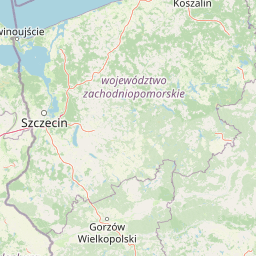
Map view of Jezioro Szare Nature Reserve

Use this park location map to pinpoint Jezioro Szare Nature Reserve in Poland, understand its exact geographic position, and read its mapped placement within the surrounding landscape more clearly.

Pigeon | © OpenStreetMap contributors

Location context for Jezioro Szare Nature Reserve

West Pomeranian Voivodeship
Park atlas

Compare adjacent freshwater habitats and regional nature reserves across Pomerania

Explore Parks Near Jezioro Szare Nature Reserve and Surrounding Protected Landscapes

Browse protected areas and wetland reserves adjacent to Jezioro Szare Nature Reserve to analyze regional freshwater habitats. Examining nearby reserves provides broader geographic context for the lobelia lake ecosystems of northwestern Poland.
Nature reserveZachodniopomorskie
About 17 km away#1 closest

Northwest

Dolina Zgniłej Strugi Nature Reserve: Geographic Overview of Protected Mires and River Valleys

A diverse wetland corridor in the West Pomeranian region.

Dolina Zgniłej Strugi Nature Reserve protects a mosaic of spring-mire, peatland, and riparian forest habitats along the Zgniła Struga river. This landscape offers a rare example of naturally occurring lowland river dynamics and diverse mire communities within the Wysoczyzna Polanowska, anchoring an important ecological network in north-western Poland.

Area
1.523 km²
Established
2024
Relief
Lowland
Climate
Temperate
Nature reserveZachodniopomorskie
About 19 km away#2 closest

North

Rezerwat przyrody Dolina Pustynki: Geography and Protected River Valley Landscapes in Zachodniopomorskie

Mapped riverine corridors and ancient deciduous forest ecosystems

Explore the detailed ecological landscape of Rezerwat przyrody Dolina Pustynki in the West Pomeranian region. This nature reserve serves as an essential example of submontane river habitats and well-preserved oak-hornbeam forests within the Polanów High Plain, maintaining vital connections between regional water catchments and protected woodlands.

Area
0.392 km²
Established
2024
Relief
Upland
Climate
Temperate
A horizontal watercolor painting showing a tranquil lake scene with sparse trees on both shores and a soft light across the water.
Nature reservePomeranian Voivodeship
About 27 km away#3 closest

East

Rezerwat przyrody Jezioro Smołowe: Geography of a Protected Polish Lobelia Lake

Mapped softwater habitats in the Pomeranian Lakeland.

Located in the Bytów Lakeland, Rezerwat przyrody Jezioro Smołowe is a small, post-glacial lake recognized for its high water purity and specialized aquatic vegetation. As a core component of the local Brda river headwater complex, this reserve represents a critical ecological site for softwater lake conservation, supported by a managed buffer zone that protects its natural catchment.

Area
0.371 km²
Established
1976
Scope
Terrestrial
Water
Water-dominated
Nature reserveWest Pomeranian Voivodeship
About 32 km away#4 closest

Northwest

Mechowisko Manowo Nature Reserve: Protected Fen and Wetland Landscapes in West Pomerania

Geographic atlas of rare peatland and spring mire habitats

Mechowisko Manowo Nature Reserve protects a distinct assemblage of alkaline fens, sedge dominated turzycowiska, and swamp forests in the post glacial landscape of northern Poland. This reserve provides a rare look at the basin-like peatland terrain and calcareous groundwater systems that characterize the Dzierżęcinka river valley within the West Pomeranian region.

Area
0.555 km²
Established
2018
Scope
Terrestrial
Water
Major water bodies
Protected areaWest Pomeranian Voivodeship
About 35 km away#5 closest

Northwest

Wiązogóra Protected Area: Geography and Wetland Habitat Mosaic in West Pomeranian Voivodeship

Exploring the ecological significance of a post-glacial lowland mire landscape

Wiązogóra forms an intricate network of twelve bog and mire vegetation complexes situated within the Równina Białogardzka. This site showcases a diverse assembly of dystrophic ponds, transitional mires, and acidophilous beech and oak woodlands, providing a distinct study in northern European wetland conservation and regional post-glacial topography.

Area
4.9 km²
Established
2011
Relief
Lowland
Climate
Temperate
A soft watercolor painting of gentle, rolling hills and scattered trees under a light sky.
Protected areaPomeranian Voivodeship
About 35 km away#6 closest

Northeast

Ostoja Masłowiczki: Protected Landscape and Post-Glacial Terrain in Pomeranian Voivodeship

Exploring the glacial basins, bogs, and forests of northern Poland.

Ostoja Masłowiczki is a protected area in the Bytów Lake District defined by its glacial heritage. The site provides a unique look at how moraine landscapes support a varied mosaic of habitats, ranging from acidic dystrophic lakes and active raised bogs to lush oak-hornbeam and beech forests within the Pomeranian region.

Area
16.8 km²
Established
2011
Relief
Lowland
Climate
Temperate
Nature reserveZachodniopomorskie
About 37 km away#7 closest

West

Dolina Rzeki Leśnicy Nature Reserve: Mapped Protected Landscapes in Zachodniopomorskie

A glacial valley reserve featuring riverine forest habitats.

Dolina Rzeki Leśnicy Nature Reserve preserves a distinct young glacial river valley characterized by its tightly meandering stream, amphitheater-like springheads, and diverse gallery forests. Located on the Białogard Plain, this protected landscape demonstrates the intersection of humid riparian ecosystems and undulating glacial relief, providing an essential study of Polish lowland geography and forest conservation.

Area
0.593 km²
Established
2024
Relief
Upland
Climate
Temperate
Nature reserveZachodniopomorskie
About 40 km away#8 closest

Northwest

Rezerwat przyrody Jodły Karnieszewickie: Mapped Geography and Protected Forest Landscapes

A rare botanical refuge for mature silver fir stands in Zachodniopomorskie.

Rezerwat przyrody Jodły Karnieszewickie is a specialized nature reserve in northern Poland that serves as a living laboratory for forest conservation. The site maintains a dense, closed canopy of silver fir trees that deviate from the region's typical woodland patterns, fostering a microclimate suitable for rare epiphytes. This protected area offers deep insight into postglacial lowland forest composition and the survival of relict plant populations.

Area
0.368 km²
Established
1978
Relief
Lowland
Climate
Temperate

Common questions about visiting, size, designation, and location context for Jezioro Szare Nature Reserve

Jezioro Szare Nature Reserve FAQs for park facts, access, geography, and protected area context

Find quick answers about Jezioro Szare Nature Reserve, including protected-area facts, park geography, trail and visitor context, and how the park fits into its surrounding country and regional landscape.
MoriAtlas Explorer

Continue Your Protected Areas Search Across the Global Atlas

Deepen your exploration by continuing the structured search for national parks and protected areas worldwide. Utilize the comprehensive filtering capabilities to compare different conservation landscapes and refine your understanding of global park geography. Discover more about the distribution and characteristics of protected natural areas.

Global natural geography