
Why Jezioro Wieleckie Nature Reserve stands out
The reserve is best known as a bird sanctuary centered on Lake Wieleckie, hosting around 140 recorded bird species. Its combination of open water, marshland, and adjacent forest creates conditions that attract both common waterbirds and rarer species considered valuable on a national and European scale. This ornithological richness, paired with its formal classification as a bird-focused faunal reserve, defines the site's identity.
Jezioro Wieleckie Nature Reserve history and protected-area timeline
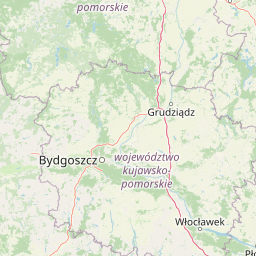
Jezioro Wieleckie Nature Reserve was formally established on 11 August 2005 by Regulation No. 17 of the Voivode of Kuyavian-Pomeranian, published in the official voivodeship gazette. The regulation set the legal framework for protecting the lake, its surrounding marshland, and the adjacent forests as a coherent ecological unit.
The reserve's history is closely tied to its role within the wider Krajeński Landscape Park, in which it is embedded. Ownership of the protected area rests with the State Treasury, administered through the Agricultural Property Agency's regional office in Bydgoszcz, reflecting the agricultural and land-property context of much of post-1989 conservation management in Poland.
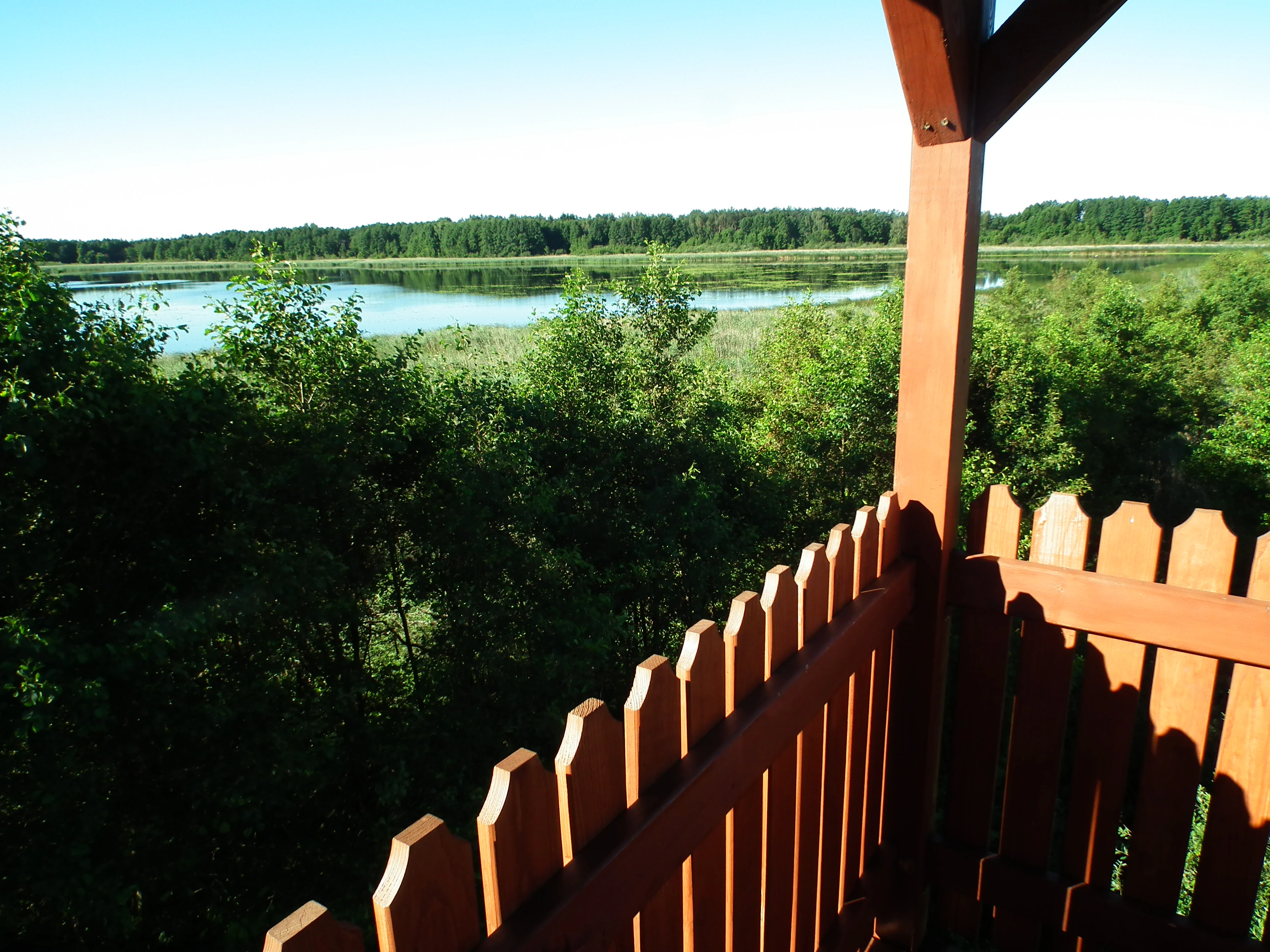
In 2014, an observation tower overlooking the lake was opened to the public near the reserve boundary, giving visitors an elevated vantage point across the protected waters and surrounding habitats. This infrastructure marked an important step in making the reserve accessible for educational, recreational, and birdwatching use without compromising its protected status.
Jezioro Wieleckie Nature Reserve landscape and geographic character
The landscape of JeThe reserve lies in the Pojezierze Krajeńskie, a lakeland mesoregion typical of the postglacial terrain found across much of northern and central Poland. The defining landform is Lake Wieleckie itself, a relatively compact water body whose surface forms the visual and ecological core of the protected area. Around the lake, depressions capture water and support marshy, boggy ground, while slightly drier rises carry forest stands that frame the basin and give the surrounding area its characteristic lake-district character.
The result is a mosaic landscape in which open water, reedbeds, wet margins, and mixed woodland stand within a short distance of one another. Such transitions, shaped by glacial meltwater patterns and ongoing vegetation succession, are typical of this part of the Kuyavian-Pomeranian region and give the reserve much of its landscape value. Viewpoints, including the observation tower introduced in 2014, allow the broad lake basin and its forested rim to be appreciated as a single integrated scene.
Jezioro Wieleckie Nature Reserve ecosystems, habitats, and plant life
Ecologically, Jezioro Wieleckie Nature Reserve is built around the dynamic interaction between a lake and its immediate wetland and forest surroundings. The aquatic zone provides open-water habitat for fish and foraging waterbirds, the marshy margins host reeds and sedges typical of nutrient-balanced Polish lowland lakes, and the surrounding forests contribute upland habitat for breeding songbirds and other woodland species.
The combination of these three habitat layers: open water, marshland, and forest, creates the structural diversity that supports such a large bird community. The protection of all three zones as a single reserve reflects an understanding that the lake's ecological value depends not just on the water itself, but on the full transition from open surface through wet shore to dry woodland. This integrated habitat framework is central to the nature reserve's purpose and is consistent with active conservation measures applied across the site.
Jezioro Wieleckie Nature Reserve wildlife and species highlights
Wildlife at Jezioro Wieleckie Nature Reserve is dominated by birds, which is reflected in the reserve's classification as a faunal bird reserve. Around 140 bird species have been recorded in or around the lake, including species whose populations are considered rare at the Polish or wider European scale. The lake's open water, reed-fringed shores, and adjacent forests collectively support breeding, resting, and feeding bird populations across the seasons.
Outside the breeding season, the lake and its margins also serve as a refuge for waterfowl and other waterbirds, while the surrounding woodlands accommodate typical species of the Kuyavian-Pomeranian lake district. The reserve's importance for birdlife, rather than its wider mammal or fish fauna, is the primary reason for its protected status and its broader recognition in regional conservation planning.
Jezioro Wieleckie Nature Reserve conservation status and protection priorities
Conservation at Jezioro Wieleckie focuses on preserving a connected system of aquatic, marshy, and forest habitats that together sustain a rich avifauna. The reserve was designated with explicit attention to natural, scientific, educational, and landscape values, a quadruple justification that reflects an integrated conservation purpose rather than a single-species focus.
The site is subject to active protection, or ochrona czynna, a Polish conservation category that allows targeted management interventions rather than leaving the area to entirely natural processes alone. This makes the reserve a managed ecological asset, with conservation work coordinated through the Agricultural Property Agency's regional branch in Bydgoszcz. Embedding the reserve within the larger Krajeński Landscape Park further strengthens its conservation role by linking it to a wider network of protected landscapes in the Krajna lake district.
Top sights and standout views in Jezioro Wieleckie Nature Reserve
The reserve's strongest points of distinction are its lake-centered habitat mosaic, its formal bird-focused protective status, and its location inside the Krajeński Landscape Park. It is one of the more accessible birdwatching sites in Kuyavian-Pomeranian Voivodeship, particularly thanks to the observation tower overlooking the lake. Its legal basis as a water reserve with a faunal-bird subtype sets it apart from purely forest or landscape reserves in the region, and its recorded community of around 140 bird species gives it clear ornithological significance within northern Poland.
Best time to visit Jezioro Wieleckie Nature Reserve
The reserve is most rewarding for visitors during the warmer months of late spring and summer, when breeding waterbirds and songbirds are active around the lake and its margins. Spring is particularly good for observing arrivals and nesting behaviour, while high summer offers steady conditions for using the observation tower and walking the immediate surroundings. In autumn and winter the lake takes on a quieter character, with frozen or open water still supporting waterbirds, though visitor infrastructure is best suited to milder seasons. As with any active bird reserve, timing visits to early morning or late afternoon typically offers the best chances of sighting wildlife without disturbing breeding or resting birds.