Why Kalambatritra Special Reserve stands out
Kalambatritra is best known for its humid highland forest ecosystem in an otherwise dry southern region of Madagascar. This unusual habitat supports a rich set of endemic species, including six lemur species, sixteen species of terrestrial micromammals, and a high diversity of birds with both Malagasy endemics and globally threatened species. The reserve is also notable for its long-term conservation value, having been designated as a BirdLife International Important Bird Area. Its combination of endemic lemurs, threatened micromammals, and rare birds such as the Madagascar red owl and Meller's duck makes it a focal point for biodiversity conservation in southern Madagascar.
Kalambatritra Special Reserve history and protected-area timeline
Kalambatritra Special Reserve has its formal origins in 1959, when the area was established as a protected reserve under Madagascar's system of natural reserves. Along with other reserves of that era, it was created during a period of expanding recognition of Madagascar's unique biodiversity and the need to safeguard representative habitats across the island.
The reserve has long been integrated into Madagascar's network of protected areas managed by Madagascar National Parks and its predecessors. A significant step in its modern conservation profile came in 2001, when an Important Bird Area was designated within the reserve by BirdLife International, capturing roughly 31,242 hectares of ornithologically important forest. This designation highlighted the reserve's role for endemic and threatened bird species and helped align it with international conservation frameworks.
In more recent years, Kalambatritra has been supported through Madagascar's broader protected-area financing mechanisms, including initiatives by organizations such as the Fondation pour les Aires Protégées et la Biodiversité de Madagascar. These efforts have aimed to strengthen the management and long-term resilience of Kalambatritra as part of a connected network of southern forests that includes the nearby Midongy du Sud National Park.
Kalambatritra Special Reserve landscape and geographic character
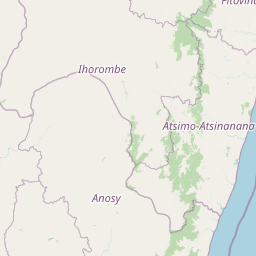
The landscape of Kalambatritra is shaped by the southern escarpment zone of Madagascar, where the central plateau descends toward the south and east. The reserve's terrain combines forested ridges, valleys, and elevated plateaus in a region where elevation creates pockets of humidity that contrast with the surrounding dry lowlands. This topography is fundamental to the reserve's identity, as the highest ground captures moisture and supports the humid forest that distinguishes Kalambatritra from the drier surrounding landscape.
The reserve sits within a broader matrix of southern Malagasy environments, including dry deciduous forest, open savannah, and rocky expanses typical of the Anosy and Ihorombe regions. Within this setting, Kalambatritra's humid forest block stands out as a green anomaly, sustained by local topography and the influence of moisture-laden air from the east. Streams and small drainage lines likely contribute to maintaining this wetter microclimate in an otherwise arid-to-subhumid landscape.
The roughly 282 square kilometers of protected terrain include slopes and valleys that vary in exposure and elevation, creating a mosaic of microhabitats. This varied terrain supports different forest types internally and contributes to the reserve's value as a transitional landscape between the eastern humid forests and the southern dry formations. The reserve's position roughly 20 kilometers from Midongy du Sud National Park further emphasizes its role within a larger forested landscape of regional conservation importance.
Kalambatritra Special Reserve ecosystems, habitats, and plant life
Kalambatritra's ecological identity is rooted in humid forest, a habitat that is far from typical in southern Madagascar. This wetter forest ecosystem sustains a rich assemblage of species more commonly associated with the eastern rainforest belt, making the reserve a biogeographically important outlier on the southern plateau.
The reserve's vegetation provides continuous canopy cover, which is essential for arboreal and forest-dependent species such as lemurs and many forest birds. Habitats within the reserve vary with elevation and slope, supporting a mosaic of forest types that range from denser, taller humid forest to drier-edge formations at lower elevations and on exposed ridges. This mosaic supports the coexistence of species with different ecological requirements within a relatively compact protected area.
Mosses, ferns, lianas, and other moisture-loving plants contribute to the humid character of the forest interior, while the surrounding drier formations contrast sharply with the core humid zones. This juxtaposition of wet and dry habitats in close proximity is part of what gives Kalambatritra its distinctive ecological character. The reserve has been documented as hosting an exceptional biological richness, with records referencing about 342 genera and 699 species across multiple groups, including 29 genera endemic to Madagascar.
Kalambatritra Special Reserve wildlife and species highlights
The wildlife of Kalambatritra is among its most significant conservation assets. The reserve is particularly important for primates, hosting six lemur species. These include the collared brown lemur (Eulemur collaris), the eastern lesser bamboo lemur (Hapalemur griseus), mouse lemurs of the genus Microcebus, dwarf lemurs of the genus Cheirogaleus, the eastern woolly lemur (Avahi laniger), and the weasel sportive lemur (Lepilemur mustelinus). Together these lemurs represent a mix of nocturnal and diurnal species occupying different forest strata.
Beyond primates, the reserve supports sixteen species of terrestrial micromammals, a group that includes endemic rodents and tenrecs. Among these, Majori's tufted-tailed rat (Eliurus majori) and the shrew tenrec Microgale principula are recognized as threatened with extinction. The presence of multiple threatened small mammals gives Kalambatritra notable conservation weight beyond its charismatic lemur fauna.
Kalambatritra is also an important area for birds. Madagascar's globally threatened Madagascar red owl (Tyto soumagnei) and Meller's duck (Anas melleri) have been recorded in the reserve, both species facing significant conservation concerns. The broader bird community contributes to the reserve's Important Bird Area designation, reflecting a high proportion of endemic genera and species. Reptiles, amphibians, and invertebrates are also part of the reserve's fauna, fitting within the broader pattern of Malagasy endemism that defines the island's natural heritage.
Kalambatritra Special Reserve conservation status and protection priorities
Kalambatritra Special Reserve plays a strategic role in the conservation of southern Madagascar's natural heritage, with particular importance for humid forest biodiversity in an otherwise dry region. Its protected status as an IUCN Category IV reserve, combined with its long history dating back to 1959, gives it an established framework for habitat protection and species conservation.
The reserve's designation as an Important Bird Area by BirdLife International in 2001 underpins its international conservation significance. Recognition of roughly 31,242 hectares within the broader reserve highlighted its importance for endemic and threatened bird species and tied its conservation profile to global ornithological priorities. Kalambatritra's proximity to Midongy du Sud National Park, located only about 20 kilometers away, reinforces its role within a connected landscape for forest-dependent wildlife.
The reserve is also part of Madagascar's broader protected-area financing and management framework, supported by organizations such as the Fondation pour les Aires Protégées et la Biodiversité de Madagascar. These mechanisms aim to provide stable funding for management, anti-poaching efforts, and ecological monitoring. Conservation priorities at Kalambatritra include safeguarding humid forest against deforestation and fire, protecting endemic lemur populations, and maintaining habitat connectivity with neighboring forests in the south-central Malagasy landscape.
Kalambatritra Special Reserve cultural meaning and human context
Kalambatritra lies in a region of Madagascar with deep-rooted rural and cultural traditions, situated between the Anosy and Ihorombe regions. The surrounding landscapes are home to communities whose livelihoods are closely tied to the land, with traditional land use, small-scale agriculture, and pastoral activities shaping patterns of interaction with the natural environment.
The reserve's existence, long established within Madagascar's national protected-area system, reflects the country's recognition of the need to set aside representative natural areas alongside its rural and cultural landscapes. While detailed ethnographic information is limited in the available sources, the reserve's location near Betroka places it within an area of southern Madagascar where local communities have historically engaged with forests through selective use of resources, in a balance increasingly shaped by conservation policy and the pressures of regional development.
Top sights and standout views in Kalambatritra Special Reserve
Kalambatritra stands out for its combination of humid forest habitat, high species richness, and a long history of formal protection. It hosts six lemur species and sixteen terrestrial micromammal species, including threatened endemics, and serves as a BirdLife International Important Bird Area supporting species such as the Madagascar red owl and Meller's duck.
The reserve's ecological importance is reinforced by its position within a connected network of southern forests, particularly its proximity to Midongy du Sud National Park. As a long-established protected area under Madagascar National Parks, it combines institutional permanence with strong biodiversity value, making it one of the more distinctive reserves in southern Madagascar.
Best time to visit Kalambatritra Special Reserve
Given the humid forest setting and the southern latitude of Kalambatritra, the cooler and drier months are generally the most comfortable period for forest exploration. In southern Madagascar, the period roughly corresponding to the dry season tends to offer more stable weather, easier access along forest paths, and more favorable conditions for observing forest wildlife such as lemurs and birds.
Wet months can make trails more difficult and reduce visibility, but they also support the lush character of the humid forest that defines Kalambatritra. Wildlife observation is possible year-round given the resident nature of many lemur and bird populations, though bird vocal activity and fruiting patterns can vary across seasons, influencing the experience for visitors interested in the reserve's exceptional biodiversity.