

Mori Atlas logo
National parkAndohahela National Park

Discover the mapped terrain and regional context of this national park in Madagascar.

Andohahela National Park: Madagascar's Protected Landscape Geography and Park Boundaries

Andohahela National Park represents a significant protected area within Madagascar's unique geographic landscape. As a national park, its conservation status is key to understanding its mapped boundaries and the natural terrain it encompasses. This page serves as a detailed entry point for exploring the park's specific geography, its place within the island nation's biodiversity, and its structured identity as a protected landscape for atlas-based discovery.

RainforestSpiny ForestLemursEndemic SpeciesWorld Heritage SiteMontane Ecosystems

Andohahela National Park

National park

Park overview

Structured park overview, official facts, and landscape profile for Andohahela National Park

Andohahela National Park park facts, protected area profile, and essential visitor context

Review the core facts for Andohahela National Park, including designation, size, terrain, visitor scale, habitats, and operating context in one park-focused overview.

About Andohahela National Park

Andohahela National Park occupies a unique position in Madagascar's protected area network as a place where dramatically different ecosystems converge. The park spans the Anosy mountain range in southeastern Madagascar, approximately 40 kilometers from the coastal city of Fort Dauphin. This mountainous area represents the southern terminus of the Malagasy Highlands, creating a natural barrier that profoundly influences the local climate and vegetation patterns. The mountains intercept moisture-bearing trade winds from the east, resulting in heavy rainfall on eastern slopes that supports lush rainforest ecosystems far south of typical tropical rainforest boundaries. Meanwhile, the western slopes lie in a rain shadow, supporting the dry spiny forest characteristic of southern Madagascar. This climatic and topographic complexity has allowed Andohahela to preserve an extraordinary range of biodiversity within its 760 square kilometer boundary. The park is divided into three distinct management zones, each representing a different ecological community. The Malio zone protects the core rainforest area with its extraordinary botanical richness, while Ihazofotsy-Mangatsiaka preserves the dry spiny forest ecosystem with its unique succulent and thorny vegetation. The Tsimelahy zone contains the Ranopiso transitional forest, representing an ecological bridge between the other two habitat types. This remarkable concentration of ecological diversity within a single park makes Andohahela particularly valuable for conservation and scientific research.

Quick facts and research context for Andohahela National Park

Andohahela National Park spans 760 square kilometers in southeastern Madagascar's Anosy region, protecting the southernmost extension of the Malagasy Highlands. The park contains three distinct ecological zones: the Malio rainforest area with elevations ranging from 100 meters to 1,956 meters at Pic d'Andohahela; the Ihazofotsy-Mangatsiaka spiny forest zone; and the Tsimelahy transitional forest at approximately 125 meters elevation. The park supports the highest lemur diversity in Madagascar with fifteen recorded species, including the ring-tailed lemur and Verreaux's sifaka. Annual rainfall ranges from 1,500-2,000 millimeters on the eastern slopes supporting rainforest to just 600-700 millimeters on the western dry spiny forest. The park was inscribed as part of the Rainforests of the Atsinanana World Heritage Site in 2007 and receives approximately 1,300 visitors annually.

Protection and recognition

Tracing the documented terrestrial management scope and geographic conservation status.

Official Protection Status and Terrestrial Designation of Andohahela National Park

Explore the formal terrestrial boundary parameters and officially designated geographic protection scope of Andohahela National Park. Analyzing verified conservation datasets and spatial management metrics clarifies how the designated wilderness aligns with regional protection frameworks.

Protection details

Protection scope
Terrestrial
Transboundary protection
No
Park context

Deeper park guide and search-rich context for Andohahela National Park

Andohahela National Park history, landscape, wildlife, and travel context

Explore Andohahela National Park through its history, landscape character, ecosystems, wildlife, conservation priorities, cultural context, and seasonal travel timing in a structured park guide built for atlas discovery and search intent.

Why Andohahela National Park stands out

Andohahela National Park is best known for its extraordinary habitat diversity within a single protected area, spanning from humid rainforest to dry spiny forest. It holds the distinction of being the richest place in Madagascar for lemur biodiversity, with fifteen species recorded including the iconic ring-tailed lemur and Verreaux's sifaka. The park contains the southernmost humid rainforests in all of Madagascar, existing south of the Tropic of Capricorn, making it an ecological outlier. The Malio zone features dense montane rainforest with more than two hundred species of tree ferns, while the distinctive Triangle palm (Dypsis decaryi) is found nowhere else on Earth. The three distinct habitat zones create a natural laboratory where visitors can traverse from rainforest to spiny forest within a single park, experiencing the dramatic ecological transition that occurs along the mountain barrier.

Andohahela National Park history and protected-area timeline

Andohahela National Park has a conservation history stretching back to 1939, when the area was first designated as a protected area under Malagasy law. This early protection recognized the region's ecological significance even before detailed scientific surveys had documented its full biodiversity value. The area remained under protected status for nearly six decades, serving as a conservation refuge while Madagascar developed its broader network of protected areas. In 1998, Andohahela was formally elevated to national park status, reflecting both its ecological importance and the maturation of Madagascar's conservation management framework. The upgrade to national park designation brought increased management attention and formal integration into the country's national park system administered by Madagascar National Parks Association. A significant milestone came in 2007 when Andohahela was inscribed as part of the Rainforests of the Atsinanana World Heritage Site, recognizing its contribution to preserving one of Madagascar's most threatened and biodiverse ecosystems. This international recognition acknowledges that the park protects irreplaceable ecological heritage of global significance.

Andohahela National Park landscape and geographic character

The landscape of Andohahela National Park is defined by the dramatic topography of the Anosy mountain range, the southernmost extension of the Malagasy Highlands. The terrain rises from approximately 100 meters elevation at the lower boundaries to 1,956 meters at the summit of Pic d'Andohahela in the Malio zone. This dramatic elevation range creates diverse microclimates and vegetation zones within a relatively compact area. The mountains run roughly east-west, creating a natural barrier that has profound effects on the distribution of rainfall and vegetation. The eastern slopes face the prevailing trade winds, receiving abundant moisture that supports dense rainforest development. In contrast, the western slopes lie in the rain shadow of the mountains, resulting in significantly drier conditions and the development of spiny forest vegetation. The landscape features numerous perennial streams and small rivers that descend from the higher elevations, fed by the higher rainfall on the eastern side. The terrain is characterized by steep ridges, rocky outcrops, and dense vegetation cover, with access challenging due to the rough, unpaved nature of the provincial road RIP118 that connects the park to Fort Dauphin.

Andohahela National Park ecosystems, habitats, and plant life

The ecological diversity within Andohahela National Park is extraordinary, with three distinct habitat types represented within its boundaries. The Malio zone contains dense lowland and montane rainforest characterized by high species richness, particularly notable for the presence of more than two hundred tree fern species. The rainforest supports a complex vertical structure with multiple canopy layers, epiphytic orchids, and climbing vines. The Montane forest zone features species adapted to cooler, higher-elevation conditions. The Ihazofotsy-Mangatsiaka zone protects dry spiny forest, a distinctive vegetation type characterized by thorny, succulent plants adapted to drought conditions. The Tsimelahy zone contains the unique Ranopiso transitional forest, representing an ecological gradient between rainforest and spiny forest. The park's position south of the Tropic of Capricorn makes its rainforests particularly unusual, as most tropical rainforests occur closer to the equator. The climate division created by the mountain range results in dramatically different vegetation communities existing in close proximity, creating exceptional ecological complexity within a single protected area.

Andohahela National Park wildlife and species highlights

Andohahela National Park supports the highest concentration of lemur species anywhere in Madagascar, with fifteen species documented within its boundaries. This remarkable primate diversity includes two of Madagascar's most emblematic species: the ring-tailed lemur (Lemur catta) and Verreaux's sifaka (Propithecus verreauxi). The different habitat zones support different lemur communities, with the rainforest areas hosting species such as the collared brown lemur, southern lesser bamboo lemur, and Fleurete's sportive lemur, while the spiny forest areas support ring-tailed lemurs, Verreaux's sifaka, southern woolly lemur, gray mouse lemur, and others. The park's reptile fauna includes 67 species, featuring rare geckos, turtles, and snakes. Bird diversity is equally impressive with 130 species recorded, while 50 amphibian species have been documented. The park is also notable for endemic species, particularly the Triangle palm (Dypsy decaryi), which is found only within Andohahela. The variety of habitats supports this extraordinary biodiversity, with each zone offering different ecological niches that have allowed speci diversification.

Andohahela National Park conservation status and protection priorities

Andohahela National Park plays a critical role in conserving Madagascar's unique biodiversity and represents one of the most important protected areas in the island's southern region. The park's inclusion in the Rainforests of the Atsinanana World Heritage Site in 2007 underscores its global significance for conservation. The park protects the southernmost remaining humid rainforests in Madagascar, ecosystems that have been severely reduced across the island. These forests serve as refuges for species found nowhere else on Earth, including numerous endemic lemurs, reptiles, amphibians, and plants. The presence of three distinct habitat types within a single protected area provides resilience against environmental change and allows for the conservation of ecological processes across environmental gradients. The park faces ongoing conservation challenges typical of Madagascar's protected areas, including habitat pressure from surrounding populations and the need for sustainable management. The low visitor numbers, approximately 1,300 annually as of 2005, reflect both the park's remote location and the challenging access conditions, which paradoxically provide some natural protection against intensive tourism pressure.

Andohahela National Park cultural meaning and human context

Andohahela National Park is situated within the Anosy region of southeastern Madagascar, an area with a distinct cultural identity influenced by the region's history and geography. The Anosy people have historically inhabited this area, with their traditional territory encompassing the forests and mountains now protected by the park. The local communities have developed cultural connections to the land and its resources over generations. Fort Dauphin (Tôlanaro), the nearest major settlement, served as an early European settlement on Madagascar's southern coast and has historical connections to the region's colonial past. The park's name Andohahela derives from local Malagasy language, reflecting the geographic identity of the area. Traditional land use patterns in the surrounding region have shaped the landscape over centuries, with the boundaries of the park established in part to protect remaining forest in an area where agricultural expansion has reduced forest cover.

Top sights and standout views in Andohahela National Park

Andohahela National Park offers visitors a rare opportunity to experience three distinct ecosystems within a single protected area, from lush montane rainforest to dry spiny forest. The park's exceptional lemur diversity makes it a prime destination for wildlife observation, with the chance to see ring-tailed lemurs and Verreaux's sifaka in their natural habitat. The Malio rainforest zone features remarkable botanical wealth, including more than two hundred tree fern species and numerous orchids. The unique Triangle palm, found only in this park, represents an irreplaceable endemic treasure. The park's dramatic mountain scenery and the ecological transition between wet and dry habitats create a visually stunning landscape. The opportunity to walk through both rainforest and spiny forest on different circuits within the same park provides an unmatched ecological experience in Madagascar.

Best time to visit Andohahela National Park

The optimal time to visit Andohahela National Park is during the dry season from approximately April through October, when conditions are most favorable for exploration. During this period, rainfall is reduced and trails are more accessible, making it easier to traverse the various habitat zones within the park. The cooler dry season temperatures are more comfortable for hiking, particularly in the higher elevation rainforest areas. The wet season from November to March brings heavier rainfall, which can make some trails difficult to navigate and may limit access to certain areas of the park. However, the wet season transforms the landscape with lush green vegetation and may offer different wildlife viewing opportunities. Visitors should be prepared for rough travel conditions regardless of season, as the unpaved access road requires a sturdy vehicle and patience. The park's low visitor numbers mean that advance planning with park authorities is essential to ensure access and arrange guides.
Monthly climate preview

Analyzing thirty-year temperature shifts and monthly precipitation trends at representative elevations

Andohahela National Park Climate Normals and Monthly Weather Statistics

Measured averages from a representative elevation of 485 meters reveal a clear annual cycle, where warmer, wetter months average around 23.7 degrees Celsius and drier periods dip toward 16.4 degrees Celsius. Examining the complete twelve-month profile offers precise insights into monthly temperature fluctuations and daily precipitation patterns.
Annual mean21 °C
16 °C24 °C
Jan24°
Feb24°
Mar23°
Apr21°
May19°
Jun17°
Jul16°
Aug17°
Sep19°
Oct21°
Nov23°
Dec24°
Warmest month
January

23.8 °C

Coolest month
July

16.5 °C

Wettest month
February

8.2 mm/day

Driest month
September

1.5 mm/day

Park location guide

Geography guide, regional context, and park location map for Andohahela National Park

Andohahela National Park park geography, regions, and map view in Madagascar

Understand where Andohahela National Park sits in Madagascar through a broader geographic reading of the surrounding landscape, nearby location context, and its mapped position within the national park landscape.

How Andohahela National Park fits into Madagascar

Madagascar is an island nation in the Indian Ocean, positioned off the southeastern coast of Africa. As the world's fourth-largest island and second-largest island country, it stands out for its exceptional biodiversity, over 90% of its wildlife is endemic, making it one of 17 megadiverse countries. The population is approximately 32 million, with Antananarivo as both the capital and largest city.

Wider geography shaping Andohahela National Park in Madagascar

Madagascar lies in the Indian Ocean off the southeastern coast of Africa, separated from the mainland by the Mozambique Channel. The island is situated approximately 400 km from the African continent. As the world's fourth-largest island, it also includes numerous smaller peripheral islands.

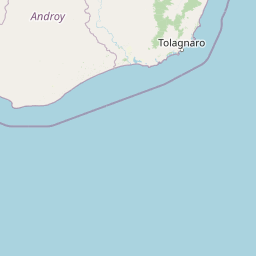
Map view of Andohahela National Park

Use this park location map to pinpoint Andohahela National Park in Madagascar, understand its exact geographic position, and read its mapped placement within the surrounding landscape more clearly.

Pigeon | © OpenStreetMap contributors

Location context for Andohahela National Park

Anosy
Park atlas

Browse the diverse protected landscapes of Madagascar, tracing the geographic spread of parks adjacent to Andohahela.

Explore Other National Parks and Protected Areas Near Andohahela National Park

After exploring Andohahela National Park's unique rainforest and spiny forest habitats, discover other national parks and protected areas across Madagascar's Anosy region. Compare their distinct ecological zones, lemur biodiversity, and varied mountain terrain, tracing the broader conservation landscape of southeastern Madagascar.
Nature reserveAnosy
About 32 km away#1 closest

East

Tsitongambarika Nature Reserve: Geographic Profile and Protected Forest Landscape

Lowland humid evergreen forest in the Anosy region

Tsitongambarika represents one of the final remaining lowland humid evergreen forest tracts in southern Madagascar. The reserve encompasses an extensive massif of ridges and the isolated Mount Ivohibe, supporting complex drainage networks that sustain the coastal water supply of the Anosy region. This protected landscape is fundamental for preserving regional biodiversity, including endemic lemurs, palm species, and specialized forest bird habitats across the southeastern Madagascar terrain.

Area
585.97 km²
Established
2015
IUCN
VI
Relief
Mountain
Nature reserveMadagascar
About 49 km away#2 closest

Southeast

Mandena Conservation Zone: Protected Littoral Forest and Wetland Geography in Madagascar

A critical nature reserve near the southeastern coastline

Mandena Conservation Zone protects over 200 hectares of rare littoral forest and coastal swamp in southeastern Madagascar. As one of the few remaining fragments of this unique coastal ecosystem, the reserve provides a critical habitat for endemic lemur populations and serves as an important site for understanding the regional geography of the Tolagnaro area.

Area
2.3 km²
Relief
Lowland
Climate
Tropical
Access
Access unknown
Nature reserveMadagascar
About 52 km away#3 closest

Southeast

Sainte Luce Reserve: Mapping Madagascar's Coastal Rainforest and Nature Reserve Boundaries

Coastal littoral forest, rare ebony enclaves, and mangrove ecosystems.

Located on the southeastern coast of Madagascar, Sainte Luce Reserve represents an intensive conservation area for littoral forest ecosystems. The reserve protects a unique linear landscape of Pandanus rainforests, white-sand ebony stands, and riverine mangroves, serving as a sanctuary for endangered palms and various endemic lemur species within its concentrated geographic footprint.

Area
0.4 km²
Established
2009
Visitors
50 annual
Relief
Lowland
Wildlife reserveAnosy
About 60 km away#4 closest

Southwest

Berenty Reserve Wildlife Reserve in the Anosy Region of Southern Madagascar

Spiny forest ecology and riverine landscape mapping

Berenty Reserve offers a concentrated look at the semi-arid spiny forests of southern Madagascar. This wildlife reserve, located along the Mandrare River in the Anosy region, serves as a vital protected area for observing endemic species within a striking terrain of cactus-like plants, baobabs, and thorny thickets.

Relief
Lowland
Climate
Arid
Access
Moderate access
Scope
Terrestrial
National parkAtsimo-Atsinanana
About 124 km away#5 closest

North

Midongy du sud National Park: National Park in Atsimo-Atsinanana, Madagascar

Explore its protected landscape and mapped geography.

Midongy du sud National Park is a significant protected area located in the Atsimo-Atsinanana region of Madagascar. This entry provides detailed geographic context, focusing on the park's mapped boundaries and its identity as a national park. It supports atlas-based discovery by offering insights into the park's specific landscape and its regional setting within southeastern Madagascar, serving as a factual resource for understanding its protected status.

Area
1,922 km²
Established
1997
IUCN
II
Relief
Mountain
Wildlife reserveMadagascar
About 128 km away#6 closest

North

Kalambatritra Special Reserve: Exploring the Geography of Southern Madagascar Protected Lands

Mapping a unique humid highland forest refuge

The Kalambatritra Special Reserve comprises a significant forested block in southern Madagascar, defined by ridges and valleys that maintain a humid microclimate. This protected area serves as a critical habitat for endemic wildlife, bridging the gap between eastern forest ecosystems and the drier terrain of the southern plateau, providing an essential study in island geography and conservation.

Area
282.55 km²
Established
1959
IUCN
IV
Scope
Terrestrial
Wildlife reserveAndroy
About 189 km away#7 closest

Southwest

Réserve spéciale du Cap Sainte-Marie: Wildlife Reserve and Protected Coastal Landscape in Androy

An essential arid-zone habitat at the southernmost edge of Madagascar

Réserve spéciale du Cap Sainte-Marie protects a fragile ecosystem of spiny thicket and coastal terrain. As a focal point for tortoise conservation in the Androy region, this reserve offers a window into the specialized reptile habitats and harsh environmental conditions that define the southern extremity of the Madagascar landscape.

Area
17.5 km²
Established
1962
IUCN
IV
Scope
Terrestrial
Marine protected areaAtsimo-Andrefana
About 208 km away#8 closest

Southwest

Nosy Ve-Androka National Park Marine Protected Area: Geographic and Atlas Discovery

Understand its marine landscape and regional geographic context.

Delve into Nosy Ve-Androka National Park, a critical marine protected area located in Madagascar's Atsimo-Andrefana region. This park offers a focused look at protected marine geography, allowing for detailed atlas exploration of its mapped boundaries and its role within the surrounding natural landscapes. Understand the specific geographic identity and conservation significance of this vital protected area through structured data.

Area
914.45 km²
Climate
Tropical
Access
Moderate access
Water
Water-dominated

Common questions about visiting, size, designation, and location context for Andohahela National Park

Andohahela National Park FAQs for park facts, access, geography, and protected area context

Find quick answers about Andohahela National Park, including protected-area facts, park geography, trail and visitor context, and how the park fits into its surrounding country and regional landscape.
MoriAtlas Explorer

Continue Your Protected Areas Search Across the Global Atlas

Deepen your exploration by continuing the structured search for national parks and protected areas worldwide. Utilize the comprehensive filtering capabilities to compare different conservation landscapes and refine your understanding of global park geography. Discover more about the distribution and characteristics of protected natural areas.

Global natural geography