
Visitor Planning
When to Visit Kalbarri National Park: The Short Answer
For travelers planning a trip to Kalbarri National Park, the best time to visit centers on a critical trade-off between manageable daytime temperatures and the seasonal occurrence of native wildflower blooms. The period from May through September is widely regarded as the most favorable window, as it provides the mildest climate for exploring the deep Murchison River gorge and the rugged coastal cliff lines. During these cooler months, average daily maximums typically drop into the mid-to-high 20s Celsius, significantly improving the conditions for walking the park’s extensive trail network compared to the intense heat encountered during the height of the Australian summer.
Navigating the Temperature Constraint
Temperature serves as the primary limiting factor for visiting this region. From December through April, daytime temperatures often climb above 40 degrees Celsius, which creates hazardous conditions for outdoor activity. Due to these persistent high temperatures, park authorities often find it necessary to implement temporary closures of inland hiking trails to ensure visitor safety. By focusing your visit on the months spanning late autumn, winter, and early spring, you avoid the most extreme thermal conditions, allowing for a much more flexible and comfortable experience. While the coastal section remains more accessible throughout the year due to the cooling influence of the Indian Ocean, the inland gorge environment becomes prohibitively hot for most casual exploration during the summer months.
Aligning Experiences with Seasonal Shifts
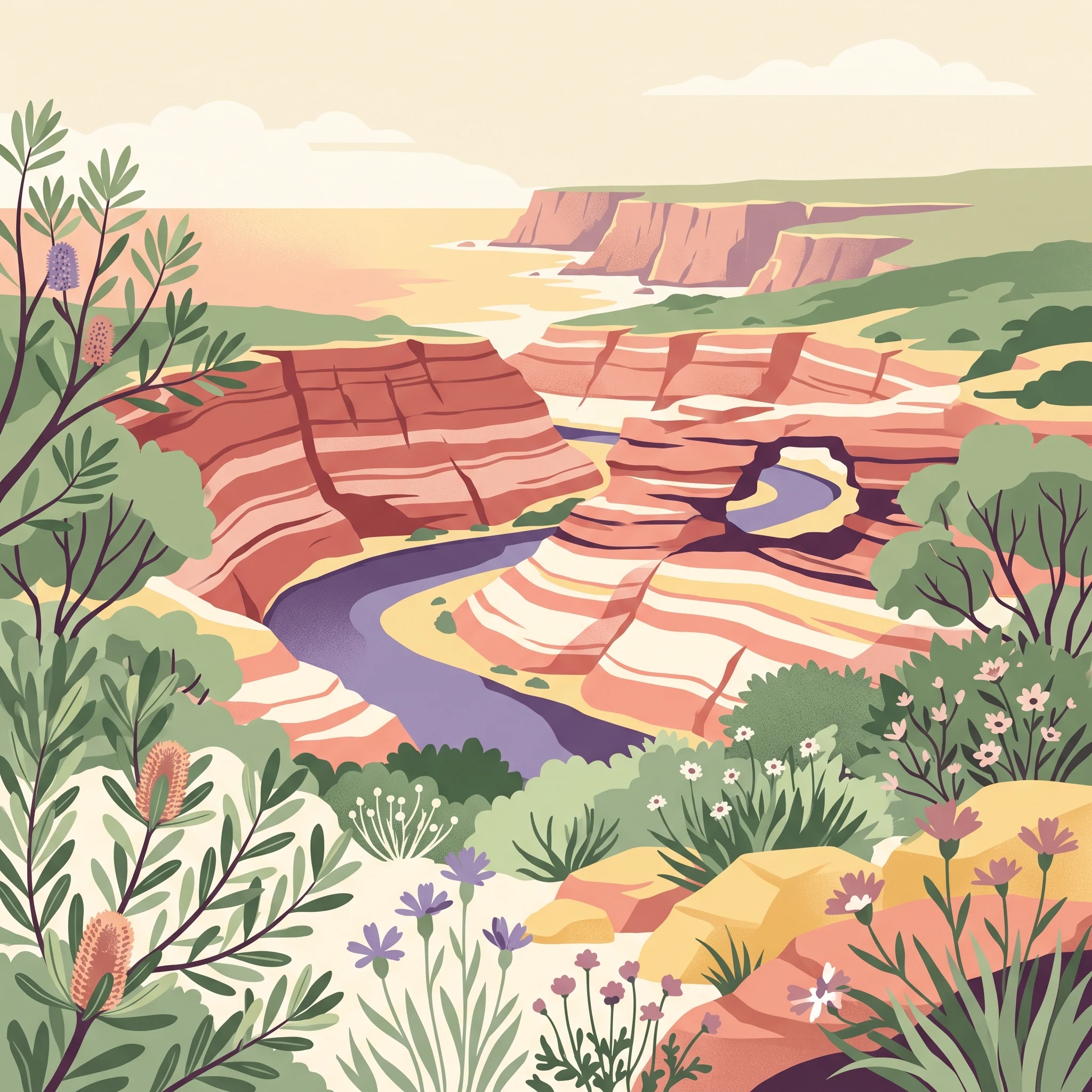
Beyond simple temperature moderation, your specific travel goals should dictate your chosen timeframe. If the park's exceptional floral displays are your primary motivation, prioritizing a visit between late winter and early spring is essential. This brief but vibrant period transforms the semi-arid landscape into a desert garden, featuring rare orchids and the iconic red catspaw. Alternatively, those interested in the park's coastal marine life, particularly the annual migration of humpback whales, will find the winter and early spring months ideal for spotting activity from the cliff-top viewpoints. These months also correspond with lower precipitation levels, which, while generally low year-round, remain consistent enough to support the seasonal growth that characterizes the landscape during these months. Because the park experiences a transition from inland desert to coastal cliffs, travelers should anticipate that even within these preferred months, the wind can be a significant factor along the exposed coastline, requiring careful preparation for varied conditions regardless of the specific week chosen for your trip.
Seasonal Planning
Best Visiting Windows in Kalbarri National Park
Peak Hiking Window: May to September
The most rewarding period for active visitors is the cooler interval from May through September. During these months, daytime temperatures moderate significantly, providing a safer and more enjoyable environment for traversing the Murchison River gorge. With average maximum temperatures settling into the low to mid-twenties Celsius, visitors can tackle longer walking trails that become physically taxing or inaccessible due to heat-related trail closures during the height of the summer. This window also benefits from lower humidity and a more stable wind profile, which enhances the comfort of viewing platforms like the Kalbarri Skywalk.
Wildflower and Coastal Migration Season: Late Winter to Early Spring
For those prioritising natural spectacles, the period from August to September serves as a dual-purpose window. This timeframe marks the tail end of the wildflower season, which typically begins in May with the first significant rains. By late winter and early spring, the arid sandstone landscape undergoes a transformation, with endemic species like the Kalbarri catspaw and various orchids reaching peak bloom. Simultaneously, this is an active period for marine life, particularly humpback whales migrating along the coast. Watching for whales from the cliff tops during August and September offers a unique coastal experience that complements the inland gorge hikes, effectively balancing terrestrial and marine viewing opportunities.
Navigating High Summer Heat: December to April
Travelers planning their trip between December and April should prepare for intense heat, as average maximums frequently exceed 38 degrees Celsius, often climbing past 40 degrees. This period is the most challenging for outdoor activities, as the arid environment offers little shade, particularly within the deep, wind-shielded gorge sections. Visitors opting for these months should shift their itinerary toward coastal viewing areas where ocean breezes may provide slight relief, though exposure remains a significant factor. Early morning starts are essential for any outdoor movement, as the mid-day hours are rarely suitable for strenuous activity. It is critical to note that the intensity of the heat during these months often leads to localized trail closures; visitors must check for live park alerts regarding access before heading to any trailhead. While this season offers the longest daylight hours, the trade-off is a narrow window for safe exploration and the necessity of managing heat-related risks throughout the day.
Annual Climate Overview
Understanding Kalbarri National Park Weather Patterns by Month
Navigating the Annual Temperature Shift
Kalbarri National Park experiences significant temperature fluctuations throughout the year, driven by its location at the intersection of inland desert heat and cooling coastal influence. Understanding these changes is essential for planning, as the park transitions from intense summer peaks to a much milder, though not cold, winter season. The summer period, spanning December through April, regularly sees maximum temperatures exceeding 35 degrees Celsius, with January and February acting as the hottest months. During these peak summer times, mean temperatures are elevated across the board, and the inland gorge environment can capture and intensify heat, often resulting in temperatures significantly higher than coastal areas.
Conversely, the cooler period from May through September offers a distinct shift. During this interval, maximum temperatures typically range between 24 and 30 degrees Celsius, providing a far more sustainable climate for physical activity. It is important to note that these figures represent long-term climate normals and are not a substitute for current local forecasts. Visitors should interpret these monthly patterns as a guide to the general environmental conditions rather than a guarantee of specific daily weather.
The Relationship Between Rainfall and Seasonal Growth
Rainfall in the park is generally sparse, but it follows a pattern that dictates the appearance of the landscape. Most of the annual precipitation occurs between May and August. While the total daily rainfall remains low by many global standards, these cooler, wetter months are the primary driver for the region's famous wildflower displays. This moisture, though limited, is sufficient to transform the arid sandstone terrain, triggering a burst of botanical activity that is largely absent during the arid months from October through March. During the dry summer and early autumn, the park enters a phase of dormancy where moisture levels are minimal, and the landscape retains its characteristic sun-baked, desert-like aesthetic.
Wind, Daylight, and Humidity Considerations
Wind and daylight duration play critical roles in how the park's climate affects a visit. The park experiences its longest days in December, with over 13.7 hours of daylight, which provides ample time for exploration but also prolongs exposure to the midday sun. Daylight hours contract to their minimum in June, with just over 10 hours of light. Visitors should plan their daily itineraries to account for these shorter winter days, particularly if they are travelling to remote sections of the gorge.
Humidity levels also fluctuate in tandem with the seasonal cycle, with the highest relative humidity recorded in June and July. This coincides with the cooler temperatures, creating a crisp, comfortable atmosphere that contrasts sharply with the drier, more intense heat of the summer months. Wind patterns, which are most persistent during the peak summer and late spring months, can influence the feel of both the coastal cliffs and the gorge. While these windier conditions can offer a cooling effect along the coast, they can also increase the volatility of weather conditions in exposed high-elevation areas. Travelers should always verify the most current climate data and local weather warnings before embarking on specific trail hikes, as the park's diverse topography ensures that conditions can vary considerably between the ocean front and the inland river systems.
Seasonal dynamics
Understanding Kalbarri National Park climate patterns and seasonal transitions
Defining the dry and warm seasonal phase
The climate at Kalbarri is dominated by an extended, hot, and arid period that spans from December through April. During these months, the park frequently experiences daytime maximum temperatures exceeding 35°C, with some peak readings climbing past 40°C. This phase is characterized by high, consistent heat, low precipitation, and sustained wind speeds that can exacerbate dehydration risks for those exploring exposed inland areas. The moisture levels in the air drop significantly, reflecting the inland desert influence that defines the Murchison River gorge environment. Because of these temperatures, park management often implements trail closures or restricts access to the deepest sections of the gorge during the heat of the day to protect visitor safety.
The cooler transition and winter period
A distinct shift occurs as the park enters the cooler months, generally recognized from May through September. During this period, the intense, oppressive heat of the summer months recedes, making the inland gorge landscapes accessible for longer stretches of the day. Minimum temperatures during the heart of winter, particularly in June and July, can dip below 10°C, providing a sharp contrast to the previous season. This is the period when the park experiences its highest frequency of rainfall, although the total volume remains relatively modest compared to more temperate coastal regions. The increase in humidity during these months is subtle but sufficient to trigger the landscape changes that make this period a primary focus for naturalists.
Interpreting seasonal volatility in shoulder months
Transition periods in April and October act as bridges between the core seasonal phases, and they rarely follow a uniform pattern. In April, while the average maximum temperatures begin to drop from the summer extremes, the land remains parched, and the heat can still be intense. Conversely, October signals a rapid return to warmer conditions after the winter moisture has dissipated. Visitors planning trips during these shoulder months should expect variable weather. Early morning excursions remain the most effective strategy throughout these transitions, as the climate can shift from a cool, clear morning to an unseasonably hot afternoon quite rapidly. These months are less about fixed seasonal labels and more about managing day-to-day fluctuations in heat exposure, as the stabilizing influence of the cooler winter months gives way to the heat-dominant patterns of the inland mid-west region.
Seasonal Experiences
Experiencing Kalbarri National Park Landscapes and Activities Throughout the Year
Navigating the Murchison River Gorge by Season
The iconic Murchison River gorge experience is highly sensitive to seasonal thermal patterns. During the summer months, spanning December through April, daytime maximums frequently exceed 38 degrees Celsius. These conditions make exposed trails, such as the trek toward the Loop or the Z-Bend, physically demanding and potentially hazardous by midday. Visitors planning to hike these areas in the warmer months are advised to complete their activities in the early morning hours, as temperatures rise rapidly after 10 AM. By contrast, the period from May through September offers a more temperate environment for exploring these geological formations, allowing for longer, more comfortable durations on the trails without the extreme heat stress associated with the summer peak.
Coastal Cliff Walks and Sea Breeze Impacts
The coastal sections of the park, including the Bigurda Trail between Eagle Gorge and the Natural Bridge, are subject to consistent coastal winds that influence the walking experience year-round. While the offshore breeze can provide some relief from inland heat during the summer months, it can also create challenging conditions on exposed cliff-top paths. The spring months of August and September often provide the most balanced conditions for coastal exploration, as the extreme heat of the summer has subsided, and the wind speeds remain relatively moderate. These months allow for extended photography at sites like Island Rock and the Natural Bridge, where the interplay of light and sea spray is a defining feature.
Viewing Platforms and Accessible Infrastructure
The Kalbarri Skywalk and the surrounding accessible pathways at the West Loop offer consistent year-round utility, as they are designed for shorter, managed visitation. Unlike the rugged, natural walking tracks that descend into the gorge, these elevated structures provide a stable experience regardless of the season. Visitors seeking the most comfortable experience during the shoulder months of April and October will find these platforms ideal for viewing the gorge without the physical exertion required for deep-canyon hiking. The kiosk and facilities located at these sites serve as a primary support point for those visiting during the heat of the day, offering a necessary refuge that is not available on more remote sections of the park's interior trails.
Seasonal Wildflower Visibility
While the park landscape is defined by its ancient sandstone, the arrival of the wildflower season from late winter into early spring serves as a significant experiential marker. During August and September, the arid inland tracks are often transformed by local flora. This window is not merely defined by the change in temperature but by the ecological response to the preceding cooler months. For visitors specifically interested in the endemic species that populate the park, this two-month span provides the best opportunity to experience the landscape in bloom, coinciding with the period where temperatures remain well below the summer extremes, making both long-distance hiking and wildflower observation feasible within the same trip.
Visitor Priorities
Optimizing Your Visit to Kalbarri National Park Based on Travel Preferences
Balancing Walking Comfort with Thermal Exposure
For visitors whose primary objective is exploring the gorge trails, the most critical decision involves balancing acceptable physical exertion with the park's heat profile. The Murchison River gorge acts as a natural heat trap, meaning temperatures in the canyon often exceed those recorded at the park entrance or nearby coastal areas. If your priority is the ability to complete more challenging hikes, such as the descent into the Z-Bend or the Four Way hike, aim for the window between June and August. During these months, daytime maximums remain significantly more manageable, typically hovering between 24 and 26 degrees Celsius. This range minimizes the risk of heat stress, allowing for longer active periods on the trails without the strict necessity of completing all movement before mid-morning.
Prioritizing Clear Skies and Dry Terrain
Travelers who prefer to avoid the possibility of rain and wind interference should look to the transition months of April or October. While April marks the end of the intense summer heat, it also sees a reduction in precipitation compared to the mid-winter months. With average maximum temperatures around 34 degrees Celsius, these shoulder periods offer drier conditions that are ideal for visiting the coastal cliff lookouts, such as the Natural Bridge or the various platforms along the Red Bluff area. The trade-off for this preference is that you must remain vigilant regarding temperature spikes, as the ambient heat can still reach levels that make extended inland exposure uncomfortable compared to the winter months.
Maximizing Daylight for Multi-Site Exploration
If your goal is to cover as many landmarks as possible within a single trip, such as combining the Skywalk, the Loop, and the coastal features in a compressed timeframe, the extended daylight of November or December provides a significant logistical advantage. With over 13 hours of daylight, you have more time to navigate the various gate entries and parking areas. However, this preference comes with the primary compromise of high thermal stress. During these months, average maximums consistently hit or exceed 37 to 40 degrees Celsius. Visitors choosing this period must be prepared to strictly observe a schedule that prioritizes site access in the earliest morning hours, followed by a mid-day retreat from the exposed interior gorge sections to coastal areas or shaded infrastructure like the Skywalk kiosks.
Identifying Your Seasonal Trade-off
Choosing the right time depends on what you are willing to concede. If you prioritize mild weather, you accept the potential for higher humidity and slightly shorter daylight hours during the winter. If you prioritize long, high-energy days, you accept the necessity of managing heat-related safety constraints and potential restrictions on deep-gorge access. The coastal strip offers more consistent cooling breezes than the inland regions throughout the year, making it a viable alternative for those who wish to visit during warmer periods but prefer to avoid the high-heat intensity of the canyon floor.
Visitor Access
Seasonal Access and Operational Considerations for Kalbarri National Park
Navigating Park Access and Infrastructure
Visitors planning a trip should distinguish between the two primary sectors of the park, as access requirements vary by location. The coastal section, stretching south from the town of Kalbarri, consists of public roads leading to various lookouts and cliff-top viewing areas. These coastal spots are generally accessible to standard vehicles and do not require entry fees. In contrast, the inland section containing the Murchison River gorge is a managed national park area. Access to these internal sites, including the Z-Bend and the Loop with its associated Skywalk, is provided via dedicated side-roads off Highway 354. These roads are typically maintained for standard vehicles, meaning a four-wheel-drive is not strictly necessary for reaching the main parking areas. However, travelers should be aware that caravans and campervans are generally prohibited on these specific park side-roads. Visitors with such vehicles are expected to arrange alternative transport or secure their units outside the park boundaries before proceeding.
Requirements for Entry and Site Usage
Entry into the inland gorge section of the park requires a valid pass, as it is a designated Western Australian national park. Fee structures can include day passes or various short-term and annual multi-park permits. While the Skywalk is a significant piece of infrastructure, access to it is included with standard park entry, and no additional fees are collected once you have gained entry to the gorge area. Because site access policies and pricing can be adjusted by the managing authority, visitors should always verify current requirements and potential closures before departing. It is important to note that access gates may be monitored or subject to operational hours, and your pass should remain easily accessible throughout your time in the park.
Seasonal Considerations for Route Planning
While the park remains open throughout the year, environmental conditions often dictate the feasibility of certain activities. During the height of the hot summer months, extreme temperatures in the gorge can lead to official recommendations or requirements to finish hiking before the middle of the day. Road conditions, although generally reliable, should always be checked for potential maintenance or weather-related impacts prior to arrival. Public transport options to the region are limited, with regional bus services operating on set schedules that do not reach directly into the remote sections of the park. Visitors relying on public or commercial transport must coordinate their arrival in the township with private arrangements for local mobility. Because information regarding shuttle availability or specific road statuses can change, always consult the official Western Australia Department of Biodiversity, Conservation and Attractions website for real-time alerts or temporary site closures before finalizing your itinerary.
Safety and Preparation
Seasonal Weather Hazards and Packing for Kalbarri National Park
Preparing for Seasonal Thermal Extremes
The primary environmental challenge for visitors is the significant heat experienced throughout the warmer months. With average daily maximums consistently exceeding 38 degrees Celsius from December through March, the intensity of the sun in an arid environment requires careful planning. Preparation during this period should focus on minimizing physical exertion during peak daylight hours. Many visitors choose to schedule their arrival at trailheads at first light, ensuring they return before the afternoon heat settles. Because the inland gorge creates a natural heat trap, those planning to visit must assume that temperatures inside the canyon are often higher than those recorded at official weather stations. Regardless of when you travel, checking the current forecast from the Bureau of Meteorology is an essential step to adjust expectations for local heatwaves or wind shifts.
Managing Exposure on Coastal and Inland Trails
Conditions vary significantly between the park's two primary landscapes, and your gear choices should reflect these differences. The coastal cliff trails are frequently exposed to high winds, which can be persistent throughout the year. Even on sunny days, these coastal winds can create a cooling effect that masks the strength of the ultraviolet radiation, making it easy to underestimate the need for skin protection. A broad-brimmed hat that stays secure in high winds is consistently recommended over caps or flimsy headwear.
Inland, the terrain within the Murchison River gorge consists primarily of rugged, uneven sandstone surfaces. Sturdy, enclosed footwear is essential to handle both the loose, rocky ground and the heat radiating from the stone paths. Avoid light or open-toed shoes, as they provide insufficient protection against heat, abrasive surfaces, and common ground-level hazards like sharp rock edges or uneven steps.
Adapting to Seasonal Weather Shifts
While the cooler months from May to September offer the most comfortable conditions for long-duration activities, they also bring increased variability. You should be prepared for cooler mornings and evenings, where temperatures can drop significantly below the daily average. Packing versatile, moisture-wicking layers is more effective than bringing a single heavy garment, as this allows you to adjust quickly to the rapid temperature fluctuations between the early morning, midday sun, and sunset. If you are visiting during the peak wildflower season in late winter and early spring, be aware that light rain may occur, although it is rarely heavy. Having a light, windproof shell in your pack is a prudent addition to manage these transient conditions without adding unnecessary bulk to your gear.
Finalizing Your Visit
How to Choose the Right Time to Visit Kalbarri National Park
Selecting your travel window requires weighing the stark contrast between the park's environmental extremes and your personal capacity for heat, physical exertion, and interest in specific natural events. There is no universally superior month, but there is a clear distinction between the periods that offer comfortable activity and those that prioritize different, more niche environmental rewards. If your primary objective is exploring the Murchison River gorge on foot, your choice is effectively limited to the cooler months. The intensity of summer heat, which frequently pushes temperatures beyond comfortable hiking levels, makes this season a practical impossibility for anyone hoping to traverse the inland trails mid-day. By choosing the window between May and September, you align your visit with the most stable thermal conditions for physical activity, though you must accept the trade-off of cooler nights and the potential for increased wind exposure along the coastal cliffs.
For travelers focused on the park's biological cycles, such as the peak wildflower season or whale migration, the calendar naturally narrows to late winter and early spring. August and September function as a strategic bridge, offering the highest probability of witnessing these events while maintaining temperatures that are still conducive to moderate hiking. This window represents a convergence of priorities where the thermal conditions remain manageable before the rapid onset of October heat. Conversely, if your schedule forces a visit during the warmer months, your itinerary must shift significantly to prioritize sunrise activities and sheltered, accessible viewpoints like the Skywalk, effectively treating the park as a series of short, high-intensity excursions rather than an immersive hiking destination.
Ultimately, your decision comes down to the core intent of your trip: either to access the full extent of the gorge through active exploration or to witness the park's ephemeral floral and coastal highlights during a more restricted, comfortable timeframe. Regardless of when you choose to travel, remember that climate normals describe long-term trends rather than daily realities. Before departing, you must consult official sources for current weather forecasts, trail status, fire warnings, and operational alerts, as these factors fluctuate independently of seasonal expectations.