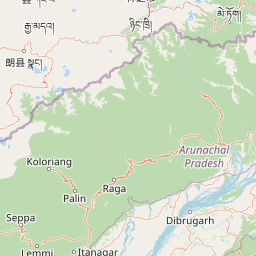
Why Kane Wildlife Sanctuary stands out
Kane Wildlife Sanctuary is best known for the combination of tropical evergreen and temperate broadleaf mixed forests within a relatively compact protected area on the eastern Himalayan foothills. This habitat diversity supports a rich mammal community, including Indian elephants, Bengal tigers, gaur, Asiatic black bears, and smaller mammals like the slow loris and mouse deer, along with primates such as the rhesus macaque and capped langur. The sanctuary is also recognized for its birdlife, with more than 70 recorded species including the white-bellied heron, white-winged duck, rufous-necked hornbill, dark-rumped swift, beautiful sibia, and broad-billed warbler. These species give the sanctuary particular value for birdwatching and for conservation of Eastern Himalayan avifauna.
Kane Wildlife Sanctuary history and protected-area timeline
Kane Wildlife Sanctuary was formally established as a protected area in 1991, joining the network of wildlife sanctuaries that distinguish Arunachal Pradesh's conservation framework. Its creation occurred during a period when the ecological significance of the state's forests was being increasingly recognized by conservation authorities in India. The sanctuary has since functioned as a refuge for forest habitat in the West Siang district, contributing to the protection of the region's diverse mammal, bird, and reptile populations.
Kane Wildlife Sanctuary landscape and geographic character
Kane Wildlife Sanctuary occupies a tract of forested terrain in the West Siang district of Arunachal Pradesh, situated within the eastern Himalayan foothills. The relief of the region includes valley systems and sloping forested hills, with the sanctuary itself encompassing an area of 31 square kilometers.
The most important landscape feature of the sanctuary is the transition between two major forest types: tropical evergreen forest, typically associated with warmer and more humid microclimates, and temperate broadleaf mixed forest, which occupies cooler, higher-elevation zones. This mosaic of forest types, shaped by elevation, moisture, and substrate, gives the sanctuary a varied physical environment that ranges from dense evergreen stands to more open mixed broadleaf cover. The terrain is part of the broader watershed and forested catchment landscape that defines much of Arunachal Pradesh.
Kane Wildlife Sanctuary ecosystems, habitats, and plant life
The ecological character of Kane Wildlife Sanctuary is defined by its mix of tropical evergreen and temperate broadleaf mixed forests. This habitat combination is significant because it brings together species normally separated by elevation and climate into a single protected landscape. Tropical evergreen forest provides dense, multi-layered canopy cover, while temperate broadleaf mixed forest offers more seasonal variation in canopy composition and understory structure.
Together, these forests support a wide range of ecological niches, from canopy-dwelling birds and primates to ground-level herbivores and large predators. The rich plant cover also provides habitat for reptiles, including large snake species such as the king cobra, Indian python, and reticulated python. The combination of stable forest cover, low human disturbance within the protected boundary, and habitat heterogeneity gives the sanctuary a meaningful ecological role within the broader Arunachal Pradesh landscape.
Kane Wildlife Sanctuary wildlife and species highlights
Kane Wildlife Sanctuary is notable for the breadth of its mammal community, which includes some of the most charismatic species of the Eastern Himalayas. Indian elephants and Bengal tigers represent large herbivore and predator components of the ecosystem, while gaur, the largest of India's wild bovines, and the Asiatic black bear add further diversity among large mammals. The Himalayan serow, a goat-antelope typical of steep forested terrain, extends the range of ungulates present in the sanctuary.
Smaller and more elusive mammals also occur, including the slow loris, a nocturnal primate, and the mouse deer, one of the smallest ungulates in Asia. Primates are represented by the rhesus macaque and the capped langur, both of which are characteristic of forested habitats in northeastern India. Various antelope species further supplement the herbivore community.
The sanctuary's birdlife is particularly noteworthy, with more than 70 recorded species. Among them are several species of conservation and regional interest, including the white-bellied heron, one of the rarest herons in the world; the white-winged duck, a threatened species associated with forested river systems; the rufous-necked hornbill, an indicator of mature tropical forest in the Eastern Himalayas; and passerines such as the dark-rumped swift, beautiful sibia, and broad-billed warbler.
Reptiles add another layer of biodiversity. The presence of king cobra, Indian python, and reticulated python suggests that the sanctuary retains the kind of large, undisturbed forest patches and prey bases needed to support these wide-ranging snake species.
Kane Wildlife Sanctuary conservation status and protection priorities
As a wildlife sanctuary declared in 1991, Kane Wildlife Sanctuary plays a role in the conservation of Eastern Himalayan biodiversity within Arunachal Pradesh. Its protected status helps safeguard a mosaic of tropical evergreen and temperate broadleaf forest, habitats that have been subject to broader pressures from logging, shifting cultivation, and infrastructure development in parts of northeastern India.
The sanctuary's significance is heightened by the presence of threatened and range-restricted species such as the white-bellied heron, white-winged duck, and rufous-necked hornbill, as well as large mammals like the Bengal tiger and Asian elephant, which require extensive, well-connected forest for long-term survival. By protecting both lower-elevation evergreen forest and higher temperate forest, the sanctuary contributes to maintaining habitat heterogeneity and ecological connectivity at a regional scale. Its inclusion in Arunachal Pradesh's protected-area network supports broader conservation goals for the state's wildlife heritage.
Top sights and standout views in Kane Wildlife Sanctuary
Kane Wildlife Sanctuary stands out for the unusual proximity of tropical evergreen and temperate broadleaf mixed forest within a single 31-square-kilometer reserve. It supports an unusually rich mammal list for its size, including Indian elephant, Bengal tiger, gaur, Asiatic black bear, Himalayan serow, slow loris, mouse deer, capped langur, and rhesus macaque.
Its bird diversity, with more than 70 species and the presence of sought-after species such as the white-bellied heron, white-winged duck, and rufous-necked hornbill, gives the sanctuary particular value for Eastern Himalayan birdwatching. The combination of large mammal presence, rare avifauna, and intact forest cover makes Kane a meaningful, though compact, component of Arunachal Pradesh's protected-area network.
Best time to visit Kane Wildlife Sanctuary
The best time to experience Kane Wildlife Sanctuary is generally during the cooler and drier months when forest paths are more accessible and the weather supports longer periods of outdoor activity. In the eastern Himalayan foothills, winter and early spring often bring clearer skies and better viewing conditions for forest wildlife and birds. The warmer months can be lush and rewarding for seeing active forest layers, though heavier seasonal rainfall in the region can make travel more difficult. Visitors interested in birdwatching may find the cooler season particularly productive, when many resident forest species are easier to observe.