Why Karower Teiche stands out
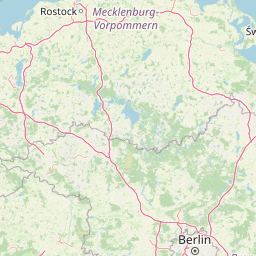
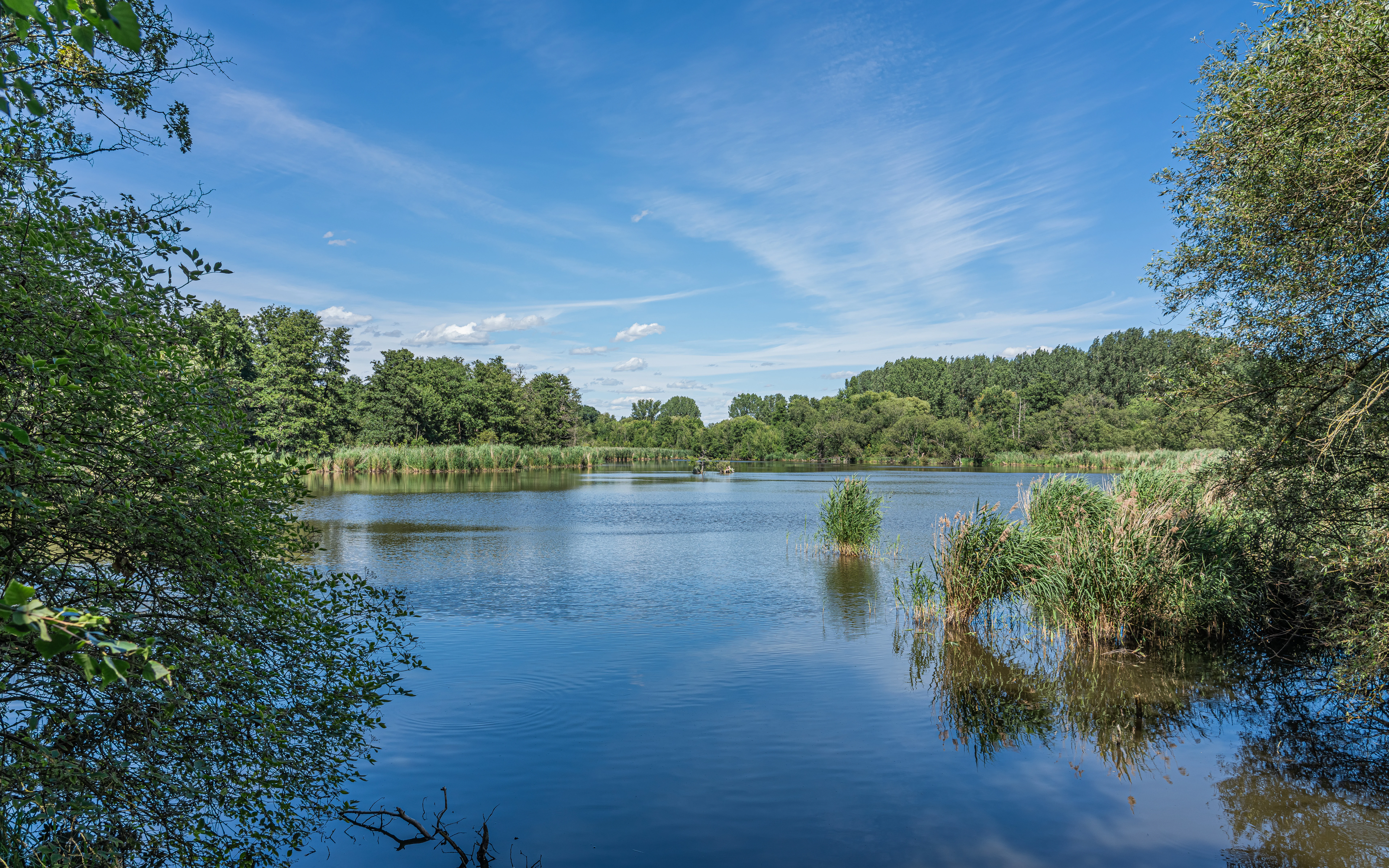
Karower Teiche is best known for its four interconnected shallow ponds and their surrounding reedbeds, which together form one of the most significant amphibian breeding areas and waterbird refuges within the city of Berlin. The reserve combines open water, emergent vegetation, wet meadows, and semi-open ruderal landscapes in a compact urban setting. The site is particularly valued for breeding and resting ducks, reed-specialist birds such as bitterns and bearded tits, and large amphibian populations that cross surrounding roads through dedicated toad tunnels. The mosaic of ponds, fens, scrub, and recovering forest makes it a textbook example of how a heavily manipulated urban landscape can be reclaimed for wildlife.
Karower Teiche history and protected-area timeline
The landscape of Karower Teiche originated after the last ice age, when meltwater from the Barnim plateau cut channels through glacial sands as deep as ten meters. Over time these channels silted up, forming lowland fens that were gradually shaped by human activity. In the nineteenth century the Panke and the Lietzengraben were straightened, and peat cutting began, producing the Inselteich in the northwest and the Weidenteich in the southwest.
Significant transformation came with the development of Berlin's sewage irrigation system. Between 1890 and 1898 the Berliner Rieselgüter (Berlin sewage estates) were established in nearby Blankenfelde and Buch, and the Karower area became part of the Rieselfeld irrigation landscape, with the ponds used for clarifying or directly receiving wastewater. By the 1920s pollution levels had risen so high that fish farming had to be abandoned, and in 1980 the inflow from the Lietzengraben was blocked. The resulting reliance on rainfall and groundwater caused water levels to drop, and when irrigation farming finally stopped in 1985 some ponds temporarily dried out. To save the wetlands, the Lietzengraben was dammed in 1986 so a partial flow again fed the ponds.
Bird recording began in the mid 1960s under the work of the local nature society in Pankow, and in 1984 the East Berlin administration decided to convert large parts of the former sewage fields into recreational forests, including the Karower site, ahead of Berlin's 750th anniversary celebrations. Heavy metal contamination in the soils and poor tree species selection meant most plantings failed. After reunification the focus shifted decisively toward conservation: formal nature reserve protection followed on 20 June 1994, with an additional care and development plan adopted in 1997. Since then, treated water inflow from the Schönerlinde treatment plant has improved the water balance, and the ongoing challenge of nutrient-rich sapropel sediment remains an open management issue.
Karower Teiche landscape and geographic character
Karower Teiche occupies a transitional zone between the Barnim plateau to the north and the broad Berlin glacial valley (Berliner Urstromtal) to the south. The reserve sits on late glacial sand deposits, locally up to about ten meters thick, which were incised by the Panke and Lietzengraben streams after the Weichselian glaciation. Today this geological setting produces a flat to gently undulating terrain below 60 meters in elevation, where former meltwater channels now appear as chains of ponds and fens.
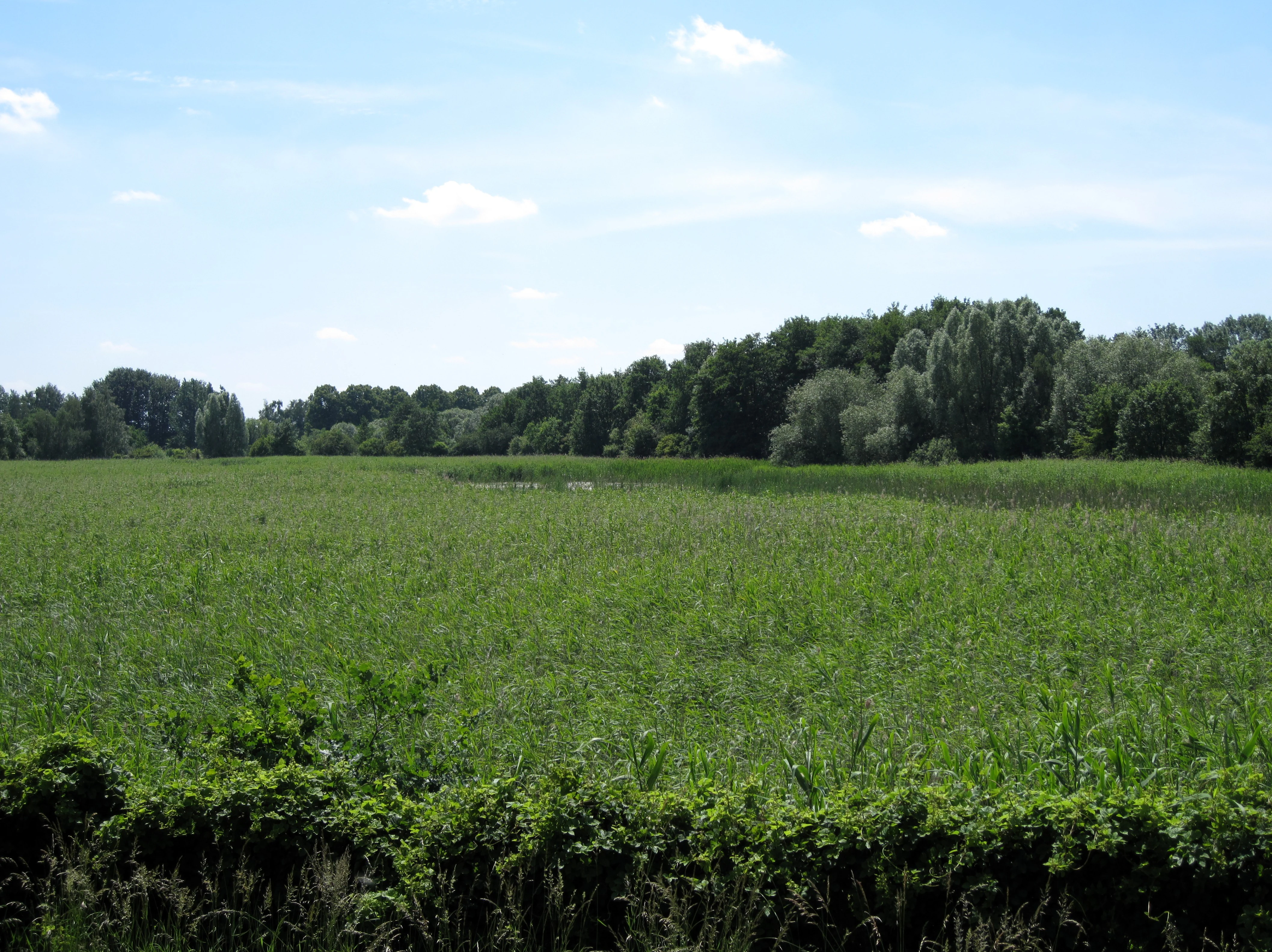
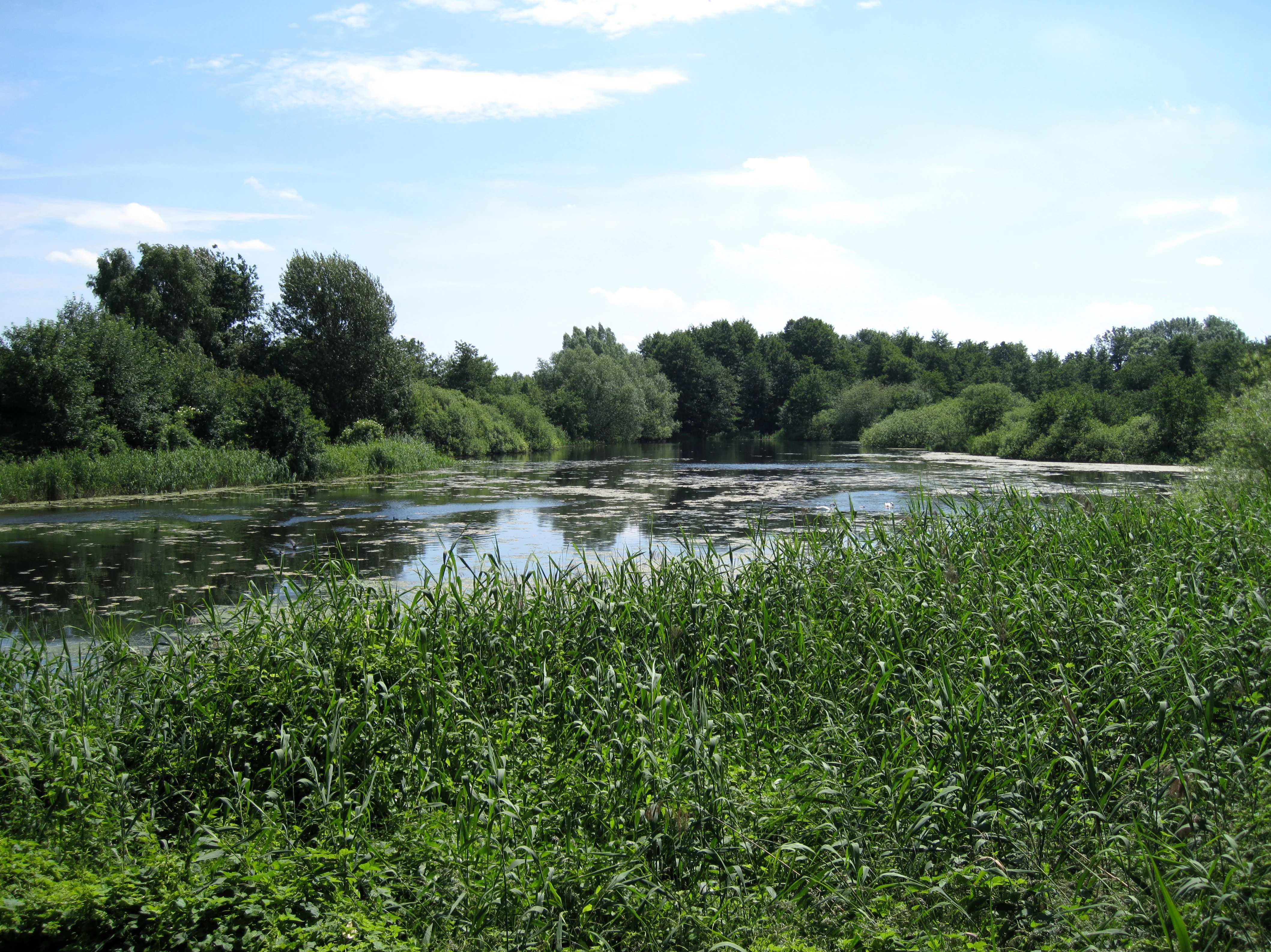
The four ponds together cover roughly 14.6 hectares but are only about a meter deep on average, giving the site a strikingly open and shallow character. East of the reserve the Panke forms a natural boundary, while the south, west, and north are framed by roads and the A10 motorway embankment. Despite being fully surrounded by urban infrastructure, the reserve retains the tranquil feel of a lowland wetland landscape, with open water, reed-lined shores, scrub, and recovering woodland visible from the perimeter trail.
Karower Teiche ecosystems, habitats, and plant life
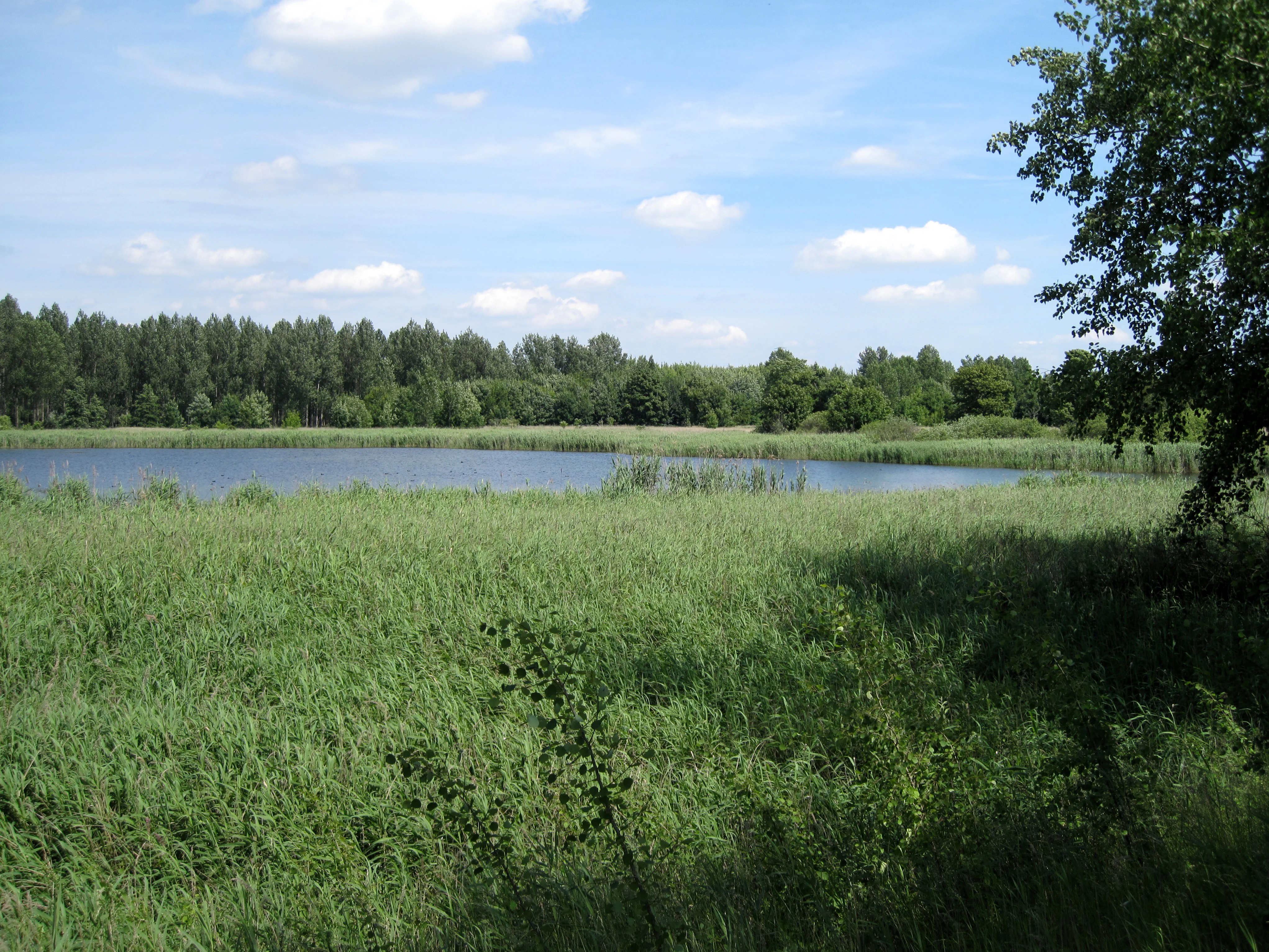
The ecological core of Karower Teiche is its combination of open shallow water with extensive reedbeds of broadleaf cattail, common reed, and water grass (sweet grass). These are fringed by characteristic high-stamen wet and dry communities, including hedge bindweed, common hemp agrimony, cuckoo flower, marsh marigold, marsh sow thistle, meadow sorrel, and meadow foam cress, giving the reserve considerable botanical variety.
Around the ponds and especially near the western water bodies, wet and waterlogged ground supports alder stands, gray willow scrub, and alder swamp forests, while on the formerly irrigated sewage-field parcels, semi-dry grasslands of couch grass and windhalm have developed alongside increasingly rich false oat meadows. The regeneration areas present a mosaic of small groves of native and fruit trees, hedges, tall herbs, and meadows; only north-east of the Ententeich has a cohesive woodland re-established, containing a mix of locally appropriate sessile oak and non-native ash maple and poplar hybrids. As of mid 2009, 334 wild plant species had been documented, including 44 species listed on Berlin's Red List.
Karower Teiche wildlife and species highlights
Karower Teiche is renowned for its birdlife: the reserve hosts 90 of Berlin's 151 regularly breeding bird species, including many threatened taxa. Waterbirds and reed specialists are particularly well represented, with breeding or resting populations of bearded reedling, shoveler, ferruginous duck, garganey, common pochard, greylag goose, mute swan, bittern, little bittern, reed warblers, marsh harrier, great crested grebe, red-necked grebe, little grebe, spotted crake, and water rail. Penduline tits nest in waterside trees, while thousands of swallows and starlings use the reedbeds as a late summer roost during migration. Semi-open areas host various raptors, red-backed shrikes, and barred warblers, and dry embankments along the Bucher Straße support common tree pipit, garden warbler, and golden oriole.
The ponds are equally important for amphibians, with Karower Teiche recognized as a breeding site of regional significance. Common toad (with up to 2,500 individuals during the breeding season), garlic toad, natterjack toad, common frog, moor frog (with a small population of 20 to 50 individuals), and pool frog all occur regularly, supported by toad tunnels under the Pankgrafenstraße. Reptile presence is more modest but includes regular grass snake and sand lizard sightings, the latter favored by dry slopes and blackberry scrub. The reserve also supports a rich dragonfly fauna of at least 22 recorded species, including banded demoiselle, common winter damselfly, emperor dragonfly, and migrant hawker, and the Weidenteich is the most important nursery for dragonfly larvae.
Karower Teiche conservation status and protection priorities
Karower Teiche holds formal protected-area status as a Berlin Naturschutzgebiet (officially designated NSG 21), classified within the IUCN framework as a Category IV Habitat and Species Management Area. Its conservation significance lies primarily in preserving a functioning wetland complex, including shallow ponds, reedbeds, and fens, within one of the most heavily built-up cities in Europe. The reserve is integral to the Naturpark Barnim and supports waterbird and amphibian populations that are increasingly rare across the surrounding region.
Management history reflects the broader European story of recovering urban industrial wetlands. Protection in 1994 followed decades of peat digging, fish farming, and sewage irrigation; subsequent restoration, including restoring stream inflow from the Lietzengraben, replanting site-native trees in buffer zones, and accepting treated wastewater from the Schönerlinde plant, has slowly improved water quality and habitat structure. Konik horses are used as part of the conservation grazing program to maintain the open character of the landscape. Despite these efforts, the reserve still faces unresolved ecological challenges, particularly the buildup of nutrient-rich sapropel sediment and the legacy contamination of soils.
Karower Teiche cultural meaning and human context
Although Karower Teiche is primarily valued as a natural refuge, its identity is closely tied to the layered cultural and industrial landscape of northeastern Berlin. The area's peat cutting, fish farming, and role within the Berliner Rieselgüter sewage irrigation system mark it as a product of more than a century of urban resource use. Surrounding localities, Französisch Buchholz to the south, Buch to the north, and the nearby Karow district, give the reserve its name and connect it to a long tradition of rural villages that were absorbed into greater Berlin through twentieth century administrative expansions.
Bird monitoring partnerships dating back to the 1960s and continued through East German conservation groups laid the foundation for the site's eventual protection and reflect a strong local civic engagement with nature. The reserve also fits into Berlin's larger network of pedestrian and cycling routes, including the Berlin–Usedom long-distance cycle path and the Barnimer Dörferweg, integrating the area into regional recreation and outdoor culture.
Top sights and standout views in Karower Teiche
Karower Teiche's main appeal lies in its combination of four shallow ponds surrounded by dense reedbelts and recovering wetland habitats, all within an easy walk of Berlin-Karow station. The reserve is one of the city's most important sites for waterbirds, reed-specialist birds, dragonflies, and amphibians, including large breeding populations of common toad and several rare ducks and grebes.
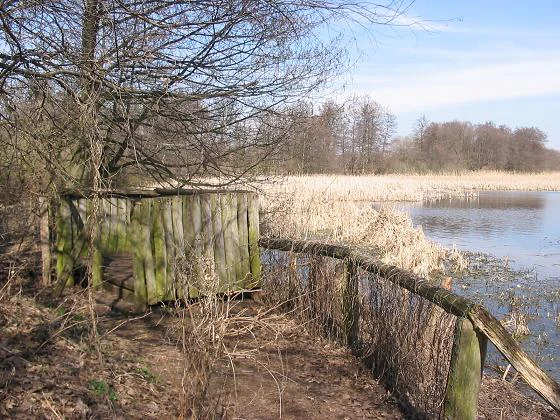
Quiet viewing platforms along the perimeter trail allow visitors to observe wildlife without disturbing it, while the surrounding Pankeweg and Barnimer Dörferweg trails link the reserve to the broader Naturpark Barnim landscape. The use of Konik horses for conservation grazing and the ongoing transformation of former sewage fields into biodiverse open country make Karower Teiche a striking example of urban wetland restoration.
Best time to visit Karower Teiche
Karower Teiche can be visited year-round, but the reserve is at its most lively during the warmer months. Late spring and early summer are the prime period for amphibian activity, when large numbers of common toads and other frogs move toward the breeding ponds and can sometimes be observed near the toad tunnels along the Pankgrafenstraße. Late summer brings large flocks of swallows and starlings using the reedbeds as roosting sites during migration.
Late autumn and winter deliver their own appeal, with ducks, grebes, and swans gathering on the open water and occasional sightings of black stork and great egret when water levels are low. Bird activity is generally easier to observe during the cooler months because foliage is reduced, and the open semi-open landscape offers long sightlines from the viewing platforms.