
Why Kiskatinaw Provincial Park stands out
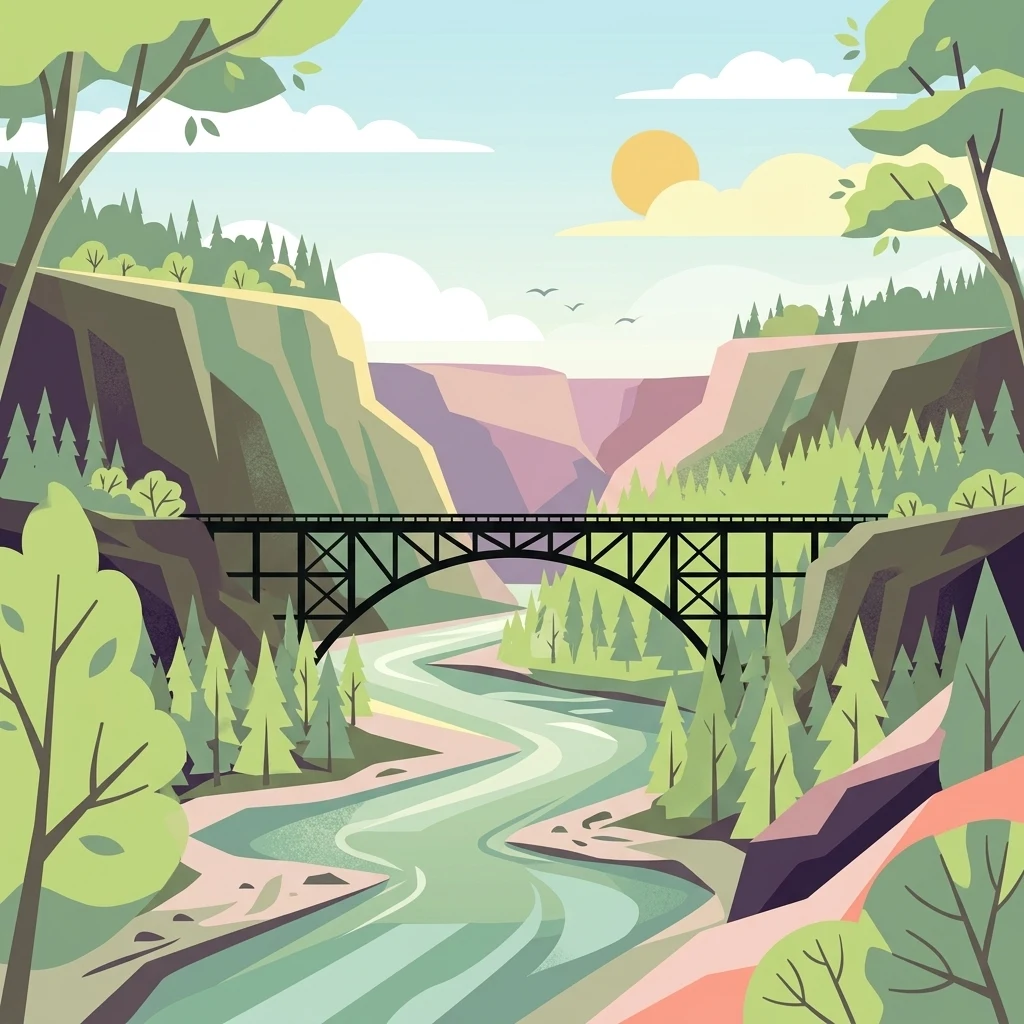
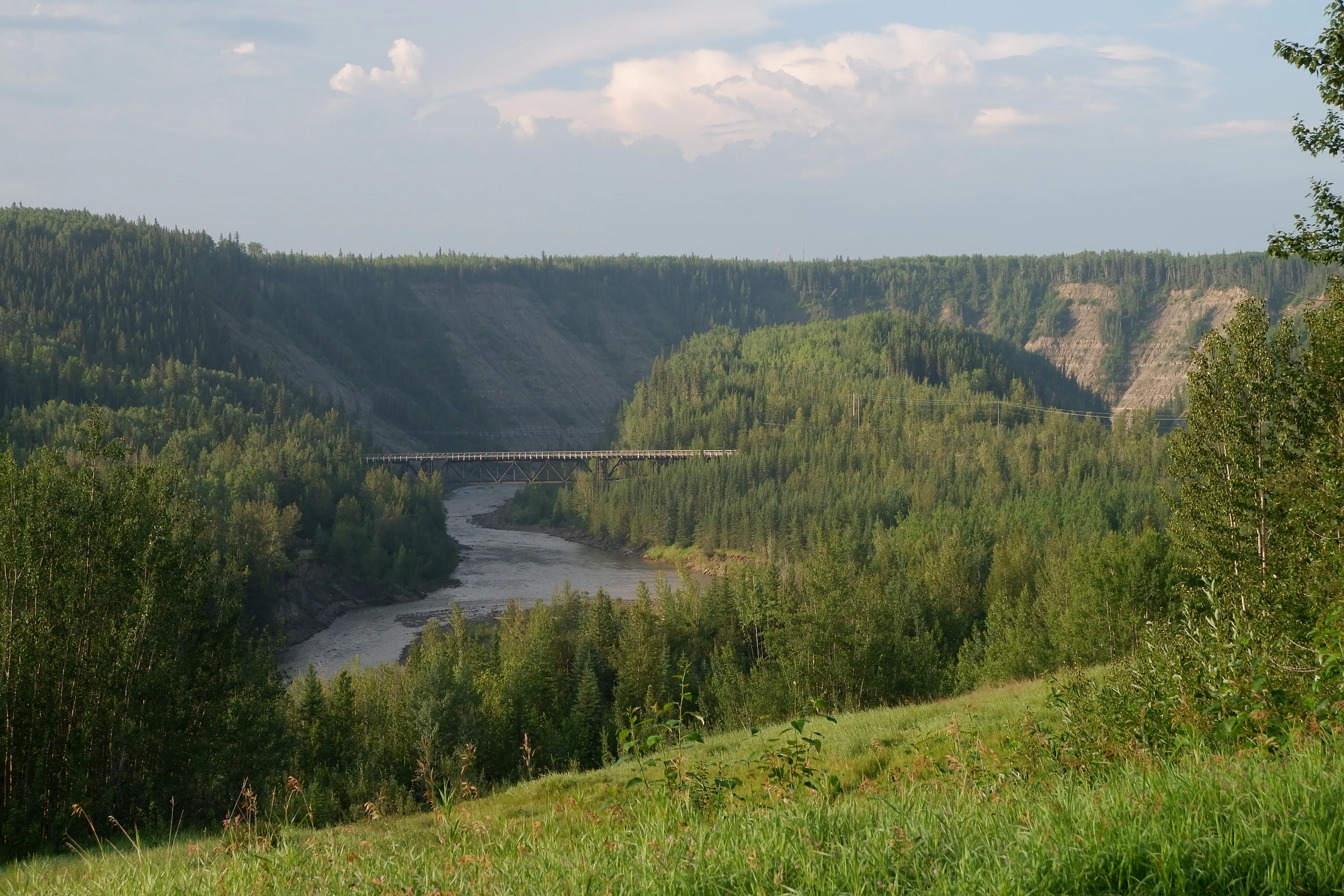
Kiskatinaw Provincial Park is best known for the dramatic horseshoe-shaped incised meander of the Kiskatinaw River, a deep, looping bend that frames the landscape and offers one of the most photographed river views along the historic Alaska Highway route. The river's sharp curve is the geological centerpiece of the park and the reason the surrounding area was set aside for protection. Equally notable is the Kiskatinaw Bridge itself: a curved, banked wooden trestle bridge built in 1942, which today stands as the only surviving example of this design in Western Canada. Together, the carved river bend and the wartime wooden bridge form the park's unmistakable visual and historical signature.
Kiskatinaw Provincial Park history and protected-area timeline
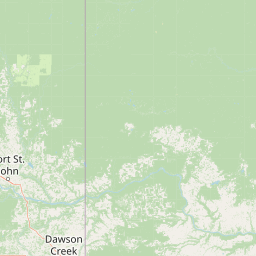
Kiskatinaw Provincial Park is closely tied to one of the most consequential infrastructure projects of the Second World War in northern North America: the construction of the Alaska Highway. After the Japanese attack on Pearl Harbor in December 1941, Canada and the United States moved quickly to build a road that would connect the U.S. territory of Alaska with the rest of the continent. The rugged terrain of northeastern British Columbia proved one of the most demanding sections of the route, particularly where the highway needed to cross a deep, looping bend of the Kiskatinaw River.
To overcome the incised meander, engineers designed and constructed a curved, banked wooden trestle bridge across the river bend. The bridge was completed in only nine months during 1942, measuring nearly 58 metres in length and incorporating a nine-degree curve that allowed the original road to maintain its chosen path along the rim of the canyon. The structure became one of the memorable features of the wartime highway.
In 1962, recognizing both the unusual geological formation and the cultural significance of the bridge, the British Columbia government formally established Kiskatinaw Provincial Park. By the late 1970s, however, the wooden bridge had been in service for more than three decades, and in 1978 the Ministry of Highways and Public Works built a replacement bridge three kilometres to the west, realigning the Alaska Highway onto a straighter, more modern route. Rather than dismantling the original crossing, authorities preserved it, and it continues to function as a vehicular and pedestrian route for visitors to the park. Today it stands as the only surviving curved, banked trestle bridge in Western Canada, giving the park a heritage dimension that goes well beyond its modest footprint.
Kiskatinaw Provincial Park landscape and geographic character
The landscape of Kiskatinaw Provincial Park is defined overwhelmingly by the horseshoe-shaped incised meander of the Kiskatinaw River. The river follows a tight, looping path that has been cut deeply into the surrounding terrain, producing steep, curving valley walls and an unusually sinuous canyon form. From the higher ground of the park, the gorge presents a sweeping view of forested slopes, exposed rock faces, and the silvery curve of the river far below, making it the most visually arresting feature in the landscape.
Around the canyon rim, the terrain transitions into the broader Peace River Country: a mix of gentle relief, mixed forest stands, and small interior drainage patterns typical of northeastern British Columbia. The canyon walls and the forested plateau above give the park a layered visual character, with close-up views of the river bend available from viewpoints and bridges, and longer views opening out across the surrounding woodland.
Kiskatinaw Provincial Park ecosystems, habitats, and plant life
The park's natural setting is shaped by the forested plateau and the sheltered microclimate of the river canyon. Dominant tree species include balsam poplar, white spruce, and trembling aspen, which together create a mixed boreal-style woodland typical of the Peace River region. The combination of river margin, canyon walls, and adjacent upland forest gives the site a compact but varied vegetative texture for such a small protected area.
The river itself acts as an ecological anchor, influencing moisture levels, soil conditions, and the kinds of vegetation that thrive along its banks. This, in turn, shapes the wildlife patterns observed around the park, with moose and deer sometimes drawn to the river corridor and surrounding forest, while smaller mammals and songbirds occupy the mixed woodland and campsite edges.
Kiskatinaw Provincial Park wildlife and species highlights
Wildlife viewing at Kiskatinaw Provincial Park reflects the broader character of the Peace River Country's mixed boreal forest. Moose and deer are reported in the vicinity of the campground area, where the combination of forest cover and proximity to the Kiskatinaw River makes the habitat attractive to larger ungulates. These are intermittent and patchy sightings rather than guaranteed encounters, but they form part of the park's everyday wildlife character.
Smaller mammals such as squirrels and chipmunks are more commonly seen, along with a range of songbirds that inhabit the poplar, spruce, and aspen stands of the park. The river corridor and canyon edges provide additional habitat complexity, supporting the kinds of birdlife typical of riverine woodlands in this part of British Columbia. For a small park, wildlife observation tends to be incidental rather than the primary reason for visiting, but it remains a recognizable presence throughout the campground and bridge viewpoints.
Kiskatinaw Provincial Park conservation status and protection priorities
Kiskatinaw Provincial Park was established primarily to safeguard a distinctive geological formation rather than to conserve a specific ecological community. The horseshoe-shaped incised meander of the Kiskatinaw River is the central conservation feature, representing a textbook example of an entrenched river meander that illustrates long-term river erosion processes in the Peace River drainage.
In addition to its geological value, the park preserves an intact example of an early Alaska Highway alignment together with the original curved wooden trestle bridge. Protection of this cultural and engineering heritage complements the natural values of the site, giving the park a combined geoheritage and transportation heritage profile that makes it a recognized roadside interpretive landscape along the historic Alaska Highway corridor.
Kiskatinaw Provincial Park cultural meaning and human context
The park carries cultural significance largely through its connection to the Alaska Highway and the broader story of wartime road-building in northern North America. The Kiskatinaw Bridge stands as an artifact of the urgent infrastructure response following the 1941 attack on Pearl Harbor, when Canada and the United States forged a road through difficult terrain to link Alaska with the southern road network. For many travelers and historians of the highway, the bridge remains an iconic symbol of that effort.
Top sights and standout views in Kiskatinaw Provincial Park
The defining highlights of Kiskatinaw Provincial Park are deeply concentrated around a single dramatic landscape and a single historic structure. The horseshoe-shaped incised meander of the Kiskatinaw River provides one of the most striking roadside river views in northeastern British Columbia, while the adjacent Kiskatinaw Bridge, a curved wooden trestle built in just nine months in 1942, anchors the park's heritage identity as the only surviving example of its design type in Western Canada.
Together, these highlights give the park a compact but distinctive profile: a place where a textbook example of river geomorphology meets one of the most photographed artifacts of the original Alaska Highway route, all accessible from a small campground on the rim of the canyon.
Best time to visit Kiskatinaw Provincial Park
The character of a visit to Kiskatinaw Provincial Park changes with the seasonal rhythm of the Peace River Country. Summer is the most accommodating period, when warm temperatures, long daylight hours, and accessible roads make the campground and bridge viewpoints easy to reach, and when the boreal mix of poplar, spruce, and aspen is in full leaf. Wildlife around the campsite, including songbirds and the occasional moose or deer, tends to be most active in these warmer months.
Shoulder-season visits in late spring and early autumn can also be rewarding, when milder weather still allows camping and the river gorge and bridge scenery takes on a quieter atmosphere. The winter context, dominated by snow and freezing temperatures, transforms the park into a much harsher environment in which the bridge's wooden structure becomes especially prominent against the white landscape, though conditions make it primarily a pass-through rather than a camping destination.