
Why Koppe Nature Reserve stands out
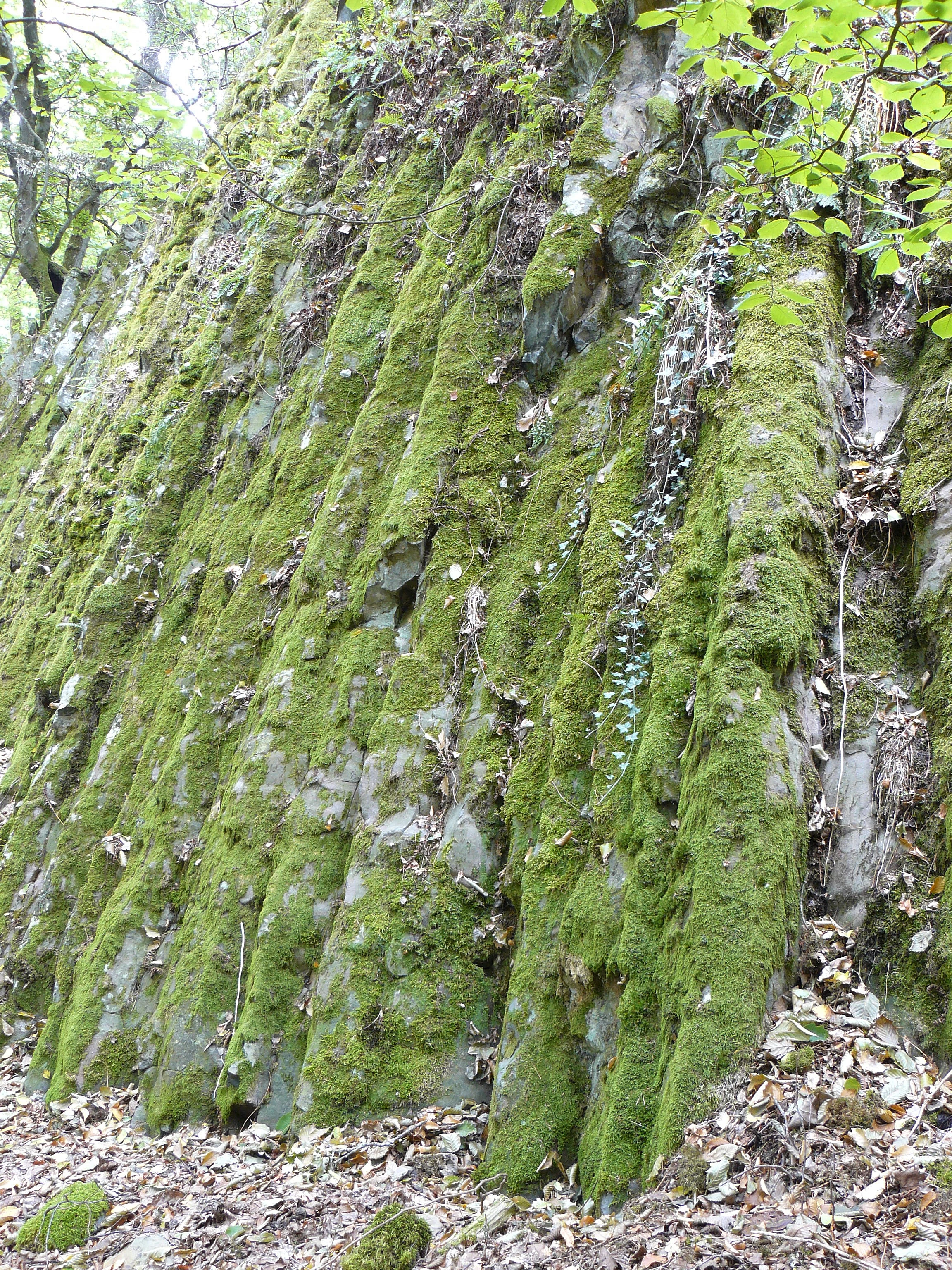
Koppe is best known as a protected basalt hill, where formerly quarried slopes near the summit reveal unusually well-formed basalt columns. It is also recognized for the transition between summit beech forest and southern heath-like woodland communities of pine, birch, and juniper.
Koppe Nature Reserve history and protected-area timeline
The Koppe was first placed under formal protection on 12 February 1931, when its entire cone was designated as a nature reserve in the then-Prussian administrative structure of the region. The early recognition reflected both the unusual basalt exposures near the summit and the distinctive mix of beech forest and heath-like marginal woodland on the hill.
The protected status of the area was explicitly reaffirmed and updated on 24 August 1976, modernizing the original designation to fit the post-war German nature conservation framework. This confirmation ensured continued legal protection of the woodland habitats, the basalt outcrops, and the wooded edges where juniper, birch, and pine still define a more open vegetation character.
Beyond its conservation history, the hill also carries a history of small-scale quarrying. The two former quarries near the summit, now abandoned, are exactly what has produced the present-day exposures of columnar basalt. Those exposures are what made the hill a recognized point of interest within the broader Geopark Westerwald-Lahn-Taunus initiative linking natural and cultural geological heritage across central-western Germany.
Koppe Nature Reserve landscape and geographic character
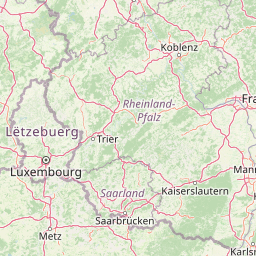
Koppe sits in the southwestern edge of the Hörre, a low ridge of forested hills in central Hesse that separates the Dill valley from neighboring lowlands. Its summit takes the form of a clearly defined cone, which is unusual enough within this gently undulating landscape to make the hill locally prominent and visually distinctive.
The hill's immediate surroundings blend wooded slopes with the open valleys around Kölschhausen to the east and Ehringshausen to the south. From wider vantage points that once existed, the views reached southward toward the eastern Taunus and southwestward toward Daubhausen, but closure of the surrounding forest canopy has significantly narrowed today's vistas.
The most visually distinctive landscape feature is geological rather than scenic: the basalt columns exposed in the old quarry faces near the top of the hill. Their regularity makes the site a compact but striking landscape element within the regional Geopark Westerwald-Lahn-Taunus, and they contrast strongly with the softer, more uniformly forested hills of the broader Hörre.
Koppe Nature Reserve ecosystems, habitats, and plant life
Ecologically, the hill functions as a small but well-defined habitat mosaic. The summit and the more sheltered upper slopes are clothed in beech forest, giving the upper cone a closed, temperate woodland character typical of central Hessian hill forests.
The southern and eastern forest edges of the hill take on a markedly different, more open structure. Here the canopy thins out into a heath-like community in which pines, birches, and junipers combine to form a transition between dense woodland and the more open land south of the cone. This marginal habitat is one of the defining natural qualities of the reserve.
Together these zones give the hill a compact contrast between high-canopy beech forest and sun-exposed, juniper-influenced woodland margins, making it an unusually expressive small-scale ecological site within the regional network of protected areas.
Koppe Nature Reserve conservation status and protection priorities
As a nature reserve, Koppe represents one of the older entries in the protected-area network of the Lahn-Dill district, having been first designated by ordinance on 12 February 1931 and confirmed again in 1976. Its long-standing protection reflects a recognition that even small hills can carry both unusual geology and ecologically valuable habitat transitions.
The conservation value of the site rests on two complementary elements. The wooded summit preserves beech forest under a regime of formal protection that has limited disturbance over many decades, while the southern and eastern margins maintain a lighter, heath-like vegetation that depends on continued protection to resist scrub encroachment and canopy closure.
The exposed basalt columns in the old quarries add a separate, geological dimension to the reserve's conservation importance. By being included as a recognized point of interest within the Geopark Westerwald-Lahn-Taunus, the hill sits at the intersection of ecological and geoscientific protection, illustrating how a compact protected area can combine habitat and geological heritage in a single site.
Top sights and standout views in Koppe Nature Reserve
Among the strongest points of interest within the reserve are the exposed columnar basalt formations near the summit, the well-defined transition between beech forest and juniper-pine-birch heath edges, and the hill's place within both Hessen's protected-area network and the larger Geopark Westerwald-Lahn-Taunus.
Best time to visit Koppe Nature Reserve
The nature reserve is easiest to appreciate on foot and is most rewarding in the warmer months, when the heath-like southern and eastern slopes of pine, birch, and juniper are at their most visible and when walking the surrounding trails is most comfortable. The hill is part of the regional hiking network, including the long-distance Hörre trail between Herborn and Edingen, so late spring through autumn is generally the most suitable window for a visit focused on landscape and geology rather than on views, which are now largely closed by forest growth.