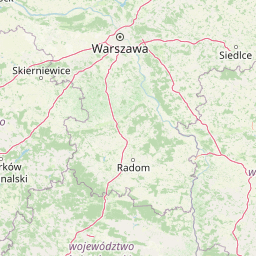
Why Łąka w Bęczkowicach stands out
Łąka w Bęczkowicach is best known for its population of the fen orchid Liparis loeselii, a rare European orchid that is strictly protected under Annex II of the EU Habitats Directive. The site is recognized as one of the more important Polish strongholds for this species. It is also valued for the combination of peat-forming wetland habitats, relict willow thickets along the Luciąża River, and the presence of European otters, making it a small but ecologically rich area within the national Natura 2000 framework.
Łąka w Bęczkowicach history and protected-area timeline
Until the mid-1980s, the Łąka w Bęczkowicach area was maintained as active agricultural land, used for haymaking and grazing, and had earlier been a site of small-scale peat extraction. Peat cutting locally ceased in the 1950s, and agricultural use of the meadows was abandoned at least a decade before the site's ecological designation.
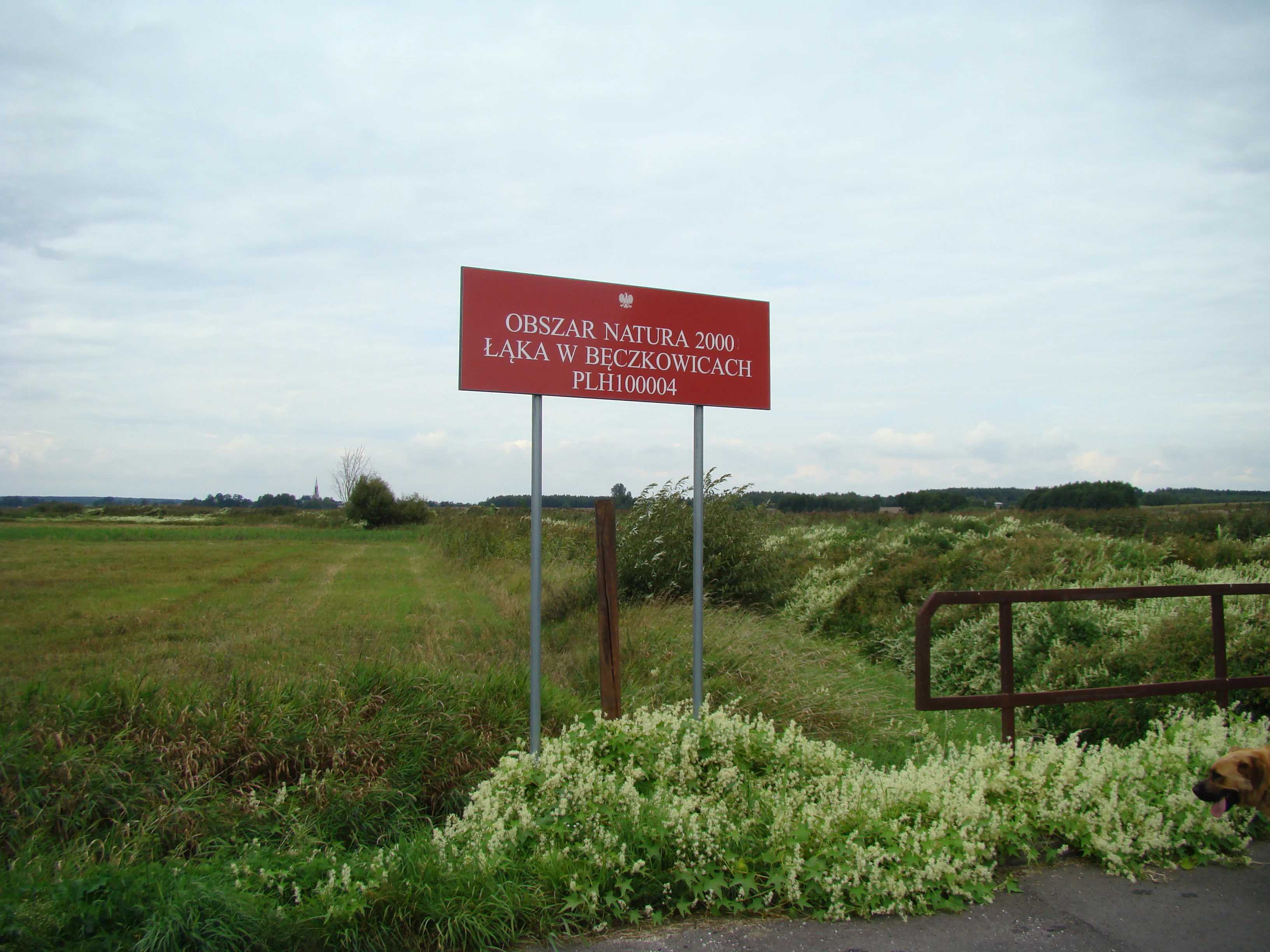
The site was formally recognized in 2008 when it was confirmed as a Site of Community Importance within the Natura 2000 network under the European Habitats Directive, with the site code PLH100004. Its inclusion reflected the increasing recognition of the area's habitat value, especially after traditional use ended and the peatlands began to be dominated by characteristic wetland vegetation rather than crops or pasture.
Since designation, the conservation focus has shifted toward maintaining the site's hydrological balance, controlling the spread of willow thickets that develop when mowing and grazing stop, and preventing any resumption of unauthorized peat extraction.
Łąka w Bęczkowicach landscape and geographic character
The landscape of Łąka w Bęczkowicach is shaped by its location in the Wzgórza Radomszczańskie mesoregion, an area of modest, rolling hills typical of central Poland. Within this broader setting, the protected area itself is low-lying and dominated by wetland features rather than upland relief.
The site consists of open peat meadows developed on former peat extraction grounds, fringed along one side by about 500 meters of the left bank of the Luciąża River. The river margin is lined with willow-dominated scrub, which frames the meadow in places and contributes to the site's sheltered, humid character.
Drainage ditches crisscross parts of the meadow, a legacy of past land management and peat working, but the overall hydrology of the peatland remains relatively intact. The result is a flat to gently undulating wetland landscape that contrasts with the surrounding agricultural countryside of central Poland and gives the site its distinctive ecological identity.
Łąka w Bęczkowicach ecosystems, habitats, and plant life
Łąka w Bęczkowicach is defined by its peatland and riparian ecosystems rather than by forest or upland habitats. The combination of open peat meadows, riverbank willow thickets, and small-scale wetland mosaics produces an unusually rich microhabitat structure for a site of its size.
Five habitat types from Annex I of the European Habitats Directive have been documented here, underlining the site's ecological diversity within a compact area. The peat-forming vegetation of the meadows supports specialized plant communities adapted to waterlogged, nutrient-poor conditions, while the riverbank and scrub zones provide structural variety and transitional habitats.
The site's ecological value rests on the persistence of these habitat mosaics despite the historical disturbances of peat cutting and grazing, and despite ongoing drainage pressures. The current hydrological balance is close enough to natural conditions for characteristic wetland flora and fauna to survive, making the area an important reference site for lowland peat meadow conservation in this part of Poland.
Łąka w Bęczkowicach wildlife and species highlights
The wildlife profile of Łąka w Bęczkowicach is dominated by wetland and riverine species, with particular importance placed on mammals associated with the Luciąża River corridor. The European otter is recorded within the site and listed under Annex II of the Habitats Directive, reflecting the area's continuing value for this semi-aquatic predator.
The Eurasian beaver is also documented as a protected species here, consistent with the wider recovery of beaver populations across many Polish river systems. Together, otters and beavers indicate an active and relatively healthy river ecosystem, even though the protected area itself is comparatively small.
Invertebrate and birdlife supported by the wetland meadows and willow scrub are typical of central European lowland marsh and river-edge habitats, although specific details for these groups are not documented in the available source material.
Łąka w Bęczkowicach conservation status and protection priorities
Łąka w Bęczkowicach plays a focused but meaningful role in the European Natura 2000 network as one of many Polish Sites of Community Importance dedicated to specific habitat types and species rather than to large-scale landscape protection. Its conservation importance is tied closely to its population of Liparis loeselii, a fen orchid of high European concern, and to the wetland conditions that sustain it.
The site also contributes to broader conservation objectives by protecting representative examples of five Annex I habitats and by maintaining habitat for otter, a species widely regarded as a useful indicator of healthy river and wetland ecosystems. The presence of multiple Annex II species within a relatively small area increases its relative conservation weight within the national Natura 2000 portfolio.
Conservation management concerns identified for the site include the risk of further drainage through the existing ditch network, the unchecked expansion of willow scrub as agricultural use has ceased, and the possibility of illegal peat extraction resuming. Maintaining the hydrology and preventing scrub encroachment from overwhelming the open peat meadow vegetation are seen as key priorities.
Łąka w Bęczkowicach cultural meaning and human context
The cultural context of Łąka w Bęczkowicach is closely tied to traditional rural land use in central Poland. The meadows were historically maintained through small-scale mowing, grazing, and peat cutting, activities that shaped both the local economy and the ecological character of the site.
The settlement of Bęczkowice and the surrounding rural communes of Łęki Szlacheckie and Masłowice form the human backdrop of this landscape, with land-use traditions that have gradually been abandoned over recent decades. This shift away from active management is itself a central part of the site's contemporary conservation story.
Top sights and standout views in Łąka w Bęczkowicach
A compact Natura 2000 habitat protection site in central Poland with a clearly defined ecological identity.
Recognized for its population of Liparis loeselii and for hosting five Annex I habitat types within roughly 191 hectares.
An ecologically interesting example of a peat meadow complex developed on former peat extraction grounds, fringed by willow-dominated riverbank habitat along the Luciąża River.
Best time to visit Łąka w Bęczkowicach
There is no strong source basis for visitor-oriented seasonal guidance on Łąka w Bęczkowicach. The site is primarily a habitat protection area rather than a tourism-focused destination, and accessible visitor infrastructure is not documented.
In ecological terms, late spring and early summer would typically be the most informative period for observing wetland vegetation and orchid populations, while autumn may bring changes in water levels and visible leaf color in the willow scrub along the Luciąża. These observations are general and not derived from specific source documentation about on-site tourism conditions.