
Mori Atlas logo
Protected landscapePark Krajobrazowy Wzniesień Łódzkich

Examining the pronounced relief, glacial terrain, and forest networks of central Poland

Park Krajobrazowy Wzniesień Łódzkich: A Detailed Analysis of Regional Upland Geography

Park Krajobrazowy Wzniesień Łódzkich represents a significant protected landscape within Poland, spanning the elevated terrain of the Łódź Hills. This analysis focuses on the park's pronounced glacial geomorphology, characterized by sharp drops toward the Warsaw-Berlin Pradolina and a complex first-order watershed. Beyond its geological relief, the area supports expansive forest ecosystems, including notable beech woodlands and critical urban-proximate greenery that define the regional landscape character.

protected landscape parkuplandsbeech forestriver valleysfirst-order watershedglacial erratics
A stylized illustration of a waterfall cascading down a cliff side into a river, surrounded by pine forests, grass, and rolling hills.

Park Krajobrazowy Wzniesień Łódzkich

Protected landscape

Park overview

Structured park overview, official facts, and landscape profile for Łódź's Hills Landscape Park

Łódź's Hills Landscape Park park facts, protected area profile, and essential visitor context

Review the core facts for Łódź's Hills Landscape Park, including designation, size, terrain, visitor scale, habitats, and operating context in one park-focused overview.

About Łódź's Hills Landscape Park

The Łódź's Hills Landscape Park represents one of the most important protected landscape units in the Łódź region. It is positioned along the northern, most elevated edge of the Łódź Hills, where elevations of nearly 284 meters drop across relatively short distances to around 150 meters in the river valleys. This sharp topographic transition gives the area an unusually pronounced relief for central Poland and creates the broad panoramas that define the protected landscape.

The park's purpose is to conserve upland landscapes that are considered unique within central Poland, occurring along the edge zone of the Łódź Hills. Although forest cover accounts for roughly 28 percent of the area, the woodlands are ecologically exceptional. The Janinowski Forest represents the largest beech forest in central Poland, while the Łagiewnicki Forest is one of the largest forests within a city boundary in Europe, surpassed only by Paris's Bois de Boulogne.

A network of rivers and streams including the Bzura, Moszczenica, Mrożyca, Mroga, and Miazga originates within the park, forming a first-order watershed. These waterways are accompanied by reed beds, peatlands, flower-rich meadows, and riparian floodplain vegetation that together support a high diversity of habitats despite the limited overall forest cover.

Beyond its natural value, the park preserves an unusually rich cultural layer. Visitors encounter large glacial erratic boulders left by the Pleistocene ice sheets, the remains of a 6th- to 9th-century gord at Stare Skoszewy, a classicist manor in Byszewy once frequented by the writer Jarosław Iwaszkiewicz, manor parks and palace complexes at Łagiewniki, Klęk, and Dobieszków, and various historic religious buildings. The combination of highland scenery, beech forests, river valleys, and heritage sites makes the park a distinctive protected area within the heavily urbanized region around Łódź.

Quick facts and research context for Łódź's Hills Landscape Park

The Łódź's Hills Landscape Park lies in the Łódź Voivodeship, between Łódź, Brzeziny, and Stryków. It was established on 31 December 1996 and covers approximately 11,580 hectares, with a surrounding buffer zone of around 3,083 hectares. Its terrain rises from about 150 meters in the Mrożyca valley near Niesułków to about 284 meters at the so-called Radary hill near Dąbrowa.

The park contains three nature reserves (Las Łagiewnicki, Struga Dobieszkowska, and Parowy Janinowskie), two protected landscape complexes (Górna Mrożyca and Sucha Dolina w Moskulach), and a major first-order watershed from which rivers such as the Bzura, Moszczenica, Mrożyca, Mroga, and Miazga originate.

Protection and recognition

Review documented terrestrial protection scope and official designation records

Park Krajobrazowy Wzniesień Łódzkich Protection Status and Recognition Data

Park Krajobrazowy Wzniesień Łódzkich maintains a defined terrestrial protection scope within its regional landscape. Official records compile available designation history and management parameters without international recognition sources.

Protection details

Protection scope
Terrestrial
Transboundary protection
No
Buffer area
30.83 km²
Park context

Deeper park guide and search-rich context for Łódź's Hills Landscape Park

Łódź's Hills Landscape Park history, landscape, wildlife, and travel context

Explore Łódź's Hills Landscape Park through its history, landscape character, ecosystems, wildlife, conservation priorities, cultural context, and seasonal travel timing in a structured park guide built for atlas discovery and search intent.

Why Łódź's Hills Landscape Park stands out

The park is best known for protecting a unique stretch of upland landscape in central Poland, characterized by the strongly exposed northern edge of the Łódź Hills that drops toward the Warsaw-Berlin Pradolina. Large relative elevations give the area a distinctly highland feel from viewpoints near Teolin, Borchówka, Dąbrowa, Janów, and Plichtów. It is also distinguished ecologically by containing the largest beech forest in central Poland, the Janinowski Forest, together with the Łagiewnicki Forest, which is among the largest woodlands located within city limits in Europe. A first-order watershed runs through the park, feeding a dense network of rivers, streams, peatlands, damp meadows, and riparian vegetation.
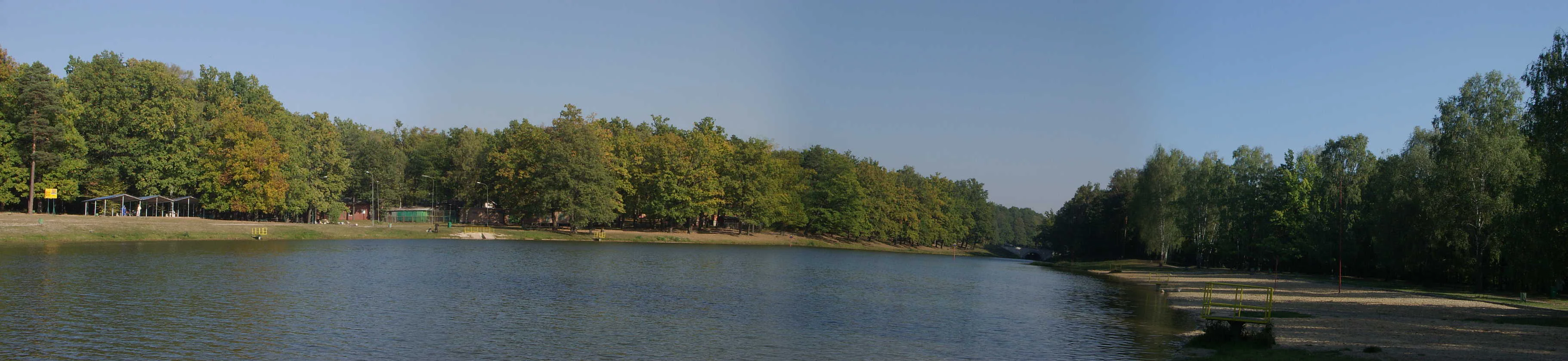
A wide panoramic view of a calm pond surrounded by dense green forest, featuring a sandy shoreline on the right.
A panoramic view of the pond in the Arturówek area within the Park Krajobrazowy Wzniesień Łódzkich.

Łódź's Hills Landscape Park history and protected-area timeline

The idea for the park emerged in the early 1980s in the Łódź Office of Planning and Design Development, where a concept was developed to protect an area in the upper Moszczenica river basin in the Nowosolna commune under the working name of the Upper Moszczenica Landscape Park. The concept was soon expanded to include part of the Mrożyca drainage basin.

By late 1993, a full project documentation had been prepared, providing a scientific justification for the park. The project received a favorable opinion from the State Council for Nature Conservation and the Ministry of Environment. The final boundaries were negotiated in 1994 under the auspices of the Regional Commission for Nature Conservation, balancing the views of designers, local governments, and regional authorities.

A key issue during the boundary process was the planned route of a future motorway, which initially ran almost along the floor of the Moszczenica valley. Following a request from the regional commission, the motorway route was modified to reduce its impact on the proposed park, removing the last obstacle to formal designation. On 31 December 1996, the voivodes of Łódź and Skierniewice signed the regulation formally establishing the Park Krajobrazowy Wzniesień Łódzkich. A protection plan was set in place on 31 July 2003.

Łódź's Hills Landscape Park landscape and geographic character

The park occupies a stretch of the Łódź Upland with unusually pronounced relief by central Polish standards. In the south, the hills rise to nearly 284 meters at the Radary hill near Dąbrowa, while in the north the terrain descends in clear steps toward the flat expanse of the Warsaw-Berlin Pradolina, reaching about 165 meters near Stryków and dropping below 150 meters in the Mrożyca valley near Niesułków. This sharp descent creates views from multiple observation points around Teolin, Borchówka, Dąbrowa, Janów, and Plichtów.

The physical character of the park is shaped by glacial processes. Large erratic boulders, some several meters in circumference, are scattered across the area and were carried here from Scandinavia by the Pleistocene ice sheet. Some of these erratics carry commemorative plaques marking events of regional historical importance.

River valleys and ravines cut into the upland surface, with small valleys such as those of the Janinowskie ravines and the Dobieszkowska stream creating dramatic local topography. A first-order watershed passes through the park, and a dense network of streams drains into the Bzura, Moszczenica, Mrożyca, Mroga, and Miazga river systems, sustaining small ponds, retention reservoirs, and wet depressions.
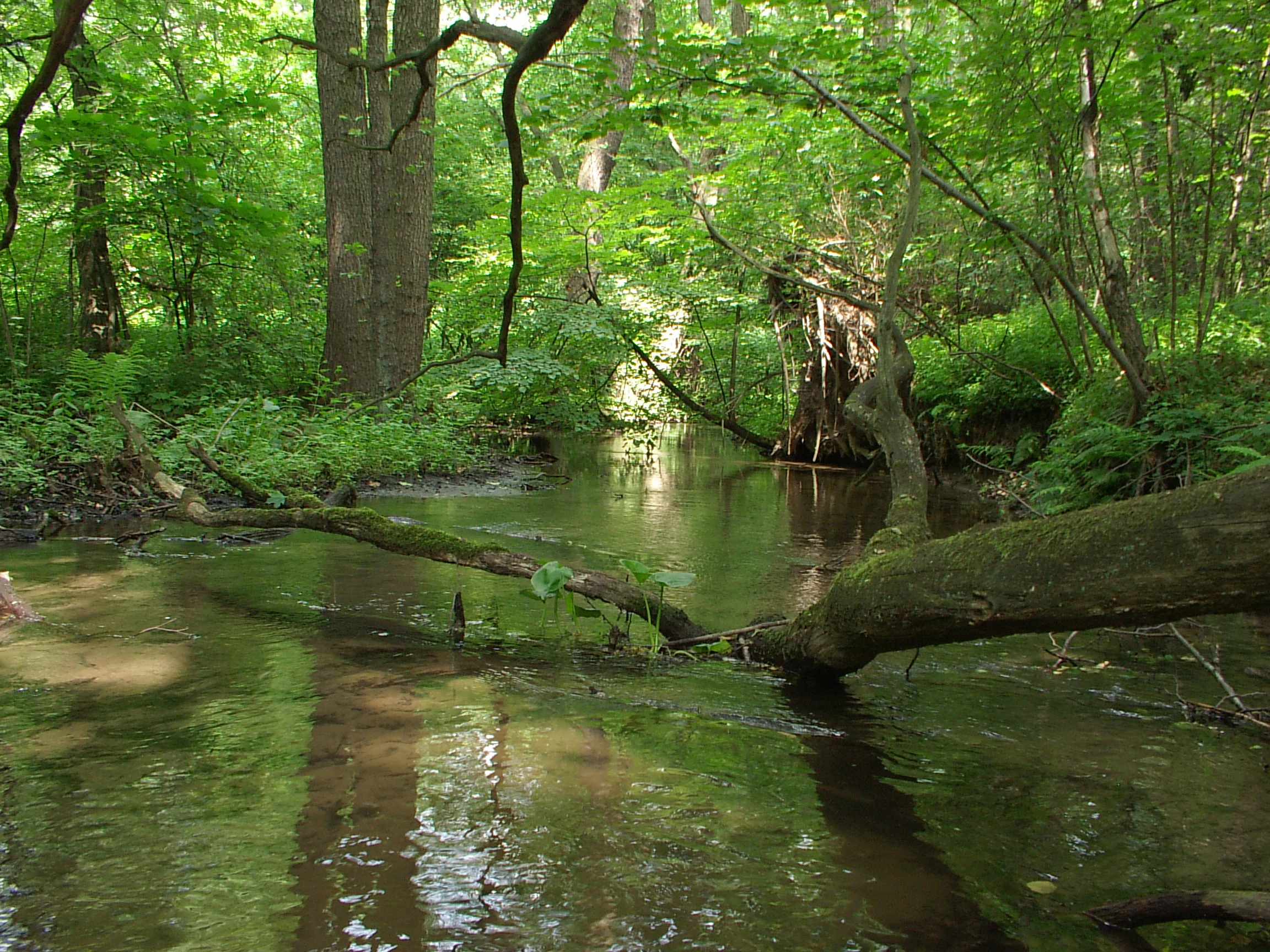
A slow-moving stream winds through a dense green forest, with a fallen tree trunk resting horizontally across the water.
The Struga Dobieszkowska flowing through a lush, forested section of the Park Krajobrazowy Wzniesień Łódzkich.

Łódź's Hills Landscape Park ecosystems, habitats, and plant life

Despite its moderate forest cover, the park hosts ecologically rich vegetation. A total of 735 vascular plant species have been recorded, including 71 species considered threatened at the regional level and several listed in the Polish Red Book of Plants. Thirty-nine species receive legal protection, of which 24 are under strict protection and 15 under partial protection.

Beech-dominated woodland is a defining element, with the Janinowski Forest standing out as the largest beech forest in central Poland. Other major forest complexes include the Łagiewnicki Forest, the Poćwiardowski Forest, the Tadzin-Szymaniszki forest tract, and the Dobieszków forest tract. Surrounding the forests are meadows, peatlands, reed beds, and riparian vegetation associated with the river valleys, producing a mosaic of habitats unusually varied for the region.

The combination of upland forests, river valleys, bogs, and meadows supports both common central European species and rarer elements typical of sub-mountain or northern relict environments.
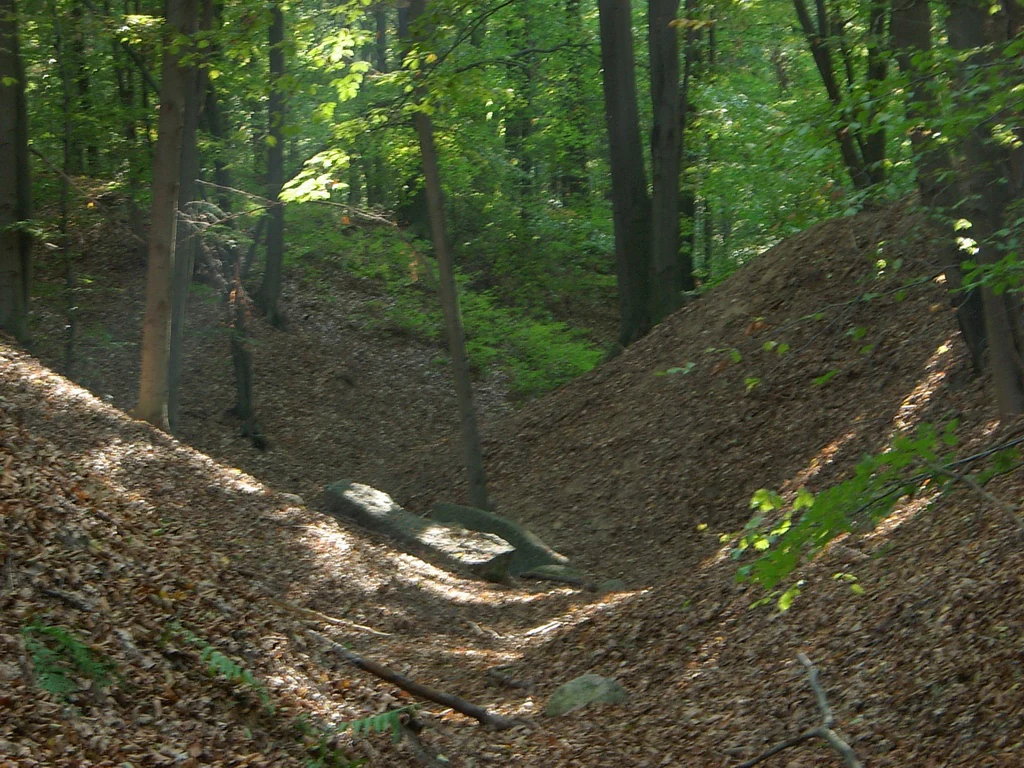
A sun-dappled forest ravine with fallen leaves on the ground and an erratic boulder partially visible in the midground.
A shaded ravine within the Janinow Ravines Nature Reserve, part of Park Krajobrazowy Wzniesień Łódzkich.

Łódź's Hills Landscape Park wildlife and species highlights

The park supports a wildlife community that includes several elements otherwise more typical of foothills or even mountains. Invertebrate fauna is particularly notable, and the rare boreal relict bumblebee known as the taiga bumblebee has been documented in the Łagiewnicki Forest, a species listed in the Polish Red Book of Animals.

Thirteen bat species have been recorded, including the western barbastelle, a species of particular conservation interest. Amphibians include the smooth newt, the fire-bellied toad, the European tree frog, and the great crested newt, making the park one of the most valuable amphibian sites in central Poland.

The avifauna includes a number of species considered among the most valuable elements of central Polish fauna, such as the red-breasted flycatcher, the barred warbler, the little owl, the European honey buzzard, the common rock dove, and the common firecrest. The mix of forest, wetland, and open habitats supports a diverse breeding and foraging bird community.

A panoramic landscape view showing rolling green hills, scattered trees, and shrubs under a cloudy sky.
A wide, panoramic view of the rolling landscape of the Łódź Hills Landscape Park in central Poland.

Łódź's Hills Landscape Park conservation status and protection priorities

The park exists to protect the unique upland landscapes found along the edge of the Łódź Hills in central Poland. Its conservation significance lies in the combination of relatively high biodiversity supported by habitat diversity and the protection of a topographic and ecological pattern that is otherwise uncommon in the region.

Within the park, three nature reserves protect the most valuable natural fragments: Las Łagiewnicki, Struga Dobieszkowska, and Parowy Janinowskie. Two additional protected landscape complexes, Górna Mrożyca and Sucha Dolina w Moskulach, complement the reserve network, and a further reserve at Torfowisko Żabieniec has been planned. The surrounding buffer zone of around 3,083 hectares extends the protection influence beyond the park's core boundary.

Łódź's Hills Landscape Park cultural meaning and human context

The landscape preserved by the park carries a long cultural history. The area contains medieval remains including a gord at Stare Skoszewy dating from the 6th to the 9th centuries, evidence of early settlement in the region. Manorial and palace-park complexes at Łagiewniki, Klęk, Dobieszków, and Niesułków reflect the later rural heritage of the area, while the classicist manor in Byszewy is associated with the writer Jarosław Iwaszkiewicz, who often stayed there.

Several religious buildings contribute to the cultural landscape, including sacred structures in Dobra, Niesułków, Stare Skoszewy, Łagiewniki, and in Łódź itself along Wycieczkowa Street. Glacial erratics scattered across the park sometimes carry plaques commemorating important events in the region's history, blending the natural and cultural heritage of the area.

Top sights and standout views in Łódź's Hills Landscape Park

The park's strongest points of identity are its unusually pronounced upland relief for central Poland, the panoramic viewpoints along its northern edge, and its ecologically rich forests, especially the Janinowski beech forest and the Łagiewnicki urban forest. The first-order watershed running through the area, with its network of rivers and peatlands, adds a distinctive hydrological character.

Equally memorable are the cultural landmarks nested within the natural setting, from the medieval gord at Stare Skoszewy and classicist manor houses to the numerous glacial erratics scattered across the landscape. The combination of geology, hydrology, forest ecology, and human heritage makes the park a notably multifaceted protected area within the Łódź region.

Best time to visit Łódź's Hills Landscape Park

Spring and early summer are particularly rewarding for visiting the park, when the beech forests and meadows are at their most lush and wildflowers are in bloom, while amphibians are active around the wetlands and ponds. The warmer months also offer the clearest conditions for enjoying the panoramic viewpoints along the northern edge of the hills.

Autumn adds a strong appeal through colorful forest foliage and a quieter, less crowded atmosphere, while winter can highlight the topographic drama of the hills, especially when snow accentuates the relief and the panoramic views toward the Warsaw-Berlin Pradolina. Birdwatching interest is generally highest in the spring and early summer breeding season.

Monthly climate preview

Long-term representative monthly temperature and precipitation patterns for Park Krajobrazowy Wzniesień Łódzkich

Park Krajobrazowy Wzniesień Łódzkich Climate Normals and Annual Temperature Rhythm

Historical climate data for Park Krajobrazowy Wzniesień Łódzkich reveals a measured annual cycle ranging from deep winter minimums to warm summer maximums with steady daily precipitation rates. Reviewing the complete twelve-month profile provides detailed meteorological context across all recorded seasons.
Annual mean9 °C
-3 °C20 °C
Jan-3°
Feb-1°
Mar
Apr
May14°
Jun18°
Jul20°
Aug20°
Sep15°
Oct
Nov
Dec-1°
Warmest month
July

20.3 °C

Coolest month
January

-3.1 °C

Wettest month
July

2.5 mm/day

Driest month
January

1.3 mm/day

Park location guide

Geography guide, regional context, and park location map for Łódź's Hills Landscape Park

Łódź's Hills Landscape Park park geography, regions, and map view in Poland

Understand where Łódź's Hills Landscape Park sits in Poland through a broader geographic reading of the surrounding landscape, nearby location context, and its mapped position within the national park landscape.

How Łódź's Hills Landscape Park fits into Poland

Poland, officially the Republic of Poland, is a Central European country spanning from the Baltic Sea in the north to the Carpathian Mountains in the south. It borders Germany, Czech Republic, Slovakia, Ukraine, Belarus, Lithuania, and Kaliningrad Oblast. The country has a temperate climate, diverse landscapes, and is known for its rich history, cultural heritage, and strong economic position within the EU.

Wider geography shaping Łódź's Hills Landscape Park in Poland

Poland occupies 312,696 km2 in Central Europe, extending from the Baltic Sea coast in the north to the Sudetes and Carpathian Mountains in the south. It borders Germany to the west, Czech Republic and Slovakia to the south, Ukraine and Belarus to the east, and Lithuania and Kaliningrad Oblast to the northeast. The landscape includes lowland plains, uplands, and mountain ranges.

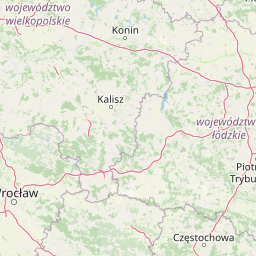
Map view of Łódź's Hills Landscape Park

Use this park location map to pinpoint Łódź's Hills Landscape Park in Poland, understand its exact geographic position, and read its mapped placement within the surrounding landscape more clearly.

Pigeon | © OpenStreetMap contributors

Location context for Łódź's Hills Landscape Park

Łódź Voivodeship

Visual reference collection for upland terrain, beech forests, and protected habitats

Park Krajobrazowy Wzniesień Łódzkich Landscape Photos and Scenery

Visual documentation captures the upland relief, beech woodlands, and river valleys that define Park Krajobrazowy Wzniesień Łódzkich. Photographic records provide clear spatial reference for understanding the protected terrain and regional character of the protected area.

A wide panoramic view of a calm pond surrounded by dense green forest, featuring a sandy shoreline on the right.

A wide, eye-level view of golden wheat or grain fields in central Poland under a bright, partly cloudy sky.

A slow-moving stream winds through a dense green forest, with a fallen tree trunk resting horizontally across the water.

A sun-dappled forest ravine with fallen leaves on the ground and an erratic boulder partially visible in the midground.

A panoramic landscape view showing rolling green hills, scattered trees, and shrubs under a cloudy sky.

Park atlas

Compare adjacent upland terrain, river valleys, and forest reserves across central Poland

Exploring Parks Near Park Krajobrazowy Wzniesień Łódzkich and Surrounding Regional Protected Landscapes

Protected areas near Park Krajobrazowy Wzniesień Łódzkich reveal a diverse network of regional natural features and upland landscapes. Comparative browsing across these adjacent territories provides deeper geographic context for central Polish conservation zones.
Nature reserveLodzkie Voivodeship
About 18 km away#1 closest

East

Doliska Nature Reserve: Protected Forest Boundaries and Geographic Landscape Context in Poland

A study in regional forest conservation and woodland ecology

Located in the Lodzkie Voivodeship, Doliska Nature Reserve is a designated phytocenotic forest area established to preserve specific woodland communities. Its primary geographic value lies in the protection of silver fir populations that exist outside their natural distribution range, making this a foundational site for regional conservation history and ecological study in the heart of lowland Poland.

Area
0.033 km²
Established
1954
Relief
Upland
Scope
Terrestrial
A watercolor painting of a rolling forested landscape with soft hills and light colors.
Nature reserveLodz Voivodeship
About 27 km away#2 closest

South

Rezerwat przyrody Molenda: Nature Reserve and Ancient Forest Geography in Lodz Voivodeship

Mapping the protected old-growth forest stands of central Poland.

Rezerwat przyrody Molenda represents an essential piece of central Polish geography, safeguarding a mature mixed-forest enclave near Tuszyn. By protecting rare admixtures of fir and beech alongside 150-year-old oaks, the reserve maintains a distinct ecological character. This site provides a look into the region's historical forest heritage, showcasing structurally complex woodlands that contrast with the surrounding lowlands and agricultural terrain.

Area
1.471 km²
Established
1959
Relief
Lowland
Scope
Terrestrial
Nature reserveŁódź Voivodeship
About 35 km away#3 closest

Southeast

Rezerwat przyrody Małecz: Protected Nature Reserve and Forest Landscape in Łódź Voivodeship

Floristic reserve and managed coniferous forest geography

Rezerwat przyrody Małecz is a key floristic site in Poland, safeguarding rare Pontic-origin flora and ancient forest stands. This reserve showcases the integration of strict protection zones with moist and dry mixed coniferous forest communities within the Spała Forest District, offering deep insight into regional botanical conservation.

Area
0.092 km²
Established
1987
Relief
Lowland
Climate
Temperate
Watercolor painting of a meandering river landscape with gentle hills, light green foliage in the foreground, and soft washes of color.
Protected landscapeLodz Voivodeship
About 37 km away#4 closest

Northeast

Bolimowski Park Krajobrazowy: Geography of a Central Polish Protected Landscape Area

Rawka River valley mapping and Puszcza Bolimowska forest terrain

Bolimowski Park Krajobrazowy encompasses a unique mosaic of postglacial plains and riverine ecosystems in central Poland. The area is defined by the Rawka River, which forms a network of meanders, oxbow lakes, and terraces, while surrounding forests retain historical links to the vast primeval woods of Puszcza Bolimowska. This protected territory offers a significant habitat for diverse wildlife, including moose and beaver, within a landscape characterized by its shifting transition between deep forest, wet meadows, and light oak groves.

Area
205.123 km²
Established
1986
Relief
Lowland
Climate
Temperate
Nature reserveLodzkie Voivodeship
About 39 km away#5 closest

West

Rezerwat przyrody Jodły Oleśnickie: Protected Nature Reserve in Lodzkie Voivodeship

Geography, forest structure, and range-edge ecology

Located within the quiet terrain of the Łaska Highland, Rezerwat przyrody Jodły Oleśnickie is a specialized forest reserve. It is defined by its scientific value as a protected sanctuary for silver fir trees growing at the geographic limit of their species range, offering insight into the development of multi-layered forest communities in lowland central Poland.

Area
0.117 km²
Established
1962
Relief
Lowland
Climate
Temperate
Protected areaLodzkie Voivodeship
About 39 km away#6 closest

Northeast

Polany Puszczy Bolimowskiej: Protected Meadow Enclaves within the Lodzkie Voivodeship Landscape

Mapped meadow clearings and wetland habitat geography

Polany Puszczy Bolimowskiej serves as a critical protected area in central Poland, encompassing a series of connected meadow clearings within the Bolimów Forest. This site preserves rare Molinion wet meadows and tall herb floodplains, offering a distinct study of how open habitats persist in a forest-dominated matrix.

Area
1.341 km²
Relief
Lowland
Water
Minor water
Protected landscapeLodzkie Voivodeship
About 44 km away#7 closest

South

Sulejowski Park Krajobrazowy: Geography and Protected Landscape Mapping

Central Polish river valley and reservoir terrain

Examine the territorial boundaries and landscape character of Sulejowski Park Krajobrazowy. This protected area integrates riverine corridors, large reservoir habitats, and mixed lowland forests across the Lodzkie Voivodeship, providing a core reference for understanding the ecological geography of the central Pilica valley.

Area
170.26 km²
Established
1994
Relief
Lowland
Climate
Temperate
Nature reserveŁódź Voivodeship
About 44 km away#8 closest

South

Rezerwat przyrody Dęby w Meszczach: Protected Oak Forest and Regional Geography

Nature reserve in the Równina Piotrkowska of central Poland.

Located in Łódź Voivodeship, this nature reserve is defined by its ancient pedunculate oaks, some over 250 years old. The site protects a unique blend of oak-hornbeam and mixed coniferous forest communities, serving as an ecologically vital fragment of lowland woodland within an agricultural landscape.

Area
0.392 km²
Established
1989
Relief
Lowland
Climate
Temperate

Common questions about visiting, size, designation, and location context for Łódź's Hills Landscape Park

Łódź's Hills Landscape Park FAQs for park facts, access, geography, and protected area context

Find quick answers about Łódź's Hills Landscape Park, including protected-area facts, park geography, trail and visitor context, and how the park fits into its surrounding country and regional landscape.
MoriAtlas Explorer

Continue Your Protected Areas Search Across the Global Atlas

Deepen your exploration by continuing the structured search for national parks and protected areas worldwide. Utilize the comprehensive filtering capabilities to compare different conservation landscapes and refine your understanding of global park geography. Discover more about the distribution and characteristics of protected natural areas.

Global natural geography