
Mori Atlas logo
Wildlife reserveRéserve nationale de faune de Longspur

Mapping the native mixed-grass prairie landscape and critical bird nesting habitats within the Saskatchewan plains.

Réserve nationale de faune de Longspur: Protected Wildlife Reserve and Saskatchewan Prairie Geography

Réserve nationale de faune de Longspur represents a targeted federal effort to conserve essential mixed-grass prairie ecosystems in southern Saskatchewan. This protected area preserves a mosaic of native bunchgrasses and open terrain vital for grassland songbirds. By examining the mapped boundaries and regional landscape context, observers can understand how this small wildlife reserve contributes to the broader conservation of the Canadian prairie plains.

national wildlife areagrassland conservationmixed-grass prairieprairie birdsgrassland songbirdsSaskatchewan

Réserve nationale de faune de Longspur

Wildlife reserve

Park overview

Structured park overview, official facts, and landscape profile for Longspur National Wildlife Area

Longspur National Wildlife Area park facts, protected area profile, and essential visitor context

Review the core facts for Longspur National Wildlife Area, including designation, size, terrain, visitor scale, habitats, and operating context in one park-focused overview.

About Longspur National Wildlife Area

Longspur National Wildlife Area sits in the southwestern corner of Saskatchewan, a region historically dominated by mixed-grass prairie that has been heavily altered by cultivation, grazing, and infrastructure development. Today, the remaining native grasslands of this part of the prairies form an archipelago of habitat patches, many of them small and isolated. The Longspur reserve is one such habitat island, set aside to maintain a functional breeding ground for ground-nesting songbirds and the broader prairie ecosystem that supports them.

The reserve's 193-hectare footprint combines uncultivated mixed-grass prairie with cultivated prairie, a configuration that helps recreate the heterogeneous landscape structure that grassland birds evolved to use. Native bunchgrasses such as blue grama and needle-and-thread dominate the unmanaged areas, while adjacent cultivated patches create edge conditions that some species use for foraging. Scattered forbs, low shrubs, and cactus species add structural complexity to the vegetation community.

Beyond its plant communities, the reserve is shaped by the wildlife it shelters. Grassland-nesting birds are the site's most visible conservation focus, and several species of conservation concern depend on habitat types represented here. The reserve also supports a community of plains mammals, including pronghorn, mule deer, white-tailed deer, coyote, American badger, and Richardson's ground squirrel, together with reptiles and amphibians typical of the dry southern Saskatchewan prairie landscape.

Longspur National Wildlife Area is not designed to attract large-scale tourism or recreation. Instead, it functions as a working conservation site managed by the federal government, with the Canadian Wildlife Service playing the central role. Its creation in 2025 illustrates the modern Canadian approach to National Wildlife Areas: scientifically justified, species-focused, and tightly integrated with national commitments to biodiversity conservation in agricultural landscapes.

Quick facts and research context for Longspur National Wildlife Area

Longspur National Wildlife Area is a federal Canadian wildlife reserve located in southern Saskatchewan, roughly 36 kilometers southeast of Val Marie. The site covers about 193 hectares and is administered by the Canadian Wildlife Service as part of Canada's National Wildlife Area system.

The reserve is classified as an IUCN Category IV protected area, meaning it is managed mainly for the conservation of specific habitats and species. Its habitat mosaic of cultivated and native mixed prairie gives it particular value for nesting grassland birds, including the chestnut-collared longspur, Baird's sparrow, western meadowlark, grasshopper sparrow, and Sprague's pipit.

Protection and recognition

Review documented terrestrial protection scope and conservation management details.

Réserve nationale de faune de Longspur Protection Status and Terrestrial Designation

Terrestrial protection status and administrative designation records for Réserve nationale de faune de Longspur are compiled within this structured overview. Official management scope details and formal conservation frameworks provide clear baseline context for the protected area.

Protection details

Protection scope
Terrestrial
Park context

Deeper park guide and search-rich context for Longspur National Wildlife Area

Longspur National Wildlife Area history, landscape, wildlife, and travel context

Explore Longspur National Wildlife Area through its history, landscape character, ecosystems, wildlife, conservation priorities, cultural context, and seasonal travel timing in a structured park guide built for atlas discovery and search intent.

Why Longspur National Wildlife Area stands out

Longspur National Wildlife Area is best known for protecting a small but ecologically significant patch of Saskatchewan mixed-grass prairie, and especially for safeguarding nesting habitat for the chestnut-collared longspur. The reserve takes its English name directly from this species, which depends on large, open prairie landscapes with healthy native grass cover. The site is also notable as one of the modern successor reserves that emerged from the restructuring of the older Prairie National Wildlife Area. Its designation reflects a broader shift in Canadian conservation policy toward smaller, scientifically justified reserves focused on priority grassland bird habitat rather than broad mosaic landscapes.

Longspur National Wildlife Area history and protected-area timeline

The history of Longspur National Wildlife Area is closely tied to the history of the Prairie National Wildlife Area, a much larger federal reserve originally established in 1978. That earlier reserve was made up of 26 separate units scattered across southern Saskatchewan, each intended to protect fragments of native prairie habitat in one of Canada's most altered landscapes.

By October 2020, a rigorous scientific review had applied updated criteria, originally established in 2005 for the creation of National Wildlife Areas, to the 26 Prairie units. The review concluded that only 7 of those units still met the current standards for national wildlife area designation. In response, the federal government decided to replace the older Prairie National Wildlife Area with five smaller, more targeted reserves and to remove the remaining 19 units from the protected-area system altogether.

The Longspur reserve corresponds to Unit 11 of the former Prairie National Wildlife Area. On 12 March 2025, the Longspur National Wildlife Area was officially established under the Canadian Wildlife Service at the same time that the old Prairie National Wildlife Area was formally abolished. This step completed a multi-year transition from a broad mosaic reserve to a tightly focused grassland bird reserve, with Longspur now standing as one of the modern successor sites that emerged from that process.

Longspur National Wildlife Area landscape and geographic character

The landscape of Longspur National Wildlife Area is a textbook example of southern Saskatchewan mixed-grass prairie, characterized by gently rolling terrain, expansive horizons, and a semi-arid continental climate. The reserve sits on the open plains, where the sky dominates the viewscape and wind, drought, and cold winters shape the land as much as any geological process.

The protected area combines two main surface types. Cultivated prairie, shaped by past agricultural use, covers a portion of the property and creates a more open, low-growing vegetation mosaic. Alongside it, indigenous mixed-grass prairie preserves a more natural structure, with native bunchgrasses forming tufted communities and flowering forbs, low cacti, and scattered shrubs contributing to vertical and seasonal diversity. The result is a heterogeneous landscape of open ground, grass cover, and low forb layers typical of the region.

The surrounding region shares the same general character: fields of cropland and improved pasture interleaved with smaller parcels of native prairie, especially along less productive soils and rougher breaks. Although the reserve itself is small, it sits within a wider prairie landscape in which conservation of remaining native grassland is a regional priority.

Longspur National Wildlife Area ecosystems, habitats, and plant life

At an ecological level, Longspur National Wildlife Area represents a fragment of the northern Great Plains mixed-grass prairie ecosystem, one of North America's most altered biomes. Mixed-grass prairie sits between the tallgrass prairie to the east and the shortgrass prairie to the west, and is defined by a blend of mid-height and short-stature grass species growing together with a rich community of perennial forbs.

The reserve's plant community reflects this transitional character. Blue grama, a classic shortgrass species, grows alongside needle-and-thread, a typical mid-grass. Western wheatgrass adds further structural diversity, while forb species such as scarlet gaura, scarlet globemallow, and Hood's phlox contribute color and pollinator resources. Other characteristic plants include cheatgrass, which reflects the influence of past disturbance, dryland sedge, and sagebrush buttercup. Cactus species are also present, a marker of the dry continental conditions of the region.

This combination of native grasses and forbs produces a structurally heterogeneous vegetation layer that supports ground-nesting birds, small mammals, pollinators, and reptiles. The mix of cultivated and native prairie within the reserve also creates a gradient of habitat conditions, allowing different species to find suitable nesting and foraging sites within a relatively small area.

Longspur National Wildlife Area wildlife and species highlights

Wildlife is the central reason for the existence of Longspur National Wildlife Area. The reserve is designed above all to protect nesting habitat for grassland songbirds, a group that has experienced severe long-term declines across North America as native prairie has been converted to cropland. The chestnut-collared longspur, after which the reserve is named, is the flagship species, but several other grassland-dependent birds are also regularly present.

Among the breeding birds documented at or near the site are Baird's sparrow, the grasshopper sparrow, Sprague's pipit, and the western meadowlark. These species share a dependence on large, open landscapes with sufficient residual grass cover for nest concealment. Their presence at Longspur reflects the site's role as a stepping stone in a broader network of remaining native prairie in Saskatchewan.

The reserve also supports a diverse mammal community typical of the southern Saskatchewan plains. Pronghorn, mule deer, and white-tailed deer move through the open landscape, while smaller mammals such as Richardson's ground squirrel are abundant. Coyotes and American badgers act as important mesopredators within the local food web. Reptiles and amphibians recorded in the area include the boreal chorus frog, the plains garter snake, and the bullsnake, completing a herpetofauna well adapted to the dry prairie environment.

Longspur National Wildlife Area conservation status and protection priorities

Conservation is the defining purpose of Longspur National Wildlife Area. The reserve was established specifically to maintain and protect habitat for grassland-dependent species, particularly breeding birds, in a region where native prairie cover has been drastically reduced. As a federally designated National Wildlife Area managed by the Canadian Wildlife Service, it carries the formal protection framework associated with Canada's network of wildlife reserves.

The site is classified as an IUCN Category IV protected area, which signals that its primary management objective is the conservation of particular species and habitats, in this case mixed-grass prairie and the bird community it supports. This designation places Longspur within the international system of protected-area categories and underscores its role as a habitat and species management site rather than a wilderness area in the strict sense.

In a broader context, the reserve's establishment reflects a national trend toward more targeted, science-based conservation in working agricultural landscapes. By replacing a portion of the older, larger Prairie National Wildlife Area with a smaller, ecologically focused unit, Canadian wildlife authorities have aimed to concentrate protection effort on the most ecologically valuable sites. Longspur therefore stands as both a local refuge for prairie biodiversity and a demonstration of modern, criteria-driven conservation planning in the Canadian prairies.

Longspur National Wildlife Area cultural meaning and human context

Longspur National Wildlife Area sits in a part of Saskatchewan shaped by a layered cultural and land-use history. Before European contact, the region was home to Indigenous peoples whose livelihoods were closely tied to bison and other prairie wildlife. The dramatic collapse of bison herds in the nineteenth century, followed by widespread agricultural development, transformed the landscape and erased much of the native grassland that once stretched across the southern prairies.

The valley of Val Marie and surrounding plains retain a sense of this older prairie identity, with ranching and mixed farming remaining important parts of the local economy. The presence of a federal wildlife reserve in this working landscape marks a contemporary recognition that protecting small but ecologically meaningful parcels of native prairie is essential to sustaining the regional identity and natural heritage of southwestern Saskatchewan.

Top sights and standout views in Longspur National Wildlife Area

A young but ecologically focused National Wildlife Area dedicated to mixed-grass prairie conservation. A direct successor to one of the original units of the Prairie National Wildlife Area, restructured in 2025. Named for the chestnut-collared longspur, a grassland songbird of conservation concern. A small but representative patch of southern Saskatchewan mixed-grass prairie, combining cultivated and native habitat. Managed by the Canadian Wildlife Service as part of Canada's National Wildlife Area system.

Best time to visit Longspur National Wildlife Area

The southern Saskatchewan prairie experiences a strongly seasonal climate, with cold winters and warm, often dry summers. Wildlife observation and appreciation of the prairie landscape are generally most rewarding in late spring and early summer, when nesting grassland birds are most active and native grasses and wildflowers are at their most visible. Late summer brings drier conditions and golden mature grasses, while winter transforms the landscape into a sparse, windswept plain. Access and visibility for visitors depend on how the reserve is managed at any given time, so seasonal conditions should be considered alongside any current site-specific guidance from the Canadian Wildlife Service.

Monthly climate preview

Long-term temperature and monthly precipitation patterns across representative coordinates in Saskatchewan

Réserve nationale de faune de Longspur Climate Normals and Weather by Month

Historical climate data for Réserve nationale de faune de Longspur reveals measured annual temperature fluctuations and monthly precipitation values recorded at a representative elevation of 835 meters. Examining the complete twelve-month climate profile provides detailed insight into long-term meteorological averages across the protected area.
Annual mean6 °C
-9 °C21 °C
Jan-9°
Feb-6°
Mar
Apr
May12°
Jun17°
Jul21°
Aug20°
Sep14°
Oct
Nov-2°
Dec-7°
Warmest month
July

21.4 °C

Coolest month
January

-9 °C

Wettest month
June

2.6 mm/day

Driest month
February

0.4 mm/day

Park location guide

Geography guide, regional context, and park location map for Longspur National Wildlife Area

Longspur National Wildlife Area park geography, regions, and map view in Canada

Understand where Longspur National Wildlife Area sits in Canada through a broader geographic reading of the surrounding landscape, nearby location context, and its mapped position within the national park landscape.

How Longspur National Wildlife Area fits into Canada

Canada is a federal parliamentary constitutional monarchy spanning North America from the Atlantic to the Pacific and Arctic Oceans. With a population of over 41 million, it is officially bilingual in English and French at the federal level. The country gained independence from the United Kingdom through a gradual process culminating in 1982.

Wider geography shaping Longspur National Wildlife Area in Canada

Canada occupies the northern portion of North America, sharing its longest international border with the United States. The country extends from the Atlantic Ocean to the Pacific Ocean and northward into the Arctic Ocean, giving it the longest coastline of any nation.

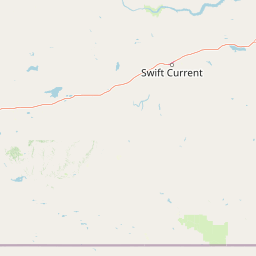
Map view of Longspur National Wildlife Area

Use this park location map to pinpoint Longspur National Wildlife Area in Canada, understand its exact geographic position, and read its mapped placement within the surrounding landscape more clearly.

Pigeon | © OpenStreetMap contributors

Location context for Longspur National Wildlife Area

Saskatchewan
Park atlas

Compare regional prairies and connected conservation areas across the plains

Parks Near Réserve nationale de faune de Longspur and Protected Landscapes

Browsing other protected areas near Réserve nationale de faune de Longspur reveals the broader ecological network of the Canadian mixed-grass prairie. Comparing these regional reserves offers deeper context for grassland bird habitats and native vegetative terrain.
National parkSaskatchewan
About 7.4 km away#1 closest

North

Grasslands National Park: Saskatchewan Protected Landscape Atlas

Discover its mapped boundaries and regional geographic context.

Grasslands National Park represents a vital component of protected lands in Saskatchewan, Canada, offering rich opportunities for atlas-based geographic exploration. This detail page provides specific insights into the park's mapped boundaries, its natural terrain, and its role as a national park within the broader regional geography. Understand how this protected landscape fits into the larger atlas of Canadian conservation areas and discover its unique geographic identity.

Area
907 km²
Established
1981
IUCN
II
Visitors
19.7K annual
Wildlife reserveSaskatchewan
About 39 km away#2 closest

Northwest

Val Marie Reservoir Migratory Bird Sanctuary: Protected Wetland Geography in Saskatchewan

A critical migratory bird habitat and prairie reservoir

Located in the southwestern plains of Saskatchewan, Val Marie Reservoir Migratory Bird Sanctuary forms a water-dominated mosaic of mudflats, marshes, and nesting islands. This protected area supports the central flyway by maintaining open water for waterfowl, serving as a primary sanctuary for colonial nesting birds within the larger mixedgrass prairie ecosystem.

Area
4.31 km²
Established
1948
IUCN
V
Wildlife reserveSaskatchewan
About 227 km away#3 closest

Northwest

Great Sandhills National Wildlife Area: Saskatchewan Protected Dune and Prairie Landscapes

Mapping the natural features and protected boundaries of this significant wildlife reserve.

The Great Sandhills National Wildlife Area represents a vital contemporary conservation effort in southwestern Saskatchewan. It encompasses a compact but biologically dense mosaic of stabilized dune fields, native mixed-grass prairie, and alkaline wetland basins. This protected area stands as a representative example of Canada's evolving strategy to preserve the most ecologically significant parcels of the prairie landscape, offering deep insights into the region's specific terrain and habitat patterns.

Area
4.7 km²
Established
2025
IUCN
IV
Relief
Lowland
Wildlife reserveSaskatchewan
About 264 km away#4 closest

Northeast

Wascana Lake Migratory Bird Sanctuary: Geographic Overview and Protected Wetland Boundaries

A vital wildlife reserve located in Regina, Saskatchewan

Explore the unique geography of Wascana Lake Migratory Bird Sanctuary, where a managed reservoir creates a rich wetland habitat for migratory waterfowl. This protected area stands as a significant ecological site within the Saskatchewan prairie landscape, offering a rare look at riparian terrain integration inside a major urban center.

Area
1.04 km²
Established
1956
Relief
Lowland
Climate
Temperate
A watercolor painting depicting a soft, stylized mountain range and a river winding through a valley.
Protected landscapeMontana
About 269 km away#5 closest

Southwest

Helena-Lewis and Clark National Forest: Geographic Overview and Protected Area Map

Montana wilderness spanning the Continental Divide

Spanning from the rolling eastern plains to the crest of the Northern Rockies, Helena-Lewis and Clark National Forest serves as a massive protected landscape in central Montana. This forest system protects eight unique mountain ranges and critical wilderness corridors, offering a comprehensive look at the ecological transition zones of the American Mountain West.

Area
11,000 km²
Established
1897
Relief
Mountain
Climate
Temperate
Protected landscapeNorth Dakota
About 295 km away#6 closest

Southeast

Little Missouri National Grassland: Geography and Protected Landscape Context

Exploring North Dakota's expansive badlands and prairie terrain

Spanning over a million acres, Little Missouri National Grassland stands as a massive protected landscape in western North Dakota. This area showcases the complex transition where open mixed-grass prairie meets the eroded, rugged badlands of the Little Missouri River corridor. Home to White Butte, the state's highest point, the grassland offers a unique topographic profile of buttes, canyons, and canyons that defines the region's broader geographic and conservation character.

Area
4,163.34 km²
Established
1960
Relief
Upland
Climate
Temperate
Wildlife reserveSaskatchewan
About 299 km away#7 closest

North

Harris Sandhills National Wildlife Area: Saskatchewan Protected Prairie Geography and Map

Mapped wildlife reserve within the Canadian prairie region.

This protected area in Saskatchewan showcases a distinct mosaic of stabilized dunes and native mixed-grass prairie. Understand its geographic significance as a sanctuary for migratory birds and rare prairie species within the expansive plains of Canada. The reserve offers a focused look at small-scale conservation landscapes through its defined physical boundaries and varied topographic features.

Area
3.7 km²
Established
2025
IUCN
IV
Relief
Lowland
Wildlife reserveSaskatchewan
About 323 km away#8 closest

Northeast

Zugvogelschutzgebiet Indian Head: A Wildlife Reserve in Saskatchewan Prairie Landscapes

Examining mapped boundaries and protected wetland terrain

Zugvogelschutzgebiet Indian Head represents a significant conservation footprint within the Saskatchewan prairie region. This wildlife reserve integrates managed wetlands and historic nursery grounds, showcasing how agricultural landscapes support migratory bird populations. Gain insight into its terrain, ecoregion placement, and the geographic history of these protected lands through our structured atlas data.

Area
0.32 km²
Established
1924
Relief
Lowland
Scope
Terrestrial

Common questions about visiting, size, designation, and location context for Longspur National Wildlife Area

Longspur National Wildlife Area FAQs for park facts, access, geography, and protected area context

Find quick answers about Longspur National Wildlife Area, including protected-area facts, park geography, trail and visitor context, and how the park fits into its surrounding country and regional landscape.
MoriAtlas Explorer

Continue Your Protected Areas Search Across the Global Atlas

Deepen your exploration by continuing the structured search for national parks and protected areas worldwide. Utilize the comprehensive filtering capabilities to compare different conservation landscapes and refine your understanding of global park geography. Discover more about the distribution and characteristics of protected natural areas.

Global natural geography