Why Luderbachaue von Dreieich stands out
The reserve is best known for its ancient floodplain forest landscape, shaped historically by clearances from the 14th to 16th centuries and by centuries of use as imperial and state forest. It contains a notable mosaic of near-natural forest types, including oak-hornbeam woodland, alder-ash floodplain forest, and beech woodland, together with old-growth stands of beech and oak, cavity trees, and abundant deadwood. These features support a rich fungal community, which in turn underpins the broader diversity of woodland plants and animals that the protection designation is intended to preserve.
Luderbachaue von Dreieich history and protected-area timeline
The landscape of the Luderbachaue has been shaped by several centuries of human intervention. The floodplain meadows were created largely through clearances of the original woodland between the 14th and 16th centuries, transforming parts of the river valley into open grassland. The surrounding forests, meanwhile, were managed for centuries as imperial and subsequently state forest, forming the southern section of the historical Wildbann Dreieich, a medieval designation for a royal hunting and forest district.
In modern times, the area's ecological value led to its formal protection as a nature reserve (Naturschutzgebiet) under the designation NSG-Kennung 438028 in 1996, with management assigned to the lower nature conservation authority of the Landkreis Offenbach. In 2000, the area received additional recognition when it was designated as an FFH (Fauna-Flora-Habitat) site under the European Union Habitats Directive, becoming part of the pan-European Natura 2000 network of protected areas. Together, these designations reflect a progression from historical forest use to active conservation of the woodland, floodplain, and old-growth features that have survived from earlier eras.
Luderbachaue von Dreieich landscape and geographic character
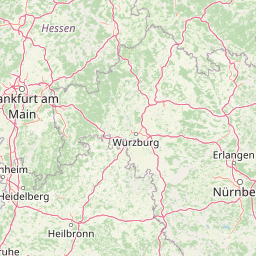
The landscape of the Luderbachaue is shaped by the flat floodplain of the Luderbach, a small left-bank tributary of the River Main that rises near Dreieich and flows onward into Frankfurt am Main under the name Königsbach. The protective designation covers over 290 hectares of forest set within this floodplain, framed by arable land and forestry beyond its borders.
To the north, the reserve is bordered by the L3117 state road; to the west by the A661 motorway; and to the east by the B459 federal road, giving the forest a clearly defined position within the surrounding transport and settlement network. The topography is generally level, consistent with the floodplain setting, but the ecological texture of the landscape is varied. Open former meadow clearings, now largely recolonised or managed as part of the protected forest, alternate with denser woodland stands dominated by beech and oak.
The visual character of the reserve is typical of central German lowland forest: closed canopy of broadleaf trees, occasional old oaks and beeches with prominent trunks, and areas rich in fallen and standing deadwood partly shaded by younger growth. Despite its proximity to urban infrastructure, the forest retains a coherent wooded appearance and offers one of the more substantial patches of contiguous woodland within the Landkreis Offenbach.
Luderbachaue von Dreieich ecosystems, habitats, and plant life
Ecologically, the Luderbachaue represents an unusual concentration of near-natural forest types on a floodplain substrate in an otherwise heavily shaped cultural landscape. Several distinct woodland communities are recognised within the reserve: oak-hornbeam forests (Eichen-Hainbuchen-Wälder) on drier soils, alder-ash floodplain forests (Erlen-Eschen-Auewälder) in wetter sections close to the Luderbach, and Hainsimsen and Waldmeister beech forests on appropriate sites. Together, these communities provide a representative cross-section of the forest types that historically characterised the Rhine-Main lowlands.
Old tree stands, including mature and over-mature beech and oak, form a second important ecological layer. Many of these trees contain cavities, and the reserve holds significant quantities of both standing and fallen deadwood. These features are central to the forest's biodiversity, supporting saproxylic beetles and other invertebrates, fungi, and tree-hole and cavity-nesting birds and mammals.
Fungi are treated as a key ecological component of the reserve. Different fungal species act both as symbionts with living trees and as decomposers of deadwood, and through this dual role they underpin the nutrient cycles that sustain the broader forest community. The interplay of floodplain soils, varied light conditions, old-growth trees, and abundant deadwood gives the Luderbachaue a layered and relatively species-rich woodland ecosystem for its size and position within the regional landscape.
Luderbachaue von Dreieich wildlife and species highlights
While the source material for the reserve emphasises its botanical and structural diversity, the wildlife significance of the Luderbachaue derives primarily from the habitats that the protected forest supports. The presence of old-growth trees, cavity trees, and abundant deadwood makes the reserve particularly important for saproxylic invertebrates, including wood-boring beetles and other insects that depend on decaying timber and fungal communities. Fungal diversity, highlighted in the conservation purpose of the designation, sustains both the invertebrates and the wider food web.
The mosaic of wet alder-ash floodplain woodland and drier oak-hornbeam and beech forest also provides habitat for a typical range of central European woodland birds, small mammals, and forest-dwelling insects associated with mature broadleaf woodland. The meadows historically created through 14th to 16th century clearances, although now largely wooded, contribute further habitat diversity where open or semi-open conditions remain.
Luderbachaue von Dreieich conservation status and protection priorities
The primary conservation purpose of the Luderbachaue is the protection of the area's rare plant species and its distinctive woodland habitats against encroachment and disturbance. Its designation as a nature reserve in 1996, under the Hessian nature conservation framework, was followed by its recognition as an FFH (Fauna-Flora-Habitat) site in 2000, integrating it into the European Natura 2000 network.
The conservation significance of the reserve rests on several particular features: the survival of extensive near-natural floodplain forests in an otherwise heavily used region; the presence of old-growth beech and oak stands with cavity trees; and the large amount of standing and fallen deadwood supporting characteristic fungal and invertebrate communities. By formally protecting these elements, the reserve safeguards a coherent example of lowland floodplain woodland that would otherwise be vulnerable to the pressures of the surrounding urban and transport landscape.
Luderbachaue von Dreieich cultural meaning and human context
The cultural-historical context of the Luderbachaue is rooted in its long role as managed forest and meadow land within the Dreieich area. As part of the southern Wildbann Dreieich, the surrounding woods were imperial and later state forest, used for centuries under a hunting-and-timber regime that influenced the species composition and structure of the woodland.
The floodplain meadows themselves reflect a separate cultural history. Clearings made between the 14th and 16th centuries converted parts of the original forest into open grassland, fundamentally shaping the pattern of forest and meadow that still defines the landscape today. The Luderbach stream, which gives the area its name, also carries historical and linguistic weight: rising near Dreieich and continuing into Frankfurt am Main, it is known in its lower course as the Königsbach, linking the local landscape to the broader hydrological and toponymic history of the Main valley.
Top sights and standout views in Luderbachaue von Dreieich
The Luderbachaue von Dreieich is distinguished by a combination of features that make it a regionally significant conservation site: an extensive floodplain forest of more than 290 hectares set within the urbanised Landkreis Offenbach; a mosaic of near-natural oak-hornbeam, alder-ash floodplain, and beech woodland communities; substantial surviving old-growth beech and oak stands; and an exceptionally rich deadwood component including cavity trees and both standing and fallen timber.
Since 2000, these features have also given the reserve a place within the European Natura 2000 network as an FFH site, underlining its recognition as a habitat of continental importance. The protected area thus represents one of the more complete examples of lowland floodplain forest remaining in the Rhine-Main region, preserved alongside long-established transport routes and settlements.
Best time to visit Luderbachaue von Dreieich
As a forested floodplain reserve, the Luderbachaue von Dreieich is most appealing in late spring and early summer, when the broadleaf canopy is fully leafed out, ground flora in the beech and oak forests is most visible, and conditions for walking are generally dry and mild. Autumn is also attractive, when fungal fruiting bodies are most conspicuous in deadwood-rich woodland and the leaf colour of beech and oak reaches its peak. Winters are quieter, with open views into the forest interior and easier observation of woodpecker and other cavity-nesting bird activity around old trees, although paths may be wetter due to the floodplain setting.