
Mori Atlas logo
Natural monumentMichovka

Discover the geographic features and rare botanical assemblages of this South Bohemian protected area.

Michovka Natural Monument: A Protected Wetland and Limestone Landscape in Jihočeský kraj

Michovka is a compact natural monument located in the Písek District of the Czech Republic. The protected area centers on a fishpond and stream outlet where exposed limestone bedrock supports specialized plant communities and diverse animal species. This site functions as a vital refuge within the rural landscape of Jihočeský kraj, showcasing how small, well-defined habitats contribute to regional ecological health.

natural monumentsmall protected areapond and stream habitatslimestone rockdry grasslandshort-sedge vegetation
A vector-style illustration showing a rocky waterfall cascading into a stream, surrounded by pine forests and distant mountains under a pastel sky.

Michovka

Natural monument

Park overview

Structured park overview, official facts, and landscape profile for Michovka

Michovka park facts, protected area profile, and essential visitor context

Review the core facts for Michovka, including designation, size, terrain, visitor scale, habitats, and operating context in one park-focused overview.

About Michovka

Michovka sits in the gentle agricultural countryside of the Písek District, on the northwestern edge of the small village of Brloh u Drhovle. Although the protected area is tiny, it packs together an unusually rich combination of habitats. A fishpond forms the centerpiece, with the outflowing stream cutting into exposed limestone below the dam. In winter, this section freezes into a localized ice waterfall, an unusual small-scale phenomenon that gives the site visual character beyond its ecological role.

The natural monument has botanical significance that far exceeds its modest area. On the dam and nearby rock outcrops, a community of short-sedge and other low-growing grasses and flowering plants has survived because of centuries of grazing by sheep and goats. This traditional land use suppressed woody vegetation and allowed a very specific limestone-dry-grassland flora to persist. The community includes species such as Acinos arvensis, Allium oleraceum, Carduus nutans, Festuca rupicola, Phleum phleoides, Polygala comosa, Sanguisorba minor, Verbascum lychnitis, Securigera varia, Koeleria pyramidata, Asplenium ruta-muraria, Ranunculus bulbosus, and, in isolated instances, Veronica teucrium and Seseli annuum. Along the pond bank, the rare tufted sedge (Carex paniculata) adds to the botanical importance.

The animal life at Michovka is similarly distinctive. Two strongly endangered species, the pool frog (Pelophylax esculentus) and the sand lizard (Lacerta agilis), live here, together with two endangered species, the grass snake (Natrix natrix) and the red-backed shrike (Lanius collurio). Observations have also included the critically endangered common redshank (Tringa totanus) and the endangered white stork (Ciconia ciconia). The diversity of these records, including aquatic, reptilian, and avian groups, highlights how a very small site can serve different ecological niches.

As a protected natural monument, Michovka falls under the Czech system of smaller-scale conservation areas focused on individual natural features or species. Its management reflects the interplay between traditional rural land use, especially grazing, and the preservation of habitat conditions that support the site's flora and fauna. The result is a small but well-defined example of how cultural practices and natural systems can sustain each other over decades.

Quick facts and research context for Michovka

Michovka is a Czech přírodní památka, or natural monument, established in 1985 in the South Bohemian Region. It lies in the Písek District, in the cadastral area of Brloh u Drhovle, near the northwestern edge of the village. The protected area covers roughly 2.5 hectares at an elevation of about 420 meters above sea level.

The site is classified as an IUCN Category IV protected area, recognizing it primarily as a habitat for particular species. Its core features include a fishpond, the stream below the dam, exposed limestone rock, and rare dry grassland. Conservation interest centers on protected amphibians, reptiles, and birds, as well as a distinctive short-sedge plant community maintained by traditional sheep and goat grazing.

Protection and recognition

Explore the official terrestrial conservation framework and designation records for Michovka.

Michovka Protection Status and Documented Conservation Scope

Michovka holds a documented terrestrial protection scope that frames its conservation governance and administrative records. Review the verified designation history and recognized status parameters associated with this protected natural area.

Protection details

Protection scope
Terrestrial
Park context

Deeper park guide and search-rich context for Michovka

Michovka history, landscape, wildlife, and travel context

Explore Michovka through its history, landscape character, ecosystems, wildlife, conservation priorities, cultural context, and seasonal travel timing in a structured park guide built for atlas discovery and search intent.

Why Michovka stands out

Michovka is best known for its unusual short-sedge vegetation community on the pond dam, which developed on a limestone substrate under long-term grazing by sheep and goats. This botanical assemblage is considered unique within the region and is the main reason the site was given protected status. The site is also recognized for its small limestone cascades below the pond outlet, the rare tufted sedge (Carex paniculata) growing along the pond bank, and the presence of several strongly protected animal species. Together, these features give Michovka an outsized conservation interest relative to its very small size.
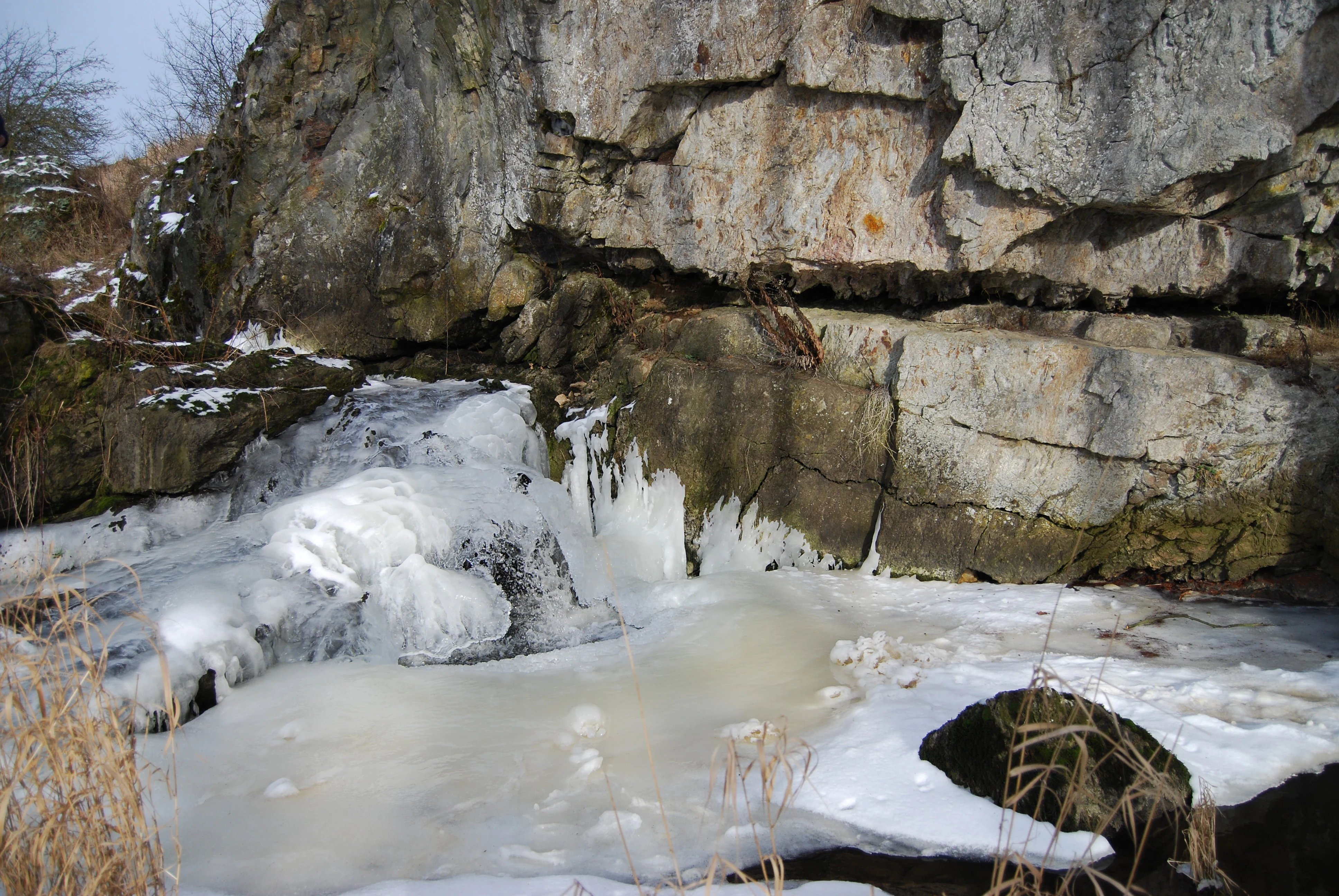
A partially frozen stream with icy rapids and icicles flowing past large rocky cliffs, with snow and dry grass in the foreground.
Frozen stream and rocky cliffs at Michovka natural monument in winter.

Michovka history and protected-area timeline

Michovka was formally declared a přírodní památka, or natural monument, in 1985, placing it under Czech nature conservation protection. The designation recognized both the botanical importance of the short-sedge plant community on the pond dam and the presence of protected animal species.

The ecological character of the site, however, carries a much longer history. The vegetation pattern on the limestone substrate has been shaped over generations by the grazing of sheep and goats, a traditional rural activity in the South Bohemian countryside. This grazing pressure prevented woody plants from dominating and allowed a specialized grassland community to persist where, in the absence of such land use, forest cover would normally have taken over. The pond itself and its surrounding land reflect the long-standing role of small fishponds in the rural landscape of the region.

Further documentation of the site appears in regional survey literature on protected areas of the Czech Republic, including volume VIII of the Chráněná území České republiky series, which covers the Českobudějovicko area. The natural monument remains part of the broader Czech network of small-scale protected areas that complement larger national parks and landscape protected zones by safeguarding local features of natural heritage.

Michovka landscape and geographic character

The landscape of Michovka is defined by a compact setting in which water, rock, and dry grassland meet over a very small area. The fishpond is the dominant feature visible at ground level, while the stream below the dam creates a small rocky gorge with cascades. These cascades cut into exposed limestone bedrock, producing a stretch of white rock and flowing water that contrasts strongly with the calmer pond above.

In winter, the freezing of these cascades produces a short-lived but visually striking ice formation that has become associated with the site. The exposed rock continues past the stream into the dam itself, which is capped by a specialized plant community that takes advantage of the thin, lime-rich soils there.

Surrounding the pond and rock outcrops, the broader landscape reflects the rolling agricultural countryside of the South Bohemian Region. The natural monument lies on the northwestern edge of Brloh u Drhovle, where small villages, fields, pastures, patches of woodland, and old fishponds together form a varied rural tapestry. Although Michovka itself is minimal in size, its landscape features make it visually distinctive within this setting.

Michovka ecosystems, habitats, and plant life

From an ecological perspective, Michovka illustrates how a very small area can support distinct and partially overlapping habitat types. The pond and stream provide freshwater and bankside conditions, the exposed limestone rock hosts specialized cliff and crevice vegetation, and the dam and adjacent dry slopes support a rare type of short-sedge grassland that has survived through traditional grazing.

Together, these habitats form a microcosm of ecological transitions: from open water to marshy shoreline, from wet rock with cascades to dry, sun-exposed limestone turf. This compression of habitats is part of what gives the site its conservation value, since even small disturbances can affect quite different ecological communities within a short distance.

The botanical biodiversity is strongly linked to the limestone substrate, which favors species that tolerate or require calcareous soils. The presence of plants such as Koeleria pyramidata, Polygala comosa, and various Sanguisorba and Verbascum species reinforces this character, while the tufted sedge along the pond bank adds a wetland element to the otherwise dry-site flora.

Michovka wildlife and species highlights

The animal life of Michovka is one of the principal reasons the site received protected status. Two strongly endangered species are documented here: the pool frog (Pelophylax esculentus), a water-dependent amphibian associated with the pond environment, and the sand lizard (Lacerta agilis), which inhabits the warm, exposed rocky and grassy slopes.

Two additional endangered species have been recorded: the grass snake (Natrix natrix), which links the site's amphibian and small-mammal food chains, and the red-backed shrike (Lanius collurio), a bird typical of open countryside with scattered shrubs and hedges. Bird observations also include the critically endangered common redshank (Tringa totanus) and the endangered white stork (Ciconia ciconia), suggesting the site plays a role for wading and water-associated birds at least on a seasonal basis.

The combination of amphibians, reptiles, and birds within such a small area points to a functioning ecological mosaic rather than a single-species habitat. The presence of both aquatic species (pool frog, grass snake) and dry-grassland species (sand lizard, red-backed shrike) underscores the complementary nature of the pond, rock, and grassland habitats within the protected area.

Michovka conservation status and protection priorities

Michovka is designated as a přírodní památka, or natural monument, a status used in the Czech Republic to protect localized natural features such as small ponds, outcrops, or habitats of individual species. The site is classified as IUCN Category IV, a Habitat/Species Management Area, reflecting its primary role in conserving specific species and ecological communities rather than a broader landscape.

The conservation value of Michovka rests on three main pillars: the rare short-sedge plant community on the dam, the protected animal species that live in or pass through the site, and the small limestone cascades and rock exposures that support additional specialist plants. Each of these elements depends on relatively narrow ecological conditions, including open ground, continued grazing pressure, and clean water in the pond and outflow.

Maintaining these conditions is an ongoing concern. The survival of the short-sedge community requires that the dam and adjacent rock remain open and that grazing, or a management practice that mimics its effects, continues. Protecting amphibians and reptiles depends on preserving both the pond and its shoreline habitats in a stable state. As a result, Michovka represents a small but demanding conservation target, where the management of land use is as important as the protection of the site itself.

Michovka cultural meaning and human context

While Michovka is fundamentally a natural site, its current ecological character is inseparable from the rural traditions of the region. The unusual short-sedge vegetation on the pond dam has been maintained by long-term grazing of sheep and goats, a land-use practice that has shaped many similar landscapes across the South Bohemian countryside. Without this kind of grazing pressure, woody species would gradually recolonize the dam and the specialized grassland community would disappear.

The fishpond itself also belongs to a long tradition of small-scale pond management in the Czech countryside, where ponds have historically been used for fish production while also creating valuable wetland habitats. The village of Brloh u Drhovle, near which the site lies, is part of this broader rural cultural landscape, in which small human communities have coexisted with species-rich natural features for generations.

In this sense, Michovka is not only a natural monument but also a marker of the ecological memory of traditional land use in the region.

Top sights and standout views in Michovka

Michovka represents a case where a very small protected area delivers outsized ecological value. Its highlights include the rare short-sedge vegetation community on the dam, the exposed limestone rock beneath the pond outlet with its seasonal ice waterfall, and the tufted sedge along the pond's edge, a regionally rare wetland species.

The site also stands out for the presence of multiple protected animal species. Strongly endangered species such as the pool frog and the sand lizard coexist with endangered species such as the grass snake and the red-backed shrike, while observations of the critically endangered common redshank and the endangered white stork emphasize the site's broader role for waterbirds. Together, these elements form a compact but unusually rich natural heritage site in the South Bohemian countryside.

Best time to visit Michovka

The character of Michovka changes meaningfully with the seasons, even though it is a small site. Spring and early summer are typically the most rewarding periods for observing the short-sedge plant community on the dam and for general botanical interest, as the grasses and wildflowers of the dry limestone turf come into bloom.

Late spring and early summer are also favorable for amphibian and reptile activity around the pond, including the pool frog and grass snake. Summer allows continued observation of the open plant communities, while autumn generally brings quieter conditions and preparation for the seasonal transformation of the cascades below the dam. Winter is the most visually distinctive period: the exposed limestone cascades freeze into a localized ice formation, offering a short-lived but striking seasonal feature unique among the site's attractions.

Monthly climate preview

Measured monthly weather patterns and representative climatology for Michovka

Michovka Climate Normals, Long-Term Temperature and Precipitation Rhythm

Representative coordinate records show measured long-term temperature swings alongside steady monthly precipitation totals across the protected landscape. Exploring the complete twelve-month data profile provides a detailed breakdown of average temperature ranges and precipitation normals.
Annual mean8 °C
-3 °C19 °C
Jan-3°
Feb-2°
Mar
Apr
May12°
Jun16°
Jul19°
Aug18°
Sep13°
Oct
Nov
Dec-2°
Warmest month
July

18.5 °C

Coolest month
January

-2.8 °C

Wettest month
June

2.9 mm/day

Driest month
February

1.4 mm/day

Park location guide

Geography guide, regional context, and park location map for Michovka

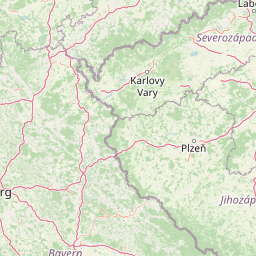
Michovka park geography, regions, and map view in Czechia

Understand where Michovka sits in Czechia through a broader geographic reading of the surrounding landscape, nearby location context, and its mapped position within the national park landscape.

How Michovka fits into Czechia

Czech Republic is a landlocked Central European country with a population of approximately 10.9 million people. The nation was established as an independent state on January 1, 1993, following the dissolution of Czechoslovakia. Its capital and largest city is Prague, with other major urban centers including Brno, Ostrava, Plzeň, and Liberec.

Wider geography shaping Michovka in Czechia

The Czech Republic is a landlocked country in Central Europe. It is bordered by Germany to the west, Austria to the south, Poland to the northeast, and Slovakia to the southeast. The landscape is predominantly hilly, with the territory covering 78,871 square kilometers.

Map view of Michovka

Use this park location map to pinpoint Michovka in Czechia, understand its exact geographic position, and read its mapped placement within the surrounding landscape more clearly.

Pigeon | © OpenStreetMap contributors

Location context for Michovka

Jihočeský kraj

Explore photographic records of limestone outcrops, pond ecosystems, and rare botanical communities.

Michovka Photos and Landscape Scenery: Visualizing Protected Habitats

Visual documentation of Michovka reveals the complex interplay between aquatic environments, exposed limestone bedrock, and specialized short-sedge vegetation. Examining these protected habitats provides clear insight into the compact topography and ecological diversity defining the reserve.

A partially frozen stream with icy rapids and icicles flowing past large rocky cliffs, with snow and dry grass in the foreground.

Two wooden signposts with roofed tops stand in the foreground on a snowy bank, with a frozen snow-covered pond, a yellow building with a red roof, bare trees, and an overcast sky in the background

Park atlas

Compare adjacent wetland habitats, limestone formations, and regional nature reserves

Exploring Parks Near Michovka and Surrounding South Bohemian Protected Landscapes

Browsing other protected areas near Michovka reveals a diverse network of regional reserves and wildlife habitats. Comparing these surrounding landscapes offers deeper geographic context for South Bohemian conservation.
Natural monumentJihočeský kraj
About 7.1 km away#1 closest

Southeast

Velký Potočný: Protected Natural Monument and Wetland Geography in the South Bohemian Region

An essential migratory node and rare plant refuge in the Czech landscape.

Velký Potočný represents a unique intersection of traditional fishpond management and modern biodiversity conservation in Jihočeský kraj. This natural monument supports exceptional shoreline vegetation, including rare species like Cyperus fuscus, and serves as a critical breeding and stopover ground for diverse waterbirds. Its shallow basin geography and hydrologic connection to the Otava River make it a vital point of interest for understanding the ecological function of South Bohemia's inland wetland network.

Area
0.39 km²
Established
1986
IUCN
IV
Relief
Lowland
A watercolor painting of soft green rolling hills and small clusters of pine trees against a light sunset sky.
Natural monumentJihočeský kraj
About 9.8 km away#2 closest

Southwest

Ryšovy Natural Monument and Botanical Protected Area in Jihočeský kraj

Exploring limestone woodland terrain and rare floral habitats

Ryšovy is a notable natural monument in the Czech Republic, defined by its characteristic limestone bedrock and the resulting diverse herb layer. This protected area creates a significant botanical stronghold within the wider landscape of the Jihočeský kraj, featuring a mosaic of woodland patches and sun-exposed clearings that support protected orchids and other rare thermophilous plant species.

Area
0.35 km²
Established
1990
IUCN
IV
Relief
Upland
A watercolor painting showing a panoramic view of a marshy wetland area with sparse bare trees, grassy mounds, and rolling hills in the background.
Natural monumentJihočeský kraj
About 11 km away#3 closest

Southeast

Ražický rybník Natural Monument and Protected Wetland Geography in South Bohemia

Protected pond ecosystems and riparian terrain maps

Ražický rybník is a protected natural monument located in the Písek District of the Czech Republic, encompassing a shallow fishpond and surrounding meadows. This site serves as an essential breeding ground for waterbirds and provides a detailed look at the wetland mosaic characteristic of the Otava river lowlands. The area highlights the intersection of long-standing conservation efforts and habitat restoration through its diverse aquatic microhabitats.

Area
0.291 km²
Established
1986
IUCN
IV
Relief
Lowland
Natural monumentJihočeský kraj
About 13 km away#4 closest

Northeast

V Obouch Natural Monument: Geographic Profile of the Lomnice River Valley

Protected riparian corridors and riverine terrain in Jihočeský kraj

Explore the unique geomorphology of V Obouch, a protected river segment in the Czech Republic. This site provides a detailed cross-section of alder floodplain forests, boulder rapids, and canyon-like terrain that defines the ecological character of the South Bohemian river network.

Area
0.051 km²
Established
1986
IUCN
IV
Relief
Upland
A pale, soft watercolor painting of a rolling, grassy meadow landscape with a prominent green mushroom in the foreground and sparse, leafless trees.
Natural monumentJihočeský kraj
About 13 km away#5 closest

North

Malý Kosatín: Protected Botanical Landscapes in the South Bohemian Region of Czechia

A rare fen-meadow sanctuary in the Písek District

Located in the heart of the Czech countryside, Malý Kosatín is a natural monument distinguished by its intense botanical density and traditional meadow management. The site serves as a crucial habitat for threatened orchids and sedge communities, providing a focused view of the ecological character that defines the upland terrain surrounding the Písek District.

Area
0.01 km²
Established
1986
IUCN
IV
Relief
Upland
Watercolor painting of a tranquil pond scene with grassy shores, reeds, and rolling hills in the background under a soft sky.
Natural monumentJihočeský kraj
About 17 km away#6 closest

Southeast

Skalský rybník a Klokočínská olšina: Protected Wetland Landscapes and Forested Terrain

Natural Monument site in South Bohemia, Czech Republic

Located in the low-lying Českobudějovická pánev basin, this natural monument protects a tightly linked wetland system. The site encompasses open water, damp meadows, and broadleaf woodland, providing a refuge for protected waterbirds and rare pond-edge vegetation amidst the traditional landscape of South Bohemia.

Area
0.128 km²
Established
1986
IUCN
IV
Relief
Lowland
A watercolor painting showing a panoramic view of soft rolling green hills, a small stream, and wildflowers in the foreground.
Natural monumentJihočeský kraj
About 18 km away#7 closest

Northwest

Smyslov Natural Monument: Mapping Protected Habitats in the South Bohemian Region

Traditional pastoral landscapes and botanical meadow mosaics

Smyslov stands as a significant natural monument in the Jihočeský kraj, illustrating the traditional ecological structure of the Blatná area. The site is defined by its tight combination of dry, rocky slopes featuring juniper, and shallow depressions hosting moisture-loving vegetation. Explore this distinct protected area to understand its role in conserving rare meadow flora and traditional South Bohemian terrain.

Area
0.078 km²
Established
1990
IUCN
IV
Relief
Lowland
Watercolor painting of a soft, panoramic landscape with rolling green hills, a gentle path or stream, and misty mountain silhouettes in the background under a pale sky.
Natural monumentStrakonice District
About 22 km away#8 closest

Southwest

Na Opukách Natural Monument: Protected Calcareous Landscapes in Strakonice District

Botanical richness and geological geography of a unique Bohemian hilltop reserve

Na Opukách protects a specialized environment of dry grassland and opuka outcrops that remain rare within the wider Strakonice foothills. This site provides a focused look at how specific sedimentary geology supports diverse orchid populations and hardy meadow flora within a predominantly forested regional geography.

Area
0.348 km²
Established
1996
IUCN
IV
Relief
Upland

Common questions about visiting, size, designation, and location context for Michovka

Michovka FAQs for park facts, access, geography, and protected area context

Find quick answers about Michovka, including protected-area facts, park geography, trail and visitor context, and how the park fits into its surrounding country and regional landscape.
MoriAtlas Explorer

Continue Your Protected Areas Search Across the Global Atlas

Deepen your exploration by continuing the structured search for national parks and protected areas worldwide. Utilize the comprehensive filtering capabilities to compare different conservation landscapes and refine your understanding of global park geography. Discover more about the distribution and characteristics of protected natural areas.

Global natural geography