Why Mierucinek Nature Reserve stands out
Mierucinek Nature Reserve is best known for protecting a well-developed fragment of lowland oak forest on a fertile deciduous woodland habitat, the kind of stand that has become increasingly rare across the agricultural landscapes of central Poland. The reserve functions as a representative example of oak-dominated forest community, valued for its structural maturity, native species composition, and ecological integrity. Its importance also lies in being administered under strict protection, the most rigorous level of nature conservation in Poland. Even though the area is small, Mierucinek serves as a local reference site for studying, teaching about, and showcasing the character of natural oak woodlands of the Gniezno Lake District.
Mierucinek Nature Reserve history and protected-area timeline
Mierucinek Nature Reserve was formally established in 1995, when the Polish Minister of Environmental Protection, Natural Resources, and Forestry issued the legal order creating the reserve. The founding act was published in the Polish Monitor in early 1996 (M.P. 1996, No. 5, item 47), marking the official entry of the site into the country's system of protected areas.
The rationale behind its creation, as stated in the founding legal instrument, was the preservation, for scientific, educational, and landscape reasons, of a well-developed fragment of oak forest on a habitat typical of fertile deciduous woodland. This placed the reserve within a broader wave of Polish nature protection efforts in the 1990s, when many forest communities across the country were being formally secured against intensification of land use, fragmentation, and forestry-driven transformation. By isolating this particular oak forest fragment under strict protection, the state ensured its long-term ecological integrity and established it as a durable reference point for understanding natural oak woodland in the region.
Mierucinek Nature Reserve landscape and geographic character
The landscape of Mierucinek Nature Reserve is shaped by its location within the Gniezno Lake District, a mesoregion characterized by gently rolling post-glacial terrain formed during the retreat of the last ice sheets. The broader area around the reserve features undulating lowlands, terminal moraines, and a network of lakes, all of which produce the typical scenery of north-central Poland: a mosaic of farmland, woodland patches, and small water bodies within a relatively flat but textured topography.
Within this regional context, the reserve itself is a small forested enclave. Its terrain reflects the conditions of a fertile deciduous woodland habitat, with soils and microtopography that support broadleaf species rather than coniferous or bog vegetation. The forest stands of the reserve are mature oak communities, creating a closed-canopy deciduous woodland setting that visually distinguishes the reserve from any open fields, meadows, or water bodies in the surrounding countryside. The overall impression is one of continuous, structured deciduous forest set within a wider agricultural and lake-district landscape.
Mierucinek Nature Reserve ecosystems, habitats, and plant life
The ecological character of Mierucinek Nature Reserve is defined by its core forest community: a well-developed oak forest on a fertile deciduous woodland habitat typical of central European lowlands. In Polish ecological classification, this habitat type is associated with grąd communities, which mix oak with other broadleaf species in a multi-layered structure that includes a tree canopy, an understory of smaller trees and shrubs, and a rich herb layer on the forest floor.
Because the reserve is classified as a phytocoenotic reserve focused on plant communities, the natural value of the site is understood primarily through the integrity and representativeness of this woodland assemblage. Protection here conserves not only individual trees, but the full community structure that defines a healthy lowland oak forest, including the conditions that allow characteristic understory and ground flora to persist. As a result, Mierucinek functions ecologically as a small but coherent refugium of natural deciduous forest in a region where such communities have become increasingly fragmented by agriculture and forestry.
Mierucinek Nature Reserve conservation status and protection priorities
The conservation significance of Mierucinek Nature Reserve lies primarily in its role as a protected example of a natural lowland oak forest community. The reserve was created explicitly to preserve, for scientific, educational, and landscape purposes, a high-quality fragment of oak woodland at a time when such communities were under pressure from land-use change across central Poland. By legally securing the area, the state committed to maintaining its ecological structure and composition as a representative reference site.
Because the reserve operates under strict protection (ochrona ścisła), the highest level of nature conservation in the Polish system, it enjoys the most restrictive safeguards available. Human activity within its boundaries is tightly limited, allowing natural forest processes, regeneration cycles, and species interactions to unfold with minimal direct interference. This makes Mierucinek an unusually stable reference point for oak forest conservation in the Kujawsko-Pomorskie region, where surrounding forests are typically subject to routine forestry management.
Top sights and standout views in Mierucinek Nature Reserve
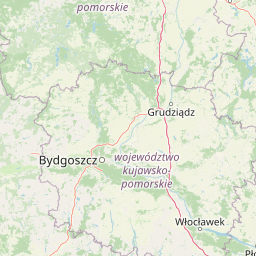
A strictly protected compact forest reserve preserving a well-developed oak forest community on fertile deciduous woodland habitat. Established in 1995 and located within the Gołąbki Forest District in the Mogilno County area of the Kujawsko-Pomorskie Voivodeship. Classified as a phytocoenotic forest reserve focused on the integrity of the entire oak woodland biocenosis. Situated within the Gniezno Lake District mesoregion, giving it strong regional context for understanding lowland deciduous forests of north-central Poland.
Best time to visit Mierucinek Nature Reserve
As a strictly protected forest reserve with no formal visitor infrastructure, Mierucinek is best understood in terms of seasonal experience rather than operational timing. Late spring and early summer bring the most expressive display of the herb layer in mature oak forests, when characteristic broadleaf understory plants are in leaf and flowering.
Autumn is the period when the oak canopy itself takes on the warmest visual character, and the structured closed-canopy deciduous woodland setting is particularly striking as broadleaf species turn color before shedding. In winter, the reserve presents a quieter, more open deciduous woodland profile that highlights the structural complexity of mature oak stands. Regardless of season, visitation is constrained by the reserve's strict protection status, so the most appropriate use is observational and respectful rather than recreational.