Mori Atlas logo
Nature reserveModrzewina Nature Reserve

Examining the ecological boundaries and morainic plateau landscapes of this historic nature reserve

Modrzewina Nature Reserve: A Detailed Geographic Atlas of Poland's Protected Larch Woodlands

(Rezerwat przyrody Modrzewina)

Modrzewina Nature Reserve stands as a significant protected site within the Masovian Voivodeship of central Poland. Located on the Wysoczyzna Rawska morainic plateau, this reserve preserves the northernmost natural population of the Polish larch, with mature trees reaching impressive heights across a gentle upland terrain. This geographic analysis details the historical forest continuity and the unique environmental conditions that define this protected lowland woodland.

forest reservePolish larchEuropean larchlowland forestmorainic plateauWysoczyzna Rawska

Modrzewina Nature Reserve

Nature reserve

Park overview

Structured park overview, official facts, and landscape profile for Modrzewina Nature Reserve

Modrzewina Nature Reserve park facts, protected area profile, and essential visitor context

Review the core facts for Modrzewina Nature Reserve, including designation, size, terrain, visitor scale, habitats, and operating context in one park-focused overview.

About Modrzewina Nature Reserve

Modrzewina Nature Reserve lies in the lowland belt of central Poland, on the Wysoczyzna Rawska, a broad postglacial plateau marked by gentle morainic terrain. The reserve sits within the Grójec Forest District, near the village of Mała Wieś in Gmina Belsk Duży, roughly in the area where the Mazowieckie Voivodeship meets the transition to the historically forested landscape south of Warsaw. Its terrain, climate, and soil conditions place it within the central European mixed lowland forest zone, but its species composition gives it a quite unusual character.

The reserve exists to protect one of the most geographically notable larch populations in Poland: an isolated, naturally established stand of the Polish larch (modrzew polski), a subspecies of the European larch that sits at the northern edge of its natural range here. The trees in Modrzewina are unusually large for the species at this latitude, with mature specimens reaching around 40 meters in height and breast-height diameters of up to 120 cm. These figures make the stand both a scientific reference point and a visually distinctive element of the surrounding plateau landscape. The protected forest is not a planted monoculture but a natural population, which gives it additional value as a reference site for understanding how this subspecies performs at the limits of its distribution.

Beyond its ecological role, Modrzewina is woven into the cultural history of the surrounding countryside. The forest is traditionally linked to the nearby Mała Wieś manor estate, and historical accounts record a visit by King Stanisław August Poniatowski on 21 July 1787, when he admired the larches on this site. Over the following centuries, the same woodland drew sustained protection, first by private owners in 1927, then by the wartime authorities, and finally by the modern Polish state. The reserve today covers roughly 332 hectares and forms part of a network of forest reserves that anchor conservation of lowland larch populations across the region.

Quick facts and research context for Modrzewina Nature Reserve

Modrzewina Nature Reserve is a forest nature reserve in central Poland, in the Gmina Belsk Duży area of Grójec County, Mazowieckie Voivodeship. It is managed by the Grójec Forest District and occupies roughly 332 hectares on the Wysoczyzna Rawska. The reserve's establishment date is 5 May 1959 under Polish ministerial regulation, though the woodland itself had been protected as early as 1927 on private land. Its purpose is the conservation of the northernmost natural stand of the Polish larch, a regional subspecies of the European larch sought after for its biological rarity.

Protection and recognition

Documented terrestrial protection history and conservation framework data

Modrzewina Nature Reserve Protection Status and Designation Records

Modrzewina Nature Reserve maintains a documented terrestrial protection status established in two thousand and five. Records outline the established designation timeline and management scope without additional international recognition sources.

Protection details

Protection scope
Terrestrial
Designated year
2005
Transboundary protection
No
Park context

Deeper park guide and search-rich context for Modrzewina Nature Reserve

Modrzewina Nature Reserve history, landscape, wildlife, and travel context

Explore Modrzewina Nature Reserve through its history, landscape character, ecosystems, wildlife, conservation priorities, cultural context, and seasonal travel timing in a structured park guide built for atlas discovery and search intent.

Why Modrzewina Nature Reserve stands out

Modrzewina is best known for sheltering the northernmost natural stand of the Polish larch (modrzew polski) on the Rawska Plateau. The trees grow to roughly 40 meters tall with breast-height diameters up to 120 cm, an unusually large stature for larch stands at this latitude. The reserve's significance lies as much in the rarity of this isolated subspecies population as in the size and age structure of the mature trees themselves. The reserve is also notable as a historical woodland that survived multiple ownership regimes: a private noble estate site, a pre-war conservation effort, wartime protection under the German occupation, and formal state-level protection after 1959.

Modrzewina Nature Reserve history and protected-area timeline

The forest at Modrzewina has been recognized as a special place for centuries. Historical records indicate that King Stanisław August Poniatowski visited the site on 21 July 1787 and admired the larches that grew there. The woodland remained part of the broader estate landscape of Mała Wieś, and its silvicultural value made it a focal point of local land management long before formal conservation legislation existed.

The first formal protection of the grove came in 1927, when the site was placed under protection as a small private reserve covering 7.44 hectares across forest sections 15a, b, and c. This early protection, granted with the consent of the landowners, marks Modrzewina as one of the older documented private conservation efforts in central Poland. During World War II, the same protectionist instinct continued even under very different governance: the occupying authorities recognized the significance of the larch stand for what they referred to as the Reich and shielded the trees from felling, while after the war it was confirmed that the protected area had been successfully preserved against wartime exploitation. By the end of the conflict, the protected area had been expanded to about 67 hectares.

After the war, the Polish state formalized what the site had enjoyed informally for decades. The modern Rezerwat przyrody Modrzewina was created on 5 May 1959 by Order No. 157 of the Minister of Forestry and the Wood Industry, covering 336.15 hectares. Subsequent boundary adjustments, including those issued by the Voivode of Mazowieckie in December 2001 and June 2005, refined the reserve to its current size of 332.15 hectares. The reserve is administered by the Regional Directorate of State Forests in Radom through the Grójec Forest District.

Modrzewina Nature Reserve landscape and geographic character

Modrzewina occupies part of the Wysoczyzna Rawska, a flat to gently undulating morainic plateau typical of central Poland. The terrain is shaped by Pleistocene glacial activity, producing broad uplands with relatively modest local relief and a substrate of postglacial deposits favorable to mixed lowland forest. Within this setting, the reserve presents a coherent forested block where gently rolling ground is clothed almost entirely by mature woodland.

The plateau's broader context is one of agricultural and forest mosaics, with arable land, small villages, and patches of managed forest surrounding the protected area. Because the Wysoczyzna Rawska is one of the warmer and drier plateaus of the region, it supports vegetation with continental tendencies, a setting that helps explain why the Polish larch can flourish here even at the northern edge of its natural range. The scattered character of the woodland stand, combined with the quiet rural setting, gives the reserve a distinctly secluded and traditional central Polish countryside atmosphere.

Modrzewina Nature Reserve ecosystems, habitats, and plant life

The ecological character of Modrzewina is defined by a single but exceptional dominant element: the Polish larch (modrzew polski), a regional subspecies of the European larch. Larch is unusual among Polish native conifers because it is deciduous, dropping its needles in autumn. The Modrzewina stand is significant because it represents a natural population rather than a planted one, meaning the trees have regenerated in place and adapted to the local substrate and climate over many generations.

The soils and microclimate of the Wysoczyzna Rawska allow the larches to grow exceptionally well at the northern edge of their ecological range. Mature individuals reach heights of about 40 meters and chest-height diameters of up to 120 cm, dimensions that are at the upper end for lowland larch in central Europe. The forest community associated with these trees includes other species typical of central European mixed and coniferous forests, consistent with the reserve's placement within the Grójec Forest District. The combination of rarity, natural regeneration, and silvicultural maturity is what makes the reserve scientifically significant in ecological terms.

Modrzewina Nature Reserve wildlife and species highlights

The source material does not describe the fauna of the reserve in any specific way. Modrzewina is described primarily as a forest reserve valued for its botanical content, particularly the Polish larch population. Any broader faunal profile would be speculative and is therefore omitted rather than fabricated.

Modrzewina Nature Reserve conservation status and protection priorities

The conservation significance of Modrzewina rests on a single but unusually valuable feature: the northernmost natural stand of the Polish larch within its geographical range. Because this subspecies has a naturally limited distribution in Poland, any preservation site for it carries exceptional scientific and ecological importance. The reserve serves as a reference point for studying how the subspecies grows and reproduces at the climatic margins of its range.

The protection history itself is striking and unusual. From early private conservation in 1927, through wartime protection that ironically saved the trees from wartime depletion, to formal state-level protection from 1959 onward, the reserve has benefited from a continuity of conservation attention exceeding a century. Its status within the state forest network, managed by the Grójec Forest District under the Radom Regional Directorate of State Forests, places it within Poland's overall protected-area framework for forests of recognized scientific value.

Modrzewina Nature Reserve cultural meaning and human context

Modrzewina has long been embedded in the cultural identity of the Mała Wieś estate landscape in Gmina Belsk Duży. The reference to King Stanisław August Poniatowski's visit in 1787 places the woodland firmly within the late-Enlightenment tradition of Polish royal interest in exemplary natural monuments, an era when unusual or stately trees were visited and recorded as part of noble estate tours.

The fact that early private protection began in 1927 shows how the site was also a focal point for interwar Polish nature conservation in private rural settings, before fully state-led conservation became standard. The reserve today retains the quiet cultural backdrop of a historically significant central Polish woodland tied to a manor estate landscape and its evolution across multiple political periods.

Top sights and standout views in Modrzewina Nature Reserve

Standout qualities of Modrzewina include its status as the northernmost natural site of the Polish larch on the Wysoczyzna Rawska; the impressive stature of the mature trees, reaching around 40 meters in height and 120 cm in diameter; the unusual continuity of conservation attention spanning nearly 150 years from the 1787 royal visit through wartime protection to modern state-level designation; and the reserve's placement in a secluded rural setting on the gentle morainic plateau south of Warsaw.

Best time to visit Modrzewina Nature Reserve

The source material does not provide direct seasonal guidance for visiting Modrzewina. As a deciduous larch forest, however, it is reasonable to expect that spring and summer bring full needle cover, while autumn provides the unusual visual experience of a conifer stand turning yellow and shedding needles, a distinctive seasonal transformation that larch forests offer compared to evergreen forests. Late autumn into winter exposes the bare structure of large mature trunks. Detailed seasonal access conditions and visitor logistics are not documented in the available source.

Monthly climate preview

Long-term representative point measurements for temperature and precipitation patterns

Modrzewina Nature Reserve Climate Normals and Annual Weather Rhythm

Modrzewina Nature Reserve records measured monthly temperature and precipitation normals derived from representative coordinate climatology between 1991 and 2020. Examining the complete twelve-month temperature sequence provides detailed insight into long-term environmental averages across the protected area.
Annual mean8 °C
-3 °C20 °C
Jan-3°
Feb-2°
Mar
Apr
May14°
Jun18°
Jul20°
Aug20°
Sep14°
Oct
Nov
Dec-2°
Warmest month
July

20.2 °C

Coolest month
January

-3.5 °C

Wettest month
July

2.5 mm/day

Driest month
March

1.3 mm/day

Park location guide

Geography guide, regional context, and park location map for Modrzewina Nature Reserve

Modrzewina Nature Reserve park geography, regions, and map view in Poland

Understand where Modrzewina Nature Reserve sits in Poland through a broader geographic reading of the surrounding landscape, nearby location context, and its mapped position within the national park landscape.

How Modrzewina Nature Reserve fits into Poland

Poland, officially the Republic of Poland, is a Central European country spanning from the Baltic Sea in the north to the Carpathian Mountains in the south. It borders Germany, Czech Republic, Slovakia, Ukraine, Belarus, Lithuania, and Kaliningrad Oblast. The country has a temperate climate, diverse landscapes, and is known for its rich history, cultural heritage, and strong economic position within the EU.

Wider geography shaping Modrzewina Nature Reserve in Poland

Poland occupies 312,696 km2 in Central Europe, extending from the Baltic Sea coast in the north to the Sudetes and Carpathian Mountains in the south. It borders Germany to the west, Czech Republic and Slovakia to the south, Ukraine and Belarus to the east, and Lithuania and Kaliningrad Oblast to the northeast. The landscape includes lowland plains, uplands, and mountain ranges.

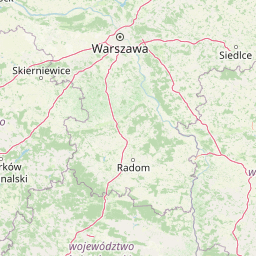
Map view of Modrzewina Nature Reserve

Use this park location map to pinpoint Modrzewina Nature Reserve in Poland, understand its exact geographic position, and read its mapped placement within the surrounding landscape more clearly.

Pigeon | © OpenStreetMap contributors

Location context for Modrzewina Nature Reserve

Masovian Voivodeship
Park atlas

Compare nearby lowland forests and regional protected areas across central Poland.

Exploring Parks Near Modrzewina Nature Reserve and Surrounding Protected Landscapes

Visitors exploring Modrzewina Nature Reserve can browse other protected areas across the central Polish morainic plateau. Comparing adjacent woodland reserves helps place regional larch populations and lowland forest habitats into a broader geographical context.
Nature reserveMasovian Voivodeship
About 20 km away#1 closest

North

Młochowski Łęg Nature Reserve: Mapping Floodplain Forests in Masovian Voivodeship

A protected wetland woodland sanctuary along the Utrata River.

Located within the flat terrain of the Łowicz-Błonie Plain, this nature reserve conserves a representative ash-alder floodplain forest. The site serves as a vital wetland woodland refugium, featuring a complex mosaic of riparian vegetation that highlights the regional ecological character of central Poland's river valleys.

Area
0.12 km²
Established
1984
Relief
Lowland
Climate
Temperate
Nature reserveMasovian Voivodeship
About 21 km away#2 closest

North

Rezerwat przyrody Młochowski Grąd: Protected Forest Geography and Nature Reserve Map

Mapping lowland woodland communities in Masovian Voivodeship

Rezerwat przyrody Młochowski Grąd preserves a representative fragment of natural oak and pine forest within the flat plains of central Poland. Discover the ecological layout of this protected area, including its grąd deciduous communities and its role as a reference site for forest research in the Masovian Voivodeship landscape.

Area
0.27 km²
Established
1983
Relief
Lowland
Climate
Temperate
Nature reserveMasovian Voivodeship
About 26 km away#3 closest

Northwest

Dąbrowa Radziejowska Nature Reserve: Protected Forest Geography in Masovian Voivodeship

An atlas entry for unique light oakwood forest landscapes and protected terrain.

Located in the Masovian Voivodeship, Dąbrowa Radziejowska Nature Reserve is a managed forest entity centered on the preservation of light-demanding oakwood habitats. This reserve provides important ecological insight into the forest composition and botanical diversity typical of the lowland plains in central Poland, offering a clear view of how small protected zones influence regional geography.

Area
0.517 km²
Established
1984
Relief
Lowland
Scope
Terrestrial
Watercolor painting of a meandering river landscape with gentle hills, light green foliage in the foreground, and soft washes of color.
Protected landscapeLodz Voivodeship
About 26 km away#4 closest

Northwest

Bolimowski Park Krajobrazowy: Geography of a Central Polish Protected Landscape Area

Rawka River valley mapping and Puszcza Bolimowska forest terrain

Bolimowski Park Krajobrazowy encompasses a unique mosaic of postglacial plains and riverine ecosystems in central Poland. The area is defined by the Rawka River, which forms a network of meanders, oxbow lakes, and terraces, while surrounding forests retain historical links to the vast primeval woods of Puszcza Bolimowska. This protected territory offers a significant habitat for diverse wildlife, including moose and beaver, within a landscape characterized by its shifting transition between deep forest, wet meadows, and light oak groves.

Area
205.123 km²
Established
1986
Relief
Lowland
Climate
Temperate
Protected landscapeMasovian Voivodeship
About 34 km away#5 closest

Northeast

Chojnowski Park Krajobrazowy: Atlas of Protected Landscapes and Forested Terrain

Geographic overview of the Masovian Voivodeship forest belt

Investigate the topographical complexity of Chojnowski Park Krajobrazowy, where flat glacial plains meet the dramatic Vistula escarpment. This protected area offers detailed mapping of forest stands, aquatic habitats, and riparian zones within the Masovian landscape, providing an essential look at the ecological connectivity of the region south of Warsaw.

Area
67.96 km²
Established
1993
Relief
Lowland
Climate
Temperate
A soft watercolor illustration of a winding river flowing through a green valley with forested hills in the background.
Nature reserveMazowieckie
About 43 km away#6 closest

Northeast

Rezerwat przyrody Morysin: Protected Floodplain Landscapes and Historic Forest Reserves

A riparian heritage site in the Mazowieckie region

Situated in the Vistula floodplain, Rezerwat przyrody Morysin stands as a significant protected area defined by its massive old-growth trees and layered cultural history. The terrain incorporates diverse wetland features, including the Sobieski Canal and Wilanówka stream, creating a vital habitat for cavity-nesting species and a rare example of integrated natural and historic preservation.

Area
0.535 km²
Established
1996
Relief
Lowland
Climate
Temperate
Nature reserveMazovia Voivodeship
About 46 km away#7 closest

East

Rezerwat przyrody Dęby Biesiadne im. Mariana Pulkowskiego: Mazovia Region Nature Reserve

Ancient oak-hornbeam forest and lowland protected landscape

This nature reserve in the Mazovia Voivodeship protects a dense mosaic of riparian and upland deciduous forest. Centered on a 220-year-old oak stand, the protected area offers a clear look at the classic woodland ecology of the Polish lowlands, providing significant value for those mapping regional forest remnants and natural vegetation zones.

Area
0.172 km²
Established
2006
Water
Minor water
Protected areaLodzkie Voivodeship
About 47 km away#8 closest

Northwest

Polany Puszczy Bolimowskiej: Protected Meadow Enclaves within the Lodzkie Voivodeship Landscape

Mapped meadow clearings and wetland habitat geography

Polany Puszczy Bolimowskiej serves as a critical protected area in central Poland, encompassing a series of connected meadow clearings within the Bolimów Forest. This site preserves rare Molinion wet meadows and tall herb floodplains, offering a distinct study of how open habitats persist in a forest-dominated matrix.

Area
1.341 km²
Relief
Lowland
Water
Minor water

Common questions about visiting, size, designation, and location context for Modrzewina Nature Reserve

Modrzewina Nature Reserve FAQs for park facts, access, geography, and protected area context

Find quick answers about Modrzewina Nature Reserve, including protected-area facts, park geography, trail and visitor context, and how the park fits into its surrounding country and regional landscape.
MoriAtlas Explorer

Continue Your Protected Areas Search Across the Global Atlas

Deepen your exploration by continuing the structured search for national parks and protected areas worldwide. Utilize the comprehensive filtering capabilities to compare different conservation landscapes and refine your understanding of global park geography. Discover more about the distribution and characteristics of protected natural areas.

Global natural geography