Mori Atlas logo
Nature reserveRezerwat przyrody Mszar nad Jeziorem Mnich

Mapping the transitional mire communities and sandy inland dunes in Greater Poland Voivodeship

Rezerwat przyrody Mszar nad Jeziorem Mnich: A Protected Peatland and Glacial Landscape

Rezerwat przyrody Mszar nad Jeziorem Mnich protects a distinct transitional peatland nestled within a narrow glacial lake basin in west-central Poland. This nature reserve serves as an important botanical site where waterlogged mire habitats meet surrounding inland dunes. The mapped geography highlights a rare glacial relic landscape within the Notec Forest region, showcasing how former lake beds evolve into complex wetland environments.

peatlandtransitional bogmireglacial lakeinland dunesNotec Forest
A flat-style digital illustration depicting a mountain valley with a waterfall in the distance, framed by pine and birch trees in the foreground.

Rezerwat przyrody Mszar nad Jeziorem Mnich

Nature reserve

Park overview

Structured park overview, official facts, and landscape profile for Mszar nad Jeziorem Mnich Nature Reserve

Mszar nad Jeziorem Mnich Nature Reserve park facts, protected area profile, and essential visitor context

Review the core facts for Mszar nad Jeziorem Mnich Nature Reserve, including designation, size, terrain, visitor scale, habitats, and operating context in one park-focused overview.

About Mszar nad Jeziorem Mnich Nature Reserve

Mszar nad Jeziorem Mnich is a compact but ecologically significant nature reserve in the Greater Poland region of western Poland. It lies within the administrative area of the Sieraków commune, where the surrounding landscape is shaped by the broader Notec Forest and the protected corridors of the Sierakowski Landscape Park.

The reserve's defining feature is a transitional peatland that has grown over the still-water southern portion of a former small lake. This lake, gradually infilling over time, occupies a narrow glacial meltwater channel bordered by inland dunes. As the open water has diminished, mire vegetation has expanded across the basin, creating a varied mosaic of bog communities in a constrained but ecologically rich setting.

The reserve was established specifically to safeguard these bog and mire plant communities. Although small in area, the site supports a comparatively high number of moss species and a substantial list of vascular plants, including species protected under Polish conservation law. The presence of glacial relicts among the mosses adds a particular biogeographical interest, reflecting the cold-tolerant flora that survived from the region's post-glacial past.

Embedded in a wider matrix of forested dunes and sandy outwash plains, the reserve represents one of the wetland anchors of the Sierakowski Landscape Park. Its protected status contributes to the broader conservation network that maintains peatland, dune, and forest habitats across this part of the Notec Forest.

Quick facts and research context for Mszar nad Jeziorem Mnich Nature Reserve

Mszar nad Jeziorem Mnich is a peatland-type nature reserve established in 1967 in the Greater Poland Voivodeship, within the administrative district of Międzychodzie and the Sieraków Forest District. The reserve covers roughly 6.43 hectares and sits inside the Sierakowski Landscape Park, part of the wider Notec Forest region.

The site protects a transitional bog that has formed in the southern part of a vanishing glacial lake. Its protected purpose focuses on conserving bog and mire plant communities, including a notable richness of moss species and protected vascular plants such as orchids and sundews.

Protection and recognition

Documented terrestrial protection scope, management details, and international recognition records

Rezerwat przyrody Mszar nad Jeziorem Mnich Protection Status and Designated Area Facts

Rezerwat przyrody Mszar nad Jeziorem Mnich features a documented terrestrial protection scope without imported international recognition sources. Reviewing these verified protection status records provides clear insight into the conservation framework governing the protected area.

Protection details

Protection scope
Terrestrial
Transboundary protection
No
Park context

Deeper park guide and search-rich context for Mszar nad Jeziorem Mnich Nature Reserve

Mszar nad Jeziorem Mnich Nature Reserve history, landscape, wildlife, and travel context

Explore Mszar nad Jeziorem Mnich Nature Reserve through its history, landscape character, ecosystems, wildlife, conservation priorities, cultural context, and seasonal travel timing in a structured park guide built for atlas discovery and search intent.

Why Mszar nad Jeziorem Mnich Nature Reserve stands out

The reserve is best known for protecting a transitional peatland that developed in a former glacial lake basin, with an unusually rich assemblage of mosses and protected vascular bog plants nestled between inland dunes.
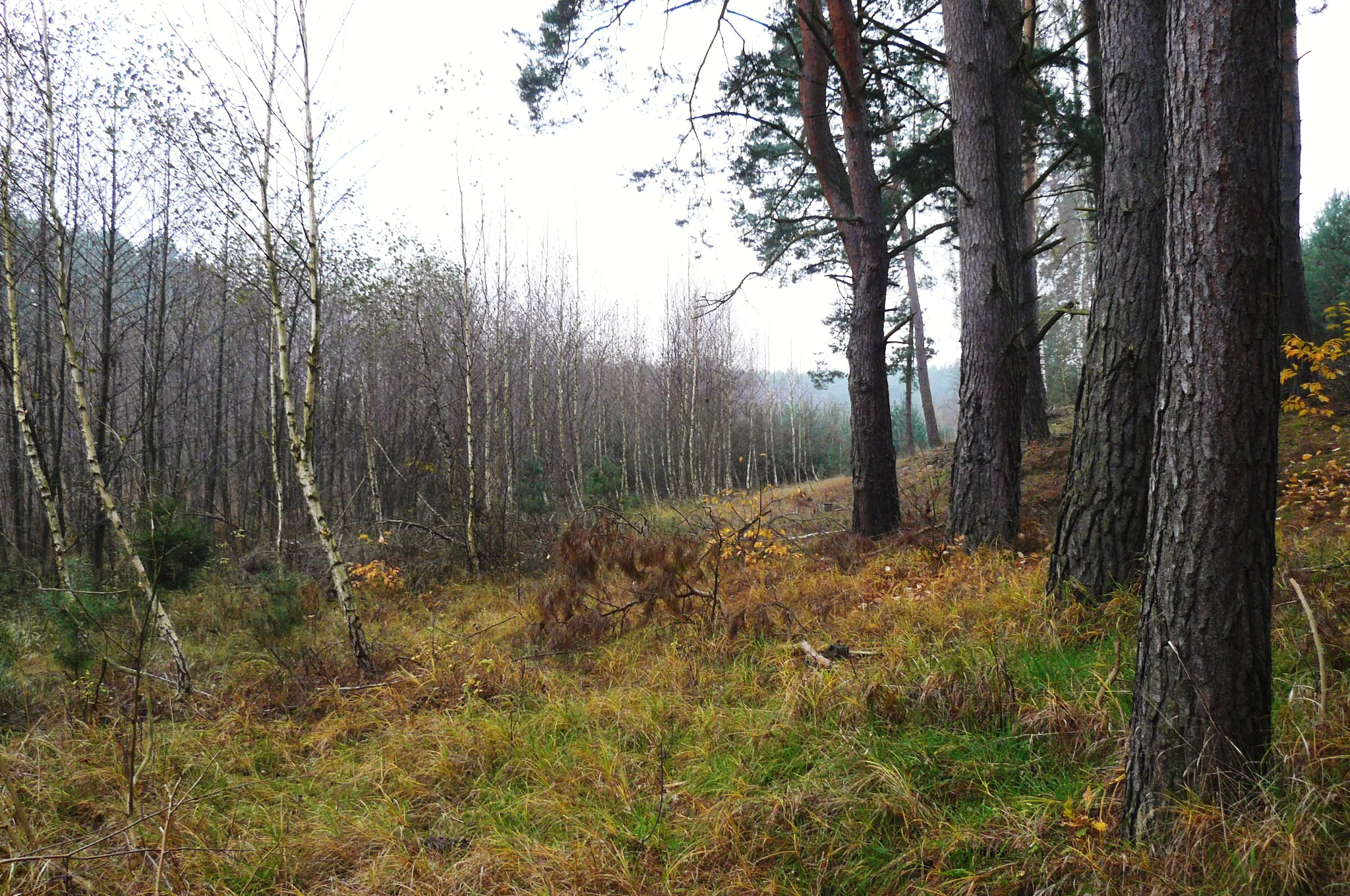
A forest edge landscape featuring tall pine trees on the right and a dense stand of slender deciduous trees on the left, with autumn-colored grasses and undergrowth in the foreground.
A view of the woodland and marshy terrain within Mszar nad Jeziorem Mnich Nature Reserve.

Mszar nad Jeziorem Mnich Nature Reserve history and protected-area timeline

The Mszar nad Jeziorem Mnich reserve was created in 1967 through a regulation of the Minister of Forestry and the Wood Industry, with the original founding act citing an area of 5.83 hectares. The purpose of designation was to protect a transitional peatland and the associated bog and mire plant assemblages that had developed in the southern part of a lake that was actively filling in and converting to wetland.

After its initial establishment, the reserve was reconfirmed in regional legislation in 2001, when the Governor of Greater Poland published an official list of nature reserves created through the end of 1998. Its current management framework was established in 2011 under a regulation of the Regional Director of Environmental Protection in Poznań, followed by an amendment issued in late 2017.

The historical name of the former lake, Mnisze, reflects an older land ownership pattern: the water body was once held by the Bernardine monks from the nearby religious house in Sieraków. Over time, the lake transitioned into the bog that the reserve now protects.

Mszar nad Jeziorem Mnich Nature Reserve landscape and geographic character

The reserve occupies a narrow glacial channel cut into the surrounding terrain, with sandy inland dunes rising on either side of the bog-filled basin. This setting is typical of the post-glacial landscape of the Notec Forest region, where leftover meltwater corridors between dune ridges have frequently evolved into lakes, marshes, and ultimately mires.

The southern part of the former lake is the heart of the reserve, now an overgrown water body whose surface is increasingly dominated by peat-forming vegetation. The dune ridges that frame the basin remain visible in the surrounding landscape, giving the reserve a distinctive profile of low sandy heights bordering a flat, waterlogged wetland interior.

Mszar nad Jeziorem Mnich Nature Reserve ecosystems, habitats, and plant life

The ecological character of the reserve is defined by transitional peatland communities that occupy the infilling lake basin. Bog and mire vegetation dominates the open wetland surface, supported by the waterlogged, nutrient-poor conditions typical of this kind of glacial landscape.

The site hosts roughly 30 moss species, including glacial relicts that point to the older cold-stage origins of the flora. Vascular plants number around 178 species in total, of which 15 receive species-level protection under Polish law. Among these are orchids, sundews, and clubmosses, all groups that are characteristic of undisturbed bog and acid mire habitats and that benefit from the reserve's protected status.

Mszar nad Jeziorem Mnich Nature Reserve conservation status and protection priorities

Mszar nad Jeziorem Mnich holds its significance as one of the small but ecologically meaningful peatland reserves within the Sierakowski Landscape Park. By safeguarding a transitional mire and its associated bog flora, the reserve protects a habitat type that has become increasingly rare across the Polish lowlands, where most similar sites have been drained or altered.

The presence of protected vascular plants, including orchids, sundews, and clubmosses, alongside glacial relict mosses, gives the reserve broader conservation relevance. It functions as a refuge for bog-dependent species that depend on intact hydrology and undisturbed peat-forming processes, both of which the reserve's small protected footprint helps to maintain.

Mszar nad Jeziorem Mnich Nature Reserve cultural meaning and human context

The former lake at the heart of the reserve once carried the name Mnisze, a toponym that reflects an older era of land ownership in the region. The water body belonged to the Bernardine monks associated with the religious house in Sieraków, tying the site's local history to the religious and economic landscape of pre-modern Greater Poland. The reserve's present-day name preserves this older reference through the use of Mnich, a word connected to that monastic past.

Top sights and standout views in Mszar nad Jeziorem Mnich Nature Reserve

A transitional peatland developed in a former glacial lake basin between inland dunes.

Rich bog flora including around 30 moss species, with glacial relicts still present.

Protected vascular plants such as orchids, sundews, and clubmosses growing in intact mire communities.

Best time to visit Mszar nad Jeziorem Mnich Nature Reserve

The reserve's character shifts with the seasons primarily through the vegetation cycle of the bog and surrounding dunes. Late spring and early summer tend to bring out the richest display of flowering bog plants, including protected species such as orchids and sundews, while autumn highlights the mosses and the broader color shifts across the mire and dune landscape. Winter visits can also reveal the open, quiet character of the wetland, when snow accentuates the contrast between the flat peat basin and the surrounding dunes.
Monthly climate preview

Long-term temperature ranges and monthly precipitation patterns across the protected landscape

Rezerwat przyrody Mszar nad Jeziorem Mnich Climate Normals and Weather by Month

Representative coordinates record measured monthly temperature swings from sub-zero winter minimums to warm summer maximums alongside steady precipitation rates. Reviewing the complete twelve-month climate profile reveals detailed long-term environmental averages for Rezerwat przyrody Mszar nad Jeziorem Mnich.
Annual mean9 °C
-2 °C20 °C
Jan-2°
Feb
Mar
Apr
May14°
Jun18°
Jul20°
Aug19°
Sep15°
Oct
Nov
Dec
Warmest month
July

19.6 °C

Coolest month
January

-1.9 °C

Wettest month
July

2.5 mm/day

Driest month
April

1.1 mm/day

Park location guide

Geography guide, regional context, and park location map for Mszar nad Jeziorem Mnich Nature Reserve

Mszar nad Jeziorem Mnich Nature Reserve park geography, regions, and map view in Poland

Understand where Mszar nad Jeziorem Mnich Nature Reserve sits in Poland through a broader geographic reading of the surrounding landscape, nearby location context, and its mapped position within the national park landscape.

How Mszar nad Jeziorem Mnich Nature Reserve fits into Poland

Poland, officially the Republic of Poland, is a Central European country spanning from the Baltic Sea in the north to the Carpathian Mountains in the south. It borders Germany, Czech Republic, Slovakia, Ukraine, Belarus, Lithuania, and Kaliningrad Oblast. The country has a temperate climate, diverse landscapes, and is known for its rich history, cultural heritage, and strong economic position within the EU.

Wider geography shaping Mszar nad Jeziorem Mnich Nature Reserve in Poland

Poland occupies 312,696 km2 in Central Europe, extending from the Baltic Sea coast in the north to the Sudetes and Carpathian Mountains in the south. It borders Germany to the west, Czech Republic and Slovakia to the south, Ukraine and Belarus to the east, and Lithuania and Kaliningrad Oblast to the northeast. The landscape includes lowland plains, uplands, and mountain ranges.

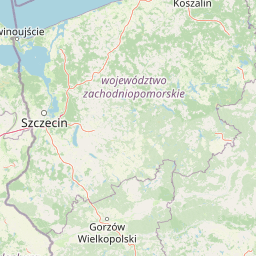
Map view of Mszar nad Jeziorem Mnich Nature Reserve

Use this park location map to pinpoint Mszar nad Jeziorem Mnich Nature Reserve in Poland, understand its exact geographic position, and read its mapped placement within the surrounding landscape more clearly.

Pigeon | © OpenStreetMap contributors

Location context for Mszar nad Jeziorem Mnich Nature Reserve

Greater Poland Voivodeship

Visualizing transitional peatland habitats, glacial channels, and sandy dune ridges

Rezerwat przyrody Mszar nad Jeziorem Mnich Photos and Landscape Scenery

Visual documentation of Rezerwat przyrody Mszar nad Jeziorem Mnich reveals the complex geography of a transitional peatland basin framed by ancient inland dunes. Examining these protected wetland habitats and glacial landforms provides a clear understanding of lowland conservation environments.

A forest edge landscape featuring tall pine trees on the right and a dense stand of slender deciduous trees on the left, with autumn-colored grasses and undergrowth in the foreground.

Park atlas

Compare nearby regional nature reserves and wetland habitats across Greater Poland

Parks Near Rezerwat przyrody Mszar nad Jeziorem Mnich and Surrounding Protected Landscapes

Browse protected areas surrounding Rezerwat przyrody Mszar nad Jeziorem Mnich to compare regional wetland reserves and glacial landforms. Continuing outward reveals connected forest ecosystems and valley habitats across the surrounding landscape.
A soft watercolor illustration of a rural landscape with rolling hills, a green forest line, and marshy foreground vegetation.
Nature reserveGreater Poland Voivodeship
About 12 km away#1 closest

South

Dolina Kamionki Nature Reserve, Protected River Valley and Forest Landscapes in Poland

Geographic overview of a post-glacial meltwater channel in Greater Poland

Dolina Kamionki Nature Reserve protects a distinct segment of a post-glacial channel characterized by diverse geological deposits and high botanical value. The valley terrain supports a layered ecosystem of moist alder swamps, mature oak-hornbeam forests, and xerothermic edge vegetation, providing a compact example of regional biodiversity in the Greater Poland Voivodeship.

Area
0.593 km²
Established
2004
Relief
Upland
Climate
Temperate
A watercolor painting showing a panoramic view of a light-colored lake surrounded by soft, green rolling hills and distant pink-toned mountains.
Nature reserveLubusz Voivodeship
About 31 km away#2 closest

Southwest

Rezerwat przyrody Jezioro Wielkie: Protected Nature Reserve and Regional Landscape Geography

Faunistic reserve in Lubusz Voivodeship, western Poland.

Rezerwat przyrody Jezioro Wielkie preserves a shallow, post-glacial lake environment enriched by reedbeds, sedge meadows, and forested islands. This bird-focused protected area within Lubusz Voivodeship sustains a complex mosaic of woodland and wetland habitats, serving as a primary site for migratory waterbirds and locally threatened avian populations across the western Polish landscape.

Area
2.363 km²
Established
1991
Relief
Upland
Scope
Terrestrial
A watercolor painting showing a soft landscape with green rolling hills and sparse trees against a white background.
Nature reserveGreater Poland Voivodeship
About 36 km away#3 closest

Southeast

Rezerwat przyrody Duszniczki: A Focused Protected Landscape in Greater Poland Voivodeship

Mapping a unique forest reserve and its Polish larch population

Rezerwat przyrody Duszniczki stands as a primary example of small-scale ecological protection within the Wielkopolska region. This forest reserve safeguards rare Polish larch populations integrated within a mature oak and hornbeam woodland, highlighting the importance of focused conservation in the lowland terrain of central Poland.

Area
0.008 km²
Established
1958
Relief
Lowland
Climate
Temperate
Nature reserveLubusz Voivodeship
About 37 km away#4 closest

Northwest

Rezerwat przyrody Mszar Rosiczkowy koło Rokitna: Protected Peatland and Bog Geography

Nature reserve terrain and regional ecological context

This protected area in the Lubusz Voivodeship features a diverse mosaic of raised bog sub habitats. The site is characterized by carnivorous sundew populations and open Scots pine stands rooted in acidic peat, offering a concentrated look at the unique post glacial landscape features found throughout western Poland.

Area
0.034 km²
Established
2009
Water
Major water bodies
Nature reserveLubusz Voivodeship
About 38 km away#5 closest

Northwest

Rezerwat przyrody Mszar Przygiełkowy, Długie im. Huberta Jurczyszyna Nature Reserve

Protected peatland and raised bog landscape in Lubusz Voivodeship

This nature reserve in western Poland serves as a crucial reference site for peatland ecology, showcasing diverse raised and transitional bog habitats. Learn about the reserve's protected botanical landscape, the role of Rhynchospora alba in its ecosystem, and its regional position within the wider forest network of the Lubusz Voivodeship.

Area
0.078 km²
Established
2009
Relief
Lowland
Scope
Terrestrial
Watercolor painting depicting a river flowing through a forested landscape with hills in the background
National parkWest Pomeranian Voivodeship
About 41 km away#6 closest

Northwest

Drawa National Park: Protected Landscape and River Geography in West Pomeranian Voivodeship

Explore Poland's unique lowland river and ancient forest protected area.

Drawa National Park stands as a vital protected area within West Pomeranian Voivodeship, Poland, celebrated for its exceptional natural geography. The park's core feature is the Drawa River, which carves a distinctive path with fast-flowing currents and deep valleys, presenting a landscape more akin to mountain streams than typical lowland waterways. This area protects one of Poland's most valuable lowland river corridors, featuring ancient beech and oak forests, the rare meromictic Lake Czarne, and diverse wetland habitats. MoriAtlas facilitates structured exploration of Drawa National Park's mapped terrain and protected landscape identity.

Area
115.36 km²
Established
1990
IUCN
II
Visitors
27K annual
A watercolor painting of a serene river valley with soft green forest hills in the distance and muted pink reflections on the water.
National parkPoland
About 41 km away#7 closest

North

Drawieński Park Narodowy: Mapping Protected Lowland Forests and Glacial Lake Networks in Poland

Regional geography and protected terrain analysis

An authoritative overview of Drawieński Park Narodowy, covering the postglacial landforms of the Równina Drawska, the unique hydrology of its river-fed lake chains, and the ecological importance of its extensive mature beech forests. This resource provides a clear understanding of the park's boundaries, riparian corridors, and the specific terrain features that define its character within the Polish landscape.

Area
115.36 km²
Established
1990
Visitors
27K annual
Relief
Lowland
A horizontal watercolor painting showing a calm body of water in the foreground with gentle rolling hills and light vegetation in the background under a soft golden sky.
Protected landscapeZachodniopomorskie
About 45 km away#8 closest

Northwest

Barlinecko-Gorzowski Park Krajobrazowy: Protected Landscape and Glacial Geography

A study of forest complexes and postglacial lake systems in Poland

Covering vast stretches of the Puszcza Barlinecka, this protected landscape is characterized by its sandr substrate, seventy-five distinct lake basins, and intricate peatland ecosystems. The region provides a deep look into the glacial history of Northwestern Poland and its unique mix of coniferous forests and moisture-rich hollows.

Area
239.83 km²
Established
1991
Relief
Lowland
Climate
Temperate

Common questions about visiting, size, designation, and location context for Mszar nad Jeziorem Mnich Nature Reserve

Mszar nad Jeziorem Mnich Nature Reserve FAQs for park facts, access, geography, and protected area context

Find quick answers about Mszar nad Jeziorem Mnich Nature Reserve, including protected-area facts, park geography, trail and visitor context, and how the park fits into its surrounding country and regional landscape.
MoriAtlas Explorer

Continue Your Protected Areas Search Across the Global Atlas

Deepen your exploration by continuing the structured search for national parks and protected areas worldwide. Utilize the comprehensive filtering capabilities to compare different conservation landscapes and refine your understanding of global park geography. Discover more about the distribution and characteristics of protected natural areas.

Global natural geography