Mori Atlas logo
Natural monumentNa ostrově

Examining the ecological terrain, juniper habitat, and traditional grazing of this protected site.

Na ostrově Natural Monument: A Protected Juniper Landscape in Středočeský kraj, Czech Republic

(Přírodní památka Na ostrově)

Na ostrově Natural Monument protects a compact hillside slope near Nemíž in the Benešov District of the Czech Republic. This site features a significant concentration of common juniper within a mosaic of dry grassland and heath communities. The area serves as a vital habitat for rare fungi and insects, maintained through ongoing pastoral grazing practices that preserve its distinct open landscape character.

juniper habitatdry grasslanddry heathhillside nature monumentcentral BohemiaBenešov District

Na ostrově

Natural monument

Park overview

Structured park overview, official facts, and landscape profile for Na ostrově

Na ostrově park facts, protected area profile, and essential visitor context

Review the core facts for Na ostrově, including designation, size, terrain, visitor scale, habitats, and operating context in one park-focused overview.

About Na ostrově

Na ostrově lies in the rolling agricultural landscape of central Bohemia, in the Benešov District of the Středočeský Region. Despite its name, which translates literally as "On the Island," it is not an island in the conventional sense but rather a small, ecologically distinct patch of hillside set within the surrounding countryside, close to the village of Nemíž and the municipality of Tehov. The protected area was declared in 1972 and has remained a focus of conservation attention ever since, primarily because of the rich juniper population that occupies its slopes.

The terrain forms part of a south-facing hillside, with elevations falling between roughly 340 and 390 meters above sea level, and it occupies about 5 hectares. The vegetation structure is layered and visually distinctive. In the upper portion of the southern slope, dry grassland communities dominate, characterized by drought-adapted herbaceous species. Lower on the slope, the character shifts to dry heath, where low shrubs and juniper form a more sparse cover. Throughout the site, mature common juniper shrubs are scattered across the slope, often growing between or behind the trunks of taller trees, creating the layered juniper-and-tree mosaic that defines the appearance of the monument.

The ecological value of Na ostrově extends beyond its vegetation. The junipers host several rare fungal species, including Chloroscypha sabinae, which until its discovery here was not known from Bohemia, and Aleurodiscus norvegicus, known elsewhere mainly from Norway and Denmark. Rare insects connected to juniper have also been recorded at the site. Together, these features make the natural monument an important reference point for juniper-associated biodiversity in the Czech Republic, even though its area is small.

Management of the site reflects a deliberate attempt to maintain the open conditions that juniper and the accompanying dry grassland and heath require. Before 1950, the slope was used as a communal pasture for goats and sheep, an activity that kept woody growth in check. After 1950, grazing ceased and the slope progressively became overgrown. Conservationists from Vlašim, working through the Czech Union for Nature Conservation, began to manage the habitat, and in 2006 grazing with a mixed flock of sheep and goats was reintroduced. This traditional land-use approach continues to shape the open character of the protected area today.

Quick facts and research context for Na ostrově

Na ostrově is a Czech natural monument in the Středočeský kraj, in the Benešov District, near the villages of Nemíž and Tehov. It was established on 9 March 1972 and covers a hillside area of around 5 hectares between approximately 340 and 390 meters above sea level. The site is managed primarily for the protection of common juniper and the associated dry grassland and heath vegetation, and is classified in the IUCN Category IV system as a habitat and species management area. Its conservation value is enhanced by rare fungi and insects that depend on the juniper shrubs, and its open landscape is maintained through deliberate grazing with mixed flocks of sheep and goats.

Park context

Deeper park guide and search-rich context for Na ostrově

Na ostrově history, landscape, wildlife, and travel context

Explore Na ostrově through its history, landscape character, ecosystems, wildlife, conservation priorities, cultural context, and seasonal travel timing in a structured park guide built for atlas discovery and search intent.

Why Na ostrově stands out

Na ostrově is best known for its concentration of common juniper (Juniperus communis) growing on open southwestern-facing slopes, where the shrubs coexist with dry grassland and dry heath communities. The natural monument has gained particular recognition for the rare fungi associated with juniper at the site, including Chloroscypha sabinea and Aleurodiscus norvegicus, which give it an unusual scientific importance for such a small protected area. It is also noted as a successful example of traditional grazing being restored to prevent the loss of open juniper habitat in central Bohemia.
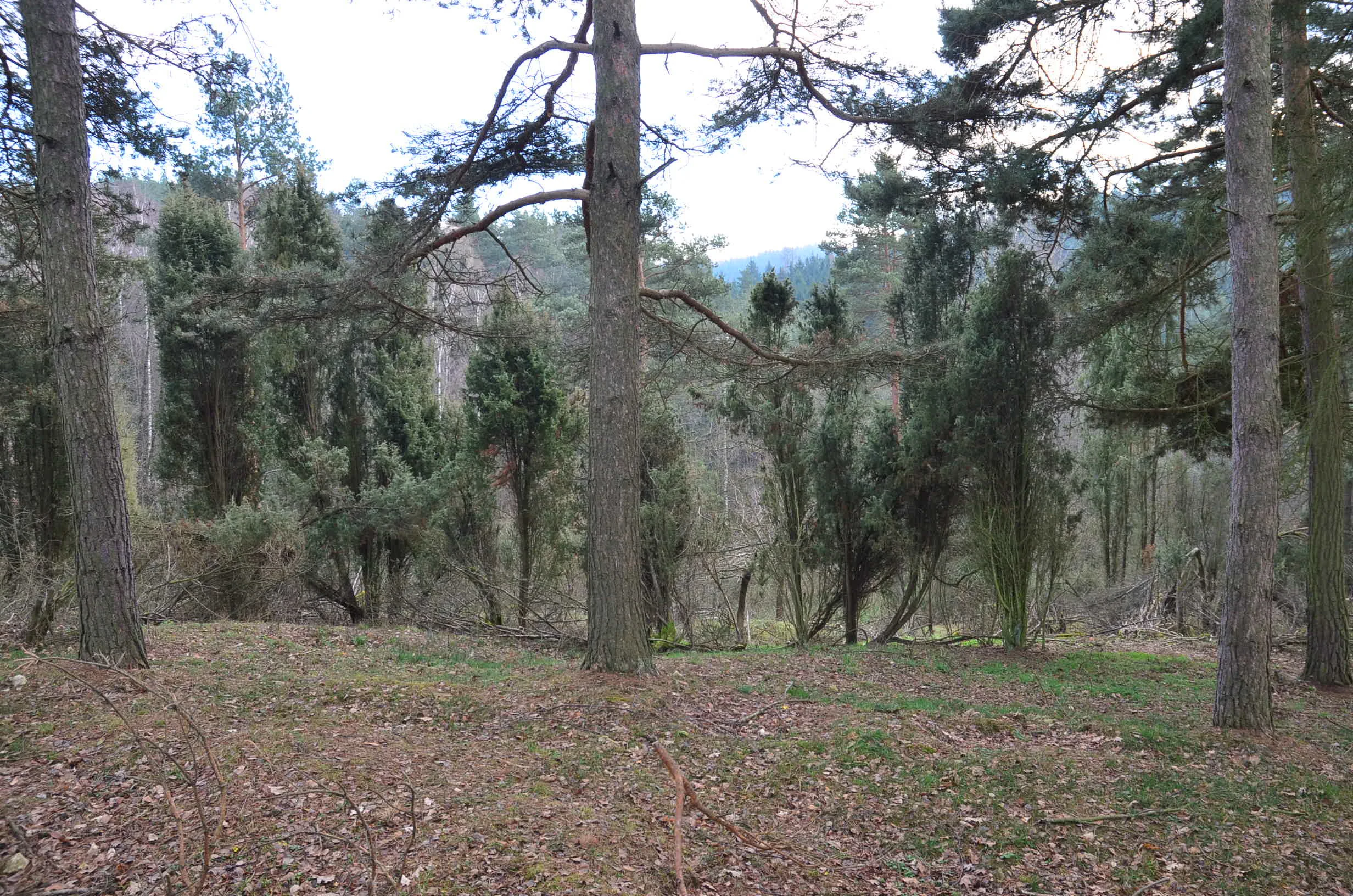
A view of a wooded area at Na ostrově Natural Monument showing several tall pine trees and shorter, dense common juniper bushes on a leaf-covered forest floor.
Common juniper growth within the protected natural monument Na ostrově.

Na ostrově history and protected-area timeline

Na ostrově was declared a protected natural monument on 9 March 1972, formalizing recognition of its outstanding juniper vegetation and the distinctive dry habitats of the slope. Before this designation, the area had long been used by the local community as communal grazing land for goats and sheep, a practice typical of many Bohemian hillsides with thin, dry soils.

After 1950, traditional grazing gradually came to an end, and without the pressure of browsing livestock, the slope began to be colonized by trees and shrubs. As woody species increased, the open character of the grassland and heath declined, raising concerns among conservationists about the long-term survival of the juniper-dominated communities. The Czech Union for Nature Conservation, working through its branch in Vlašim, took up active management of the site, beginning clearing and habitat restoration.

A decisive moment came in 2006, when grazing with a mixed flock of sheep and goats was reintroduced. This revival of traditional land use has been central to maintaining the open structures that support juniper, dry grassland, and dry heath. The site's natural monument status remains the framework within which this conservation effort continues.

Na ostrově landscape and geographic character

The landscape of Na ostrově is shaped by a sloping hillside set within the agricultural countryside of central Bohemia. Elevations at the site range from roughly 340 to 390 meters above sea level, and the protected area covers about 5 hectares. The defining slope is south-facing, creating warm and dry conditions that have allowed an unusual concentration of juniper to persist.

In the upper part of the southern slope, the terrain supports dry grassland communities, with low herbaceous vegetation on relatively thin soils, characteristic of sun-exposed hillsides in this part of Bohemia. Lower on the slope, conditions become even drier and more open, giving way to dry heath vegetation where smaller shrubs spread across the ground. Mature common junipers are scattered throughout, often visible as dark, conical shrubs standing amid or behind the trunks of taller trees.

The surrounding countryside is shaped by farming and scattered woodland, with the small settlement of Nemíž nearby and the municipality of Tehov in the broader area. Within this ordinary Bohemian rural setting, the protected slope stands out as a distinct, ecologically focused pocket of open habitat.

Na ostrově ecosystems, habitats, and plant life

The natural character of Na ostrově is defined by a tightly woven combination of habitats: dry grassland in the upper parts of the slope, dry heath lower down, and a population of common juniper (Juniperus communis) distributed across the open terrain. This combination produces the dry, sun-exposed conditions that the site is recognized for.

The juniper population is unusually rich for so small an area, making the monument an important reference site for juniper communities in central Bohemia. Beyond the junipers, the dry grasslands support a specialized flora adapted to drought and thin soils, while the heath patches contribute their own characteristic plant communities. The vegetation pattern reflects both the local topography and the long history of grazing, which kept the slope open.

While the area is small, the ecological coherence of grassland, heath, and juniper shrubs makes it function almost as a single integrated habitat complex. The management regime, including grazing with sheep and goats, is designed to keep these three elements in balance, preventing woody encroachment while preserving the open character on which the most sensitive species depend.

Na ostrově wildlife and species highlights

Wildlife interest at Na ostrově centers on the species associated with the juniper shrubs and the broader dry grassland and heath environment. The site has become notable for hosting rare insects closely tied to juniper, contributing to its recognition as a small but ecologically specialized protected area.

The fungal community associated with the junipers is particularly distinctive for a Bohemian site of this size. Among the species recorded are Chloroscypha sabinae, previously known from only a single locality in Bohemia, and Aleurodiscus norvegicus, which had otherwise been documented mainly in northern Europe, specifically Norway and Denmark. These records have given the site an unusually high scientific profile in mycology and underline the importance of mature juniper stands as habitat for specialist fungi.

In the dry grasslands and heath at the surface, typical fauna of warm, low-intensity Czech habitats can be expected, including common invertebrates of such settings. Although the site's overall area is small, the combination of rare fungi and rare insects tied to juniper gives Na ostrově a meaningful place in the wider network of Czech juniper habitats.

Na ostrově conservation status and protection priorities

Na ostrově is designated as a natural monument, a category of Czech protected area focused on preserving specific natural features of local significance. Under the broader IUCN framework, the site is classified in Category IV, an area where the principal aim is the protection of particular species or habitats. The central conservation objective at Na ostrově is the long-term survival of its common juniper population and the related dry grassland and dry heath habitats.

The site illustrates how small protected areas can carry outsized conservation importance when they concentrate rare species or unusual habitat combinations. The records of fungi such as Chloroscypha sabinae and Aleurodiscus norvegicus, together with rare juniper-associated insects, demonstrate the site's value as a refuge for species that depend on open juniper communities, which have declined widely across central Europe.

Active conservation management is central to the site's future. After decades without grazing, beginning in the second half of the twentieth century, allowed woody species to encroach on the slope. Since the early 2000s, conservationists from Vlašim have worked to restore its open character, and from 2006 onward, mixed grazing with sheep and goats has once again been used as the principal means of maintaining the habitats. This combination of formal protection status and ongoing practical management reflects a broader recognition that juniper habitats require continued human stewardship to survive in the modern Czech landscape.

Na ostrově cultural meaning and human context

The cultural context of Na ostrově is closely tied to the long-standing tradition of communal grazing in central Bohemia. Before the discontinuation of grazing practices after 1950, the slope served as local pasture for goats and sheep, a use typical of dry, sun-exposed hillsides with thin soils. This pastoral history is part of why the slope remained open long enough to support such a rich juniper population.

The reintroduction of mixed sheep and goat grazing in 2006 represents a deliberate revival of this older land-use pattern, now guided by conservation goals rather than purely agricultural ones. Through this blend of rural tradition and modern habitat management, the site links the present-day Czech nature conservation movement with the long pastoral past of the Bohemian countryside.

Top sights and standout views in Na ostrově

Among the defining features of Na ostrově, its concentration of common juniper on a small but ecologically rich south-facing slope stands at the center. This juniper population supports rare fungi, including Chloroscypha sabinae and Aleurodiscus norvegicus, lending the site an unusual scientific significance. The layered mosaic of dry grassland, dry heath, and scattered juniper shrubs gives the protected monument a visual and ecological identity distinct from the surrounding agricultural land.

Another highlight is the active, ongoing effort to maintain these open habitats. Mixed grazing with sheep and goats, reinstated in 2006, ties the conservation of the site to a revival of older pastoral land use in central Bohemia, illustrating how a small nature monument can remain ecologically valuable through deliberate, continuing management.

Best time to visit Na ostrově

The look and feel of Na ostrově are shaped by its open, dry character and its juniper shrubs, which are most easily appreciated in the warmer half of the year. Late spring and summer bring out the dry grassland vegetation and make the scattered junipers clearly visible against the hillside. Autumn can lend the area a quieter atmosphere as the surrounding countryside shifts color, while winter visits can still reveal the structural contrast of juniper shrubs and tree trunks.

Because the monument's appeal rests on its vegetation and on the herbaceous communities of its dry slopes, visits during the growing season offer the most representative experience of its ecological character.
Monthly climate preview

Long-term representative point measurements tracking monthly weather patterns

Na ostrově Climate Normals, Annual Temperature and Precipitation Rhythm

Historical data records the annual temperature progression and daily precipitation averages across representative coordinates in Na ostrově. Reviewing the complete twelve-month climatology profile reveals detailed shifts in regional weather norms across the protected terrain.
Annual mean8 °C
-3 °C19 °C
Jan-3°
Feb-2°
Mar
Apr
May12°
Jun16°
Jul19°
Aug18°
Sep13°
Oct
Nov
Dec-2°
Warmest month
July

18.6 °C

Coolest month
January

-3.1 °C

Wettest month
July

2.9 mm/day

Driest month
February

1.3 mm/day

Park location guide

Geography guide, regional context, and park location map for Na ostrově

Na ostrově park geography, regions, and map view in Czechia

Understand where Na ostrově sits in Czechia through a broader geographic reading of the surrounding landscape, nearby location context, and its mapped position within the national park landscape.

How Na ostrově fits into Czechia

Czech Republic is a landlocked Central European country with a population of approximately 10.9 million people. The nation was established as an independent state on January 1, 1993, following the dissolution of Czechoslovakia. Its capital and largest city is Prague, with other major urban centers including Brno, Ostrava, Plzeň, and Liberec.

Wider geography shaping Na ostrově in Czechia

The Czech Republic is a landlocked country in Central Europe. It is bordered by Germany to the west, Austria to the south, Poland to the northeast, and Slovakia to the southeast. The landscape is predominantly hilly, with the territory covering 78,871 square kilometers.

Map view of Na ostrově

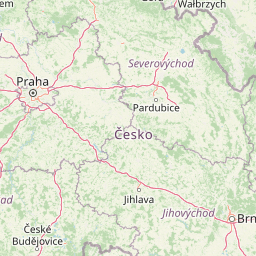
Use this park location map to pinpoint Na ostrově in Czechia, understand its exact geographic position, and read its mapped placement within the surrounding landscape more clearly.

Pigeon | © OpenStreetMap contributors

Location context for Na ostrově

Středočeský kraj

Explore protected area photography, terrain views, and rare vegetation habitats

Na ostrově Landscape and Scenery: Visualizing the Protected Juniper Habitat

Visual records capture the distinctive south-facing slopes, scattered common juniper shrubs, and dry grassland habitats defining Na ostrově. Photographic documentation reveals the specialized terrain and protected landscape character preserved across the central Bohemian countryside.

A view of a wooded area at Na ostrově Natural Monument showing several tall pine trees and shorter, dense common juniper bushes on a leaf-covered forest floor.

Park atlas

Compare regional protected landscapes and neighboring natural monuments

Explore Protected Areas and Parks Near Na ostrově in Central Bohemia

Browse other parks near Na ostrově to discover related juniper habitats and dry grasslands across the surrounding region. Extending the geographic review provides valuable context on Central Bohemian protected areas and local conservation terrain.
Natural monumentJihočeský kraj
About 3.6 km away#1 closest

South

Vlašimská Blanice Natural Monument: Mapped River Geography and Protected Valley Terrain

A vital riverine habitat in the South Bohemian Region

Vlašimská Blanice forms a protected natural monument around an unregulated, meandering section of the Blanice River. This landscape is defined by its continuous riparian woodland, gravel-rich riverbed structures, and a surrounding mosaic of floodplains and meadows, providing essential habitat continuity within the Jihočeský kraj terrain.

Area
0.304 km²
Established
2014
IUCN
III
Relief
Upland
Natural monumentStředočeský kraj
About 8.6 km away#2 closest

North

Na Stříbrné Natural Monument: A Geological and Forest Sanctuary in Central Bohemia

Protected woodland and historical mining terrain

Spanning less than five hectares, Na Stříbrné represents a dense mosaic of metamorphic geology and vibrant woodland habitat. This protected area in Středočeský kraj showcases the persistence of forest flora like mezereon amidst historic industrial relics, offering a clear window into the varied terrain of the Czech landscape.

Area
0.048 km²
Established
1972
IUCN
IV
Relief
Upland
Watercolor painting of a peaceful wetland landscape with a pond, tall grasses, rolling hills, and a soft, muted color palette.
Natural monumentCentral Bohemia Region
About 15 km away#3 closest

South

Rybník Louňov Natural Monument: Mapped Geography and Protected Wetland Ecosystems

Central Bohemia Region protected wetland and pond habitat

Rybník Louňov serves as a protected natural monument defined by its intimate mosaic of open water, emergent reed beds, and wet meadow patches. Located in the Central Bohemia Region, this site provides a critical refuge for rare flora and fauna, illustrating the role of small-scale landscape preservation in maintaining regional ecological health.

Area
0.019 km²
Established
2001
IUCN
IV
Relief
Lowland
Natural monumentStředočeský kraj
About 16 km away#4 closest

Southwest

Roudný Natural Monument: Mapping Protected Mining Habitats in Středočeský Kraj

Explore the geography of this rare sandy sanctuary for invertebrates and fungi.

Roudný is a specialized natural monument protecting the sandy, nutrient-poor substrate of a former gold mine. The site stands as a significant biological island in Středočeský kraj, supporting species dependent on open, eroded sandy slopes that are now rare in the wider regional landscape. Its compact geography highlights the intersection of industrial history and conservation in the Czech Republic.

Area
0.025 km²
Established
1994
IUCN
IV
Relief
Lowland
A horizontal watercolor illustration of a gentle, rolling landscape with green fields, patches of forest, and faint pink floral accents in the foreground.
Protected landscapeBenešov District
About 20 km away#5 closest

West

Přírodní park Džbány-Žebrák: Geography and Protected Area Landscape Map

Mapping the forests and meadows of the Benešov District

Přírodní park Džbány-Žebrák offers a distinct look into the central Bohemian uplands, marked by gentle ridges and spring-fed valleys. This protected area supports an interconnected web of small ponds, damp woodland clearings, and rural agricultural mosaics. Use this resource to trace the park boundaries and understand the regional significance of its protected waters, orchid-rich meadows, and varied, bird-populated forests.

Area
53 km²
Established
1996
Water
Major water bodies
A watercolor painting showing a soft, panoramic landscape with rolling hills, a line of trees, and a small pond or marshy area in the foreground.
Protected landscapeStředočeský kraj
About 29 km away#6 closest

Northwest

Hornopožárský les Nature Park: Atlas of Protected Landscapes in Středočeský kraj

Granite Bedrock and Forested Terrains in Central Bohemia

Trace the undulating ridges and rocky outcrops of Hornopožárský les Nature Park, where central Bohemian geography meets historical quarrying heritage. This protected area offers a deep look into the regional forests and river valley ecosystems characteristic of the lower Posázaví landscape.

Area
25 km²
Established
2002
Relief
Upland
Climate
Temperate
Nature reserveStředočeský kraj
About 32 km away#7 closest

Northwest

Vlčí rokle Nature Reserve: Geological Ravines and Ancient Beech Forests in Středočeský kraj

Mapping protected natural monument boundaries and ancient woodland remnants

Explore the geological and botanical features of Vlčí rokle, an exceptional nature reserve set within the Středočeský kraj. This protected area safeguards a fragment of ancient beech forest and a granite-boulder-strewn ravine, representing a classic example of central Bohemian geological and ecological heritage.

Area
0.085 km²
Established
1990
IUCN
III
Relief
Upland
Watercolor painting of a pastoral landscape featuring a tree, a large rock, and soft hills in the background with a pale sky.
Natural monumentStředočeský kraj
About 33 km away#8 closest

Northwest

Skalsko Natural Monument: Mapped Wetland Landscapes and Protected Meadow Geography

A representative habitat in the Středočeský kraj uplands

Focusing on the conservation of sensitive wet meadow ecosystems, Skalsko serves as a key reference for the biodiversity of the Říčany Plateau. This site showcases a mosaic of flora, including rare orchids, set against the backdrop of the geologically distinct Central Bohemian uplands, providing a structured look at one of the region's most important protected natural monuments.

Area
0.036 km²
Established
2008
IUCN
IV
Relief
Upland

Common questions about visiting, size, designation, and location context for Na ostrově

Na ostrově FAQs for park facts, access, geography, and protected area context

Find quick answers about Na ostrově, including protected-area facts, park geography, trail and visitor context, and how the park fits into its surrounding country and regional landscape.
MoriAtlas Explorer

Continue Your Protected Areas Search Across the Global Atlas

Deepen your exploration by continuing the structured search for national parks and protected areas worldwide. Utilize the comprehensive filtering capabilities to compare different conservation landscapes and refine your understanding of global park geography. Discover more about the distribution and characteristics of protected natural areas.

Global natural geography