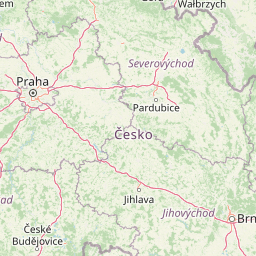
Why Na Skalách stands out
Na Skalách is best known for its relict thermophilic oak forests of stunted growth, a rare habitat type that clings to warm, south-exposed limestone cliffs above the Svratka valley. The protected site preserves both the woodland community and its associated herb layer, along with open calcareous rock vegetation that supports several warmth-loving and calcareous-specialist plant species. Its other defining trait is its compactness: the natural monument compresses a wider cross-section of south-Moravian habitats into a tiny, easily studied rock-and-forest mosaic, making it scientifically valuable despite its small footprint.
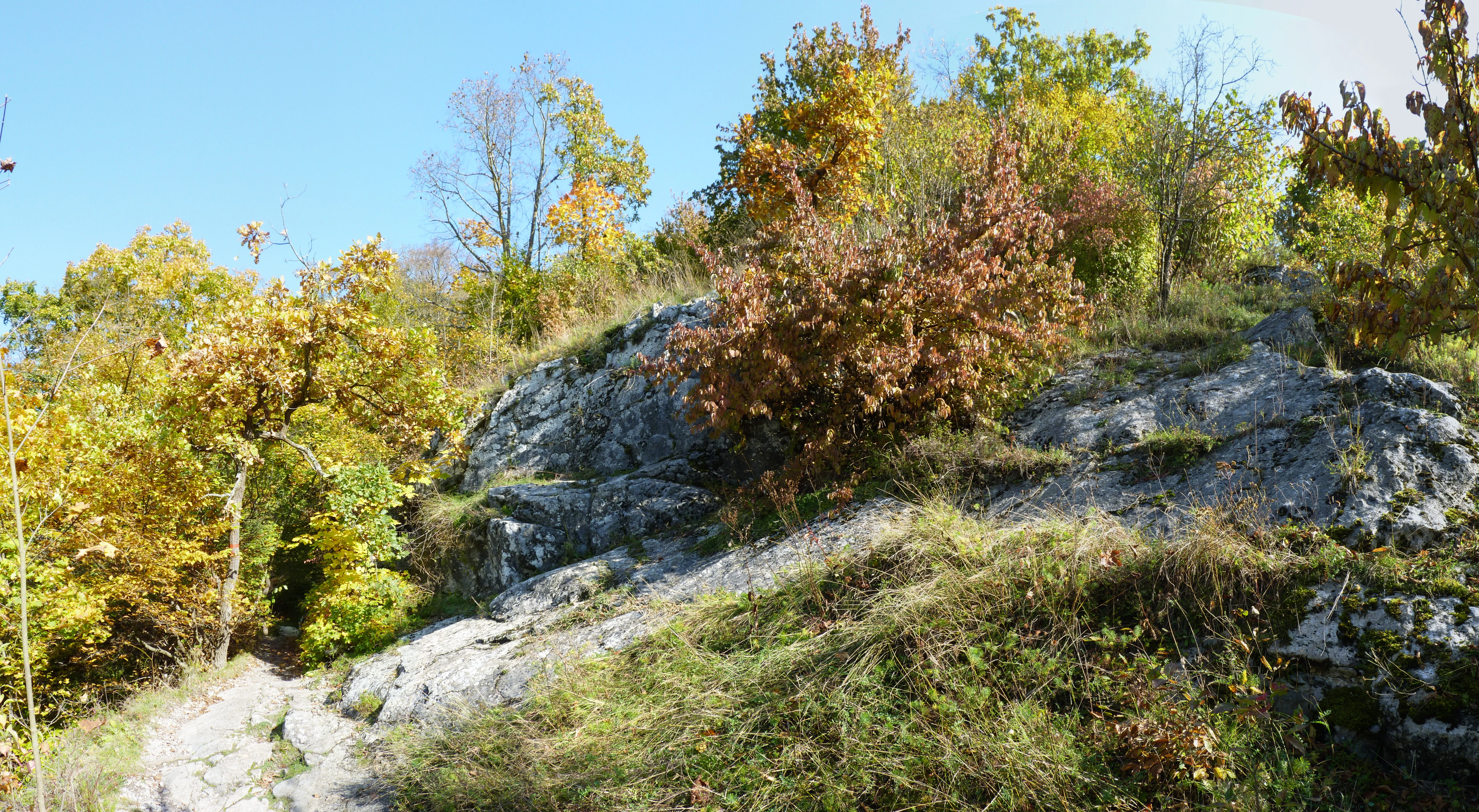
Na Skalách history and protected-area timeline
Na Skalách was officially designated as a natural monument (přírodní památka) in December 1991 by the City Office of Brno, with legal effect from February 1992. The decision was made to preserve a narrow strip of calcareous rock and adjacent forested slope within the Svratka valley that had survived as a relict of warmer-climate vegetation in an otherwise heavily urbanized region.
Its protection came during a period of increasing recognition in the Czech Republic of small, ecologically distinctive sites that had previously gone unrecorded. The site lies in an area where the construction of the Brno Reservoir had already altered parts of the river valley, raising the importance of preserving the remaining natural cliff habitat.
The reserve is now part of the regional network of small protected areas administered by the South Moravian Region under the Czech system of nature conservation. Its long-term status as an IUCN Category IV site reflects its continuing role as a managed habitat refuge for thermophilic forest and rock plant communities.
Na Skalách landscape and geographic character
The landscape of Na Skalách is defined by a short section of limestone cliff and steep slope rising above the gorge of the Svratka River. The exposure faces south to southwest, giving the rocks prolonged direct sunlight and creating relatively warm and dry microclimates despite being embedded within the otherwise cooler Bohemian-Moravian highlands.
Geologically, the cliff is built from Vilémovice limestones of Devonian age from the Moravian Karst system, intersecting with magmatic rocks from the Brno massif and sediments from the Boskovice Furrow. Soils on the exposed rocks are thin, with rendzina soils on the limestone sections and acidic cambisols on the more silicate-rich parts of the slope.
In broader context, the site sits within the Bobravská vrchovina, a patch of warmer upland that historically supported oak-dominated vegetation. Since the filling of the Brno Reservoir, a portion of the original lower slope has been flooded, but the protected cliff itself remains above water level and stands as a fragmentary but visually distinct rocky step rising from the lakeshore near the Kníničky area of Brno.
Na Skalách ecosystems, habitats, and plant life
The vegetation of Na Skalách falls into two clearly differentiated layers. On the warm cliff faces and upper rocky shelves grow open herb-grass communities dominated by warmth-loving species, while on the more stable, less exposed parts of the slope grow stunted thermophilic oak forests and oak-hornbeam stands (dubohabřiny).
The forests here are not tall, full-canopy woodlands but low, gnarled forms typical of stressful calcareous habitats. Pedunculate oak and sessile oak form the canopy, accompanied by hornbeam, sycamore maple, wild service tree, wych elm, and small-leaved and large-leaved linden. The shrub layer is unusually diverse for such a small site, with cornelian cherry, common hawthorn, black elder, warty spindle, buckthorn, blackthorn, hazel, dogwood, and dog rose all forming a dense understory.
On the open limestone rocks, vegetation shifts to specialized calcareous species: purple cyclamen, solid tuberous corydalis, balm-leaved melittis, cowslip primrose, wood spurge, and the rare Austrian mullein. Many of these plants are warmth-loving relicts that have persisted here thanks to the combination of calcareous geology and steep southerly exposure, and they collectively give the site its conservation importance.
Na Skalách wildlife and species highlights
The wildlife value of Na Skalách is closely tied to the presence of old, hollow-bearing trees within its stunted oak woodland. Such trees create nesting cavities and feeding sites for a characteristic set of woodland birds, and several cavity-nesting and insectivorous species are recorded as breeding here.
Among the breeding birds documented are the Eurasian wryneck, collared and spotted flycatchers, common redstart, middle spotted woodpecker, and the Eurasian golden oriole. Their presence indicates a relatively undisturbed, insect-rich woodland habitat with sufficient dead wood and mature trees, despite the site's small size and immediate proximity to the city of Brno.
Na Skalách conservation status and protection priorities
Na Skalách is protected primarily for its ecological and botanical value. The site preserves a small but scientifically significant fragment of thermophilic oak woodland that has largely disappeared from the surrounding intensively used central Moravian landscape. Its warm, limestone-based cliffs host relict vegetation patterns that would otherwise be lost without active designation.
As an IUCN Category IV protected area (habitat/species management area), the site is recognized for its role in maintaining specific habitat conditions for warmth-loving plants, calcareous rock species, and the bird community associated with old, hollow-bearing trees. The protection also serves a broader educational and scientific function, allowing researchers to study a relict ecosystem close to a major urban center.
The protected area is registered under Czech code 1650. Its small footprint means that even minor disturbances could have disproportionate ecological effects, which is one of the reasons its formal protection has been maintained since the early 1990s. The site thus represents a microcosm of the wider struggle to preserve small-scale, ecologically distinctive habitats in heavily populated European landscapes.
Na Skalách cultural meaning and human context
Na Skalách does not have a major documented cultural or historical narrative of its own. The site lies within the broader cultural landscape of the Brno region, where the Svratka valley has long been a corridor of settlement, industry, and transportation.
The construction and filling of the Brno Reservoir in the 20th century transformed the surrounding valley, including the lower slopes adjoining the protected rocks, but the cliff itself was preserved as a natural fragment above the new lake. In this sense the reserve represents a small surviving natural landmark within the heavily modified cultural landscape of the Brno outskirts.
Top sights and standout views in Na Skalách
Na Skalách packages several distinct conservation values into a single tiny site. It combines a geologically varied cliff face of Devonian limestone with stunted thermophilic oak forest and open warm-rock vegetation, an unusual concentration of habitat types in less than one hectare.
The reserve is also notable for its urban-proximity context: it preserves ancient-looking woodland, dead wood, and cavity-nesting birds literally on the edge of Brno, making it both an ecological refuge and a reference site for studying relict habitats in a heavily urbanized Czech landscape.
Best time to visit Na Skalách
Na Skalách is a year-round outdoor site, but late spring and early summer typically offer the richest experience. In May and June, the limestone-woodland herb layer comes into flower, while the warm rocks continue to support thermophilic vegetation into early autumn.
Autumn brings strong leaf color in the oak and hornbeam stands, and winter views from the lakeside of the Brno Reservoir, looking up toward the cliff, highlight the bare geological structure of the limestone exposure. Bird activity in the canopy is most noticeable in spring and early summer, when cavity-nesting species are breeding.