
Why Na Stráži stands out
Na Stráži is best known for its population of the green-winged orchid (Anacamptis morio, historically Orchis morio), a once-common but now declining European meadow orchid. The meadow is reported to host around 400 flowering specimens of this species, making it one of the more significant inland strongholds of the orchid in the region. Beyond the orchid, the site is recognized for its thermophilous, acidophilic grassland vegetation, a combination of warmth-loving and acid-tolerant plant communities that is relatively unusual in otherwise cooler and wetter South Bohemian landscapes. The mix of dry-meadow specialists and orchid habitat gives the small site disproportionately high botanical value.
Na Stráži history and protected-area timeline
Na Stráži has been recognized as a nationally important botanical site and was formally declared a natural monument (přírodní památka) on 31 March 1993. The declaration was issued by the Administration of the Blanský les Protected Landscape Area (Správa CHKO Blanský les), the regional authority responsible for managing protected areas in this part of South Bohemia.
The site came into the conservation system as part of the broader development of small-scale protection of grassland habitats across the Czech Republic during the early 1990s, a period when many meadows with unusual orchid populations or rare plant communities were given formal status to safeguard them against agricultural intensification and land-use change. Na Stráži's designation reflects that broader national recognition of small, ecologically rich grasslands as conservation priorities in their own right.
Its location within the Blanský les Protected Landscape Area connects it to a longer-running conservation effort in this region of South Bohemia, where landscape-level protection had been established earlier, with smaller sites like Na Stráži serving as concentrated pockets of botanical and habitat value within that broader framework.
Na Stráži landscape and geographic character
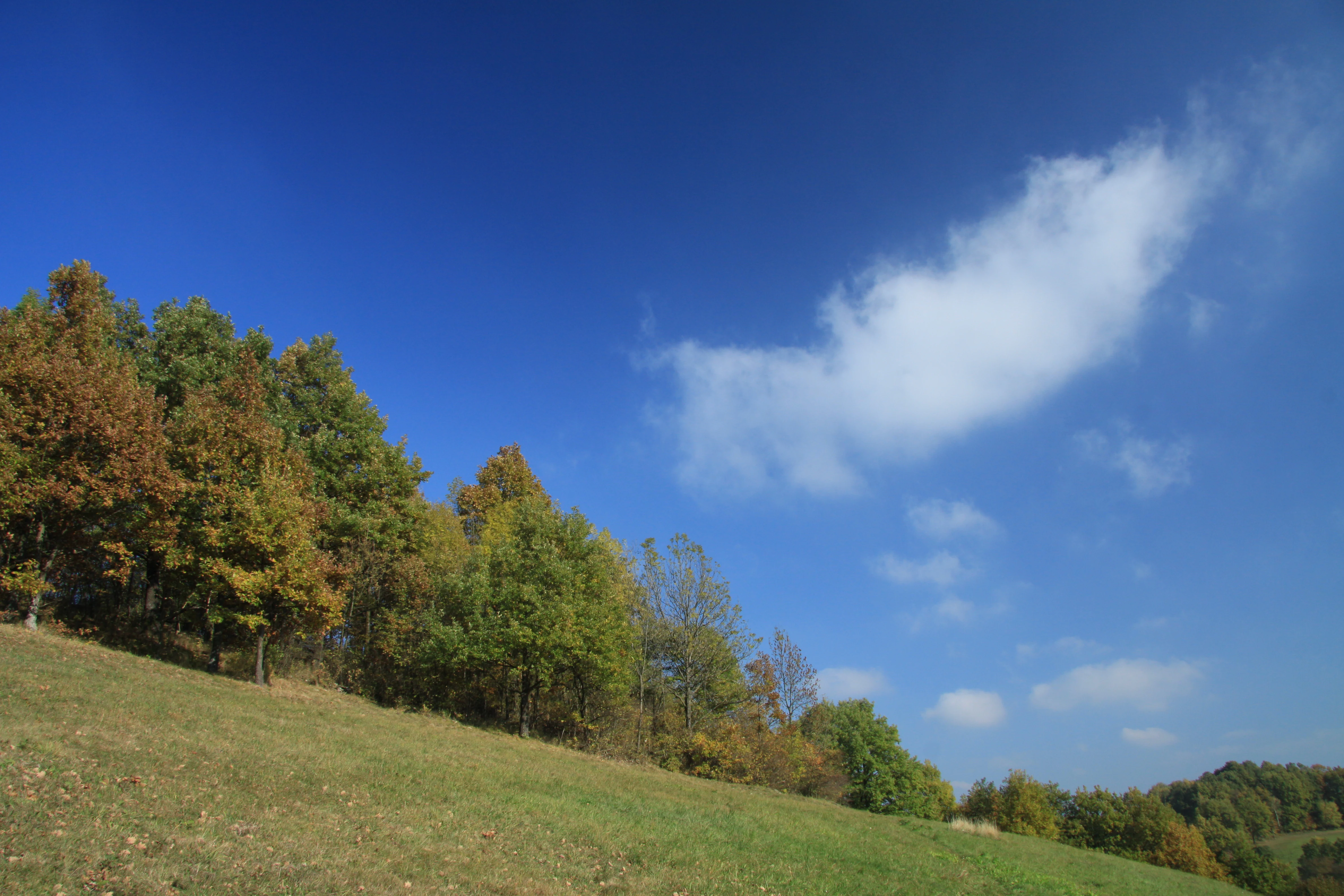
Na Stráži occupies a steep south-facing slope on the southern flank of the hill Stráže in the Křemžská kotlina, a relatively open valley basin north of the Blanský les uplands. The protected strip sits on the eastern edge of Brloh, overlooking the left bank of the Křemžský potok, the small stream that drains the southeastern part of this basin toward the Vltava river system.
The terrain of the protected area itself is a narrow, sharply inclined hillside meadow between approximately 556 and 610 meters in elevation. Its position on a steep, sun-facing slope is central to the site's ecological character: the combination of slope, aspect, and elevation creates a localized microclimate that is markedly warmer and drier than the surrounding valley floor, supporting vegetation that would not otherwise persist in this part of South Bohemia.
The broader visual setting alternates between closed-forest slopes of the Blanský les foothills on one side and the more open agricultural mosaic of small villages, fields, and meadows around Brloh on the other. The contrast between the forested uplands and the clearly bounded meadow strip reinforces the site's identity as a small, embedded grassland fragment within a larger mixed land-use landscape.
Na Stráži ecosystems, habitats, and plant life
Ecologically, Na Stráži represents a particularly well-preserved example of thermophilous acidophilic grassland, a vegetation type that combines warmth-loving, drought-tolerant species with plants adapted to acidic, nutrient-poor soils. This combination is uncommon in South Bohemia, where most natural and semi-natural grasslands lean toward mesic or wetter habitats; the presence of such vegetation on a steep, sun-exposed slope here is largely what makes the site botanically distinctive.
The grassland is not a heavily managed nature reserve but rather a surviving semi-natural meadow, the kind of land use historically maintained through low-intensity mowing and grazing. The open structure and low nutrient status that result from this traditional use are crucial for sustaining the plant communities of conservation interest, especially orchids and other slow-growing specialist species.
Beyond the headline orchid population, the meadow hosts a diverse grassland flora that includes characteristic meadow grasses, rockrose relatives, campions, cinquefoils, broom relatives, and thyme-family plants, all of which together create the layered botanical richness that earned the site its protected status.
Na Stráži wildlife and species highlights
Na Stráži is primarily a botanical site rather than a wildlife reserve, and its conservation focus is squarely on plants and habitat rather than fauna. The meadow does, however, support the invertebrate communities associated with species-rich, low-intensity grasslands, including pollinator groups such as wild bees, butterflies, and other insects that depend on the diversity of flowering plants.
Such meadows generally also provide habitat for small ground-nesting birds, small mammals, and reptiles associated with warm, sunny slopes, though the steep terrain and small size of the site limit the scale of these communities. The site should be understood principally as a plant-conservation locality within a larger landscape mosaic, with its broader faunal value realized mainly through the ecological continuity it provides within the Blanský les Protected Landscape Area.
Na Stráži conservation status and protection priorities
From a conservation standpoint, Na Stráži matters because it concentrates, in just a few hectares, a suite of plant species and habitat conditions that have become increasingly scarce in central European lowlands and foothills. The site's protected subject is the meadow itself as habitat, an approach that recognizes that the orchid population and the grassland community depend on the survival of the entire meadow structure, not just individual species in isolation.
The site is classified under IUCN category IV, a designation used for areas managed primarily for the conservation of a particular species or habitat. This framing fits Na Stráži exactly: the legal protection targets the meadow habitat supporting the green-winged orchid and the associated thermophilous acidophilic community, rather than a broader landscape-scale conservation objective.
Within the Czech system, the site sits in a layered conservation framework. It is part of the Blanský les Protected Landscape Area, giving it landscape-scale legal protection, while its status as a přírodní památka adds stricter, site-specific protection managed by the CHKO administration. The combination is typical of how Czech nature conservation integrates broad landscape planning with the targeted protection of small, ecologically valuable patches.
Top sights and standout views in Na Stráži
The headline highlight of Na Stráži is its population of green-winged orchid (Anacamptis morio), estimated at around 400 flowering plants, representing one of the more significant inland concentrations of this species in the region.
Equally important is the broader thermophilous acidophilic grassland community, a vegetation type combining warmth-loving and acid-tolerant species that is uncommon in South Bohemia. The site also stands out for its layered conservation status, sitting inside the Blanský les Protected Landscape Area while carrying its own national natural monument designation, which makes it a clear example of how small, botanically rich grasslands are integrated into the Czech protected-area system.
Best time to visit Na Stráži
The meadow at Na Stráži is most rewarding to visit in late spring and early summer, when the green-winged orchid and a significant share of the associated grassland flora are in bloom. The south-facing slope and relatively sheltered basin location mean the site tends to reach peak flowering somewhat earlier than cooler, shaded areas nearby.
For broader landscape enjoyment, late spring through early summer offers the combination of full grassland color and pleasant walking conditions along the slopes above the Křemžský potok. Visitors interested in the wider Blanský les Protected Landscape Area typically find this season well suited to combining the meadow visit with the surrounding woodlands and viewpoints.