
Why Meandry Chvalšinského potoka stands out
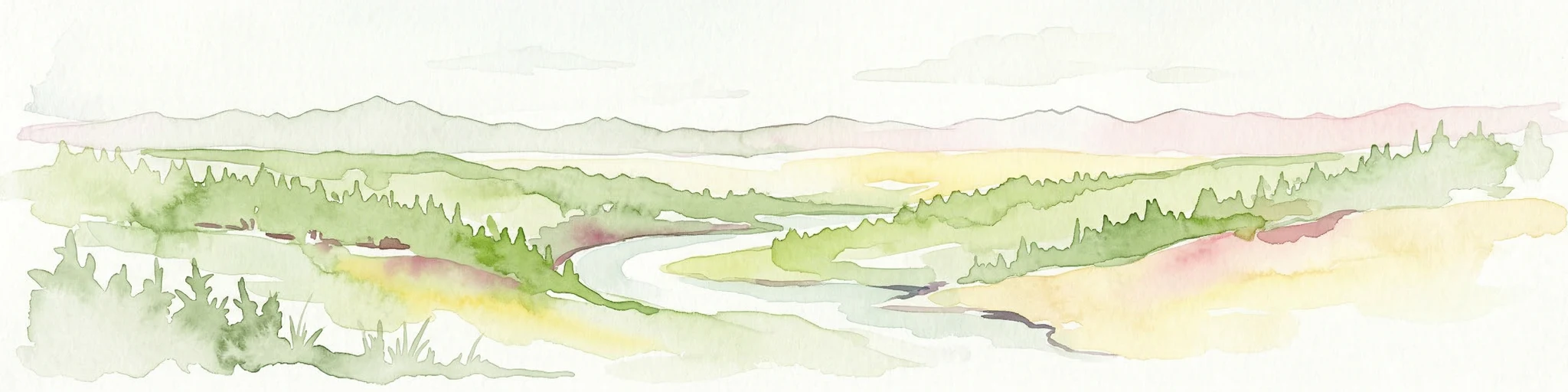
The protected area is best known for preserving an unusually natural, freely meandering stretch of the Chvalšinský potok in an otherwise heavily cultivated Bohemian landscape. Where many streams in Central Europe have been straightened, channelized, or dredged for agriculture, this site retains the original sinuous curves of the watercourse, complete with cut banks, gravelly point bars, and oxbow tendencies that shape the surrounding vegetation. Equally important to the site's identity is the mosaic of wetland habitats attached to the brook itself: lush riparian vegetation along the banks and broad patches of moist thistle and sedge meadows on the valley floor. Together, the meander and the meadows form a compact but ecologically rich refuge that gives the monument its distinct profile within the Blanský les protected landscape area.
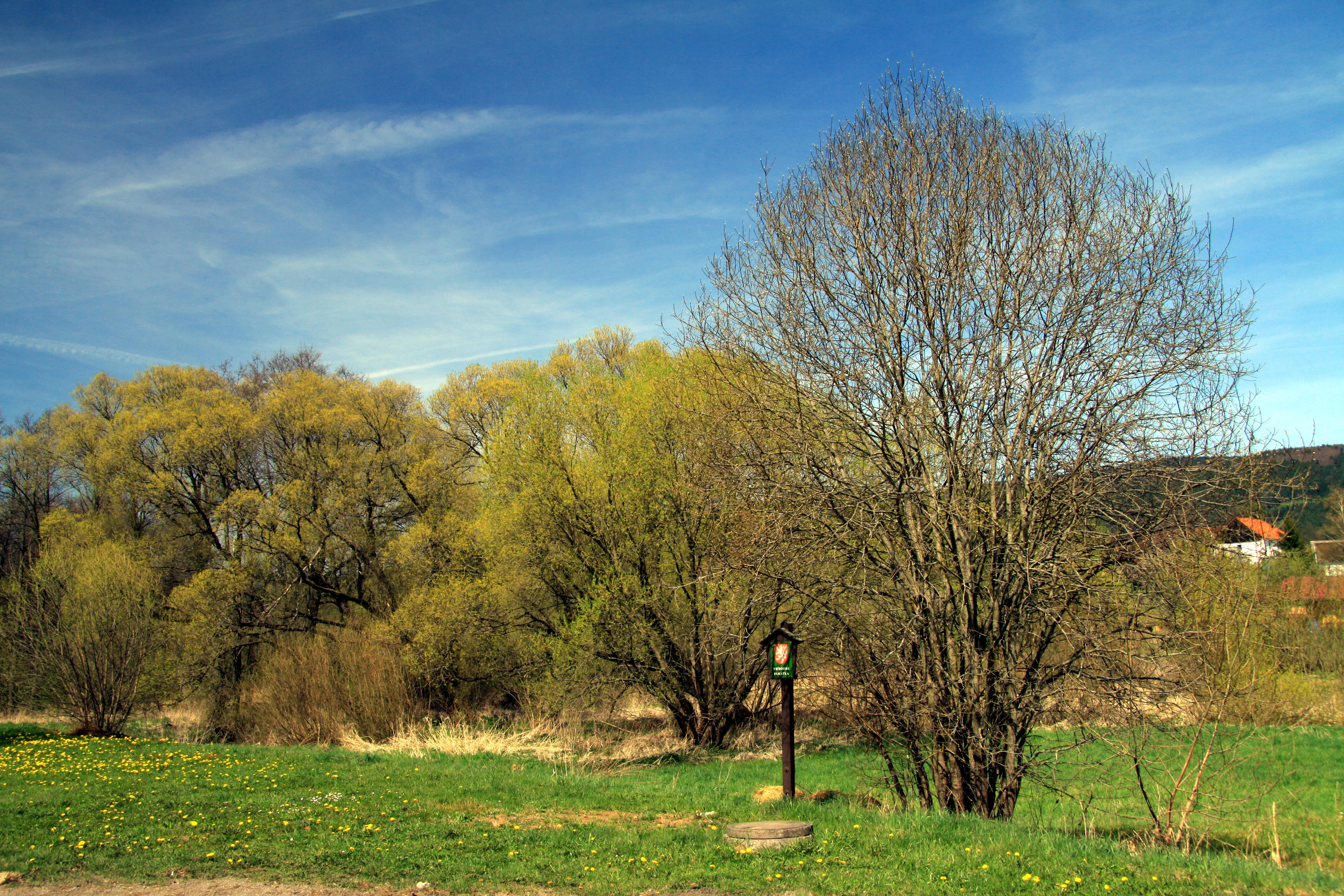
Meandry Chvalšinského potoka history and protected-area timeline
The history of the site as a protected natural monument begins with its declaration on 26 February 2001, when the administration of the Chráněná krajinná oblast Blanský les formally established Meandry Chvalšinského potoka as a přírodní památka. The timing was deliberate: by the early 2000s, the surviving natural meanders of this small stream were already considered unusual in the Czech landscape, where most watercourses had been altered by long-standing drainage and channelization efforts tied to agriculture and settlement.
Before its designation, the stretch of the Chvalšinský potok between Křenov and the road bridge toward Chvalšiny had been preserved largely because the immediate surroundings remained in traditional rural use, with meadows and small-scale farming rather than industrial-scale land transformation. The 2001 declaration did not alter the ownership or land use of these meadows so much as place them under a formal protection regime, requiring any interventions along the brook and its banks to be assessed against the goal of keeping the meander and its associated habitats intact.
Within the framework of the Blanský les protected landscape area, the monument represents one of the smaller but more targeted conservation units, focused specifically on a riverine habitat rather than on forests or upland terrain. It is a recognition that even a few hectares of an intact, freely meandering stream along with its fringing wet meadows can carry disproportionate ecological and didactic value in a heavily modified Central European landscape.
Meandry Chvalšinského potoka landscape and geographic character
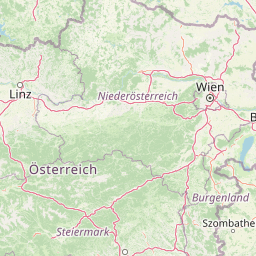
The landscape of Meandry Chvalšinského potoka is defined above all by the meandering channel of a small lowland stream set within a shallow valley basin. The Chvalšinská kotlina, the broad basin around Chvalšiny south of Český Krumlov, frames the site with gentle valley slopes that descend from the wooded uplands of the Blanský les toward flatter agricultural ground. Within this basin, the protected stretch follows the natural curves of the brook rather than a straightened artificial bed.
The terrain itself is modest in elevation, sitting only just above 530 meters above sea level, but it is visually rich because of the contrast between the curving watercourse and the surrounding mosaic of meadows, banks, and scattered trees. Undercut riverbanks expose sandy and gravelly sediments where the meander actively cuts into older deposits, while the corresponding inner banks show accreting point bars where freshly deposited material gradually builds up. Over time, this dynamic continually reshapes the local relief on a small but ongoing scale.
Surrounding the immediate river corridor, the broader landscape is a mix of wet meadows, drier pastoral fields, and patches of riparian woodland along the watercourse. Small footbridges and the modest road bridge near Červený Dvůr provide the only crossings within the protected area, and the wider basin retains the appearance of a traditional South Bohemian rural valley rather than an intensively engineered floodplain. This combination of small-scale landforms, active hydrological shaping, and a largely traditional agricultural matrix gives the site its distinct landscape character.
Meandry Chvalšinského potoka ecosystems, habitats, and plant life
Ecologically, the site is built around a tightly linked trio of habitats: the open water and gravel bed of the Chvalšinský potok itself, the narrow strip of riparian vegetation along its banks, and the wet meadows that extend outward from the channel. These habitats are not isolated patches; they form a continuous gradient in which small changes in water level and soil moisture translate into clear shifts in plant communities.
Along the stream, the banks host characteristic riverside vegetation, including taller herbaceous plants, reeds, and shrubs that thrive where the water table is high and occasional flooding brings fresh sediment. Away from the immediate banks, the valley floor grades into moist meadows dominated by thistles (pcháčové louky) and sedges (ostřicové louky), species groups typical of Central European wet meadows. These meadows depend on periodic high groundwater and on the natural dynamics of the meander, which creates microtopographic variation between higher, drier edges and lower, wetter cores.
The broader ecological context is the Blanský les protected landscape area, a region known for its patchwork of forests, agricultural land, and small valley wetlands. Within that frame, the meandering stretch of the Chvalšinský potok functions as a small but important hydrological and ecological corridor, allowing moisture-dependent species to persist in an otherwise cultivated matrix and providing a continuous link between different segments of the valley ecosystem.
Meandry Chvalšinského potoka wildlife and species highlights
The wildlife profile of the protected area is dominated by aquatic and riparian species rather than by large mammals, reflecting the linear, water-driven nature of the habitat. Two species in particular are highlighted in the protection rationale: the European brook lamprey (Lampetra planeri), known in Czech as mihule potoční, and the bullhead, or common sculpin (Cottus gobio), known as vranka obecná.
Both species are characteristic of clean, well-oxygenated small streams with gravelly or sandy beds, exactly the conditions preserved by the still-natural, unchannelized meanders of the Chvalšinský potok. The European brook lamprey spends its larval phase buried in soft sediments in the brook before undergoing metamorphosis, while the bullhead uses the spaces between stones as shelter and spawning substrate. Their continued presence is treated as a direct indicator that the stream's hydrology and sediment structure remain close to their natural state.
Beyond these focal species, the wet meadows and riparian strips provide habitat for typical Central European wetland fauna, including insects and other invertebrates associated with thistle and sedge meadows, amphibians that use both the stream and adjacent wet ground, and small mammals and birds that forage along the linear corridor of the brook. The site does not host charismatic megafauna, but its wildlife value lies precisely in the persistence of these specialized aquatic and wetland communities in a small, well-defined refuge.
Meandry Chvalšinského potoka conservation status and protection priorities
From a conservation perspective, Meandry Chvalšinského potoka is significant because it preserves a functioning, naturally meandering lowland stream together with its attendant riparian and meadow habitats in a region where such intactness is rare. In the Czech context, where many watercourses have been historically channelized for land drainage and agricultural intensification, an unaltered meandering system of this size is treated as a valuable reference site for both biodiversity and hydrological processes.
The formal classification of the site as a přírodní památka, corresponding to IUCN Category IV, signals that the main objective is targeted habitat and species management rather than broad landscape protection. In practice this means that activities in or near the brook, such as watercourse modifications, intensive grazing, or land-use changes in the wet meadows, are regulated to maintain the meander and the species it supports. The umbrella of the surrounding Blanský les protected landscape area adds a broader landscape-level framework, ensuring that the small monument remains embedded in a larger connected system of protected and semi-natural habitats.
A particular focus of the conservation effort is the persistence of the European brook lamprey and the bullhead, both of which depend on clean gravel beds and unaltered hydrology, as well as the maintenance of the wet thistle and sedge meadows along the banks. By holding the line against further stream modification and meadow conversion, the monument functions as a small but durable anchor of aquatic and riparian biodiversity within the South Bohemian countryside.
Top sights and standout views in Meandry Chvalšinského potoka
The defining highlight of Meandry Chvalšinského potoka is the surviving natural meander of the Chvalšinský potok between Křenov and the road bridge toward Chvalšiny, a stretch where the water still curves freely through its valley rather than flowing in a straightened channel. This geomorphic signature is the core of the site's identity and the reason for its protected status.
Closely tied to this is the supporting matrix of riparian vegetation and wet thistle and sedge meadows, which together with the meander create a complete, working floodplain on a very small scale. The presence of the European brook lamprey and the bullhead, two species sensitive to stream degradation, reinforces the site's role as a living benchmark of stream health, while its location within the Blanský les protected landscape area gives it additional landscape-scale relevance.
Best time to visit Meandry Chvalšinského potoka
The most rewarding time to experience the protected area is late spring and early summer, when the wet thistle and sedge meadows along the brook are in full growth and the streamside vegetation is most lush. Higher groundwater and occasional spring flooding during this period highlight the dynamic relationship between the meander and the surrounding meadows that the monument is designed to protect.
Late summer and early autumn can also be attractive, when meadow vegetation has matured, seed heads of sedges and thistles add visible texture to the valley floor, and water levels are typically lower, making it easier to observe the structure of the meander itself, including its cut banks, point bars, and shallow gravelly stretches. In winter, the site is quieter and the meander pattern is more visible against the bare meadows, though vegetation interest is reduced.