Why Ostoja Jaśliska stands out
Ostoja Jaśliska is best known for its exceptional representation of Carpathian beech forest habitats, especially fertile beechwood (Żyzna buczyna karpacka), which alone covers roughly 40 percent of the entire site. This dominance of natural, semi-natural, and old-growth beech communities is unusual even by Carpathian standards and places the area among the most important beech forest sites in Poland. The site is equally recognized as one of the few Polish Natura 2000 areas where all three large Carpathian carnivores, wolf, lynx, and brown bear, occur together in a continuous forest landscape. The combination of extensive beech forest, river gorges such as the Przełom Jasiołki reserve, and a network of peatlands gives the site a layered ecological profile that is rare in a single protected polygon. Another distinctive element is the high number of strict nature reserves contained within the area, nine in total, ranging from yew stands at Cisy w Nowej Wsi to the karst features around Kamień nad Jaśliskami and the Jasiołka river springs. This mosaic of habitats and reserve-level protections defines the site's reputation among European conservation planners.
Ostoja Jaśliska history and protected-area timeline
Ostoja Jaśliska was formally proposed as a Special Area of Conservation under the European Union Habitats Directive in 2009 and currently functions as a Site of Community Importance within the Natura 2000 ecological network. Its establishment reflected Poland's obligation to identify and protect areas of European importance for the conservation of natural habitat types and wild fauna and flora listed in the directive's annexes.
The ecological basis for the site, however, predates its Natura 2000 designation by decades. Long before formal EU-driven protection, several of its most sensitive features had already been secured through the creation of nature reserves, including the yew-rich Cisy w Nowej Wsi reserve and the Jasiołka river corridor reserves. The site's later integration into the Jaśliski Landscape Park further institutionalized its conservation status at the Polish national level.
In 2012, the site was described in a published regional inventory of Podkarpackie Natura 2000 areas, which highlighted Ostoja Jaśliska as one of the most complex and biologically rich Habitats Directive sites in the voivodeship. This recognition helped cement its standing as a flagship area for Carpathian conservation in southeastern Poland.
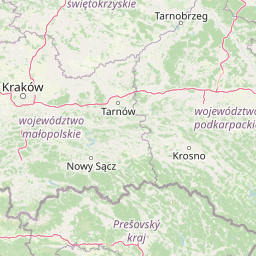
Ostoja Jaśliska landscape and geographic character
The landscape of Ostoja Jaśliska is shaped by the gentle, forested ridges of the Beskid Niski, a low segment of the Outer Carpathians whose rounded summits, broad valleys, and deeply incised river gorges create a quiet, heavily wooded terrain. Elevations are moderate, and the topography is dominated by long, parallel hill ridges separated by narrow valleys drained by the Jasiołka and its tributaries.
Because of the prevailing forest cover, the visual impression of the site is one of continuous woodland stretching from valley bottoms to ridge tops. Individual landmarks stand out mostly where rock outcrops, river cliffs, or peatland openings break the canopy. The Kamień nad Jaśliskami reserve protects a prominent rocky hill, while reserves along the Jasiołka guard the river's springs and gorge sections, where steep slopes and exposed bedrock punctuate the otherwise gentle terrain.
Small peatland basins occupy shallow depressions on the ridge plateaus and valley heads, often invisible at a distance but ecologically distinct up close. Their open, waterlogged surfaces, fringed by bog vegetation and surrounded by bog woodland, contrast sharply with the dense surrounding beech forests and contribute much of the site's habitat diversity.
Ostoja Jaśliska ecosystems, habitats, and plant life
Ostoja Jaśliska harbors an unusually dense concentration of forest habitat types from Annex I of the Habitats Directive. The most extensive is fertile Carpathian beechwood (Żyzna buczyna karpacka), which alone covers roughly 40 percent of the site and is regarded as one of the best-preserved examples of its type in the Polish Carpathians. Acidophilus beech forest, oak-hornbeam grąd, sycamore (jaworzyny), and ash-alder riparian forests (łęgi) round out the forest cover, each contributing distinct microhabitats.
Non-forest habitats are scattered but ecologically significant. Small fragments of Nardus grassland and tall-herb vegetation persist in forest openings and former pastoral clearings, while rocky habitats and ungrazed mountain grasslands support specialized herbaceous flora. The site also contains Annex I rock and cave habitats, including caves not open to the public, which provide shelter for cave-dwelling bats and invertebrates.
Wetland habitats include raised bogs, transitional mires, and base-rich fens. These small peatland complexes are hydrologically isolated features, often surrounded by forest, and they act as refugia for relict and specialist plant species that would otherwise be lost from the wider Carpathian forest landscape.
Ostoja Jaśliska wildlife and species highlights
Wildlife is one of the principal reasons for Ostoja Jaśliska's designation, particularly the presence of all three large Carpathian carnivores. The site supports breeding populations of gray wolf, Eurasian lynx, and brown bear, sustained by extensive, well-connected tracts of forest that provide adequate prey base and minimal disturbance. Together, these populations place Ostoja Jaśliska among the most important sites in Poland for monitoring large carnivore recovery in the Carpathians.
Aquatic and semi-aquatic fauna are notable as well. The Jasiołka and its tributaries harbor Annex II fish species including the Danube barbel and the bullhead, while beaver and Eurasian otter occur along the same waters. Amphibians are represented by the yellow-bellied toad, the Carpathian newt, and the great crested newt, which depend on the combination of forest pools and peatland pools found within the site.
The site's caves and old-growth forests shelter several rare bat species, including the lesser horseshoe bat, Geoffroy's bat, Bechstein's bat, and the greater mouse-eared bat. Mature and decaying beech trees, along with ancient yew stands in reserves such as Cisy w Nowej Wsi, sustain an exceptional assemblage of saproxylic invertebrates, including Rosalia longhorn, the cucumber beetle Cucujus cinnaberinus, and the rare ground beetle Carabus variolosus.
A rich butterfly fauna, including the scarce fritillary Euphydryas aurinia, the large copper Lycaena dispar, the scarce swallowtail Iphiclides podalirius, and several large blue species, depends on the site's open meadows, peatlands, and forest edges. This combination of flagship mammals, specialist wetland species, and forest invertebrates gives Ostoja Jaśliska a particularly broad wildlife profile for a single Natura 2000 site.
Ostoja Jaśliska conservation status and protection priorities
Conservation significance at Ostoja Jaśliska operates on several nested levels. At the European scale, the site is part of the Natura 2000 network under the EU Habitats Directive, which obliges Poland to maintain or restore favorable conservation status for the listed habitat types and species. At the national scale, most of the area is protected as the Jaśliski Landscape Park, with the remainder under the Beskid Niski Protected Landscape Area, giving a continuous national-level protection envelope.
Within these broader designations, nine nature reserves provide strict protection for the most sensitive features: old-growth beech stands, river gorges, peatlands, karst phenomena, and ancient yew populations. This layered structure, with EU, national landscape, and reserve-level protections overlapping, is characteristic of the most valued ecological sites in Poland and reflects the recognized importance of the area for multiple conservation objectives simultaneously.
The site's value for large carnivore conservation is particularly notable. Continuous forest cover, low human density, and limited infrastructure make Ostoja Jaśliska a key refuge for wolf, lynx, and brown bear, all of which depend on large, connected habitat patches. Maintaining this connectivity across the Beskid Niski is widely regarded as essential to the long-term viability of these species in the Polish Carpathians, and the site therefore plays a role well beyond the boundaries of its own polygon.
Ostoja Jaśliska cultural meaning and human context
The cultural context of Ostoja Jaśliska is closely tied to the historically mixed, multilingual character of the Beskid Niski, a region that once formed a transitional zone between Polish, Slovak, Lemko, and other communities. Small villages such as Jaśliska, Królik Polski, and Mszana retain a heritage of traditional Carpathian rural life, with dispersed hamlets, wooden churches, and pastoral landscapes shaping the surroundings of the protected forests.
Traditional land use, including small-scale grazing, haymaking, and forest management, has left a subtle imprint on the area's vegetation pattern. Forest clearings, traditionally maintained meadows, and forest edges still support grassland and tall-herb habitat types that would otherwise be absent from a closed forest landscape. This historical mosaic of woodland and open ground continues to provide habitat for many species protected under the Natura 2000 designation.
Top sights and standout views in Ostoja Jaśliska
Ostoja Jaśliska stands out as one of the most ecologically layered Natura 2000 sites in the Polish Carpathians. Its most striking highlight is the dominance of fertile Carpathian beech forest, which forms the backbone of the landscape and supports an extraordinary forest ecosystem.
Equally important is the simultaneous presence of wolf, lynx, and brown bear within a single continuous forest block, a condition that is becoming increasingly rare across Europe. The combination of diverse peatland habitats, river gorges along the Jasiołka, karst features, and ancient yew stands further distinguishes the site.
The presence of nine nature reserves within its boundaries, ranging from yew-rich Cisy w Nowej Wsi to the Jasiołka river gorge, gives Ostoja Jaśliska a depth of formal protection that complements its Natura 2000 and landscape park status. Together, these qualities make the area a benchmark for Carpathian conservation in southeastern Poland.
Best time to visit Ostoja Jaśliska
The most rewarding time to experience Ostoja Jaśliska is in late spring and early summer, when beech forests are in full leaf, forest herb layers are flowering, and peatland basins are most accessible without deep snow. Late spring also brings active amphibian breeding in forest pools and the emergence of many invertebrates.
Autumn offers a different character, with beech stands turning color, rutting activity among larger ungulates, and increased visibility of large carnivore tracks in wet forest soils. Bird migration through the Carpathian ridges can also be productive in early autumn, particularly in mixed and open habitats near peatland edges.
Winter can be appealing for tracking mammals and observing snow-covered beech forests and frozen peatlands, though heavy snow, limited road access, and the rugged nature of the Beskid Niski mean that winter visits require careful preparation and local knowledge.