
Mori Atlas logo
Protected areaOstoja Popradzka

Analyzing the mapped boundaries, montane forest habitats, and diverse riparian corridors of the Beskid Sadecki

Ostoja Popradzka: A Comprehensive Geographic Overview of Protected Landscapes in the Polish Carpathians

(Ostoja Popradzka (PLH120019))

Ostoja Popradzka represents a cornerstone of conservation in the Polish Carpathians, spanning over 57,000 hectares of mountainous terrain in the Lesser Poland Voivodeship. This protected area incorporates an altitudinal gradient from riverine valleys to high-altitude meadow communities. By documenting the intersection of Carpathian beech forests, upper-montane spruce zones, and vital wildlife habitats, the site provides a clear view of the regional ecological structure within the broader Beskid Sadecki mountain range.

Natura 2000Carpathian mountainsCarpathian beech forestmontane spruce forestriver valleysbrown bear habitat

Ostoja Popradzka

Protected area

Park overview

Structured park overview, official facts, and landscape profile for Ostoja Popradzka

Ostoja Popradzka park facts, protected area profile, and essential visitor context

Review the core facts for Ostoja Popradzka, including designation, size, terrain, visitor scale, habitats, and operating context in one park-focused overview.

About Ostoja Popradzka

Ostoja Popradzka is one of the largest habitat-focused protected areas in the Polish Carpathians. Designated under the European Natura 2000 network with the code PLH120019, the site covers about 57,931 hectares in the Beskid Sądecki mountains, in the Lesser Poland Voivodeship. Its location in the heart of the Carpathian range shapes both its physical character and its ecological importance.

The site was established in 2008 as a proposed Special Area of Conservation and is currently classified as a Site of Community Importance under the EU Habitats Directive. Its main purpose is to preserve the natural habitat types and species for which the Carpathian region of southern Poland is internationally recognized. The site protects a striking assortment of forest, meadow, grassland, wetland, rocky, and subterranean habitats, allowing entire ecological gradients to persist within a single protected territory.

A defining feature of Ostoja Popradzka is the dominance of well-preserved forest habitats. Carpathian fertile beech forest (Dentario glandulosae-Fagetum) alone covers roughly one-fifth of the area, while acidophilous upper-montane spruce forest (Plagiothecio-Piceetum), oak-hornbeam forest (Tilio-Carpinetum), and riparian floodplain forests add further forest diversity. Above the tree line and along forest edges, the area contains valuable non-forest habitats such as alpine herb communities, xerothermic grasslands, mat-grass swards, fresh meadows, alkaline fens, abandoned river channels, and small cave systems that are not open to visitors.

About 88% of the site overlaps with the Popradzki Park Krajobrazowy, while the remaining portion falls within the South Lesser Poland Protected Landscape Area. This layering of regional and European protection means that the area benefits from both national landscape-level management and European habitat-level conservation frameworks. Thirteen nature reserves are located within the site, adding another layer of strict protection for particularly valuable forest stands, geological formations, and species habitats.

The site's conservation value is strongly tied to the survival of large Carpathian mammals. Brown bears, wolves, and lynx continue to find refuge in the extensive forests of the Beskid Sądecki, while populations of European bison have been documented in the wider region. Bats such as the lesser horseshoe bat, Geoffroy's bat, Bechstein's bat, and greater mouse-eared bat use underground shelters within the area. The freshwater habitats of the site support otters, European beavers, and a range of fish, amphibians, and rare invertebrates.

Ostoja Popradzka can therefore be understood as both a forest-dominated mountain habitat complex and an ecological anchor for one of Europe's most important temperate mountain ranges. Its combination of habitat diversity, large-carnivore presence, layered protection status, and overlap with established landscape parks makes it a key reference site for Carpathian conservation.

Quick facts and research context for Ostoja Popradzka

Ostoja Popradzka is a Natura 2000 site covering about 57,931 hectares in the Beskid Sądecki mountains of Lesser Poland. It was established in 2008 and is catalogued under the code PLH120019 as a Site of Community Importance. About 88% of the area lies within Popradzki Park Krajobrazowy, while the remainder falls within the South Lesser Poland Protected Landscape Area.

The site protects a wide range of habitats, with Carpathian beech forest (Dentario glandulosae-Fagetum) covering around 20% of the area, alongside acidophilous upper-montane spruce forest, oak-hornbeam forest, riparian forests, alpine meadows, and cave systems. It is also home to notable species such as brown bear, wolf, lynx, European bison, and several rare bat and amphibian species. Thirteen nature reserves are located within the protected site, making it one of the most ecologically significant Natura 2000 areas in southern Poland.

Protection and recognition

Documented terrestrial protection scope and Natura 2000 recognition records

Ostoja Popradzka Protection Status and International Recognition Data

Terrestrial protection status and official Natura 2000 recognition sources define the documented conservation framework for Ostoja Popradzka. Structured records outline the verified designation history and management scope associated with the protected landscape.
Park context

Deeper park guide and search-rich context for Ostoja Popradzka

Ostoja Popradzka history, landscape, wildlife, and travel context

Explore Ostoja Popradzka through its history, landscape character, ecosystems, wildlife, conservation priorities, cultural context, and seasonal travel timing in a structured park guide built for atlas discovery and search intent.

Why Ostoja Popradzka stands out

Ostoja Popradzka is best known for its extensive Carpathian beech and spruce forests, which form the backbone of one of southern Poland's most important Natura 2000 habitat networks. The site is recognized at the European level for its habitat diversity, including Carpathian fertile beech forest, upper-montane spruce forest, alpine herb communities, mountain hay meadows, xerothermic grasslands, and underground cave systems. Equally important is the site's role in supporting large carnivores of the Carpathians. Brown bears, wolves, and lynx are among the protected species whose presence reflects the ecological integrity of the wider landscape. The combination of varied montane habitats, protected species, and overlap with Popradzki Park Krajobrazowy gives the area its identity as a flagship conservation zone in the Polish Carpathians.

Ostoja Popradzka history and protected-area timeline

Ostoja Popradzka has a relatively short formal history, reflecting the more recent development of European habitat-level conservation frameworks. The site was established in 2008, when it was formally designated as a proposed Special Area of Conservation under the European Union's Natura 2000 network. It later received recognition as an area of Community importance, a status that confirmed its role within the EU Habitats Directive system.

The site was originally referred to in some sources as 'Beskid Sądecki', an earlier working name that reflected its mountainous regional context. Its current identifier, PLH120019, comes from the Polish Natura 2000 register.

Although Ostoja Popradzka itself is a relatively new designation, the territory it covers has a long history of national-level conservation. Most of the site lies within the Popradzki Park Krajobrazowy, a landscape park created under Polish national law, and a substantial portion lies within the South Lesser Poland Protected Landscape Area. The site also contains thirteen nature reserves, several of which existed long before the Natura 2000 designation. For example, the Las Lipowy Obrożyska reserve and reserves such as Pusta Wielka and Barnowiec have protected locally important forest stands, geological features, and species for decades.

One nature reserve previously located within the site, the Rezerwat w Łosiach im. prof. Mieczysława Czai, was liquidated in 2011 and is no longer part of the protected network. Its removal illustrates the dynamic relationship between the Natura 2000 area and the broader Polish nature reserve system, in which national-level reserves can be created, modified, or dissolved independently from European-level designations.

Ostoja Popradzka landscape and geographic character

The landscape of Ostoja Popradzka is shaped by the Beskid Sądecki, a section of the Western Carpathians characterized by medium-height mountains, deeply incised river valleys, and extensive forest cover. The area lies roughly between the Poprad and Dunajec river basins, which together create a network of valleys, slopes, ridges, and stream corridors typical of the Polish Carpathians.

The terrain features a clear altitudinal gradient. Lower elevations are occupied by riverine and foothill habitats, including floodplain forests, abandoned river channels, and wet meadows. Mid-altitudes support mixed and broadleaf forests dominated by Carpathian beech, while higher elevations transition into upper-montane spruce forest. Above the tree line, the landscape includes alpine herb communities, mat-grass swards, fresh mountain meadows, and rocky outcrops supporting xerothermic grassland vegetation. Limestone and other suitable substrates host small cave systems that form part of the protected site.

Hydrography plays an important role in shaping the landscape. Numerous streams and mountain brooks carve the terrain, while larger rivers such as the Poprad and Dunajec frame the broader catchments. These waterways support riparian forests and create the conditions needed for the freshwater species protected within the site. The interaction between mountainous terrain, dense forest, and dynamic watercourses gives Ostoja Popradzka its characteristic Carpathian character: a layered, ecologically varied mountain landscape with strong forest continuity across elevations.

Ostoja Popradzka ecosystems, habitats, and plant life

Ostoja Popradzka is defined ecologically by its extraordinary range of natural habitats, which together span nearly the full altitudinal spectrum of the Polish Carpathians. The site is a habitat complex rather than a single forest type, with forests nonetheless forming the most important component of its ecological identity. Carpathian fertile beech forest (Dentario glandulosae-Fagetum) alone covers approximately 20% of the area, making it the single largest protected habitat within the site. Acidophilous upper-montane spruce forest (Plagiothecio-Piceetum), oak-hornbeam forest (Tilio-Carpinetum), sycamore-dominated ravine forests, and riparian floodplain forests further diversify the forest mosaic.

Non-forest habitats contribute significantly to the site's ecological value. Alpine herb communities, xerothermic grasslands on rocky slopes, mat-grass swards, fresh meadows, and alkaline fens create habitat mosaics along ridges, slopes, and valley floors. Abandoned river channels support wetland habitat types that depend on the site's natural hydrology. Small cave systems, closed to visitors, form a distinct subterranean habitat type within the EU Habitats Directive category for the area.

The vegetation includes numerous protected and characteristic plant species. Species such as the martagon lily (Lilium martagon), coralroot orchid (Corallorhiza trifida), sword-leaved helleborine (Cephalanthera longifolia), dark-red helleborine (Epipactis atrorubens), common ivy (Hedera helix), and various wild orchids indicate the presence of both well-preserved forest understoreys and species-rich meadow habitats. The presence of fir clubmoss (Huperzia selago) reflects the site's upper-montane and subalpine conditions.

The interaction between forest, meadow, rock, water, and underground habitats makes Ostoja Popradzka an unusually complete example of a Carpathian ecological landscape. Many of the habitat types protected within the site are considered priorities under the Habitats Directive, reinforcing its importance at both national and European levels.

Ostoja Popradzka wildlife and species highlights

Ostoja Popradzka supports one of the most ecologically significant wildlife communities in the Polish Carpathians. The site's extensive, continuous forests provide habitat for the region's most iconic large mammals, including the brown bear (Ursus arctos), grey wolf (Canis lupus), and Eurasian lynx (Lynx lynx). These species depend on large, undisturbed forest tracts, and their presence signals the integrity of the wider Carpathian landscape.

The European bison (Bison bonasus) is part of the wider regional wildlife context for the Carpathians, with populations documented in nearby mountain areas that are ecologically connected to the forests of the Beskid Sądecki. Smaller mammals also benefit from the site's habitat diversity. The European beaver (Castor fiber) and Eurasian otter (Lutra lutra) inhabit the streams and rivers flowing through the protected area.

Bats are another important component of the site's fauna. Several species protected under the Habitats Directive use the area's caves, rock crevices, and forest habitats, including the lesser horseshoe bat (Rhinolophus hipposideros), Bechstein's bat (Myotis bechsteinii), Geoffroy's bat (Myotis emarginatus), and greater mouse-eared bat (Myotis myotis).

Amphibians are well represented, with species such as the Carpathian newt (Lissotriton montandoni), the great crested newt (Triturus cristatus), and the yellow-bellied toad (Bombina variegata) inhabiting the diverse wet microhabitats of the site. Freshwater streams support species of conservation interest including the European brook lamprey (Lampetra planeri), the asp (Aspius aspius), the bullhead (Cottus gobio), and the Danube barbel (Barbus peloponnesius).

Invertebrates also contribute to the site's ecological richness. Insect species protected under the Habitats Directive, such as Rosalia longhorn beetle (Rosalia alpina), large blue butterfly (Lycaena dispar), Jersey tiger moth (Euplagia quadripunctaria), and Carabus variolosus ground beetle, indicate well-preserved forest and meadow habitats. The presence of the narrow-mouthed whorl snail (Vertigo angustior) demonstrates the value of small, specialized microhabitats such as alkaline fens and damp meadows. Together, these wildlife groups illustrate the breadth of trophic levels and habitat connections maintained within the protected site.

Ostoja Popradzka conservation status and protection priorities

Conservation is the central purpose of Ostoja Popradzka. The entire site exists to protect natural habitat types and species of European importance under the EU Habitats Directive. Its designation as a Site of Community Importance places it within the pan-European Natura 2000 network, which is the largest coordinated network of protected areas in the world.

From a conservation perspective, the site is particularly important because it preserves large, functionally connected blocks of Carpathian forest habitats. The dominance of Carpathian fertile beech forest, an EU priority habitat type, gives the site direct relevance to the conservation of Europe's natural heritage. The presence of upper-montane spruce forest, alpine herb communities, and riparian habitats further strengthens its ecological profile.

The site's value for large carnivores, including brown bear, wolf, and lynx, gives it additional significance for conservation strategies aimed at maintaining viable populations of these species across the Carpathians. The presence of multiple bat species, rare amphibians, and a wide range of freshwater species adds further conservation weight.

The site's layered protection framework is central to its conservation strategy. The overlap with Popradzki Park Krajobrazowy ensures broader landscape-level management under Polish national law, while the thirteen nature reserves within the site provide strict, site-specific protection for particularly valuable forest stands, geological formations, and wildlife habitats. The remaining portion of the site falls within the South Lesser Poland Protected Landscape Area, where landscape-level protections complement the Natura 2000 framework.

Together, these layers create a robust conservation system in which European habitat-level protection, national landscape protection, and reserve-level protection reinforce one another. This integrated approach is one of the site's defining characteristics and a major reason for its importance to Carpathian conservation.

Ostoja Popradzka cultural meaning and human context

Ostoja Popradzka does not have a strongly documented cultural narrative in the available sources, and the site is primarily recognized for its ecological value rather than for cultural or historical associations. The Beskid Sądecki region in which it lies is historically associated with Polish Carpathian mountain culture, including traditional forestry, pastoralism, and small-scale mountain agriculture.

The Popradzki Park Krajobrazowy, which overlaps most of the site, helps maintain the regional cultural landscape of forested mountains, river valleys, and traditional villages. The presence of nature reserves such as Okopy Konfederackie also reflects a historical association with the area, although the available sources do not elaborate on this cultural dimension.

Because cultural context is only lightly supported by the source material, this section is kept brief and focused on the natural landscape context rather than on detailed cultural interpretation.

Top sights and standout views in Ostoja Popradzka

Ostoja Popradzka stands out as one of the most habitat-rich Natura 2000 sites in the Polish Carpathians. Its size, exceeding 57,000 hectares, allows for the conservation of entire ecological gradients, from lowland riverine habitats up to subalpine communities. The presence of multiple priority habitat types, including Carpathian fertile beech forest and upper-montane spruce forest, places the site firmly within the priority conservation framework of the European Union.

Equally distinctive is the site's wildlife profile, which includes brown bears, wolves, and lynx, alongside rich bat, amphibian, and invertebrate communities. The layered protection system combining Natura 2000, Popradzki Park Krajobrazowy, thirteen nature reserves, and a protected landscape area makes Ostoja Popradzka a model of integrated conservation in southern Poland.

Best time to visit Ostoja Popradzka

The seasonal character of Ostoja Popradzka is shaped by the climate of the Beskid Sądecki mountains in the Polish Carpathians. Late spring and early summer bring flowering meadows, wild orchids, and fresh forest understoreys, making this a particularly rewarding period for visitors interested in vegetation and flowering plants. The full alpine and subalpine meadows develop in summer, when most forest habitats are easily accessible for walking and wildlife observation.

Autumn transforms the forest habitats into displays of yellow, orange, and red foliage, especially in the beech and mixed forest zones. This period is well suited to landscape appreciation and observation of Carpathian forest character. Winter brings snow cover across the higher elevations of the Beskid Sądecki, altering the visual character of the area, although seasonal access conditions vary depending on weather and infrastructure. As in any large Carpathian protected area, visitors interested in wildlife observation generally benefit from quieter periods such as early morning, when forest mammals and birds are more active.

Monthly climate preview

Long-term representative monthly averages for temperature swings and precipitation rhythm

Ostoja Popradzka Climate Normals, Annual Temperature and Precipitation Records

Representative coordinates record sustained temperature shifts and precipitation levels across twelve distinct monthly intervals. Detailed multi-year data provides complete analytical context for comparative meteorological research.
Annual mean7 °C
-5 °C18 °C
Jan-5°
Feb-3°
Mar
Apr
May12°
Jun16°
Jul18°
Aug17°
Sep12°
Oct
Nov
Dec-3°
Warmest month
July

17.5 °C

Coolest month
January

-4.6 °C

Wettest month
July

4 mm/day

Driest month
January

1.5 mm/day

Park location guide

Geography guide, regional context, and park location map for Ostoja Popradzka

Ostoja Popradzka park geography, regions, and map view in Poland

Understand where Ostoja Popradzka sits in Poland through a broader geographic reading of the surrounding landscape, nearby location context, and its mapped position within the national park landscape.

How Ostoja Popradzka fits into Poland

Poland, officially the Republic of Poland, is a Central European country spanning from the Baltic Sea in the north to the Carpathian Mountains in the south. It borders Germany, Czech Republic, Slovakia, Ukraine, Belarus, Lithuania, and Kaliningrad Oblast. The country has a temperate climate, diverse landscapes, and is known for its rich history, cultural heritage, and strong economic position within the EU.

Wider geography shaping Ostoja Popradzka in Poland

Poland occupies 312,696 km2 in Central Europe, extending from the Baltic Sea coast in the north to the Sudetes and Carpathian Mountains in the south. It borders Germany to the west, Czech Republic and Slovakia to the south, Ukraine and Belarus to the east, and Lithuania and Kaliningrad Oblast to the northeast. The landscape includes lowland plains, uplands, and mountain ranges.

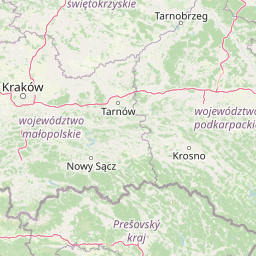
Map view of Ostoja Popradzka

Use this park location map to pinpoint Ostoja Popradzka in Poland, understand its exact geographic position, and read its mapped placement within the surrounding landscape more clearly.

Pigeon | © OpenStreetMap contributors

Location context for Ostoja Popradzka

Lesser Poland Voivodeship
Recorded earthquake history

Explore Historical Earthquake Records Associated With Ostoja Popradzka

Access a detailed catalogue of recorded seismic events associated by location with Ostoja Popradzka. The MoriAtlas collection enables users to review documented earthquake history in the Beskid Sądecki mountains through specific event data, including magnitude and epicentre distance, ensuring a clear view of regional seismic activity.

Ostoja Popradzka Earthquake History

Catalogued events

12 events

Strongest magnitude

Magnitude 4.8

Most recent event

Jun 25, 2006

This history includes earthquakes recorded inside the park or within 50 km of its borders

Park atlas

Compare regional mountain habitats and connected conservation zones across the Carpathians.

Parks Near Ostoja Popradzka and Surrounding Protected Landscapes

Browsing other protected areas near Ostoja Popradzka reveals shared montane terrain, river valleys, and forest ecosystems across the region. Expanding the geographic comparison highlights wider ecological patterns and connects individual mountain reserves into a complete regional park network.
Protected areaLesser Poland Voivodeship
Park boundaries overlap#1 closest

West

Środkowy Dunajec z dopływami: Protected River Habitats and Carpathian Foothills Geography

Exploring the river corridor and riparian ecosystems of southern Poland

Spanning 755 hectares across four connected enclaves, Środkowy Dunajec z dopływami protects the vital riverine systems of the middle Dunajec and its tributaries. This site offers a unique look at the fluvial processes and biodiversity of Carpathian mountain streams, showcasing diverse habitat structures from pioneer gravel banks to mature riparian forests.

Area
7.56 km²
Relief
Upland
Scope
Terrestrial
Water
Major water bodies
Protected areaLesser Poland Voivodeship
0.6 km away#2 closest

North

Łabowa Protected Area: Forested Carpathian Foothills and Riparian Habitats in Lesser Poland

A key Natura 2000 site protecting mountain stream ecosystems and forest diversity

Located in the Lesser Poland Voivodeship, Łabowa is a significant protected area known for its continuous forest cover and diverse stream-influenced terrain. Spanning over 3,000 hectares, this site offers deep insight into the ecological character of the Carpathian foothills and the preservation of habitat for sensitive bat species.

Area
33.04 km²
Relief
Mountain
Water
Major water bodies
Watercolor illustration of a river flowing through a forested valley with rolling hills and scattered trees
National parkPrešov Region
1.5 km away#3 closest

West

Pieniny National Park: Geographic Insights and Protected Landscape Mapping in Prešov Region

Explore karst terrain, river gorge geography, and mountain boundaries

Pieniny National Park showcases remarkable limestone scenery and rare karst microhabitats along the Slovak-Polish border. This atlas focus provides a technical overview of the park's physical boundaries, river canyon systems, and its geological significance within the Prešov Region. Access key geographic data regarding the Lesser Pieniny ridges and the unique ecological corridors that define this internationally recognized conservation zone.

Area
37.5 km²
Established
1967
IUCN
II
Relief
Mountain
A horizontal watercolor painting showing stylized Pieniny mountain ridges, coniferous forests, and a prominent limestone rock formation against a soft pastel landscape.
National parkLesser Poland Voivodeship
1.6 km away#4 closest

West

Pieniński Park Narodowy: Mapping the Limestone Mountains of Lesser Poland Voivodeship

A historic protected area featuring the iconic Dunajec River gorge

Discover the unique geography of Pieniński Park Narodowy, an essential protected area in the Polish Carpathians. The terrain spans limestone cliffs, deep river gorges, and mountain ridges, offering deep insights into the region's karstic landscape and natural history.

Area
23.46 km²
Established
1932
Visitors
815K annual
Relief
Mountain
Watercolor illustration of a mountainous landscape with green forests and a river
National parkLesser Poland Voivodeship
1.6 km away#5 closest

West

Pieniny National Park: Geographic and Protected Area Map Analysis of Lesser Poland

Limestone karst landscapes and Carpathian mountain terrain

Examine the topography of Pieniny National Park, from the towering Trzy Korony peaks to the narrow channels of the Dunajec River gorge. This detailed overview covers the protected limestone ridges and species-rich meadows that define one of the most prominent natural landscapes in the Lesser Poland region.

Area
23.46 km²
Established
1932
IUCN
II
Visitors
815K annual
Protected areaLesser Poland Voivodeship
5 km away#6 closest

Northeast

Ostoje Nietoperzy Powiatu Gorlickiego: Landscape and Protected Area Geography

A twelve-enclave forest network in the Lesser Poland foothills

Spanning roughly 2,825 hectares across Gorlice County, this protected area preserves representative stands of Central European beech and mixed slope forests. Through its unique multi-enclave design, the site acts as a key refuge for saproxylic beetles, Carpathian newts, and specialized chiropteran species that rely on the mosaic of mature timber and subterranean shelters in the Polish landscape.

Area
28.249 km²
Scope
Terrestrial
Forest
Mostly forested
Nature reserveLesser Poland Voivodeship
About 8.2 km away#7 closest

West

Rezerwat przyrody Modrzewie: Mapping Protected Larch Woodland Geography in Lesser Poland

Nature reserve on the southern slopes of the Gorce mountains

The Rezerwat przyrody Modrzewie nature reserve protects a rare stand of old-growth larch trees within the Gorce mountain range. Located on the southern slopes of Lubań in the Lesser Poland Voivodeship, this site provides valuable data on Carpathian forest ecology, displaying distinct tree populations that contrast with the surrounding alpine meadows and montane landscapes of southern Poland.

Area
0.107 km²
Established
1959
Relief
Mountain
Climate
Temperate
Nature reserveLesser Poland Voivodeship
9.4 km away#8 closest

East

Rezerwat przyrody Markowiec-Gródek: Mountain Forest Reserve and Regional Geographic Map

Protected Carpathian forest terrain in the Lesser Poland Voivodeship

Explore the physical geography of Rezerwat przyrody Markowiec-Gródek, a nature reserve covering the slopes of two mountain summits in the Beskid Niski range. This area is characterized by steep ravines, rocky debris, and valuable deadwood habitats, standing as a representative fragment of the regional Carpathian forest landscape.

Area
0.719 km²
Established
2024
Relief
Mountain
Climate
Temperate

Common questions about visiting, size, designation, and location context for Ostoja Popradzka

Ostoja Popradzka FAQs for park facts, access, geography, and protected area context

Find quick answers about Ostoja Popradzka, including protected-area facts, park geography, trail and visitor context, and how the park fits into its surrounding country and regional landscape.
MoriAtlas Explorer

Continue Your Protected Areas Search Across the Global Atlas

Deepen your exploration by continuing the structured search for national parks and protected areas worldwide. Utilize the comprehensive filtering capabilities to compare different conservation landscapes and refine your understanding of global park geography. Discover more about the distribution and characteristics of protected natural areas.

Global natural geography