Mori Atlas logo
National parkPetrified Forest National Park

Discover the mapped terrain and regional park context of this significant natural area.

Petrified Forest National Park: Protected Landscape and Geographic Atlas in Navajo County

Petrified Forest National Park stands as a unique protected landscape within Navajo County, Arizona, offering a distinct geographic profile for atlas-driven exploration. This national park provides insight into specific natural terrains and mapped park boundaries, serving as a key point of reference for understanding regional geography and the distribution of protected lands across the United States. Its identity as a national park anchors its significance for detailed geographic study and landscape context.

Fossil ForestsBadlandsColorado PlateauLate TriassicPainted DesertWilderness Area

Petrified Forest National Park

National park

Park overview

Structured park overview, official facts, and landscape profile for Petrified Forest National Park

Petrified Forest National Park park facts, protected area profile, and essential visitor context
Review the core facts for Petrified Forest National Park, including designation, size, terrain, visitor scale, habitats, and operating context in one park-focused overview.

About Petrified Forest National Park

Petrified Forest National Park represents a unique convergence of geological, paleontological, and archaeological significance in the American Southwest. The park's landscape tells a story spanning more than 200 million years, from the Late Triassic forests that once thrived near the equator to the semi-desert environment visitors experience today. The Chinle Formation, which underlies much of the park and gives the Painted Desert its characteristic colors, contains not only the petrified logs but also an extraordinary fossil record that has attracted paleontologists since the early 20th century. The formation can reach up to 800 feet thick in places and consists of mudstone, siltstone, claystone, sandstone, conglomerate, and limestone, all susceptible to the wind and water erosion that creates the badlands terrain. The park's geography is bisected by Interstate 40, the historic U.S. Route 66, the BNSF Railway, and the Puerco River, all following similar east-west routes through this ancient landscape. About one-third of the park is designated wilderness, protecting some of its most remote and undeveloped character. The park's significance extends beneath the surface, where an unconformity representing a 200-million-year gap in the rock record occurs where erosion has removed all layers above the Chinle except for the geologically recent Bidahochi Formation.

Quick facts and research context for Petrified Forest National Park

Located in northeastern Arizona, Petrified Forest National Park covers about 346 square miles of semi-desert terrain at an average elevation of 5,400 feet. The park was established as a national monument in 1906 and became a national park in 1962. It protects extensive deposits of petrified wood from the Late Triassic period, colorful badlands of the Chinle Formation, and more than 1,200 archaeological sites including petroglyphs and Ancestral Puebloan ruins. About one-third of the park is designated wilderness, totaling 50,260 acres. The park lies along historic U.S. Route 66 and the BNSF Railway's Southern Transcon, with the Puerco River bisecting the area. The climate is cold semi-arid with summer temperatures reaching around 100°F and winter lows well below freezing.

Park context

Deeper park guide and search-rich context for Petrified Forest National Park

Petrified Forest National Park history, landscape, wildlife, and travel context
Explore Petrified Forest National Park through its history, landscape character, ecosystems, wildlife, conservation priorities, cultural context, and seasonal travel timing in a structured park guide built for atlas discovery and search intent.

Why Petrified Forest National Park stands out

Petrified Forest National Park is best known for its extraordinary deposits of petrified wood, where ancient trees from the Late Triassic have been transformed into colorful stone through a process of permineralization. The logs, primarily from the extinct conifer Araucarioxylon arizonicum, display remarkable preservation of form while their internal structure has been replaced by quartz crystals tinted by iron oxide and other minerals. Beyond the petrified forests, the park is famous for the Painted Desert, a colorful badlands landscape where differential erosion of the Chinle Formation has created dramatic cliffs, mesas, buttes, and rounded hills in shades of red, orange, purple, and white. The park also holds exceptional scientific importance for its Late Triassic fossils, including not just trees but also one of the world's most diverse assemblages of Triassic vertebrates, early dinosaurs, giant reptiles called phytosaurs, and diverse plant fossils.

Petrified Forest National Park history and protected-area timeline

The human history of Petrified Forest National Park spans at least 13,000 years, beginning with Clovis-era peoples who are the ancestors of modern Native Americans. By approximately 2,500 years ago, Ancestral Pueblo farmers were growing corn and living in subterranean pit houses within what would become the park. Between 700 and 900 CE, population grew rapidly and families began aggregating into large villages. The famous Puerco Pueblo, which once housed up to 200 people in roughly 200 rooms around an open plaza, represents the height of Ancestral Pueblo settlement. By 1450 CE, these communities migrated to join rapidly growing towns on the Hopi Mesas and at the Pueblo of Zuni, where descendants still live today. More than 1,200 archaeological sites have been identified within the park, including numerous petroglyphs. Spanish explorers visited the area in the 16th century, and by the mid-19th century, U.S. surveyors documented the petrified wood. The Arizona Territorial Legislature first requested a national park in 1895, and in 1906, President Theodore Roosevelt used the Antiquities Act to create Petrified Forest National Monument. The monument became a national park in 1962, and wilderness areas were designated in 1970 following the Wilderness Act. A major expansion was authorized in 2004, nearly tripling the park's protected area.

Petrified Forest National Park landscape and geographic character

The terrain of Petrified Forest National Park is remarkably diverse, ranging from gentle hills and major petrified wood deposits in the south to deeply eroded badlands in the north. The elevation varies from about 5,340 feet along the Puerco River to 6,230 feet at Pilot Rock. The colorful badlands of the Painted Desert, composed of the Chinle Formation, have been eroded by wind and water into dramatic formations including cliffs, gullies, mesas, buttes, and rounded hills. The Blue Mesa Member of the Chinle displays particularly striking examples of these formations. The northern part of the park features volcanic landforms called maars, flat-bottomed volcanic craters exposed by erosion of the Bidahochi Formation. The landscape is crossed by numerous washes including Lithodendron Wash, Dead Wash, Ninemile Wash, Dry Wash, Cottonwood Wash, and Jim Camp Wash. The Puerco River flows generally eastward through the park, while in the southern portion, Cottonwood Wash and Jim Camp Wash flow into the Little Colorado River. The contrast between the lush vegetation along the Painted Desert rim and the relatively barren badlands below creates one of the park's most striking visual characteristics.

Petrified Forest National Park ecosystems, habitats, and plant life

Petrified Forest National Park supports a semi-desert shrub steppe ecosystem that, despite its apparent barrenness, contains remarkable biodiversity. The park has documented more than 400 plant species, including more than 100 grass species, making it one of the best-preserved grassland areas in northeastern Arizona. Native grasses include bunchgrass, blue grama, sacaton, sideoats grama, bearded sprangletop, and bush muhly. The volcanic soils of the Bidahochi Formation in the northern part support abundant plant life along the Painted Desert rim, where shrubs, small trees, grasses, and herbs create a contrast to the bare badlands below. Riparian zones along the washes support willows, cottonwoods, rushes, and sedges. The park contains two potential natural vegetation types: Grama Galleta Steppe and Juniper Pinyon pine. Invasive species including annual lovegrass, brome (cheat grass), and tamarisk (saltcedar) pose ongoing challenges to native vegetation communities.

Petrified Forest National Park wildlife and species highlights

Despite its desert appearance, Petrified Forest National Park supports a surprising diversity of wildlife. Larger mammals include pronghorns, the fastest land animals in North America capable of 60-mile-per-hour sprints, coyotes, bobcats, and mule deer. Black-tailed jackrabbits, Gunnison's prairie dogs, and various small mammals populate the grasslands. The park is home to more than 200 bird species, including golden eagles with wingspans up to 7 feet, western meadowlarks known for their charming song, and Anna's hummingbirds. The collared lizard is the largest and most commonly seen reptile, while plateau striped whiptails represent a species consisting entirely of females. Seven amphibian species, including tiger salamanders, Woodhouse's toads, and several spadefoot varieties, have been identified. The park's reptile population includes more than 16 kinds of lizards and snakes, with the prairie rattlesnake being the only venomous species. Numerous insects, arthropods, and other invertebrates complete the park's ecological communities.

Petrified Forest National Park conservation status and protection priorities

Petrified Forest National Park is significant for both paleological and ecological conservation. The Chinle Formation is considered one of the richest Late Triassic fossil-plant deposits in the world, containing more than 200 fossil plant taxa and one of the most diverse Late Triassic vertebrate assemblages. Paleontologists have documented more than 300 fossil sites and continue research in the 21st century. The park's designation of wilderness areas, protecting 50,260 acres where human activity is limited, preserves natural processes and provides habitat for wildlife. However, the park faces ongoing challenges from fossil theft, with an estimated 12 short tons of petrified wood stolen annually despite enforcement efforts. Invasive species including tamarisk, lovegrass, and brome threaten native plant communities. The park's grasslands, protected from development and overgrazing for many years, represent some of the best-preserved in northeastern Arizona and serve as important habitat for grassland-dependent species.

Petrified Forest National Park cultural meaning and human context

The cultural context of Petrified Forest National Park extends deep into human history and remains vital to present-day communities. The park contains more than 1,200 archaeological sites representing continuous human habitation for over 13,000 years, from Paleoindian groups through Ancestral Pueblo peoples to historic-era communities. Puerco Pueblo and Stone Axe represent significant Ancestral Pueblo villages where hundreds of people lived in apartment-like masonry structures. The petroglyphs scattered throughout the park, most estimated to be between 650 and 2,000 years old, remain important to descendant communities who consider these ancestral places sacred. The Ancestral Pueblo farmers who once lived in the Petrified Forest migrated beginning around 1450 CE to join communities on the Hopi Mesas to the northwest and the Pueblo of Zuni to the east, where thousands of their descendants still live today. The park's landscape also relates to the historic Route 66 era and the development of the American Southwest, with preserved sections of the former highway within park boundaries.

Top sights and standout views in Petrified Forest National Park

Petrified Forest National Park offers extraordinary encounters with deep time through its fossil forests, colorful badlands, and archaeological sites. The giant logs at the Rainbow Forest Museum and the Crystal Forest trail showcase petrified logs in remarkable detail, while the Painted Desert rim provides sweeping views of the multihued terrain. The park preserves more than 1,000 archaeological sites including the ruins of Puerco Pueblo and numerous petroglyph panels. The Painted Desert Inn, a National Historic Landmark designed by modernist architect Richard Neutra, represents significant architectural heritage. Visitors can hike seven maintained trails ranging from less than 0.5 miles to nearly 3 miles, explore wilderness areas with permits, or simply drive the 28-mile park road while stopping at overlooks. The park's paleontological significance continues with ongoing research and fossil discoveries, including new species identified as recently as 2023.

Best time to visit Petrified Forest National Park

Petrified Forest National Park can be visited year-round, though spring and fall offer the most comfortable temperatures for outdoor exploration. Summer temperatures can exceed 100°F, while winter temperatures drop well below freezing with occasional snow. The park receives most of its annual precipitation from July through September, with August being the wettest month. Visitors should be aware that winter winds can reach 60 miles per hour, and summer breezes, while lighter, still cause frequent sandstorms and dust devils. The annual average relative humidity stays below 50 percent and can drop to less than 15 percent. For those seeking to avoid crowds, weekdays and the winter months generally see fewer visitors. The park is open every day except Thanksgiving and Christmas, with hours varying seasonally from as early as 7 a.m. to as late as 7 p.m. in peak summer months. The Painted Desert Visitor Center and Rainbow Forest Museum offer orientation programs, exhibits, and ranger-led activities throughout the year.
Park location guide

Geography guide, regional context, and park location map for Petrified Forest National Park

Petrified Forest National Park park geography, regions, and map view in United States of America
Understand where Petrified Forest National Park sits in United States of America through a broader geographic reading of the surrounding landscape, nearby location context, and its mapped position within the national park landscape.

How Petrified Forest National Park fits into United States of America

The United States of America is a federal presidential republic and one of the world's largest countries by area and population. It consists of 50 states across a vast territory spanning multiple time zones, with its capital in Washington, D.C. and largest city in New York City. The nation has a diverse economy, influential political system, and significant cultural and military presence globally.

Wider geography shaping Petrified Forest National Park in United States of America

The United States occupies a vast territory in North America, bordered by Canada to the north and Mexico to the south. The 48 contiguous states stretch from the Atlantic to the Pacific Ocean, while Alaska occupies the northwestern region and Hawaii is an archipelago in the Pacific. The country encompasses diverse terrain including the Rocky Mountains, Appalachian Mountains, Great Plains, and extensive river systems.

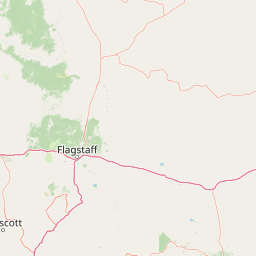
Map view of Petrified Forest National Park

Use this park location map to pinpoint Petrified Forest National Park in United States of America, understand its exact geographic position, and read its mapped placement within the surrounding landscape more clearly.

Pigeon | © OpenStreetMap contributors

Location context for Petrified Forest National Park

Apache CountyArizonaNavajo County
Park atlas

Trace mapped park geography and compare unique protected landscapes across the region surrounding Petrified Forest National Park.

Explore National Parks and Protected Areas Near Petrified Forest National Park, Arizona
Browse other national parks and protected areas located in the semi-desert shrub steppe and Colorado Plateau region, offering similar arid landscapes and fossil-rich formations to Petrified Forest National Park. Use this geographic context to understand the regional spread of protected lands and compare the unique conservation profiles of neighboring national park entities.
National parkArizona

Grand Canyon National Park: Arizona National Park Protected Landscape & Geography

Explore mapped boundaries and regional atlas context.

Grand Canyon National Park stands as a premier national park, showcasing a unique protected landscape within Arizona's diverse geography. This detailed entry focuses on the park's specific geographic identity, its mapped boundaries, and its significance within the regional atlas. Discover the contours of this protected area and its place in the natural terrain of the American Southwest.

Area
4,926.08 km²
Established
1919
IUCN
II
Visitors
4.9M annual
National parkMontezuma County

Mesa Verde National Park: Protected Landscape Atlas and Geographic Identity

Discover the mapped terrain and regional context of this national park.

Mesa Verde National Park serves as a critical protected landscape within Montezuma County, offering distinct insights into regional geography and mapped terrain. This entry details the park's identity as a National Park, emphasizing its geographic setting and providing a foundation for atlas-driven exploration. Understand the park's place within the broader landscape context and its significance as a mapped protected area, ideal for focused geographic study.

Area
212.4 km²
Established
1906
IUCN
II
Visitors
463.1K annual
National parkPima County

Saguaro National Park: Discover Its Protected Landscape Geography and Mapped Boundaries

Explore the natural terrain and regional context of this national park.

Saguaro National Park offers a focused exploration of a specific protected landscape, highlighting its unique geographic features and mapped boundaries within Pima County. This detail page provides an atlas perspective, allowing for a deep dive into the park's natural terrain and its regional significance. Understand the protected area's identity and its place within the wider geographical context.

Area
371.16 km²
Established
1994
IUCN
II
Visitors
946.4K annual
National parkUtah

Canyonlands National Park: A Mapped Protected Landscape in Utah's Geography

Explore its vast geography and protected area boundaries.

Canyonlands National Park stands as a significant protected entity within the state of Utah, characterized by its immense scale and dramatic geological formations. This page facilitates an atlas-style exploration of its terrain, emphasizing its mapped boundaries and its crucial role as a protected landscape. Gain a deeper appreciation for its unique geographic setting and its place within the broader regional context.

Area
1,366.21 km²
Established
1964
IUCN
II
Visitors
818.5K annual
National parkUtah

Bryce Canyon National Park: Utah's Mapped Protected Landscape and Geographic Context

Explore the unique geology and protected boundaries of Bryce Canyon National Park.

Bryce Canyon National Park offers a distinct protected landscape within the geography of Utah, characterized by its unique geological formations. This entry provides essential context for understanding its mapped boundaries and natural terrain, serving as a vital component for atlas-based discovery of protected areas. Investigate the specific geographic setting and conservation significance of this iconic national park.

Area
145.02 km²
Established
1928
IUCN
II
Visitors
2.5M annual
National parkUtah

Capitol Reef National Park: Utah National Park Protected Landscape and Geography

Explore Capitol Reef National Park's mapped terrain and boundaries.

Delve into the protected landscape and geographic identity of Capitol Reef National Park, a key national park in Utah. This resource provides detailed context on its mapped terrain and regional setting, supporting a structured understanding of protected areas for atlas exploration. Discover the specific geographic features and park boundaries that define this protected natural area.

Area
978.95 km²
Established
1971
IUCN
II
Visitors
1.4M annual
National parkUtah

Zion National Park National Park: Detailed Mapped Geography and Protected Landscape Identity

Explore the mapped terrain and regional context of this Utah national park.

Zion National Park represents a key protected area within Utah, ideal for detailed geographic exploration. This canonical page offers insights into the park's specific mapped boundaries, its inherent landscape character, and its regional geographic setting. It is designed for users seeking to understand the atlas-level significance of Zion National Park as a national park entity, focusing on its protected terrain and natural geography.

Area
593.26 km²
Established
1919
IUCN
II
Visitors
4.9M annual
National parkUtah

Arches National Park: Utah National Park Protected Landscape Exploration

Explore mapped terrain and geographic context.

Delve into the specifics of Arches National Park, a protected national park located in Utah. This atlas-focused entry provides detailed insight into the park's protected landscape features and geographic distribution. Understand the mapped park boundaries and the unique natural terrain that shapes this significant conservation area within the United States' broader regional geography.

Area
310.31 km²
Established
1971
IUCN
II
Visitors
1.5M annual

Common questions about visiting, size, designation, and location context for Petrified Forest National Park

Petrified Forest National Park FAQs for park facts, access, geography, and protected area context
Find quick answers about Petrified Forest National Park, including protected-area facts, park geography, trail and visitor context, and how the park fits into its surrounding country and regional landscape.
MoriAtlas Explorer

Continue Your Protected Areas Search Across the Global Atlas

Deepen your exploration by continuing the structured search for national parks and protected areas worldwide. Utilize the comprehensive filtering capabilities to compare different conservation landscapes and refine your understanding of global park geography. Discover more about the distribution and characteristics of protected natural areas.

Global natural geography