Why Quellbäche des Eppenbrunner Baches stands out
The reserve is best known for protecting the spring brooks that form the headwaters of the Eppenbrunner Bach, along with the chain of small impoundments and their associated wetland transitions in a single compact valley system. It is also notable for the tight juxtaposition of very different habitats within the protected boundary, from groundwater-fed fens and sedge meadows to alder and ash brook forests, and from there to drier rocky and open slope communities near the French border.
Quellbäche des Eppenbrunner Baches history and protected-area timeline
The area now known as Quellbäche des Eppenbrunner Baches was formally placed under nature protection in 1991, through a legal ordinance of the former Landkreis Pirmasens in Rhineland-Palatinate. The designation was issued on August 29, 1991, and established the roughly 94-hectare zone as a registered Naturschutzgebiet, focusing on the headwater streams and valleys of the Eppenbrunner Bach.
The legal text accompanying the designation made clear that the purpose of protection was the preservation and development of the spring brooks, their impoundments and sedimentation zones, transitional mires, sedge communities, wet meadows, fallow meadows, brook-side alder and ash forests, near-natural old-growth stands, and the dry and rocky habitats in the area. Both the ecological character and the visual quality of the valley landscape were cited as reasons for protection.
Following German administrative reforms, the reserve now lies within the Landkreis Südwestpfalz. It is also recorded in international databases, including the World Database on Protected Areas under WDPA ID 165057, reflecting its standing as a recognized protected area beyond national inventories.
Quellbäche des Eppenbrunner Baches landscape and geographic character
The landscape of the reserve is shaped by the gentle topography of the eastern Palatinate Forest, where shallow valleys and low ridges converge toward the headwaters of the Eppenbrunner Bach. Rather than dramatic peaks or cliffs, the terrain consists of softly incised stream valleys, broad spring zones, and adjacent slopes that quickly transition from wet to dry conditions.
A defining feature is the chain of small Stauweiher, or impoundment ponds, that interrupt the spring brooks along their upper course. Their associated sedimentation zones create the characteristic shallow-water and wet-soil transitions that define so much of the protected landscape. Around them, the valley floors widen into wet meadows, sedge-dominated vegetation, and small transitional mires, while the slopes above carry more mesic and then progressively drier vegetation.
At the edges of these wet systems, the reserve transitions into drier, more open terrain with rocky sections and near-natural old-growth woodland. This compression of different landscape types into a narrow geographic band, from open water and fens through floodplain forests to rock and slope communities, is what gives the area its visual and ecological distinctiveness, even at its modest size.
Quellbäche des Eppenbrunner Baches ecosystems, habitats, and plant life
The ecological identity of the reserve is built around its headwater wetlands. The protected designation explicitly lists the spring brooks, the small impoundment ponds and their sedimentation zones, open-water areas, transitional mires, and spring zones as the core ecological features to maintain and develop. These habitats form a coherent hydrological network in which groundwater emergence, slow surface flow, and seasonal water-level fluctuations together shape the vegetation patterns.
Vegetation in the wetter parts of the valley is dominated by sedge communities, wet meadows, fallow meadows, and the early successional zones around the impoundments where sediments accumulate. As conditions become slightly less wet, these communities give way to characteristic spring-fed brook forests and floodplain woodland, rich in alder and ash, with near-natural old-growth stands adding structural diversity to the canopy and understory.
In contrast, the drier flanks of the valley carry open, rocky, and partially herb-rich vegetation. This juxtaposition is not incidental; it supports very different plant and animal communities within the same protected boundary, reinforcing the value of the site as a representative example of the small-scale habitat mosaics typical of the eastern Palatinate Forest near the French border.
Quellbäche des Eppenbrunner Baches wildlife and species highlights
The reserve's wildlife value is closely tied to its mosaic of spring, brook, wetland, and rocky habitats. The impoundments and their margins provide habitat for amphibians, aquatic invertebrates, and the fish and invertebrate communities characteristic of small, slow-flowing brooks. The transitional mires, sedge stands, and wet meadows support insects, mollusks, and the small mammals and birds associated with reed-like and herbaceous wetland vegetation.
The brook-side and floodplain forests, with their near-natural old-growth structure, offer nesting and foraging habitat for forest birds and a range of woodland invertebrates, while the drier rocky and open sections nearby host species more typical of warm, dry slope environments. This combination of wet, mesic, and dry habitats within a very compact area gives the reserve an unusually broad ecological footprint for its size, even though detailed species lists are not the focus of the official designation text.
Quellbäche des Eppenbrunner Baches conservation status and protection priorities
From a conservation perspective, Quellbäche des Eppenbrunner Baches is important because it protects a complete headwater system rather than a single habitat type. The 1991 ordinance explicitly ties the protection goal to maintaining and developing the springs, brooks, impoundments, and the full gradient of associated wetland, brook-forest, and dry rocky habitats, rather than treating any one of these in isolation.
The reservation of these habitats recognizes both their ecological function, in particular their role in sustaining the water quality, hydrology, and biological communities of the upper Eppenbrunner Bach, and their landscape character, which the legal text describes as having particular beauty and uniqueness. The site therefore belongs to the broader network of Palatinate Forest nature reserves that collectively safeguard the forest's small-scale wetland and stream ecosystems.
Internationally, the area is recorded in the World Database on Protected Areas under WDPA ID 165057, confirming its standing as a recognized protected area and supporting its inclusion in cross-border ecological contexts given its direct adjacency to France.
Quellbäche des Eppenbrunner Baches cultural meaning and human context
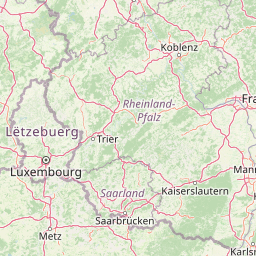
The reserve sits in a borderland region where the eastern Palatinate Forest meets Alsace, and the village of Eppenbrunn has long been part of a forest-oriented cultural landscape shaped by small-scale woodland use, milling along the brooks, and transboundary exchange. The wooded valleys of the Eppenbrunner Bach historically supported modest water-powered activity and traditional land use that left a legacy of small impoundments, wet meadows, and brook-side woodland, some of which are now incorporated into the protected area.
That said, the primary framing of the site remains ecological protection rather than cultural heritage, and the formal designation text emphasizes the preservation of natural hydrology, vegetation, and landscape character rather than specific cultural or historical practices.
Top sights and standout views in Quellbäche des Eppenbrunner Baches
The defining highlights of the reserve are the spring brooks themselves, the chain of small impoundments along their headwaters, and the unusually compact transition from wet fen and sedge habitats through brook-side alder and ash forests to drier rocky slopes.
Equally distinctive is the cross-border setting, with the area extending directly to the French border and forming part of the broader eastern Palatinate Forest landscape. Together, these features make the reserve a small but ecologically coherent showcase of headwater stream and valley wetland conservation in southwestern Germany.
Best time to visit Quellbäche des Eppenbrunner Baches
Because the reserve is defined primarily by wetland and brook features, the most atmospheric conditions are typically found in spring, when high groundwater feeds strong flow at the springs and the impoundments are full, and in early summer, when wet meadows and sedge communities are most expressive. Late spring and early summer are also generally the most rewarding periods for observing wetland vegetation and the amphibian and bird activity associated with it.
In summer, the contrast between the cool, shaded brook valleys and the warmer, open rocky slopes becomes especially apparent, while autumn brings changes to the brook-side forests as the alder and ash stands shift color. Winter visits can offer a quieter view of the valley structure, although conditions at the springs depend strongly on seasonal precipitation and groundwater levels. As with any small protected area, visitors should follow on-site guidance about access and stay on established paths to avoid disturbing the sensitive wetland and brook habitats.