Mori Atlas logo
Nature reserveRéserve naturelle régionale des collines de Rouffach

Discover the dry calcareous grasslands and Mediterranean-influenced flora of this Alsatian nature reserve.

Réserve naturelle régionale des collines de Rouffach: A Protected Mosaic in Grand Est

The Réserve naturelle régionale des collines de Rouffach protects a rare mosaic of dry calcareous grasslands and deciduous woodland within the pre-Vosgian hills. Situated in the Grand Est region of France, this protected area thrives in a warm, arid microclimate that supports diverse flora with strong Mediterranean influences. Its unique landscape of limestone ridges and sun-exposed slopes serves as a critical refuge for rare plant species and specialized insect life in the Alsatian Piedmont.

dry grasslandcalcareous grasslandxerobrometumAlsaceHaut-Rhinpre-Vosgian hills

Réserve naturelle régionale des collines de Rouffach

Nature reserve

Park overview

Structured park overview, official facts, and landscape profile for Réserve naturelle régionale des collines de Rouffach

Réserve naturelle régionale des collines de Rouffach park facts, protected area profile, and essential visitor context

Review the core facts for Réserve naturelle régionale des collines de Rouffach, including designation, size, terrain, visitor scale, habitats, and operating context in one park-focused overview.

About Réserve naturelle régionale des collines de Rouffach

The Réserve naturelle régionale des collines de Rouffach protects a small but ecologically distinctive stretch of the pre-Vosgian hills east of Rouffach in Haut-Rhin, Alsace. Although it covers only around 44 hectares, the reserve captures landscape elements that are almost unique in the region: dry calcareous grasslands, dense thorny shrub formations, downy oak woodland, and herbaceous fringes with bloody cranesbill. Together these habitats form a fine-scale mosaic typical of warm, sunny hillside country in southern and central Europe, transplanted here by the unusual local climate of the Alsatian Piedmont.

The reserve sits on hills belonging to the pre-Vosgian piedmont, where hard limestone hills emerge from softer decalcification clays. This combination produces fertile but quickly draining soils and a notably dry, sunny exposure. Sheltered behind the higher Vosges massifs like the Petit Ballon and the Ventron, the Rouffach hills enjoy one of the driest microclimates of the pre-Vosgian hills. Locals often speak of these slopes as a small Alsatian

Quick facts and research context for Réserve naturelle régionale des collines de Rouffach

The Réserve naturelle régionale des collines de Rouffach is a French regional nature reserve located in Haut-Rhin, Alsace, within the Grand Est region. Classified on 8 February 2013, it covers roughly 44 hectares across two hill sectors east of Rouffach, primarily on the Bollenberg and smaller parcels on the Strangenberg. It is managed by the Conservatoire des Sites Alsaciens and holds IUCN Category IV status.

The reserve is zoned within a ZNIEFF Type 1 inventory site, and the older Bollenberg area has been protected under a prefectural decree since 1965. The protected landscape is dominated by calcareous soils and dry exposures that produce an unusually warm, Mediterranean-influenced microclimate on the Alsatian side of the Vosges foothills.

Protection and recognition

Examine documented protection metrics, administrative scope, and recognized international conservation frameworks.

Protection Status and International Recognition for Réserve naturelle régionale des collines de Rouffach

Protected area records for Réserve naturelle régionale des collines de Rouffach compile official database entries alongside verified conservation designations. Structured parameters outline administrative boundaries and international recognition frameworks for global atlas research.

Protection details

WDPA ID
555561908
Park context

Deeper park guide and search-rich context for Réserve naturelle régionale des collines de Rouffach

Réserve naturelle régionale des collines de Rouffach history, landscape, wildlife, and travel context

Explore Réserve naturelle régionale des collines de Rouffach through its history, landscape character, ecosystems, wildlife, conservation priorities, cultural context, and seasonal travel timing in a structured park guide built for atlas discovery and search intent.

Why Réserve naturelle régionale des collines de Rouffach stands out

The reserve is best known for its exceptional dry calcareous grasslands of the Xerobrometum type, an exceptionally warm and arid microclimate for Alsace, and a flora that blends continental and Mediterranean influences. These open sunny slopes support rare species such as the Alsatian peucedanum, bloody cranesbill, bladder senna, and the small spider orchid, alongside shrubby vegetation of downy oak. The site's combination of limestone geology, decalcification clays, and rain-shadow conditions behind the Vosges makes the hills around Rouffach a singular botanical and ecological refuge within the broader Alsatian landscape.

Réserve naturelle régionale des collines de Rouffach history and protected-area timeline

The hills around Rouffach, and especially the Bollenberg, have long drawn human interest. The site shows traces of prehistoric activity, suggesting that people have visited and used these open slopes for thousands of years. In the modern era, the area has been valued primarily for its natural qualities, recognized by Alsatian naturalists well before formal protection was put in place.

Legal protection began earlier than the creation of the regional reserve. A prefectural decree of 11 December 1965 already protected the Bollenberg, securing its dry grassland and scenic qualities before the broader regional reserve framework existed. The full Réserve naturelle régionale des collines de Rouffach was formally established by deliberation on 8 February 2013, locking in regional protection around the Bollenberg and adjoining parcels on the Strangenberg. Since its creation, the reserve has been managed by the Conservatoire des Sites Alsaciens, an organization specialized in conserving the natural heritage of Alsace.

The reserve is also embedded in a wider scientific inventory framework. It is part of a ZNIEFF Type 1 inventory area known as

Réserve naturelle régionale des collines de Rouffach landscape and geographic character

The reserve's landscape is built around two main hills east of Rouffach: the larger Bollenberg to the south and the smaller Strangenberg parcels to the north. These hills form part of the pre-Vosgian Piedmont, the transitional zone where the Vosges Mountains descend toward the Alsatian plain. The terrain is relatively gentle compared to the high Vosges, but the slopes still feel distinctly hilly, with sunny exposures that open broadly toward the Rhine valley.

Geology plays a defining role in the scenery. Hard, slightly weathered limestone is exposed near the surface and is overlain by older decalcification clays. The combination produces fertile soils, often reddish where the iron-rich clay dominates, while still retaining the dry, well-drained character typical of limestone country. The vegetation reflects this geology: open grassy plateaus, eroded limestone benches, dense thickets, and patches of downy oak woodland that follow the stonier soils.

The visual impression is one of open, light-filled countryside. Sun-exposed meadows and shrub mosaics, broken by low hedges and small copses, sit against a backdrop of higher forested ridges toward the Vosges. It is a landscape that feels Mediterranean in tone yet remains firmly rooted in the Alsatian foothills.

Réserve naturelle régionale des collines de Rouffach ecosystems, habitats, and plant life

The reserve protects a warm-toned mosaic of dry habitats rarely seen elsewhere in Alsace. The dominant ecological character is a xerobromion-type dry calcareous grassland, or Xerobrometum, interspersed with hedges, shrubs, and broadleaf woodlands. The mix includes several habitat types that are described as unique in Alsace: dense thermophilous shrub formations, downy oak (Quercus pubescens) woodland, and herbaceous fringes rich in bloody cranesbill (Geranium sanguineum). The overall ecology is shaped more by dryness, exposure, and the underlying limestone than by altitude.

The unusually warm, dry microclimate is the engine of the reserve's biodiversity. Sheltered behind the Petit Ballon, the Ventron, and other Vosges massifs, the Rouffach hills sit in a partial rain shadow. Combined with the quickly draining calcareous soils, this produces conditions more reminiscent of southern Europe than of the surrounding Alsace region. The result is a habitat complex where Mediterranean and continental species occur side by side, creating the kind of floristic assembly usually found far to the south of Alsace.

The reserve's flora is inventoried at more than 270 species, and fauna recorded in the area exceeds 460 species. While the reserve is small, its concentration of rare and threatened habitats makes it ecologically disproportionate to its size, serving as a refuge for warmth-loving plants and animals at the northern edge of their biogeographical range in eastern France.

Réserve naturelle régionale des collines de Rouffach wildlife and species highlights

The varied mosaic of dry grasslands, hedges, and downy oak woods supports a rich fauna for such a small reserve. More than 480 species have been recorded across animal groups. Among birds, the warm open slopes attract hoopoe, woodlark, little owl, wryneck, yellowhammer, linnet, skylark, common stonechat, and cirl bunting, several of which are species of conservation concern at the European level that thrive in open, sun-exposed countryside.

Reptile life is also notable. Green lizard and smooth snake are present, and although asp viper is generally absent from the area, the reserve's dry warm slopes create occasional conditions where it may occasionally appear. Among insects, the dry meadows host meadow grasshoppers (Chorthippus parallelus), saddle-backed bush crickets (Ephippiger ephippiger), the praying mantis, and the striking swallowtail butterfly (Papilio machaon). Traditional European mammals of open farmland and wood edges such as hare, red fox, and roe deer are also part of the local fauna.

The combination of sun-baked slopes, dense hedges, and broadleaf woods creates a layered habitat structure, where species that depend on open ground, shrub thickets, and tree cover can all coexist within a short distance. This structural richness is one of the reasons the reserve's small size still produces a wide faunal inventory.

Réserve naturelle régionale des collines de Rouffach conservation status and protection priorities

The reserve's conservation importance lies primarily in preserving one of the driest and warmest habitat complexes in Alsace, and in safeguarding the associated dry grassland and thermophilous woodland communities that are otherwise scarce in the region. The site's designation under the regional nature reserve framework, combined with overlapping protection in the form of ZNIEFF Type 1 inventory areas and the older 1965 prefectural decree on the Bollenberg, layers multiple levels of recognition onto a small but ecologically sensitive landscape.

Because dry calcareous grasslands depend on continued open conditions and traditional extensive management, the reserve partners' management efforts center on preventing scrub encroachment, maintaining the mosaic of grass, hedge, and woodland, and protecting threatened plant species such as the Alsatian peucedanum, fumana, bladder senna, and small spider orchid. The Conservatoire des Sites Alsaciens, which manages the reserve, applies site-specific ecological knowledge to balance the needs of rare plants, breeding birds, and the broader habitat mosaic.

Beyond its legal status, the reserve contributes to a broader conservation story in the Grand Est region: it preserves a biogeographical bridge where Mediterranean and continental flora and fauna meet, making it a strategic reference site for understanding the displacement of warm-loving species under changing regional climate conditions.

Réserve naturelle régionale des collines de Rouffach cultural meaning and human context

The Bollenberg has been frequented since prehistoric times, and the open, sunny character of these hills has long shaped how local people relate to them. The microclimate is so distinctive that Alsatians sometimes refer to the Rouffach hills as a small regional

Top sights and standout views in Réserve naturelle régionale des collines de Rouffach

Dry calcareous grasslands (Xerobrometum) that are unique in Alsace form the heart of the reserve, ungrafted here by an exceptionally dry microclimate on the pre-Vosgian Piedmont. Downy oak woodland, thermophilous shrubby formations, and bloody-cranesbill-rich fringes add layers of vegetation more typical of the European south than of northeastern France.

The reserve's flora, exceeding 270 inventoried species including 38 considered threatened in Alsace, ranges from Mediterranean-influenced species such as fumana and bladder senna to Alsatian endemics like the Alsatian peucedanum. Birdlife includes hoopoe, woodlark, wryneck, and cirl bunting, supported by insects such as praying mantis and swallowtail.

Best time to visit Réserve naturelle régionale des collines de Rouffach

The dry, sun-exposed character of the Rouffach hills is most striking in late spring and summer, when the calcareous grasslands typically bloom in full and the warm microclimate is most pronounced. These seasons also offer the best chance to observe the reserve's characteristic birds, insects, and flowering plants in active condition.

Spring brings early blooms and active bird song across the open slopes, while summer highlights the Mediterranean-influenced flora and the yellowed tones of mature dry grasslands. Autumn tends to soften the visual palette of the hills, and winter is generally quieter but reveals the underlying structure of the slopes, hedges, and woody habitats that frame the reserve.
Monthly climate preview

Long-term representative temperature ranges and monthly precipitation distributions across the protected landscape

Réserve naturelle régionale des collines de Rouffach Climate Normals and Annual Weather Patterns

Representative coordinate data records measured annual temperature swings and monthly precipitation variations across the protected terrain. Analyzing the complete twelve-month climatology profile provides deeper insight into long-term environmental patterns for Réserve naturelle régionale des collines de Rouffach.
Annual mean10 °C
0 °C20 °C
Jan
Feb
Mar
Apr
May14°
Jun18°
Jul20°
Aug19°
Sep15°
Oct10°
Nov
Dec
Warmest month
July

19.6 °C

Coolest month
January

0.1 °C

Wettest month
May

3 mm/day

Driest month
February

1.7 mm/day

Park location guide

Geography guide, regional context, and park location map for Réserve naturelle régionale des collines de Rouffach

Réserve naturelle régionale des collines de Rouffach park geography, regions, and map view in France

Understand where Réserve naturelle régionale des collines de Rouffach sits in France through a broader geographic reading of the surrounding landscape, nearby location context, and its mapped position within the national park landscape.

How Réserve naturelle régionale des collines de Rouffach fits into France

France is a unitary semi-presidential republic and one of the world's largest economies. It borders Belgium, Luxembourg, Germany, Switzerland, Italy, Monaco, Andorra, and Spain, with a maritime border to the United Kingdom. The country is known for its cultural influence, art, cuisine, and political history spanning centuries.

Wider geography shaping Réserve naturelle régionale des collines de Rouffach in France

France is located in Western Europe. Metropolitan France extends from the Rhine to the Atlantic Ocean and from the Mediterranean Sea to the English Channel and North Sea. The country borders Belgium, Luxembourg, Germany, Switzerland, Italy, Monaco, Andorra, Spain, and has a maritime border with the United Kingdom.

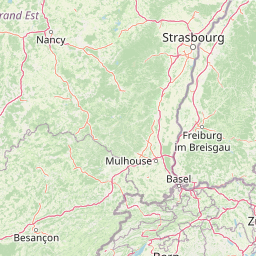
Map view of Réserve naturelle régionale des collines de Rouffach

Use this park location map to pinpoint Réserve naturelle régionale des collines de Rouffach in France, understand its exact geographic position, and read its mapped placement within the surrounding landscape more clearly.

Pigeon | © OpenStreetMap contributors

Location context for Réserve naturelle régionale des collines de Rouffach

Grand Est
Park atlas

Compare nearby protected areas and regional reserves across the surrounding landscape

Parks Near Réserve Naturelle Régionale des Collines de Rouffach and Protected Landscapes

Explore nearby protected areas and regional reserves sharing similar calcareous terrain and limestone foothills. Compare adjacent conservation landscapes to understand the broader ecological network surrounding the Vosges Piedmont.
Nature reserveGrand Est
About 9.1 km away#1 closest

Southeast

Réserve naturelle régionale de l'Eiblen et l'Illfeld: Alsace Floodplain Protected Area

Geographic context of regional alluvial habitats in Haut-Rhin

Located in the Alsace plain, this nature reserve preserves a rare cross-section of original river floodplain geography. The area provides a critical look at alluvial ecosystems and sediment-rich lowland terrain that defines the historical character of the Upper Rhine plain within France.

Area
0.66 km²
Established
1992
A panoramic watercolor painting depicting a calm wetland or marsh with pink and yellow reeds in the foreground, green trees in the midground, and soft purple mountains in the background.
Nature reserveHaut-Rhin
About 18 km away#2 closest

South

Réserve naturelle régionale des marais et landes du Rothmoos Protected Landscape and Geography

Regional nature reserve in the Haut-Rhin department of Alsace

The Réserve naturelle régionale des marais et landes du Rothmoos encompasses a rare inland saline habitat complex within the Nonnenbruch forest. Its terrain is defined by stable pools created from mining subsidence, transitioning into heathland and oak forests. This protected area stands as an ecological refuge for migratory waterbirds and specialized aquatic species within an industrial-legacy environment.

Area
1.457 km²
Established
1988
IUCN
IV
Relief
Lowland
Nature reserveGrand Est
About 19 km away#3 closest

East

Réserve naturelle régionale de la forêt de Mequillet Le Hardtwald Geographic Atlas and Map

Protected dry forest and steppe habitat in Grand Est

Situated on the elevated terraces of the Rhine floodplain, this nature reserve protects 249 hectares of distinct dry woodland and open clearings. The landscape offers a rare example of continental flora and saproxylic beetle habitats, set within the broader agricultural context of the Alsace plain. This record provides a comprehensive view of the park boundaries and ecological geography found within this significant French conservation area.

Area
2.49 km²
Established
2012
IUCN
IV
Relief
Lowland
A watercolor painting showing a wide panoramic view of green rolling hills and mountain ridges under a soft light.
Nature reserveGrand Est
About 22 km away#4 closest

West

Réserve naturelle régionale des hautes-chaumes du Rothenbach: Protected Geography in the Vosges

A regional nature reserve in Grand Est, France.

This protected area provides a representative profile of the high Vosges mountains, spanning elevations from 900 to 1,300 metres. The terrain is characterized by an open mosaic of primary and secondary grasslands, known as chaumes, along with acidic heathlands and subalpine forests. Managed to preserve its fragile biodiversity, the site offers a deep look into the regional geography and the historical land use patterns that define the crests of Alsace.

Area
0.942 km²
Established
2008
IUCN
IV
Relief
Mountain
Nature reserveGrand Est
About 24 km away#5 closest

Northwest

Réserve naturelle nationale du Tanet-Gazon du Faing: Grand Est Protected Landscape Map

High-altitude heathlands and glacial granite ridges

The Réserve naturelle nationale du Tanet-Gazon du Faing protects a critical upland mosaic in the Vosges massif, defined by its subarctic-style flora, sprawling peat bogs, and rugged granite boulder fields. This high-elevation geography provides essential habitat for montane species and offers a clear example of post-glacial landscape development across the Grand Est region.

Area
5.05 km²
Established
1988
IUCN
IV
Relief
Mountain
A soft watercolor painting of a rolling landscape with green hills, light blue distant mountains, and patches of pink and yellow vegetation.
Nature reserveGrand Est
About 24 km away#6 closest

Southwest

Réserve naturelle régionale de la forêt des volcans de Wegscheid: Geological Protected Area

Mapping volcanic terrain in the Grand Est region of eastern France.

Located in the Haut-Rhin, this regional nature reserve preserves a distinct volcanic landscape characterized by rocky promontories, basalt columns, and mature forest stands. The protected terrain features varied elevation from 700 meters to the Rossberg ridge, showcasing geological formations that have remained largely untouched by intensive historical forestry.

Area
1.015 km²
Established
2008
IUCN
IV
Relief
Mountain
Nature reserveGrand Est
About 32 km away#7 closest

South

Réserve naturelle régionale Im'Berg: Mapping a Unique Protected Nature Reserve in France

A rare calcareous grassland habitat in the Grand Est region.

Réserve naturelle régionale Im'Berg preserves a sun-drenched limestone slope in the commune of Tagolsheim. Known as the Buxberg, this protected area guards one of the most significant natural boxwood populations in Europe alongside specialized dry-habitat flora. The reserve functions as an essential geographic reference for studying how steep, calcareous terrain creates isolated, warm microclimates within the broader Alsatian landscape.

Area
0.017 km²
Established
2013
IUCN
IV
A watercolor painting showing a wide view of a green field with clumps of trees in the foreground and soft rolling hills in the background under a pale sky.
Nature reserveBas-Rhin
About 36 km away#8 closest

Northeast

Réserve naturelle régionale du Ried de Sélestat, l'Ill*Wald: Protected Alluvial Forest Mapping

Explore the wetland geography and floodplain ecosystem of the Alsatian Grand Ried.

Spanning over 1,800 hectares, the Réserve naturelle régionale du Ried de Sélestat, l'Ill*Wald stands as one of the most significant regional nature reserves in France. This detailed atlas entry reveals its complex hydrological structure, consisting of dense forest, marshland, and a dense web of distributaries shaped by the Ill river and unique phreatic groundwater systems.

Area
18.55 km²
Established
1995
IUCN
IV
Relief
Lowland

Common questions about visiting, size, designation, and location context for Réserve naturelle régionale des collines de Rouffach

Réserve naturelle régionale des collines de Rouffach FAQs for park facts, access, geography, and protected area context

Find quick answers about Réserve naturelle régionale des collines de Rouffach, including protected-area facts, park geography, trail and visitor context, and how the park fits into its surrounding country and regional landscape.
MoriAtlas Explorer

Continue Your Protected Areas Search Across the Global Atlas

Deepen your exploration by continuing the structured search for national parks and protected areas worldwide. Utilize the comprehensive filtering capabilities to compare different conservation landscapes and refine your understanding of global park geography. Discover more about the distribution and characteristics of protected natural areas.

Global natural geography