Why Rezerwat przyrody Jezioro Wielkie stands out
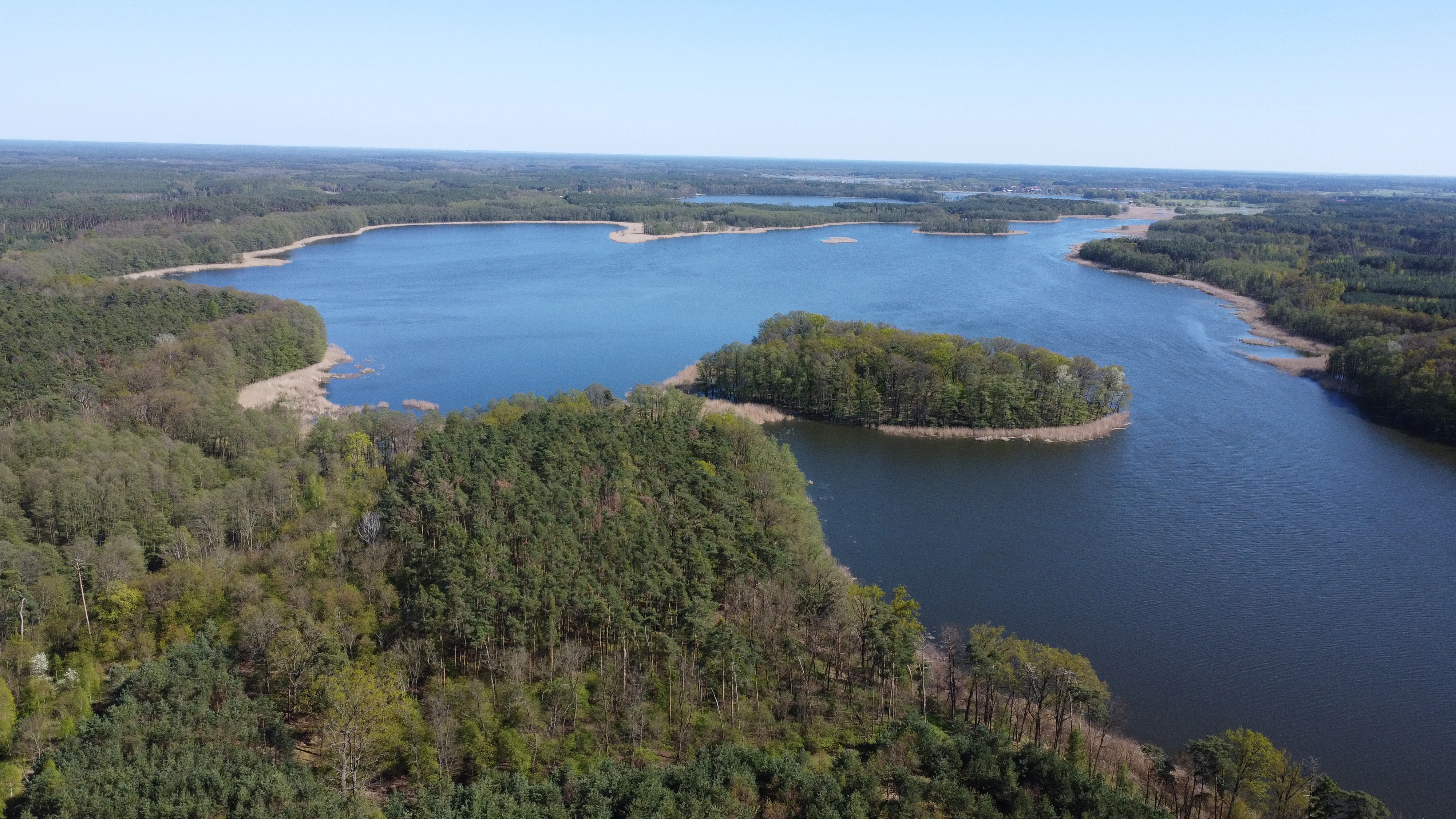
The reserve is best known for its rich and ecologically significant waterbird community. Roughly 120 bird species have been recorded in the area, with thirty-two taxa considered threatened at the national level. Several species occur here in some of the largest populations found in the Lubusz region and even in western Poland, and during peak migration the lake can host about six thousand waterbirds at a time. Equally distinctive is the lake's physical setting: a shallow, strongly eutrophied waterbody with three forested islands, reed belts along the Obra River outlet, sedge meadows, and steep, hilly terrain covered almost entirely by woodland. This mosaic of open water, islands, wetlands, and forest gives the reserve its strong identity as a bird-focused protected landscape.
Rezerwat przyrody Jezioro Wielkie history and protected-area timeline
The reserve was formally designated on 9 October 1991 through an order of the Minister of Environmental Protection, Natural Resources and Forestry, which recognized multiple new nature reserves across Poland, including Jezioro Wielkie. The area was assigned the voivodeship registry number 39, reflecting its formal administrative inclusion in the protected-area system of the region.
From the outset, the reserve was established as a faunistic nature reserve with active protection, meaning that its management aims not only to restrict harmful activities but also to maintain and improve habitat conditions for the species it was created to protect. Its administrative history reflects a fragmented ownership pattern typical of post-1990s Polish nature conservation: parts of the reserve are held by the State Treasury and managed by the Trzciel Forest District, while other parcels are managed by the Klub Przyrodników in Świebodzin, the Agricultural Property Agency regional office in Gorzów Wielkopolski, and the Marshal of the Lubusz Voivodeship. This arrangement continues to frame the practical management of the reserve today.
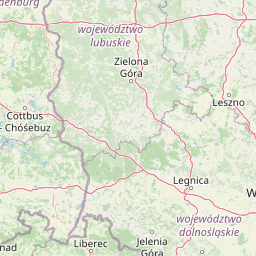
Rezerwat przyrody Jezioro Wielkie landscape and geographic character
The landscape of the reserve is shaped around the shallow waters of Jezioro Wielkie, which average about 2.5 metres in depth. Because the lake is strongly nutrient-rich, its water often turns green and loses transparency during the growing season, but this productivity underlies the dense birdlife that the reserve is known for. Out of the lake rise three forested islands totaling around 2.34 hectares of land, adding visual variety and serving as critical refuges for nesting birds.
Surrounding the lake, the terrain rises into strongly elevated, hilly country covered almost entirely by forest. This wooded edge only opens up near the outlet of the Obra River, where a broad belt of reeds borders unused meadows and pastures overgrown with dense sedge communities. The combination of open water, reedbeds, sedge meadows, moraine hills, and continuous forest creates a compact but varied landscape where water, wetland, and woodland ecosystems meet within a relatively small area.
Rezerwat przyrody Jezioro Wielkie ecosystems, habitats, and plant life
Ecologically, Jezioro Wielkie is dominated by a shallow, strongly eutrophied lake and the wetlands that fringe it. The water itself sustains abundant but seasonally turbid conditions, with greenish coloration during the vegetation period, while the lake margins provide reed swamp, sedge meadow, and wet meadow habitats that are crucial for waterbirds.
The forest surrounding the lake adds an upland character to the reserve. The largest island supports more than two-hundred-year-old mixed woodland with a natural character and a clear dominance of oak, while the smaller islands carry younger forests dominated by spruce and alder. Together, these features form a mosaic of open water, aquatic vegetation, wetland, and mature and maturing forest, which together support the unusually rich avifauna that defines the reserve.
Rezerwat przyrody Jezioro Wielkie wildlife and species highlights
The reserve's wildlife profile is overwhelmingly shaped by its birdlife. Approximately 120 bird species have been recorded in the area, of which 32 are taxa considered threatened at the national scale in Poland. Many of these species occur in sizeable numbers, with some forming among the largest populations in the Lubusz region and even in western Poland as a whole.
The site is especially important for waterbirds. During the peak of migration, the lake can host around six thousand individual waterbirds, using the open water, islands, and fringing reedbeds for feeding, resting, and in many cases breeding. The combination of nesting islands, extensive shoreline vegetation, and secure forest cover makes Jezioro Wielkie a magnet for diverse waterbird communities and reinforces the reserve's designation as a faunistic protected area.
Rezerwat przyrody Jezioro Wielkie conservation status and protection priorities
The reserve's conservation purpose is explicitly focused on waterbirds. According to its designation, the area is protected for scientific and educational reasons in order to preserve breeding biotopes and the feeding and resting sites of waterbirds.
This focus is reflected in the reserve's active protection status, which allows interventions aimed at maintaining or improving habitat conditions rather than purely passive protection. The contrast between the lake, the mature oak forest on the main island, and the younger spruce and alder woods on the smaller islands is itself part of what is being conserved: a dynamic patchwork of habitats supporting nationally significant bird populations. The presence of 32 nationally threatened taxa among the roughly 120 recorded species gives the reserve genuine conservation weight well beyond its modest 236-hectare footprint.
Top sights and standout views in Rezerwat przyrody Jezioro Wielkie
Jezioro Wielkie stands out as a compact but highly productive waterbird reserve, where a shallow eutrophic lake, three forested islands, reedbeds, sedge meadows, and surrounding woodland combine within a single protected area. Its inclusion of about 120 bird species, with 32 nationally threatened taxa and peak gatherings of around six thousand waterbirds, makes it one of the most notable bird sites in the Lubusz region and western Poland.
Equally noteworthy is the reserve's relatively undisturbed setting: the forest almost completely encircles the lake, creating a sense of enclosure that enhances both its ecological integrity and its landscape character. The mix of old oak-dominated forest on the main island, younger spruce and alder stands on the others, and traditional unused meadows near the Obra outlet gives the reserve a layered ecological identity that is unusual for an area of its size.
Best time to visit Rezerwat przyrody Jezioro Wielkie
The most rewarding periods to experience the reserve coincide with the bird seasons. Spring and early summer are typically the time when breeding waterbirds use the lake's islands, reedbeds, and shoreline vegetation, while the peak migration periods can bring the most dramatic gatherings of waterbirds, when numbers on the lake may reach around six thousand individuals.
In summer, visitors should expect the lake's water to be strongly green and less transparent due to eutrophication, which reflects the lake's productive character. Autumn and winter can offer quieter conditions, though the reserve's specific winter bird communities are not documented in detail in the source material, so timing should ideally be planned around the known breeding and migration seasons for the most rewarding experience.