
Mori Atlas logo
Nature reserveRezerwat przyrody Marynopole

Examining the ecological boundaries and terrain of this vital silver fir nature reserve

Rezerwat przyrody Marynopole: A Protected Upland Forest Reserve in Lublin Voivodeship, Poland

Rezerwat przyrody Marynopole represents a significant protected upland forest habitat located within the Wzniesienia Urzędowskie hills of Poland. This reserve focuses on preserving mature silver fir stands at the northeastern margin of their natural range. By maintaining a stable microclimate through old-growth oak and fir canopy coverage, the site supports various protected plant species and provides essential data for understanding forest composition shifts within the Polish upland transition zone.

forest reservesilver firold-growth forestupland forestmixed forestedge-of-range population

Rezerwat przyrody Marynopole

Nature reserve

Park overview

Structured park overview, official facts, and landscape profile for Marynopole Nature Reserve

Marynopole Nature Reserve park facts, protected area profile, and essential visitor context

Review the core facts for Marynopole Nature Reserve, including designation, size, terrain, visitor scale, habitats, and operating context in one park-focused overview.

About Marynopole Nature Reserve

Marynopole Nature Reserve is a forest nature reserve situated in Lubelskie Voivodeship in eastern Poland, within Gmina Gościeradów and Kraśnik County. The reserve lies on the Wzniesienia Urzędowskie, a mesoregion of gently rolling upland terrain that forms part of the larger belt of uplands in this part of the country. With an area of around 156 hectares, Marynopole is a relatively compact reserve, but it carries a focused ecological purpose that gives it a meaningful place in the regional network of protected forest sites.

The defining feature of the reserve is its old-growth stand of silver fir (Abies alba), which grows here in grouped patches near the northeastern boundary of the species' natural distribution. Silver fir once had a wider range in Poland, but due to historical land use, air pollution pressures, and changing climatic conditions, populations at the range edge are now considered ecologically significant. Marynopole protects one such population in a mature, multi-aged structure, partly mixed with old oak, allowing the fir trees and their associated understorey flora to persist in a relatively undisturbed setting.

The reserve is administered through the Marynopole forest district, a subdivision of Nadleśnictwo Gościeradów, and its designation dates from 1976, when it was established by order of the Minister of Forestry and the Wood Industry. It also overlaps with the Natura 2000 site known as Szczecyn (PLH060083), embedding it within the broader European network of habitats protected for their biodiversity value.

Beyond its formal designations, Marynopole exemplifies a typical Polish forest reserve: small in area, situated in a working forest district, and designed to protect a specific forest composition rather than an entire landscape. Its value lies less in dramatic scenery and more in the persistence of mature fir-oak forest on upland soils, the protected plants that thrive beneath its canopy, and the role it plays in conserving range-edge populations of silver fir.

Quick facts and research context for Marynopole Nature Reserve

Marynopole Nature Reserve is a forest reserve in eastern Poland, in Lubelskie Voivodeship, Kraśnik County, Gmina Gościeradów. It occupies roughly 156 hectares within the Marynopole forest district of Nadleśnictwo Gościeradów, on the Wzniesienia Urzędowskie mesoregion. Established in 1976, it protects an old-growth stand of silver fir and oak, and lies within the Natura 2000 site Szczecyn (PLH060083).

Protection and recognition

Examine documented terrestrial conservation frameworks and designation history.

Rezerwat przyrody Marynopole Protection Status and International Recognition

Rezerwat przyrody Marynopole maintains a documented terrestrial protection status within official conservation records. Structured administrative data outlines management scope and international recognition frameworks for the protected area.

Protection details

Protection scope
Terrestrial
Park context

Deeper park guide and search-rich context for Marynopole Nature Reserve

Marynopole Nature Reserve history, landscape, wildlife, and travel context

Explore Marynopole Nature Reserve through its history, landscape character, ecosystems, wildlife, conservation priorities, cultural context, and seasonal travel timing in a structured park guide built for atlas discovery and search intent.

Why Marynopole Nature Reserve stands out

Marynopole is best known for preserving an old-growth, grouped silver fir stand at the northeastern edge of silver fir's natural range in Poland. This makes the reserve an important reference site for fir ecology, range-edge dynamics, and upland forest conservation in central-eastern Europe. The reserve is also valued for the combination of mature fir with old oak and for the presence of several protected understorey plant species that depend on the humid, shaded conditions of such old-growth forest. Together these features give Marynopole a clear identity as a small but ecologically focused mixed upland forest reserve.

Marynopole Nature Reserve history and protected-area timeline

The Marynopole Nature Reserve was formally established in 1976 under a decision issued by the Minister of Forestry and the Wood Industry on 24 May 1976 (Monitor Polski No. 24, item 108). The legal designation was later updated by an amendment published in Monitor Polski in 1984 (No. 15, item 107). From the outset, the reserve's primary purpose was to conserve a grouped occurrence of silver fir near the northeastern edge of its natural range in Poland, and the surrounding old oak forest was included as a complementary feature of the protected stand.

The reserve has continued to be managed through the Polish State Forests system, specifically within the Marynopole forest district of Nadleśnictwo Gościeradów. Its inclusion in the Natura 2000 site Szczecyn (PLH060083) reflects a later recognition of its broader European habitat value, integrating the reserve into the continent-wide network for the protection of threatened habitats and species. Over time, the reserve's role has come to include not only direct protection of fir and oak forest, but also long-term monitoring of how an isolated silver fir population behaves at the edge of its climatic tolerance.

Marynopole Nature Reserve landscape and geographic character

Marynopole lies within the Wzniesienia Urzędowskie, a mesoregion of gently rolling upland terrain characteristic of the belt of low hills that runs through the eastern part of the Polish lowland-upland transition zone. The reserve sits on these undulating upland slopes, where forest cover has historically been the dominant land use and where mature forest patches have been able to develop where soils and topography permit.

The local terrain is shaped by the broader geology of the area, producing loamy and loess-influenced upland soils that support both fir and oak. Because the reserve is situated away from major river valleys and in a relatively well-drained upland position, its topography is moderate rather than dramatic: low ridges, gentle slopes, and shallow valleys define the forest setting. The visual character is that of a traditional Polish upland forest, with mature broadleaf and mixed conifer stands forming a continuous canopy broken only by small clearings, forest roads, and the edges of the administrative district.

Marynopole Nature Reserve ecosystems, habitats, and plant life

The ecological identity of Marynopole is built around its mature silver fir and oak forest. Silver fir (Abies alba) is the focal species of protection and occurs here in grouped, old-growth stands. Oak (Quercus) forms a significant secondary component, contributing to a structurally diverse forest in which coniferous and broadleaf elements are intermixed rather than separated into pure stands. This kind of mixed, multi-aged structure is a key habitat feature for many understorey species that depend on stable, shaded forest conditions.

The reserve's soils, microclimate, and forest age allow a notable community of protected and forest-indicator plants to persist beneath the canopy. These include several clubmoss species, mezereon, the white helleborine orchid, and the martagon lily, all of which are characteristic of late-successional, humid, shaded upland forests in central Europe. Their continuing presence indicates that the reserve has retained the ecological conditions necessary for slow-growing, late-successional woodland flora.

Marynopole Nature Reserve wildlife and species highlights

The wildlife profile of Marynopole is characteristic of mature upland forest in this region of Poland. The closed canopy, complex vertical structure, and undisturbed leaf litter of old fir-oak stands create habitat for typical woodland birds, small forest mammals, and a rich community of forest-floor invertebrates. Among larger fauna, the reserve can be expected to support deer and other ungulates typical of Polish upland forests, alongside smaller carnivores and a wide range of passerine and woodpecker species associated with old-growth conditions.

Because the reserve's ecological value is anchored in its plant community and forest structure rather than in charismatic large mammals, its wildlife significance is best understood as part of the broader functioning of an intact upland forest ecosystem. The presence of stable habitat for forest-interior bird species and the persistence of specialist understorey plants are both indicators of ecological continuity in this protected stand.

Marynopole Nature Reserve conservation status and protection priorities

Marynopole is a forest reserve with a clearly defined conservation purpose: the preservation of an old-growth silver fir stand and its associated plant community at the northeastern margin of the species' range in Poland. This edge-of-range status gives the reserve a specific importance beyond the local level, because populations that grow near the climatic or geographic limit of a species often behave differently from those in the core of the range. Conserving such populations helps maintain genetic and ecological diversity within the species and provides a baseline for studying range dynamics.

The reserve's conservation value is reinforced by its overlap with the Natura 2000 site Szczecyn (PLH060083), which recognizes the broader habitat significance of the area within the European Union's ecological network. Through this designation, Marynopole contributes to the protection of habitats and species of community interest, and benefits from coordinated cross-border standards of habitat management. Managed through the Polish State Forests system via Nadleśnictwo Gościeradów, the reserve represents a long-standing example of targeted forest conservation policy in eastern Poland.

Marynopole Nature Reserve cultural meaning and human context

Marynopole reflects the broader Polish tradition of designating small forest reserves to protect specific stands of ecological or silvicultural interest, particularly those containing silver fir, a species with deep cultural and economic significance in Polish forestry. The surrounding region of Wzniesienia Urzędowskie has a long history of small-scale agricultural settlement and forest management, and the reserve represents an effort to set aside a particular patch of old-growth forest from the more active forest economy around it. There are no documented indigenous or culturally specific human associations unique to this reserve; its cultural relevance is closely tied to the history of Polish forest conservation rather than to any distinct ethnographic heritage.

Top sights and standout views in Marynopole Nature Reserve

Marynopole Nature Reserve stands out for its protection of a mature, grouped silver fir stand near the northeastern edge of the species' natural range, a feature that gives the small reserve disproportionate ecological interest. Its mix of old fir and oak forest creates a structurally rich habitat that supports a range of protected understorey plants, including three clubmoss species, mezereon, white helleborine, and martagon lily. The reserve's inclusion in the Natura 2000 network further links it to European-scale habitat protection efforts.

The reserve offers a compact but clearly defined example of Polish upland forest conservation: a quiet, mature woodland within the Wzniesienia Urzędowskie, managed as part of Nadleśnictwo Gościeradów, and valued primarily by ecologists, foresters, and visitors interested in old-growth forest at the edge of silver fir's range.

Best time to visit Marynopole Nature Reserve

The best time to experience Marynopole is during the warmer months of late spring and summer, when the canopy is in full leaf and the understorey plants, including orchids and martagon lily, are most visible. Early summer tends to be the most rewarding season for observing the forest's botanical richness.

Autumn brings its own character, with mature oaks and firs coloring the forest and the ground layer shifting to a different palette. Winter visits are also possible, though the reserve is a working forest area and visitors should expect typical conditions of upland Polish woodland, with limited formal infrastructure for tourism. Because the value of Marynopole lies primarily in its ecological character rather than in dramatic scenery, the seasons matter less for spectacle and more for which aspects of the forest one hopes to observe.

Monthly climate preview

Long-term representative point measurements tracking monthly temperature and precipitation cycles

Rezerwat przyrody Marynopole Climate Normals and Annual Weather Rhythm

Representative coordinate records show measured monthly temperature and precipitation patterns spanning annual cycles across Rezerwat przyrody Marynopole. Detailed monthly breakdowns provide complete long-term climate normals for comprehensive evaluation.
Annual mean8 °C
-4 °C20 °C
Jan-4°
Feb-2°
Mar
Apr
May14°
Jun18°
Jul20°
Aug20°
Sep14°
Oct
Nov
Dec-2°
Warmest month
July

20.3 °C

Coolest month
January

-3.8 °C

Wettest month
July

2.7 mm/day

Driest month
January

1.2 mm/day

Park location guide

Geography guide, regional context, and park location map for Marynopole Nature Reserve

Marynopole Nature Reserve park geography, regions, and map view in Poland

Understand where Marynopole Nature Reserve sits in Poland through a broader geographic reading of the surrounding landscape, nearby location context, and its mapped position within the national park landscape.

How Marynopole Nature Reserve fits into Poland

Poland, officially the Republic of Poland, is a Central European country spanning from the Baltic Sea in the north to the Carpathian Mountains in the south. It borders Germany, Czech Republic, Slovakia, Ukraine, Belarus, Lithuania, and Kaliningrad Oblast. The country has a temperate climate, diverse landscapes, and is known for its rich history, cultural heritage, and strong economic position within the EU.

Wider geography shaping Marynopole Nature Reserve in Poland

Poland occupies 312,696 km2 in Central Europe, extending from the Baltic Sea coast in the north to the Sudetes and Carpathian Mountains in the south. It borders Germany to the west, Czech Republic and Slovakia to the south, Ukraine and Belarus to the east, and Lithuania and Kaliningrad Oblast to the northeast. The landscape includes lowland plains, uplands, and mountain ranges.

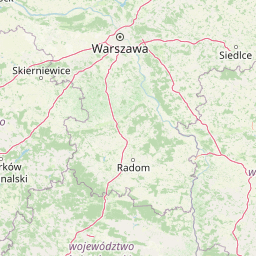
Map view of Marynopole Nature Reserve

Use this park location map to pinpoint Marynopole Nature Reserve in Poland, understand its exact geographic position, and read its mapped placement within the surrounding landscape more clearly.

Pigeon | © OpenStreetMap contributors

Location context for Marynopole Nature Reserve

Lublin Voivodeship
Park atlas

Compare adjacent forest reserves and protected landscapes across the upland terrain.

Other Parks Near Rezerwat Przyrody Marynopole and Regional Protected Areas

Explore other parks near Rezerwat przyrody Marynopole to compare similar forest habitats and protected upland landscapes in the region. Continuing across neighboring reserves reveals broader ecological patterns and the geographic distribution of old-growth woodland remnants.
Nature reserveLubelskie Voivodeship
Mapped location lies within the park boundary#1 closest

South

Szczecyn Nature Reserve: Mapping Protected Deciduous Forest Habitats in Eastern Poland

A vital mosaic of oak-hornbeam forest enclaves and nature reserves.

Szczecyn functions as a specialized Natura 2000 conservation landscape, spanning four forest enclaves across the border of the Lubelskie and Podkarpackie voivodeships. This site provides an essential reference for lowland deciduous forest protection, emphasizing the preservation of old-growth oak-hornbeam stands and thermophilic habitats. The area serves as a critical refuge for rare flora and invertebrates within a broader agricultural mosaic.

Area
9.325 km²
Established
2011
Relief
Upland
Climate
Temperate
Nature reserveLublin Voivodeship
About 5.4 km away#2 closest

Southwest

Rezerwat przyrody Doły Szczeckie: Upland Forest and Karst Landscape Geography in Lublin Voivodeship

A protected nature reserve featuring distinct ravine systems and ancient beech stands

Rezerwat przyrody Doły Szczeckie is defined by its dissected, scenic karst terrain featuring a network of dry valleys and deep gorges. Located in the Lublin Voivodeship, this nature reserve protects significant stands of European beech and hornbeam that anchor the region's broader broadleaf forest identity. Use this data to understand the elevation shifts and boundaries that shape this distinct patch of protected Polish landscape.

Area
2.036 km²
Established
1997
Relief
Upland
Scope
Terrestrial
Protected areaPoland
About 12 km away#3 closest

Southeast

Uroczyska Lasów Janowskich: Protected Forest and Wetland Geography in Eastern Poland

Mapping the extensive Natura 2000 lowland forest and peatland complexes

Spanning the Biłgoraj Plain and San River valley, Uroczyska Lasów Janowskich is a notable lowland forest complex in Poland. Its terrain integrates mature oak-hornbeam woods with diverse peatland systems, offering a clear look at how layered conservation strategies protect rare European habitats within a single continuous geographic block.

Area
345.443 km²
Established
2009
Relief
Lowland
Climate
Temperate
Protected landscapeLubelskie Voivodeship
About 26 km away#4 closest

Northwest

Wrzelowiecki Park Krajobrazowy: Geographic Atlas and Protected Landscape Overview

Mapped upland terrain and Vistula valley geomorphology

Analyze the landform composition of Wrzelowiecki Park Krajobrazowy through its loess ravines, Cretaceous fossil exposures, and wetland river systems. This protected landscape preserves the regional integrity of the Wzniesienia Urzędowskie, offering a structured look at the interplay between highland forests and historic Polish river valley settlements.

Area
49.89 km²
Established
1990
Relief
Upland
Climate
Temperate
Protected landscapeTarnobrzeska Dolina Wisły
About 27 km away#5 closest

Southwest

Tarnobrzeska Dolina Wisły Protected Landscape: Mapped Riverine Geography and Habitat Corridor

A sprawling Vistula valley floodplain site in southeastern Poland.

The Tarnobrzeska Dolina Wisły protected area encompasses a 4,060-hectare corridor of rare lowland habitats. This map-focused site highlights an ecologically active river system composed of riparian forests, shifting banks, and extensive wetlands that define the regional geography of the middle Vistula basin.

Area
40.597 km²
Established
2011
Scope
Terrestrial
Water
Major water bodies
Nature reserveŚwiętokrzyskie Voivodeship
About 40 km away#6 closest

Northwest

Rezerwat przyrody Modrzewie: Protected Oak-Lime and Polish Larch Forest Reserve

Forest landscape discovery in the Świętokrzyskie region of Poland.

Located in the Kamienna Valley, Rezerwat przyrody Modrzewie acts as a vital protected area for mature, near-primary oak-lime forest. This nature reserve provides essential botanical context for the Polish larch, embedding a rich woodland fragment within the wider geographical tapestry of the Świętokrzyskie Voivodeship.

Area
0.047 km²
Established
1971
Relief
Lowland
Climate
Temperate
Nature reserveLublin Voivodeship
About 47 km away#7 closest

Southeast

Kacze Błota Nature Reserve: Mapping the Protected Peatland Landscapes of Lublin Voivodeship

A study of high bogs and sandy dune forest terrain.

Kacze Błota is a protected nature reserve in Poland known for its sequence of transition mires and boggy coniferous woods. Positioned on the northern slopes of the Roztocze region, this site preserves unique plant species within its waterlogged depressions and acid-soil sandy ridges. The area remains a crucial example of historical landscape preservation in the Lublin Voivodeship, bridging the gap between upland forests and lowland river basins.

Area
1.679 km²
Established
1988
Relief
Lowland
Climate
Temperate
Nature reserveświętokrzyskie
About 47 km away#8 closest

Southwest

Ostoja Żyznów Protected Landscape: Loess Ravines and River Valleys of Świętokrzyskie

A dense mosaic of xerothermic grasslands and mixed forest ecosystems

Ostoja Żyznów protects a compact yet ecologically rich region characterized by deep loess gullies and the meandering paths of the Koprzywianka and Kacanka rivers. The area creates a striking transitional landscape, shifting from flat agricultural plateaus to steep, forest-covered ravines and cliff-like river walls. This site offers significant value for understanding regional biodiversity, featuring a rare combination of warm-dry grasslands and moisture-dependent peatland habitats in the heart of Poland.

Area
44.8 km²
Established
2011
Relief
Mixed relief
Climate
Temperate

Common questions about visiting, size, designation, and location context for Marynopole Nature Reserve

Marynopole Nature Reserve FAQs for park facts, access, geography, and protected area context

Find quick answers about Marynopole Nature Reserve, including protected-area facts, park geography, trail and visitor context, and how the park fits into its surrounding country and regional landscape.
MoriAtlas Explorer

Continue Your Protected Areas Search Across the Global Atlas

Deepen your exploration by continuing the structured search for national parks and protected areas worldwide. Utilize the comprehensive filtering capabilities to compare different conservation landscapes and refine your understanding of global park geography. Discover more about the distribution and characteristics of protected natural areas.

Global natural geography