Mori Atlas logo
Nature reserveRezerwat przyrody Modrzewie

Examining the ecological boundaries and botanical significance of this Świętokrzyskie forest reserve.

Rezerwat przyrody Modrzewie: Protected Oak-Lime Forest and Polish Larch Nature Reserve

Rezerwat przyrody Modrzewie preserves a rare fragment of near-primary oak-lime forest within the Przedgórze Iłżeckie mesoregion of Poland. Situated in the Kamienna Valley, this nature reserve serves as a critical site for the study and conservation of the Polish larch, a species integral to the woodland structure of this protected area. Its geography connects mature deciduous forest communities with the wider river-basin landscape of the Świętokrzyskie Voivodeship.

forest reservefloristic reservePolish larchoak-lime forestgrąd communityŚwiętokrzyskie region

Rezerwat przyrody Modrzewie

Nature reserve

Park overview

Structured park overview, official facts, and landscape profile for Modrzewie Nature Reserve

Modrzewie Nature Reserve park facts, protected area profile, and essential visitor context

Review the core facts for Modrzewie Nature Reserve, including designation, size, terrain, visitor scale, habitats, and operating context in one park-focused overview.

About Modrzewie Nature Reserve

Modrzewie Nature Reserve is a compact, ecologically focused protected area in central-eastern Poland, falling within the Świętokrzyskie Voivodeship. Although it covers only a few hectares, the reserve is significant because it preserves a fragment of forest that experienced relatively little disturbance, allowing it to retain a near-primary structural character. The reserve's floristic emphasis, combined with its classification as a forest reserve, places it among the smaller but botanically meaningful protected woodland sites in the region.

Geographically, the reserve lies north of the village of Bałtów in Gmina Bałtów, within Powiat ostrowiecki, on the Przedgórze Iłżeckie mesoregion. This places it on the transitional landscape between the higher terrain of the Świętokrzyskie region and the broader lowland landscapes of the Kamienna river basin. The reserve itself is contained within forest divisions 346 h and 347 b of the Narożniki forestry unit in the Bałtów administrative forest area, managed by Nadleśnictwo Ostrowiec Świętokrzyski.

Ecologically, the reserve's core interest is a high-quality deciduous forest community classified as grąd wysoki, dominated by oak and small-leaved lime with an important share of Polish larch. This combination gives the site a notable mix of broadleaf trees and a native conifer that is otherwise uncommon in lowland-central Polish forests. The presence of scattered introduced species, such as Douglas fir and black locust, alongside typical native trees like ash, sycamore maple, spruce, black alder, pear, elm, and bird cherry, adds a layer of botanical complexity that makes the reserve an interesting reference site for forest composition studies.

Within the wider Polish system of nature protection, Modrzewie sits inside the Protected Landscape Area of the Kamienna Valley, which gives it additional contextual significance. The surrounding landscape combines forested hills, river-valley terrain, and the cultural environment of Bałtów, a locality associated with both traditional rural life and a regionally famous paleontological and tourist complex. While Modrzewie is not designed for mass visitation, its protected status helps anchor the natural and scenic value of the broader Kamienna Valley landscape.

Quick facts and research context for Modrzewie Nature Reserve

Modrzewie Nature Reserve is a forest and floristic nature reserve in the Świętokrzyskie Voivodeship, situated in Gmina Bałtów within Powiat ostrowiecki, on the Przedgórze Iłżeckie mesoregion in central-eastern Poland. Established in 1971 under the legal act M.P. z 1971 r. Nr 53, poz. 346, it covers approximately 4.68 hectares, with the original founding document citing 5.06 hectares. The site is managed within the Bałtów forest district of Nadleśnictwo Ostrowiec Świętokrzyski and forms part of the Protected Landscape Area of the Kamienna Valley.

The reserve holds a partial protection status and is recorded under ewidencyjny numer WKP 037. Its primary subject of protection is a fragment of a near-original forest community featuring Polish larch. The site lies just north of the village of Bałtów, giving it a close relationship with one of Poland's well-known cultural and paleontological tourism areas along the Kamienna valley.

Protection and recognition

Examine the terrestrial protection scope and documented conservation status.

Rezerwat przyrody Modrzewie Protection Status and Mapped Designation Record

Rezerwat przyrody Modrzewie maintains a defined terrestrial protection scope within its regional landscape. Structured records outline the official designation framework and international recognition data associated with the protected area.

Protection details

Protection scope
Terrestrial
Transboundary protection
No
Park context

Deeper park guide and search-rich context for Modrzewie Nature Reserve

Modrzewie Nature Reserve history, landscape, wildlife, and travel context

Explore Modrzewie Nature Reserve through its history, landscape character, ecosystems, wildlife, conservation priorities, cultural context, and seasonal travel timing in a structured park guide built for atlas discovery and search intent.

Why Modrzewie Nature Reserve stands out

Modrzewie Nature Reserve is best known for protecting a small but ecologically valuable fragment of a near-primary oak-lime forest enriched by Polish larch. The Polish larch (Larix polonica), a regionally significant conifer sometimes treated as an endemic tree of Poland, is the species that gives the reserve its name and its principal conservation justification. The reserve is also noted for the unusually mature, close-to-natural structure of its woodland. The high-grąd character of the oak-lime community, combined with the presence of both native deciduous trees and unexpected introduced species such as Douglas fir and black locust, gives Modrzewie a distinctive botanical profile that exceeds what its tiny area might otherwise suggest.

Modrzewie Nature Reserve history and protected-area timeline

Modrzewie Nature Reserve was formally established in 1971 under a regulation of the Minister of Forestry and Timber Industry dated 13 October 1971, published in the Polish legal journal as M.P. z 1971 r. Nr 53, poz. 346. The act was designed to protect a small fragment of near-primary forest in the Bałtów area, with particular reference to the presence of Polish larch and the overall quality of the oak-lime woodland.

The original founding document recorded the reserve's area as 5.06 hectares, while current documentation lists 4.68 hectares. This minor discrepancy reflects the kind of small legal revisions that frequently accompany older Polish nature reserves, where administrative measurements and boundary descriptions are occasionally updated over time without changing the reserve's underlying protective purpose.

The reserve's longevity within the broader Polish nature conservation network illustrates the long-term institutional commitment to protecting representative examples of the country's natural forest heritage. By remaining under partial protection status and being managed through the regional forest service, Modrzewie continues to serve its original conservation function more than half a century after its designation.

Modrzewie Nature Reserve landscape and geographic character

The landscape setting of Modrzewie Nature Reserve is shaped by its position on Przedgórze Iłżeckie, a submontane upland mesoregion that forms the northern foothills of the broader Świętokrzyskie mountain system in central-eastern Poland. This area is characterized by gently rolling terrain, a mix of forested ridges and small valleys, and soils that support both deciduous woodland and productive lowland forest communities.

Within this broader context, the reserve itself occupies a small but well-wooded tract just north of the village of Bałtów, in the Kamienna river basin. The wider Kamienna Valley Protected Landscape Area surrounds the reserve, ensuring that the broader scenery remains dominated by forest cover, agricultural land, and the river-related terrain typical of the lower Kamienna catchment. The reserve's modest size makes its immediate physical character essentially identical to its broader ecological character: a patch of mature, mixed deciduous forest with a strong larch component, embedded within a wider mosaic of similar woodland.

Modrzewie Nature Reserve ecosystems, habitats, and plant life

Ecologically, Modrzewie Nature Reserve belongs to the category of high-quality deciduous forest communities known in Polish forestry and ecology as grąd. The specific community type present, referred to as grąd wysoki, is the form of this community developed on relatively fertile, well-drained soils and is recognized for its species richness and structural complexity.

The reserve's forest is dominated by oak and small-leaved lime, with a notable population of Polish larch (Larix polonica) integrated into the stand. This combination reflects a near-primary forest structure that has retained natural layering, regeneration patterns, and species composition that distinguish it from more typical managed forests. The reserve also contains various native broadleaf and conifer species, including ash, sycamore maple, spruce, black alder, wild pear, elm, and bird cherry.

The botanical profile is further enriched by the presence of introduced tree species, which adds a particular character to the site. Douglas fir (Daglezja zielona) and black locust (grochodrzew) occur alongside the native species, making the reserve a small-scale example of how historical forest use and modern forestry have shaped tree composition even in protected woodland in Poland.

Modrzewie Nature Reserve wildlife and species highlights

Because the source documentation for Modrzewie Nature Reserve focuses predominantly on vegetation and forest type, specific wildlife content is limited and is best understood through the lens of its mature deciduous forest habitat. The dense oak-lime stand with a larch component, along with the broader Protected Landscape Area of the Kamienna Valley, provides habitat conditions suitable for typical central-Polish forest fauna associated with mature broadleaf woodland and mixed tree layers.

The reserve would be expected to support generalist woodland bird species, small forest mammals, and the usual complement of forest invertebrates that depend on mature deciduous trees, fallen wood, and varied canopy structure. However, because the available source material does not provide species-level wildlife information, no further specific wildlife claims should be drawn from this profile.

Modrzewie Nature Reserve conservation status and protection priorities

Modrzewie Nature Reserve was established primarily to conserve a small but ecologically significant fragment of a near-primary oak-lime forest featuring Polish larch. Its protection profile emphasizes the preservation of representative forest composition, stand structure, and the genetic and ecological presence of Larix polonica, which is treated as a regionally important native conifer.

The reserve's placement within the broader Kamienna Valley Protected Landscape Area adds a layer of landscape-scale conservation value, because the surrounding area is subject to protections aimed at maintaining the visual, ecological, and cultural character of the valley. Together, the reserve-level and landscape-level designations help anchor the long-term protection of native forest communities in the transitional landscape between the Świętokrzyskie foothills and the broader central Polish lowlands.

Although the site is small, the partial protection status and its inclusion in the state forest management system ensure that the reserve continues to function as a reference site for the natural forest heritage of its mesoregion.

Modrzewie Nature Reserve cultural meaning and human context

The cultural context of Modrzewie Nature Reserve is closely tied to the village of Bałtów and the wider Kamienna Valley in the Świętokrzyskie region. Bałtów is well known regionally for its paleontological tourism complex associated with Jurassic-period dinosaur sites, which adds a layer of natural heritage significance to the broader Bałtów area beyond the reserve itself.

The reserve also reflects long-standing Polish forestry and conservation traditions, in which small forest and floristic reserves have been used to protect representative examples of native woodland types. The use of the Polish language throughout the reserve's designation and protection history reflects the deep integration of woodland conservation into regional Polish institutional culture.

Top sights and standout views in Modrzewie Nature Reserve

Modrzewie Nature Reserve's principal highlight is its well-preserved, near-primary oak-lime forest with a meaningful population of Polish larch, a tree that anchors the site's identity and protective purpose. The reserve also stands out for its compact yet botanically rich species mix, which combines classic grąd community trees with notable introduced species such as Douglas fir and black locust.

Its embedded position within the Protected Landscape Area of the Kamienna Valley, just north of the culturally resonant village of Bałtów, gives Modrzewie an additional layer of significance, connecting a small but ecologically valuable forest reserve with a broader regional cultural and natural landscape.

Best time to visit Modrzewie Nature Reserve

Because Modrzewie Nature Reserve is a small, ecologically focused forest reserve rather than a visitor-attraction site, seasonal timing primarily affects the visual and ecological character of the visit rather than accessibility. In late spring and early summer, the broadleaf canopy of oak and small-leaved lime is fully leafed, producing a dense, shaded forest atmosphere typical of mature central-European deciduous woodland.

Autumn brings the seasonal color change of the deciduous trees and, importantly, the golden coloration of the larch, which is one of the few native conifers that loses its needles seasonally. This makes autumn a particularly visually distinctive period in the reserve's calendar. Winter, by contrast, reveals the structural character of the woodland, with the larch standing out as a bare deciduous conifer among the more persistent broadleaf skeletons. Visitors should be aware that the reserve is small and that quiet, low-impact exploration is consistent with its conservation purpose.
Monthly climate preview

Long-term annual temperature and precipitation patterns from representative coordinates

Rezerwat przyrody Modrzewie climate normals and temperature ranges

Rezerwat przyrody Modrzewie records measured monthly temperature swings and precipitation rates across a representative coordinate at 225 meters elevation. Detailed monthly climate normals provide deeper insight into long-term averages for annual temperature and rainfall patterns.
Annual mean8 °C
-4 °C20 °C
Jan-4°
Feb-2°
Mar
Apr
May14°
Jun18°
Jul20°
Aug20°
Sep14°
Oct
Nov
Dec-2°
Warmest month
July

20.2 °C

Coolest month
January

-3.8 °C

Wettest month
July

2.8 mm/day

Driest month
January

1.2 mm/day

Park location guide

Geography guide, regional context, and park location map for Modrzewie Nature Reserve

Modrzewie Nature Reserve park geography, regions, and map view in Poland

Understand where Modrzewie Nature Reserve sits in Poland through a broader geographic reading of the surrounding landscape, nearby location context, and its mapped position within the national park landscape.

How Modrzewie Nature Reserve fits into Poland

Poland, officially the Republic of Poland, is a Central European country spanning from the Baltic Sea in the north to the Carpathian Mountains in the south. It borders Germany, Czech Republic, Slovakia, Ukraine, Belarus, Lithuania, and Kaliningrad Oblast. The country has a temperate climate, diverse landscapes, and is known for its rich history, cultural heritage, and strong economic position within the EU.

Wider geography shaping Modrzewie Nature Reserve in Poland

Poland occupies 312,696 km2 in Central Europe, extending from the Baltic Sea coast in the north to the Sudetes and Carpathian Mountains in the south. It borders Germany to the west, Czech Republic and Slovakia to the south, Ukraine and Belarus to the east, and Lithuania and Kaliningrad Oblast to the northeast. The landscape includes lowland plains, uplands, and mountain ranges.

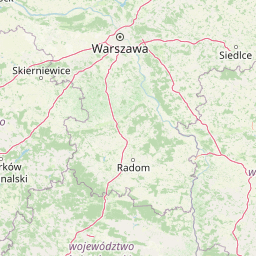
Map view of Modrzewie Nature Reserve

Use this park location map to pinpoint Modrzewie Nature Reserve in Poland, understand its exact geographic position, and read its mapped placement within the surrounding landscape more clearly.

Pigeon | © OpenStreetMap contributors

Location context for Modrzewie Nature Reserve

Świętokrzyskie Voivodeship
Park atlas

Compare adjacent forest reserves and regional conservation landscapes

Explore Parks Near Rezerwat przyrody Modrzewie and Surrounding Protected Areas

Browse other parks near Rezerwat przyrody Modrzewie to discover connected forest reserves and regional protected landscapes across the surrounding terrain. Expanding the geographic comparison reveals broader ecological patterns and woodland habitats throughout the wider river basin.
Protected areaŚwiętokrzyskie Voivodeship
About 17 km away#1 closest

West

Wzgórza Kunowskie: Geographic Atlas of an Essential Polish Protected Area and Habitat Mosaic

Mapping riparian forests and inland dunes in Świętokrzyskie

Wzgórza Kunowskie serves as a crucial Natura 2000 site in Poland, blending sand grasslands, oak-hornbeam forests, and riverine floodplains within a compact landscape. This overview analyzes the topographical gradients and habitat distribution that define the area, from elevated dunes to the moisture-rich valley floors of the Świętokrzyskie region, reflecting the interplay between sandy substrate and river regulation.

Area
18.687 km²
Water
Major water bodies
Protected landscapeLubelskie Voivodeship
About 26 km away#2 closest

East

Wrzelowiecki Park Krajobrazowy: Geographic Atlas and Protected Landscape Overview

Mapped upland terrain and Vistula valley geomorphology

Analyze the landform composition of Wrzelowiecki Park Krajobrazowy through its loess ravines, Cretaceous fossil exposures, and wetland river systems. This protected landscape preserves the regional integrity of the Wzniesienia Urzędowskie, offering a structured look at the interplay between highland forests and historic Polish river valley settlements.

Area
49.89 km²
Established
1990
Relief
Upland
Climate
Temperate
Watercolor illustration of rolling hills with green forests in the foreground and purple, green, pink, and yellow mountain ranges in the background
National parkŚwiętokrzyskie Voivodeship
About 30 km away#3 closest

West

Świętokrzyski National Park: Protected Mountain Terrain in Świętokrzyskie Voivodeship

Geography and landscape mapping for Poland's oldest mountain range

Świętokrzyski National Park encompasses the highest ridges of the Świętokrzyskie Mountains, showcasing a landscape defined by expansive granite boulder fields and primeval fir forests. This atlas entry provides a detailed look at the park's topography, ranging from the prominent Łysica peak to the protected valley floors, highlighting the geological and biological diversity preserved within this central Polish sanctuary.

Area
76.26 km²
Established
1950
IUCN
II
Visitors
168K annual
National parkŚwiętokrzyskie Voivodeship
About 30 km away#4 closest

West

Świętokrzyski Park Narodowy: Protected Forests and Mountain Geography in Central Poland

A preserved landscape of ancient fir forests and rubble fields

Situated within the Świętokrzyskie Voivodeship, this protected area guards the Łysogóry range and its rare forest associations. The landscape is characterized by its dramatic gołoborza rubble fields and dense mixed-woodland terrain, providing a unique look into the natural geography of the region.

Area
76.26 km²
Established
1950
Visitors
168K annual
Relief
Mountain
Nature reserveŚwiętokrzyskie Voivodeship
About 33 km away#5 closest

Southwest

Małe Gołoborze Nature Reserve: Mapping Cambrian Geology and Forested Ridge Ecosystems

A study of protected terrain in the Świętokrzyskie Voivodeship

Małe Gołoborze Nature Reserve stands as a preserved fragment of the Jeleniowskie Range, showcasing rare surface exposures of Cambrian quartzite sandstones alongside mature deciduous woodland. This entry offers a focused perspective on the reserve's topography, including its signature boulder slope and the valley floor that reveals the underlying geological foundations of central Poland's mountain landscape.

Area
0.216 km²
Established
1994
Relief
Mountain
Climate
Temperate
Nature reserveświętokrzyskie
About 34 km away#6 closest

South

Ostoja Żyznów Protected Landscape: Loess Ravines and River Valleys of Świętokrzyskie

A dense mosaic of xerothermic grasslands and mixed forest ecosystems

Ostoja Żyznów protects a compact yet ecologically rich region characterized by deep loess gullies and the meandering paths of the Koprzywianka and Kacanka rivers. The area creates a striking transitional landscape, shifting from flat agricultural plateaus to steep, forest-covered ravines and cliff-like river walls. This site offers significant value for understanding regional biodiversity, featuring a rare combination of warm-dry grasslands and moisture-dependent peatland habitats in the heart of Poland.

Area
44.8 km²
Established
2011
Relief
Mixed relief
Climate
Temperate
Nature reserveLubelskie Voivodeship
About 39 km away#7 closest

Southeast

Szczecyn Nature Reserve: Mapping Protected Deciduous Forest Habitats in Eastern Poland

A vital mosaic of oak-hornbeam forest enclaves and nature reserves.

Szczecyn functions as a specialized Natura 2000 conservation landscape, spanning four forest enclaves across the border of the Lubelskie and Podkarpackie voivodeships. This site provides an essential reference for lowland deciduous forest protection, emphasizing the preservation of old-growth oak-hornbeam stands and thermophilic habitats. The area serves as a critical refuge for rare flora and invertebrates within a broader agricultural mosaic.

Area
9.325 km²
Established
2011
Relief
Upland
Climate
Temperate
Nature reserveMasovian Voivodeship
About 40 km away#8 closest

North

Rezerwat przyrody Miodne: Protected Nature Reserve Landscape in Masovian Voivodeship

Forest geography and ecological preservation in east-central Poland.

Rezerwat przyrody Miodne offers a focused look at mixed lowland forest communities in Poland. As a nature reserve established to guard beech populations at their northern limit, it serves as a key reference for understanding how small, strictly managed forest patches function within the wider, pine-dominated matrix of the Masovian Voivodeship.

Area
0.204 km²
Established
1985
Relief
Lowland
Climate
Temperate

Common questions about visiting, size, designation, and location context for Modrzewie Nature Reserve

Modrzewie Nature Reserve FAQs for park facts, access, geography, and protected area context

Find quick answers about Modrzewie Nature Reserve, including protected-area facts, park geography, trail and visitor context, and how the park fits into its surrounding country and regional landscape.
MoriAtlas Explorer

Continue Your Protected Areas Search Across the Global Atlas

Deepen your exploration by continuing the structured search for national parks and protected areas worldwide. Utilize the comprehensive filtering capabilities to compare different conservation landscapes and refine your understanding of global park geography. Discover more about the distribution and characteristics of protected natural areas.

Global natural geography