Why Rio Negro-Sopladora National Park stands out
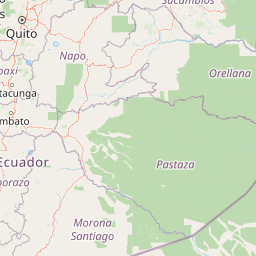
The park is best known for its extensive and largely undisturbed páramo and montane forest ecosystems, which together form a near-pristine Andean landscape at elevations between roughly 800 and 3,900 meters. Its forests and grasslands host a notable concentration of endemic plants and birds typical of the southern Eastern Cordillera of the Andes. It is also recognized for its role in regional connectivity. Río Negro-Sopladora anchors part of the Sangay-Podocarpus conservation corridor and lies within the Cóndor Kutukú-Palanda core area, making it a key link between protected landscapes in the Andes and the eastern Andean foothills.
Rio Negro-Sopladora National Park history and protected-area timeline
Río Negro-Sopladora National Park was officially created on 23 January 2018 through Interministerial Agreement No. 009, formalizing its designation as a national park under Ecuador's protected-area framework. The establishment followed a multi-investigator biological assessment completed in 2017, which documented the area's vegetation cover, species composition, and conservation significance.
The park's creation also completed an important step in Ecuador's landscape-scale conservation planning. By designating this area, the authorities extended the national system of protected areas and reinforced the role of the Sangay-Podocarpus connectivity corridor. Within that framework, the park lies inside one of the four core areas of the Cóndor Kutukú-Palanda corridor, recognized as the first major connectivity corridor designed in Ecuador. The park therefore emerged not just as an isolated reserve, but as part of a deliberate network intended to maintain ecological flows between Andean uplands and lower eastern Andean landscapes.
Since its designation, Río Negro-Sopladora has been administered under the Ministry of Environment and Water (MAAE) within the SNAP structure, continuing the country's approach of managing high-priority ecosystems through national-level coordination.
Rio Negro-Sopladora National Park landscape and geographic character
The landscape of Río Negro-Sopladora is defined by a steep Andean gradient. The park covers an elevational range from roughly 800 meters in its lower eastern reaches to nearly 3,900 meters along its highest ridges. This dramatic vertical change produces a transition from sub-Andean foothills up through increasingly moist montane forests, then into open páramo on the highest plateaus.
Geologically and ecologically, the territory belongs to the southern Eastern Cordillera of the Andes, with deeply dissected slopes, narrow valleys, and ridges that funnel water into the Río Negro and Sopladora basins. Above the main forest belt, the terrain opens into high-elevation páramo plains where wetlands, cushion-plant vegetation, and shrubby mosaics shape a landscape that feels starkly different from the forested slopes below.
The variation in altitude, slope orientation, and moisture produces a patchwork of forest subtypes across the park, from piemontano forests at lower elevations to the high-altitude montano alto cloud forest types near the treeline. The result is a landscape of continuous ecological transition, where dense evergreen forest gives way to open grassland and where elevation, slope, and humidity jointly determine what grows and what survives.
Rio Negro-Sopladora National Park ecosystems, habitats, and plant life
Ecologically, Río Negro-Sopladora is structured around two interlocking systems: evergreen Andean forest and high-altitude páramo. Together, these ecosystems occupy the overwhelming majority of the park's surface, and their distribution follows elevation closely.
Andean forest is the dominant ecosystem, covering roughly two-thirds of the park. Within this broad forest class, several altitudinal subtypes occur, ranging from piemontano forests at lower elevations through montano bajo, montano, and montano alto forests higher up. Each band supports distinct vegetation compositions and microclimates, creating layered habitats along the steep slopes of the Eastern Cordillera.
Above the forest limit, páramo occupies the highest terrain. This ecosystem forms a mosaic of herbaceous páramo grasslands and evergreen shrublands, interspersed with wetlands and localized patches where soils stay saturated year-round. The combination of varied habitats and unstable, moisture-rich highland conditions creates refugia for specialized plant species, including endemic and restricted-range taxa that are often vulnerable to disturbance elsewhere in the Andes.
Rio Negro-Sopladora National Park wildlife and species highlights
Wildlife in Río Negro-Sopladora reflects the diversity of its habitats, with documented records spanning birds, amphibians, reptiles, and mammals. The park has recorded around 136 bird species, including several endemics such as Cinnamon Screech-Owl (Megascops petersoni), Coppery-chested Jacamar (Galbula pastazae), Crescent-faced Antpitta (Grallaricula lineifrons), Chusquea Tapaculo (Scytalopus parkeri), Mouse-colored Thistletail (Asthenes griseomurina), Black-breasted Fruiteater (Pipreola lubomirskii), and Black-backed Bush-Finch (Urothraupis stolzmanni). Several of these are restricted to narrow ranges in the Andes and represent a key conservation priority for the park.
In the herpetofauna, the park hosts around 23 recorded species of amphibians and reptiles, many of them endemic to the southern Ecuadorian Andes and surrounding foothill forests. Notable records include Pristimantis balionotus, Lepidoblepharis festae, Alopoglossus buckleyi, Anolis fitchi, and Synophis zamora, the last being a snake endemic to the Amazonian slopes of the southeastern Andes.
Mammal diversity is also substantial, with around 43 species documented, including Andean Bear (Tremarctos ornatus), Mountain Tapir (Tapirus pinchaque), Andean White-tailed Deer (Odocoileus ustus), Puma (Puma concolor), White-lipped Peccary (Tayassu pecari), Northern Tiger Cat (Leopardus tigrinus), Andean Weasel (Nasuella olivacea), Mountain Paca (Cuniculus taczanowskii), Andean Cottontail (Sylvilagus andinus), and Caenolestes sangay, a rare marsupial. The presence of large mammals and rare species underscores the park's role as a refuge for wildlife that is increasingly pressured elsewhere in the Andes.
Rio Negro-Sopladora National Park conservation status and protection priorities
Río Negro-Sopladora holds a central conservation role within southern Ecuador. Its ecosystems remain nearly intact, which is unusual in a region where Andean forests and páramos have historically faced heavy pressure from agriculture, grazing, and burning. The site's condition makes it a critical source area for Andean biodiversity and an important reservoir of genetic and ecological diversity for the surrounding landscape.
The park is also a cornerstone of regional connectivity. As part of the Sangay-Podocarpus corridor and one of the four core areas of the Cóndor Kutukú-Palanda corridor, it sustains biological flows between highland páramos and the eastern Andean foothills. This functional role, linking protected environments across elevation and ownership, gives the park a conservation weight that extends well beyond its own borders.
The high concentration of endemic and threatened species within a relatively compact area reinforces this importance. Many of the plant species recorded are nationally endemic, and a substantial share of the documented flora falls into some category of national threat. Combined with the presence of sensitive mammals and amphibians, this profile positions the park as a priority site for long-term biodiversity protection in Ecuador.
Rio Negro-Sopladora National Park cultural meaning and human context
The cultural context of the park reflects its rural Andean setting, where traditional land use has long intersected with forests and páramos in the Azuay and Morona Santiago highlands. The protected area crosses parishes that are deeply tied to agricultural and pastoral traditions, and its creation reflects an evolving relationship between local communities, regional governments, and the national conservation system.
The park also contributes to regional identity through its role within long-standing conservation initiatives, including the Sangay-Podocarpus corridor and the Cóndor Kutukú-Palanda connectivity framework, both of which emphasize cooperative stewardship across multiple jurisdictions. While the park itself is primarily valued for its ecological integrity, its establishment reinforces a broader narrative of mountain landscapes as shared cultural and natural heritage in southern Ecuador.
Top sights and standout views in Rio Negro-Sopladora National Park
The most distinctive feature of Río Negro-Sopladora is its near-pristine condition: large expanses of Andean forest and páramo that still preserve their ecological structure with little modification. Within this setting, the park offers dramatic transitions from sub-Andean forest to high páramo in a relatively compact geographic footprint.
Equally important is the park's place within a connectivity network. Through the Sangay-Podocarpus corridor and the Cóndor Kutukú-Palanda core area, it functions as a living bridge for wildlife moving between Andean highlands and the eastern foothills. For conservation-minded visitors, researchers, and regional planners, this combination of integrity and connectivity makes Río Negro-Sopladora a standout among Ecuador's newer protected areas.
Best time to visit Rio Negro-Sopladora National Park
Given its high Andean setting, the park's character shifts meaningfully between drier and wetter seasons. Drier months generally offer clearer skies, better views of high-elevation páramo, and easier access on foot through forest and grassland landscapes. This period is also typically favorable for birdwatching, when many Andean species are most detectable along forest edges and páramo margins.
Wetter months bring more cloud cover, frequent mist in the montane forests, and saturated páramo wetlands. While conditions can be muddier and visibility more limited, the forest is at its lushest and many amphibians become more active. Travelers interested in the ecological atmosphere of cloud forest and páramo ecosystems often find this season rewarding, even though access can be more demanding. As always in high-Andean terrain, conditions vary year to year, and flexible planning helps accommodate local weather shifts.