
Mori Atlas logo
Nature reserveRiserva naturale Boschi del Giovetto di Paline

Analyzing the protected terrain, coniferous forest gradients, and alpine pastoral landscape

Riserva naturale Boschi del Giovetto di Paline: An In-Depth Map of Lombardy Mountain Forests

The Riserva naturale Boschi del Giovetto di Paline represents a significant protected area within the Lombardia region of northern Italy. This nature reserve, spanning nearly 600 hectares, captures a complex altitudinal gradient of Norway spruce and fir forests that reach up to the summit ridges. Through its dense woodland and open alpine pastures, the area functions as an ecological sanctuary for diverse species, including the notable red wood ant colonies that characterize its unique forest floor environment.

regional nature reserveLombardyBergamoBresciaPrealpsspruce forest
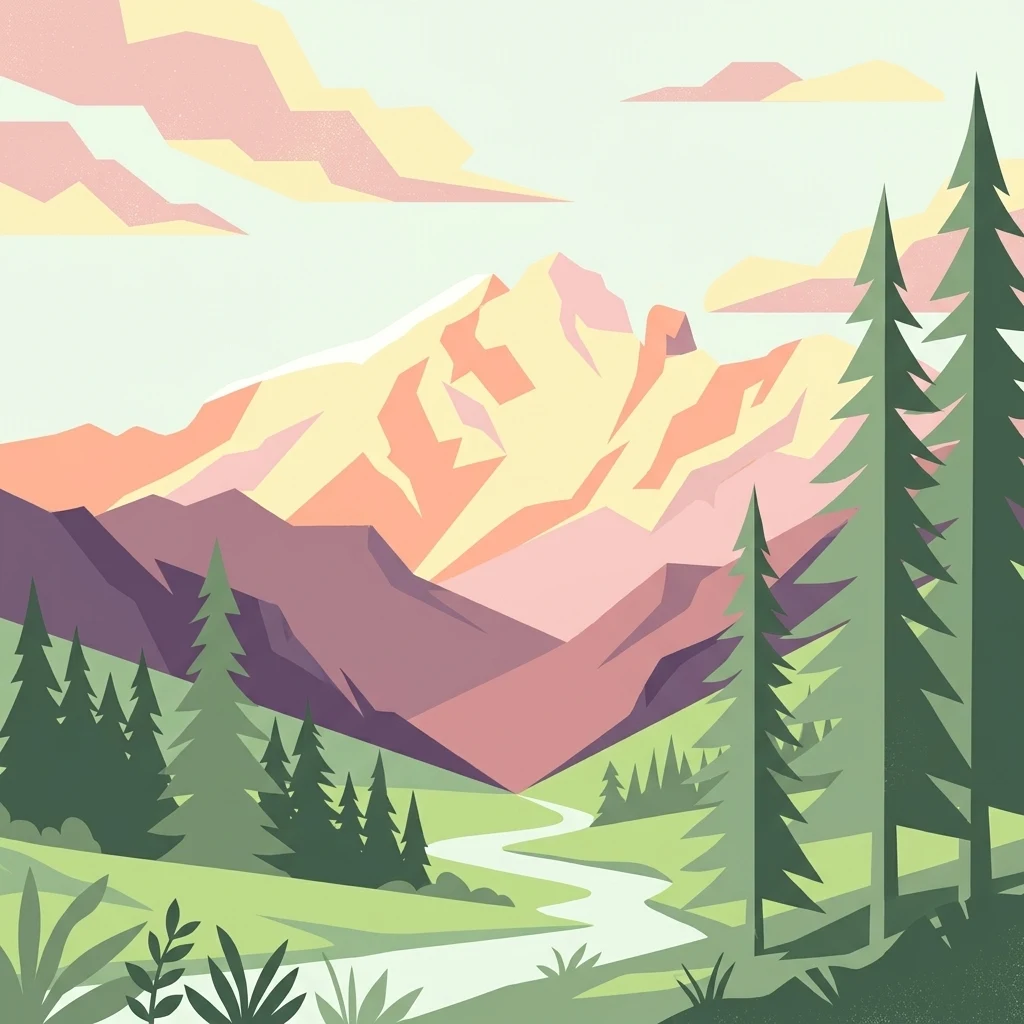
A digital illustration showing a valley scene with evergreen trees, a stream flowing through a grassy meadow, and large mountains in the background under a soft pastel sky.

Riserva naturale Boschi del Giovetto di Paline

Nature reserve

Park overview

Structured park overview, official facts, and landscape profile for Riserva naturale Boschi del Giovetto di Paline

Riserva naturale Boschi del Giovetto di Paline park facts, protected area profile, and essential visitor context

Review the core facts for Riserva naturale Boschi del Giovetto di Paline, including designation, size, terrain, visitor scale, habitats, and operating context in one park-focused overview.

About Riserva naturale Boschi del Giovetto di Paline

Riserva naturale Boschi del Giovetto di Paline is one of Lombardy's regional nature reserves, set in the Orobic Prealps where the provinces of Bergamo and Brescia meet. The reserve was established in 1985 with the explicit goal of conserving Formica rufa, but in practice it protects a much broader ecosystem centered on mature coniferous forest, subalpine pasture, and rocky alpine ridge.

The terrain is shaped by Triassic sedimentary rocks, principally clay and marl deposits that erode easily and produce the rounded landforms and gentle slopes characteristic of much of the reserve. In steeper sections, more resistant calcareous-marl formations appear, while near the Croce di Salven pass, detrital limestone and sand deposits are visible. This geological base supports a wide range of soils and microclimates across an elevation band that crosses nearly 1000 vertical meters.

Forest dominates the landscape, covering around 82 percent of the reserve between roughly 950 and 1850 meters. Below about 1250 to 1300 meters, mixed stands of Norway spruce and white fir flourish on cool, sheltered slopes, accompanied by mosses, ferns, and a rich shrubby understory. On drier or sunnier ground, Norway spruce remains dominant with scattered beech, ash, sycamore maple, and hazel. Between 1300 and roughly 1450 to 1550 meters, spruce continues to dominate with sparse white fir and larch, the latter introduced artificially in places. Above that zone, the forest opens into clearings that support green alder, rowan, rhododendron, and bilberry, where larch progressively takes over from spruce on abandoned pasture.

Although the reserve's official conservation target is the red wood ant, the broader landscape gives it value as a refuge for forest birds, small mammals, and rare invertebrates. The combination of strict habitat protection and the continued seasonal use of traditional alpine malghe gives the reserve a particular character, balancing ecological preservation with a long-standing mountain cultural landscape.

Quick facts and research context for Riserva naturale Boschi del Giovetto di Paline

The reserve is a regional nature reserve (Riserva naturale regionale) in Lombardy, northern Italy, classified as IUCN Category IV. It lies in the provinces of Bergamo and Brescia, across the municipalities of Azzone and Borno. Established on March 25, 1985, by regional decree, it is managed by ERSAF. The protected area extends across roughly 597 hectares of land, from about 1000 meters in the Giona valley up to 1937 meters at the summit of Costone.

Protection and recognition

Examine documented protected area status, designation records, and international recognition details.

Riserva naturale Boschi del Giovetto di Paline Protection Status and International Recognition Data

Review the documented protection status and designated management scope associated with Riserva naturale Boschi del Giovetto di Paline. Official records compile verified protected area data to provide transparent context for conservation geography.

Protection details

WDPA ID
83358
Park context

Deeper park guide and search-rich context for Riserva naturale Boschi del Giovetto di Paline

Riserva naturale Boschi del Giovetto di Paline history, landscape, wildlife, and travel context

Explore Riserva naturale Boschi del Giovetto di Paline through its history, landscape character, ecosystems, wildlife, conservation priorities, cultural context, and seasonal travel timing in a structured park guide built for atlas discovery and search intent.

Why Riserva naturale Boschi del Giovetto di Paline stands out

Riserva naturale Boschi del Giovetto di Paline is best known for its dense spruce-dominated mountain forests and for being specifically established to safeguard Formica rufa, the red wood ant. The reserve is recognized for its pristine old-growth coniferous woodland character, an unusually intact habitat in the Lombard Prealps, and for the role its numerous ant colonies play in shaping the understory ecology. It is also appreciated for the layered altitudinal structure of its forests, ranging from mixed fir and spruce stands at lower elevations to open larch woodlands and subalpine pastures near the ridge. The combination of well-preserved forest, traditional alpine grazing grounds, and a species-specific conservation mandate gives the reserve a distinctive identity within Italy's regional protected-area network.
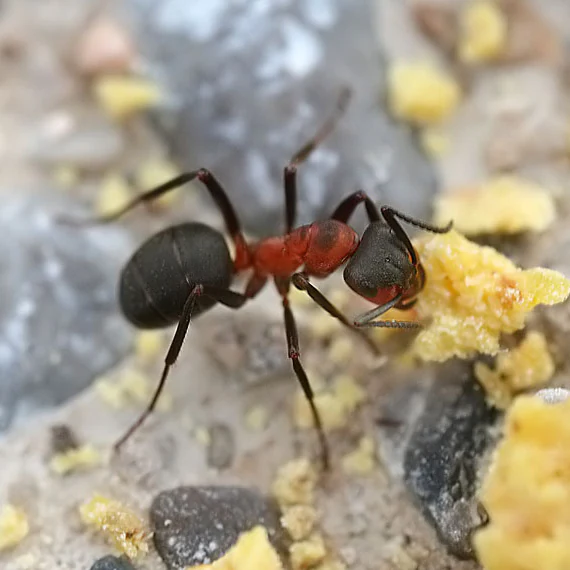
Close-up macro photograph of a red wood ant crawling over small stones and organic debris.
A red wood ant (Formica rufa), the species for which the Riserva naturale Boschi del Giovetto di Paline is primarily established.

Riserva naturale Boschi del Giovetto di Paline history and protected-area timeline

The reserve was formally instituted in 1985 through a regional council resolution (DCR 2014) dated March 25, 1985, making it one of the older regional nature reserves in Lombardy. Its creation was specifically motivated by the need to protect populations of Formica rufa, whose large dome-shaped nests are a defining feature of the local spruce forests.

Since its establishment, the reserve has been managed by ERSAF, the Lombard regional agency for agricultural and forestry services, which oversees habitat conservation, monitoring, and the maintenance of traditional pastoral infrastructure. The presence of long-standing seasonal grazing at malghe Creisa, Paiano, and Costone means that the area's history also includes centuries of alpine pastoralism, even though forest protection is now the dominant land use.

Formal recognition at the international level followed later, with inclusion in the World Database on Protected Areas under the WDPA code 83358 and classification as an IUCN Category IV area, underlining its focus on targeted habitat and species management rather than full wilderness protection.

Riserva naturale Boschi del Giovetto di Paline landscape and geographic character

The reserve sits in a transitional zone of the Lombard Prealps, where rounded mountain ridges alternate with steep valleys and rocky shoulders. Elevations range from about 1000 meters along the floor of the Giona valley up to 1937 meters at the summit of Costone, which marks the boundary between the provinces of Bergamo and Brescia. This almost 1000-meter elevation span creates a clear altitudinal gradient, visible as a transition from dense forest near the valley floor to open ridges and pastures near the summit.

Geologically, the area is dominated by Triassic sedimentary formations, mainly clays and marls that erode into softened, rounded slopes. In steeper sections, calcareous-marl deposits produce more resistant outcrops, while near the Croce di Salven pass, glacial and fluvial action has left detrital deposits of limestone pebbles and sand. The overall result is a landscape of long forested slopes, modest cliff sections, and elevated basins where alpine pastures have historically been maintained.

The reserve also captures classic features of the Orobic mountain scenery, including glacial valleys, the Valle Giona with its seasonal torrent, the pass at Croce di Salven, and the cluster of small alpine pastures that still dot the higher ground. Together these elements form a varied mountain tableau that supports both dense coniferous woodland and more open transitional habitats.

Riserva naturale Boschi del Giovetto di Paline ecosystems, habitats, and plant life

Ecologically, the reserve is defined by its coniferous forests, which cover the great majority of the protected area. The forest forms a layered system that reflects both elevation and exposure: cool, shaded lower slopes favor mixed spruce and fir with a dense moss- and fern-rich understory, while sunnier or drier sites support spruce with broadleaf associates such as beech, ash, sycamore maple, and hazel.

Higher on the mountain, the forest structure becomes more open, with clearings of green alder, rowan, rhododendron, and bilberry appearing between groups of trees. In this upper band, larch progressively replaces spruce, especially where past grazing has created open land that larch is recolonizing. These subalpine mosaics combine woodland, scrub, and herbaceous communities in patterns that are typical of the Orobic Prealps.

Where the slopes are steepest, particularly along the northern flank of Valle Giona, prolonged snow cover restricts tree growth and gives rise to shrub-dominated communities dominated by green alder, alpine laburnum, and willow along drainage lines. Above the forest line, secondary grasslands and pastures are maintained by traditional grazing, while abandoned pastures have begun to revert to shrub and tree cover, a process that the reserve closely monitors.

Riserva naturale Boschi del Giovetto di Paline wildlife and species highlights

Wildlife in the reserve reflects the integrity and continuity of its forest cover. Among birds, three species of Galliformes are present: black grouse, hazel grouse, and rock partridge, alongside three woodpecker species: green woodpecker, great spotted woodpecker, and black woodpecker. The black woodpecker has particular ecological importance, as more than forty species of birds and mammals have been documented using the cavities it excavates, making it a keystone species for forest-dwelling fauna.

Owls are well represented, with tawny owl, boreal owl, long-eared owl, and pygmy owl recorded. Diurnal raptors include golden eagle, common kestrel, Eurasian sparrowhawk, northern goshawk, and common buzzards, all of which use the reserve's combination of forest edge and open pastures. The mix of habitats supports an active community of forest and mountain birds typical of the Lombard Prealps.

Mammals include squirrels and hares as relatively common residents, while roe deer and red deer are present but more sporadic. Among smaller predators, red fox, beech marten, and least weasel are widespread. The reserve is also notable for its large colonies of Formica rufa, whose dome-shaped nests can contain hundreds of thousands of workers and play a significant role in the forest-floor ecosystem, regulating invertebrate populations and cycling nutrients.

Riserva naturale Boschi del Giovetto di Paline conservation status and protection priorities

Conservation in the reserve is organized around its formal mandate as an IUCN Category IV protected area, focused on the management of specific habitats and species. The most explicit conservation objective is the protection of Formica rufa, whose populations are considered a defining feature of the local spruce forest and a flagship for the reserve's protection efforts.

Beyond the ant itself, the reserve functions as a refugium for mature coniferous woodland and for the associated community of cavity-nesting birds, mammals, and invertebrates that depend on old-growth forest structure. The protection of dead wood, veteran trees, and large ant mounds is therefore central to ongoing management practice.

Management balances strict habitat preservation with the continuation of traditional alpine pastoralism at malghe Creisa, Paiano, and Costone, where seasonal grazing with cattle and sheep helps maintain the open pastures that are themselves part of the reserve's ecological mosaic. Through ERSAF, this combination of targeted species protection, forest conservation, and cultural landscape maintenance is pursued as an integrated conservation approach.

Riserva naturale Boschi del Giovetto di Paline cultural meaning and human context

The reserve lies within a long-established alpine cultural landscape, where seasonal transhumance and small-scale dairy farming have shaped the high pastures for centuries. The malghe Creisa, Paiano, and Costone continue to support summer grazing with cattle and sheep, and their associated infrastructure of stone huts, paths, and meadows remains part of the visible heritage of the area.

The two municipalities within the reserve, Azzone on the Bergamo side and Borno on the Brescia side, represent the traditional communities whose livelihoods have long been tied to forest resources and upland grazing. Forest use, alpine pasture management, and the careful stewardship of water sources have shaped the local economy and identity.

The reserve's focus on Formica rufa also carries cultural resonance. Wood ants have long been a familiar presence in Alpine forests, and the large domed nests that dot the reserve are part of the recognized natural heritage of these mountains, linking ecological protection to local environmental identity.

Top sights and standout views in Riserva naturale Boschi del Giovetto di Paline

The reserve's most distinctive highlight is its unusually intact Norway spruce forest, layered across nearly 1000 meters of elevation and sheltering large colonies of Formica rufa. The dome-shaped ant nests, often more than a meter tall and home to hundreds of thousands of workers, are both an ecological signature and a visual landmark of the protected area.

Equally notable is the reserve's altitudinal forest gradient, ranging from mixed fir and spruce stands on shaded lower slopes to open larch woodlands, rhododendron-rich clearings, and subalpine pastures near the summit ridge. The presence of black woodpeckers, hazel grouse, and black grouse underlines the area's value as a stronghold for forest wildlife typical of the Orobic Prealps.

A further distinguishing feature is the integration of strict habitat protection with active traditional pastoralism, allowing seasonal grazing at Creisa, Paiano, and Costone malghe to continue alongside ecological management by ERSAF.

Best time to visit Riserva naturale Boschi del Giovetto di Paline

Late spring through early autumn is generally the most rewarding period to experience the reserve, when snow has receded from most of the lower and middle elevations and the forest trails are accessible. In late spring and early summer, the varied altitudinal vegetation is at its most expressive, with flowering understory in the lower forests and fresh growth in the subalpine shrub and pasture zones.

Summer offers the fullest access to the higher ground, including the alpine pastures and the summit area around Costone, as well as the chance to encounter the reserve's birdlife at its most active. Wildlife observation tends to be good across the warmer months, while the cooler temperatures of early autumn bring stable weather, vivid foliage change in the larch and beech stands, and a quieter atmosphere before the first snow closes higher trails.

In winter, much of the reserve lies under deep snow, particularly on the northern slopes of Valle Giona, and access becomes significantly more limited, though the snow-covered coniferous landscape has its own atmospheric appeal for properly equipped winter visitors.
Monthly climate preview

Long-term monthly temperature averages and precipitation patterns for Riserva naturale Boschi del Giovetto di Paline

Riserva naturale Boschi del Giovetto di Paline Climate Normals and Annual Temperature Rhythm

Temperature and precipitation data recorded at a representative elevation of 1347.93 meters outline the long-term annual climate rhythm for Riserva naturale Boschi del Giovetto di Paline. Opening the complete monthly climate profile provides detailed average high, low, and precipitation metrics across all twelve months.
Annual mean6 °C
-4 °C16 °C
Jan-4°
Feb-3°
Mar
Apr
May10°
Jun14°
Jul16°
Aug16°
Sep12°
Oct
Nov
Dec-2°
Warmest month
July

16.1 °C

Coolest month
January

-3.7 °C

Wettest month
November

4.8 mm/day

Driest month
February

1.9 mm/day

Park location guide

Geography guide, regional context, and park location map for Riserva naturale Boschi del Giovetto di Paline

Riserva naturale Boschi del Giovetto di Paline park geography, regions, and map view in Italy

Understand where Riserva naturale Boschi del Giovetto di Paline sits in Italy through a broader geographic reading of the surrounding landscape, nearby location context, and its mapped position within the national park landscape.

How Riserva naturale Boschi del Giovetto di Paline fits into Italy

Italy is a unitary parliamentary republic in Southern and Western Europe, located on the Italian Peninsula with the Alps to the north. It borders France, Switzerland, Austria, Slovenia, Vatican City, and San Marino, and shares maritime boundaries with several Mediterranean countries. The country has approximately 59 million residents and uses the Euro as its currency.

Wider geography shaping Riserva naturale Boschi del Giovetto di Paline in Italy

Italy occupies a boot-shaped peninsula in southern Europe, bordered by the Alps to the north. It shares land borders with France, Switzerland, Austria, Slovenia, Vatican City, and San Marino. The country includes the Mediterranean islands of Sicily and Sardinia, along with approximately 800 smaller islands.

Map view of Riserva naturale Boschi del Giovetto di Paline

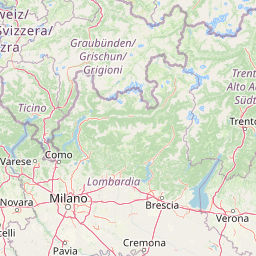
Use this park location map to pinpoint Riserva naturale Boschi del Giovetto di Paline in Italy, understand its exact geographic position, and read its mapped placement within the surrounding landscape more clearly.

Pigeon | © OpenStreetMap contributors

Location context for Riserva naturale Boschi del Giovetto di Paline

Lombardia
Recorded earthquake history

Examine Historical Seismic Data for Riserva naturale Boschi del Giovetto di Paline

Navigate into the dedicated historical catalogue of recorded earthquakes associated with this nature reserve. This MoriAtlas resource maps seismic events by proximity to the protected area, offering a clear view of recorded activity across the surrounding Lombardy landscape.

Earthquake History: Riserva naturale Boschi del Giovetto di Paline

Catalogued events

53 events

Strongest magnitude

Magnitude 5.1

Most recent event

Jan 9, 2026

This history includes earthquakes recorded inside the park or within 50 km of its borders

Visualizing alpine forests, mountainous terrain, and conserved habitats across the reserve

Riserva naturale Boschi del Giovetto di Paline Photos and Protected Landscape Scenery

Examine detailed photographs capturing the dense Norway spruce forests, steep Alpine valleys, and high-elevation terrain of Riserva naturale Boschi del Giovetto di Paline. Visual records reveal the altitudinal gradient of the Lombard Prealps, illustrating protected habitats, traditional mountain pastures, and forested ridges.

Close-up macro photograph of a red wood ant crawling over small stones and organic debris.

A sunset view of snow-capped mountains in the distance, framed by dark pine tree silhouettes in the foreground.

Park atlas

Compare adjacent Alpine reserves, mountain forests, and regional conservation landscapes

Parks Near Riserva naturale Boschi del Giovetto di Paline and Surrounding Protected Areas

Browsing other protected areas near Riserva naturale Boschi del Giovetto di Paline reveals broader ecological patterns across the Lombard Prealps. Comparing adjacent mountain reserves provides essential geographical context for understanding regional forest habitats and alpine watersheds.
Watercolor painting of a mountain range with a lake, green hills, and a sunset sky
National parkTrentino-Alto Adige/Südtirol
36 km away#1 closest

Northeast

Stelvio National Park National Park: Protected Landscape and Regional Geographic Context

Explore its mapped boundaries and natural terrain.

Navigate Stelvio National Park, a designated national park in Italy's Trentino-Alto Adige/Südtirol region, through a map-centric lens. This page provides critical context for understanding the park's protected landscape, its geographic position within the Alps, and its mapped terrain. Utilize MoriAtlas to grasp the park's boundaries and its place in regional geography for structured natural landscape discovery.

Established
1935
IUCN
II
Relief
Mountain
Scope
Terrestrial
A soft watercolor painting of a tranquil lake surrounded by gentle, rolling green hills and wetland vegetation.
Nature reserveTrentino-Alto Adige
39 km away#2 closest

East

Lago d'Ampola: Mapping the Ecology of a Glacial Nature Reserve in Trentino

A critical protected wetland and montane biotope

Lago d'Ampola preserves a remarkably layered habitat of glacial origin, where water lilies, marsh vegetation, and spruce-beech forests converge. This protected site in Trentino-Alto Adige offers a focused look at the intersection of glacial geography and successful ecosystem recovery in an Alpine valley setting.

Area
0.5 km²
Established
1990
Relief
Mountain
Climate
Alpine
Nature reserveLombardia
About 48 km away#3 closest

Northwest

Val di Mello Nature Reserve: Mapping the Granitic Geography of the Italian Alps in Lombardia

A study of protected vertical relief, glacial cirques, and Alpine terrain.

Val di Mello offers a profound look at high-altitude Alpine geography, characterized by its immense, light-colored granitic walls and deeply carved tributary valleys. This protected nature reserve acts as a gateway to the broader mountainous terrain of the Lombardia region, showcasing the geological evolution of the Italian Alps through its steep gullies, high summits, and expansive valley floor.

Established
2009
Relief
Mountain
Access
Moderate access
Scope
Terrestrial
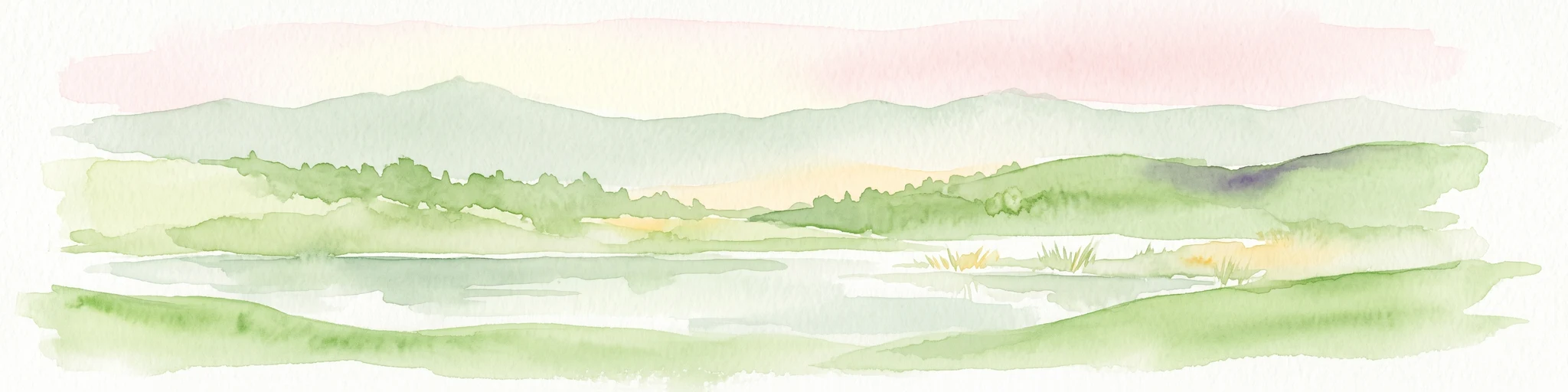
A horizontal watercolor illustration showing stylized, overlapping mountain ridges in shades of soft green, pink, and yellow against a white background.
Natural monumentGraubünden
About 50 km away#4 closest

Northwest

Roseggletscher Natural Monument: Alpine Glacier Geography and Proglacial Lake Mapping

Protected landscape data for the Bernina range in Graubünden.

Examine the geographic boundaries and terrain of the Roseggletscher, a protected natural monument situated in the upper Val Roseg. This record captures its glacial extent, the emergence of the Lej da Vadret proglacial lake, and its role within the wider Bernina glacier ensemble of southeastern Switzerland.

Area
6.38 km²
Relief
Mountain
Climate
Alpine
Access
Moderate access
A watercolor painting showing a panoramic view of a green wetland landscape with soft purple mountains in the background.
Nature reserveTrentino-Alto Adige
About 52 km away#5 closest

East

Biotopo Fiavé: A Protected Wetland and Archaeological Landscape in Trentino-Alto Adige

Mapping glacial lake basins and ancient prehistoric heritage sites

Located at the foot of Monte Cogorna, Biotopo Fiavé functions as a vital wetland reserve characterized by extensive peat bogs and mixed willow-alder thickets. This area offers a unique intersection of natural hydrological evolution and UNESCO-protected archaeological history, serving as a rare, compact cross-section of alpine valley ecosystems and prehistoric human settlement patterns.

Area
1.373 km²
Established
1988
IUCN
IV
Nature reserveTrentino-Alto Adige
About 55 km away#6 closest

East

Biotopo Lomasona Nature Reserve: Protected Landscapes and Alpine Geography in Trentino

A small-scale conservation area in the heart of Val Lomasona

Biotopo Lomasona stands as a specialized nature reserve in the Italian Province of Trento. This compact protected area focuses on habitat conservation within the alpine terrain, serving as an important ecological anchor in the valley landscape of Comano Terme and the wider Trentino-Alto Adige region.

Area
0.26 km²
Established
1987
IUCN
IV
Nature reserveTrentino-Alto Adige
About 56 km away#7 closest

East

Biotopo Monte Brione: Protected Nature Reserve and Mediterranean Landscape Map

Exploring the limestone ecology of northern Italy

Biotopo Monte Brione stands as a remarkable protected area where southern European vegetation, including holm oaks and Phoenician juniper, flourishes against a backdrop of sun-exposed limestone cliffs. Situated as a natural buffer near Lake Garda, this reserve offers a deep look into the intersection of Mediterranean floral diversity and Alpine geographic settings, providing a essential refuge for protected raptors and rare invertebrate species.

Area
0.663 km²
Established
1992
IUCN
IV
A soft watercolor painting of a wetland landscape with distant rolling hills, green grassy banks, and a calm water surface, rendered in a muted palette.
Nature reserveTrentino
59 km away#8 closest

East

Lago di Loppio Nature Reserve: A Protected Wetland and Archaeological Landscape in Trentino

Mapping the ecological intersection of wetlands and historical island sites.

Lago di Loppio functions as a critical provincial biotope, blending rare marshland ecology with a deep historical footprint on the Island of Sant'Andrea. Situated within a depression in the Adige valley, this protected area features a unique transitional microclimate that supports diverse flora and fauna, alongside ruins spanning Roman to medieval eras.

Area
1.126 km²
Established
1987
Relief
Upland
Climate
Temperate

Common questions about visiting, size, designation, and location context for Riserva naturale Boschi del Giovetto di Paline

Riserva naturale Boschi del Giovetto di Paline FAQs for park facts, access, geography, and protected area context

Find quick answers about Riserva naturale Boschi del Giovetto di Paline, including protected-area facts, park geography, trail and visitor context, and how the park fits into its surrounding country and regional landscape.
MoriAtlas Explorer

Continue Your Protected Areas Search Across the Global Atlas

Deepen your exploration by continuing the structured search for national parks and protected areas worldwide. Utilize the comprehensive filtering capabilities to compare different conservation landscapes and refine your understanding of global park geography. Discover more about the distribution and characteristics of protected natural areas.

Global natural geography