
Why Riverland Biosphere Reserve stands out
The reserve is perhaps best known for its extensive mallee woodland landscapes, shaped by the dry, sandy conditions of the Murray Mallee, and for the ecological richness of its Murray River floodplains. The wetland systems along the river are internationally significant for migratory birds and have been recognised under the Ramsar Convention. It is also recognised for assembling a large, multi-tenure landscape, including conservation parks, wilderness protection areas, game reserves, pastoral leases, and private land, under a single biosphere framework. Key component areas such as Gluepot Reserve, Chowilla Regional Reserve, Danggali Conservation Park, and Murray River National Park contribute strongly to its identity as a refuge for threatened mallee birds and other native species.
Riverland Biosphere Reserve history and protected-area timeline
The Riverland Biosphere Reserve was formally established in 1977, when it received recognition as part of UNESCO's World Network of Biosphere Reserves. It was originally known as the Bookmark Biosphere Reserve, reflecting an earlier name tied to the surrounding region, before being later redesignated under its current Riverland identity.
Its development reflects a broader shift in conservation thinking toward biosphere reserves as landscapes that combine core protected areas with surrounding multiple-use lands. Rather than being created as a single fenced national park, the reserve grew as a coordinated framework that brought together pre-existing properties of varying tenures and management objectives. Over time, properties such as Chowilla Regional Reserve, Danggali Conservation Park, Gluepot Reserve, and Murray River National Park became recognised component parts of the larger biosphere landscape, reinforced by additional recognition through listings such as the Riverland Mallee Important Bird Area.
Riverland Biosphere Reserve landscape and geographic character
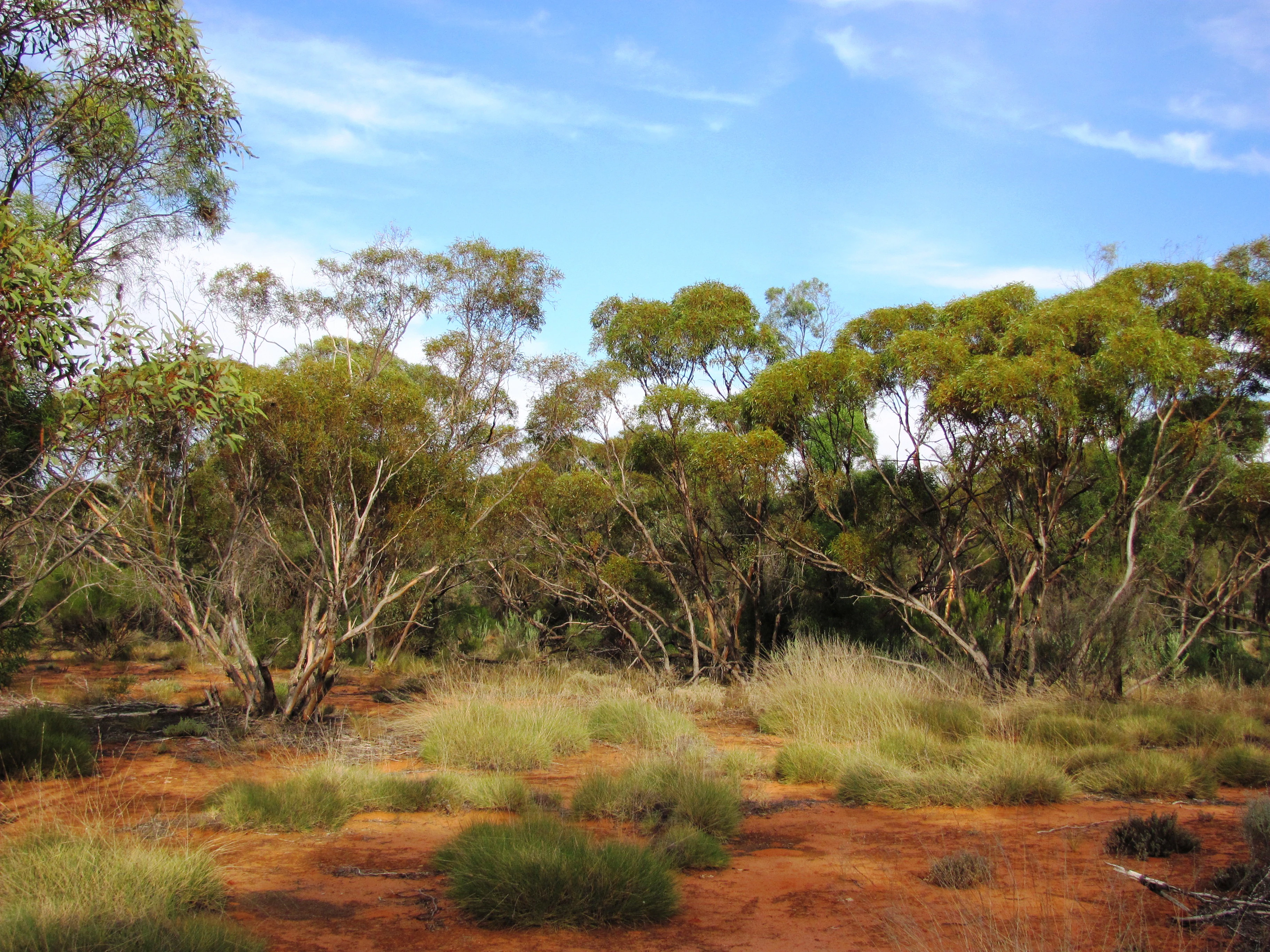
The landscape of the Riverland Biosphere Reserve is defined by the meeting of two very different Australian environments. Across much of its area, especially in the Murray Mallee portion, the terrain is shaped by low rainfall, sandy soils, and an open cover of mallee woodland and shrubland. Mallee vegetation, with its multi-stemmed eucalypts and dense understorey of hardy shrubs, creates a characteristically dry, textured, low-canopy landscape adapted to fire and aridity.
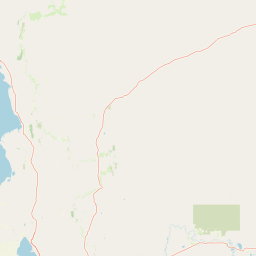
Running along the southern and eastern edge of the reserve, the Murray River introduces a contrasting riverine corridor. Here, the land is shaped by water, with river channels, anabranches, and broad floodplains that periodically fill and recede. The result is a network of wetlands, riparian vegetation, and open floodplain habitats that stand in sharp visual contrast to the surrounding dry mallee. This mosaic of arid woodland and riverine floodplain gives the reserve a varied topography despite its generally low relief, and it is the foundation for much of the area's ecological significance.
Riverland Biosphere Reserve ecosystems, habitats, and plant life
Ecologically, the reserve is dominated by mallee woodland and associated shrubland, vegetation types highly adapted to dry, nutrient-poor conditions and to fire as a recurring influence. These habitats form a semi-arid mosaic where trees, shrubs, and open ground alternate across the landscape, supporting a specialised community of birds, reptiles, and small mammals.
Along the Murray River corridor, however, the ecological character shifts toward riverine vegetation, wetlands, and floodplain systems. These areas introduce aquatic and semi-aquatic habitats, dense stands of plants tolerant of periodic inundation, and seasonal wetlands that draw waterbirds in large numbers. The combination of dry woodland and seasonally inundated floodplain wetlands gives the reserve a strong duality, supporting both arid-adapted terrestrial species and waterbirds that depend on wet phases of the floodplain.
Riverland Biosphere Reserve wildlife and species highlights
The reserve's wildlife profile is shaped by its two main habitat systems: mallee woodland and Murray River floodplain wetlands. The mallee country supports a suite of bird species specifically associated with this habitat type, including the endangered black-eared miner, a species that has prompted an active national recovery effort. The broader mallee bird community is recognised as significant enough that the reserve overlaps with the Riverland Mallee Important Bird Area identified by BirdLife International.
Along the river and across the floodplain, the wetlands function as internationally significant habitat for migratory birds. Under the Ramsar Convention, these floodplain wetlands have been recognised for their role in supporting species that move between Australia and other countries on annual migrations. Together, the dryland bird fauna and the waterbird populations give the reserve a rich and contrasting wildlife character that bridges arid and aquatic ecological worlds.
Riverland Biosphere Reserve conservation status and protection priorities
The Riverland Biosphere Reserve is significant from a conservation perspective because it demonstrates how biodiversity protection can be pursued across a vast, multi-tenure Australian landscape rather than within a single fenced reserve. Its UNESCO listing since 1977 places it within a global framework for testing approaches to reconciling conservation with sustainable human use, and its component properties collectively protect an unusually large area of mallee habitat and Murray River floodplain.
At an international level, the floodplain wetlands have been recognised under the Ramsar Convention for their value to migratory waterbirds, giving the reserve a global standing in wetland conservation. At a national level, participation in the recovery plan for the endangered black-eared miner highlights its role in safeguarding one of Australia's most threatened mallee specialists. The reserve also overlaps with the Riverland Mallee Important Bird Area, reinforcing its importance for bird conservation. By integrating protected areas, pastoral leases, and private land into a single coordinated framework, the reserve offers an important working model of landscape-scale conservation in a low-productivity Australian setting.
Top sights and standout views in Riverland Biosphere Reserve
Few Australian protected landscapes combine UNESCO biosphere recognition, Ramsar-listed wetlands, and a nationally important bird recovery program within a single boundary, but the Riverland Biosphere Reserve achieves exactly this. Its scale, around 9,000 square kilometres, makes it one of the largest coordinated conservation frameworks of its kind in the country.
Internal highlights include Gluepot Reserve for mallee bird conservation, Chowilla Regional Reserve and Chowilla Game Reserve for floodplain ecosystems, Danggali Conservation Park and Danggali Wilderness Protection Area for more remote mallee wilderness, and Murray River National Park for riverine scenery. The reserve's mix of arid woodland and Murray River floodplain, combined with overlapping recognition from UNESCO, the Ramsar Convention, and BirdLife International, makes it a landscape of unusually broad ecological and conservation significance.
Best time to visit Riverland Biosphere Reserve
Seasonal timing changes the character of a visit to the Riverland Biosphere Reserve substantially, because the landscape is shaped by the contrast between dry mallee country and water-influenced riverine corridors. In the cooler months, mallee bird activity can be productive for observing species such as the black-eared miner and other dryland specialists, and conditions for outdoor exploration in the woodland are generally more comfortable than during peak summer heat in this semi-arid environment.
Along the Murray River floodplains, filling and drying cycles influence both scenery and wildlife, with higher water levels often drawing larger numbers of waterbirds. Visitors interested in migratory waterbirds and wetland scenery will find seasonal conditions along the river and its associated floodplain wetlands particularly important, while those focused on mallee landscapes will appreciate the cooler months for traversing the dry woodland under more moderate conditions. The reserve's diverse habitats mean that visitors with different interests may find different times of year rewarding.