
Mori Atlas logo
National parkRoztocze National Park

Trace the rolling terrain and river-carved valleys of this vital ecological highland boundary.

Roztocze National Park: A Deep Geographical Analysis of Poland's Primary Forested Protected Land

(Roztoczański Park Narodowy)

Roztocze National Park represents the most heavily forested protected area in Poland, spanning 84.83 square kilometers within the southeastern Lublin Voivodeship. The park preserves a unique biogeographic crossroads where western European and Carpathian landscape features converge across rolling hills and deep river valleys. Through detailed mapping, uncover the physical geography of the Wieprz river corridor, ancient old-growth fir forests, and protected habitats that define this distinct upland environment.

national parkforest reserveold-growth forestEastern EuropeLublin VoivodeshipRoztocze
Illustration of a mountainous landscape with a lake, forest, and waterfall

Roztocze National Park

National park

Park overview

Structured park overview, official facts, and landscape profile for Roztocze National Park

Roztocze National Park park facts, protected area profile, and essential visitor context

Review the core facts for Roztocze National Park, including designation, size, terrain, visitor scale, habitats, and operating context in one park-focused overview.

About Roztocze National Park

Roztocze National Park protects a distinctive landscape in southeastern Poland where the Roztocze upland creates a natural boundary between the Lublin Upland and the Sandomierz Basin. The park's terrain is characterized by undulating hills, steep-sided valleys carved by glacial and river processes, and a dense forest cover that makes it unique among Poland's protected areas. The forests here represent a transition zone between western European and eastern Carpathian forest types, creating exceptional biodiversity. The Wieprz River, one of Poland's notable eastern rivers, flows through the park and supports wetland ecosystems along its valley. The park's headquarters are located in Zwierzyniec, a settlement with deep historical roots in the Zamoyski family estate established in 1589. Five walking trails and one dedicated bicycle trail allow visitors to explore the park's natural wonders, while the educational center in Zwierzyniec provides interpretation of the park's ecology and conservation significance. The park's buffer zone extends into surrounding lands, creating ecological connectivity with the broader Roztocze landscape.

Quick facts and research context for Roztocze National Park

Roztocze National Park occupies 84.83 km² in southeastern Poland, making it the most forested national park in the country with 95.5% coverage (8,102 hectares). Located in the Roztocze Środkowe region within Lublin Voivodeship, the park was established in 1974 and is administered from Zwierzyniec. The Wieprz River, of notable water quality, flows through the park alongside two smaller streams. Strict protection covers 1,029 hectares, while active protection encompasses 7,242 hectares. The park contains five strict nature reserves and supports over 750 vascular plant species and 190 bird species.

Protection and recognition

Explore documented terrestrial protection scope, Natura 2000 listings, and UNESCO biosphere reserve status.

Roztocze National Park Protection Status and International Recognition

Roztocze National Park maintains documented terrestrial protection status alongside verified Natura 2000 and UNESCO biosphere reserve listings. Structured conservation records outline official international designations and management scope across the protected area.

International recognition

Protection details

Protection scope
Terrestrial
Designated year
2019
Transboundary protection
No
Core area
91.49 km²
Buffer area
803.92 km²
Park context

Deeper park guide and search-rich context for Roztocze National Park

Roztocze National Park history, landscape, wildlife, and travel context

Explore Roztocze National Park through its history, landscape character, ecosystems, wildlife, conservation priorities, cultural context, and seasonal travel timing in a structured park guide built for atlas discovery and search intent.

Why Roztocze National Park stands out

Roztocze National Park is best known for its extraordinary old-growth forests dominated by towering firs, some of the largest in Poland, and its designation as the nation's most heavily forested national park. The park preserves critical habitat for the Polish konik pony, a heritage breed reintroduced in 1982 that now roams freely in dedicated conservation areas near Echo Ponds. The ancient tree population, over 400 specimens designated as nature monuments, represents one of the most significant heritage tree collections in Central Europe. The park also protects the Wieprz river valley, a major waterway with relatively clean water, and serves as a critical corridor for European wildlife including wolves, beavers, and numerous bird species.
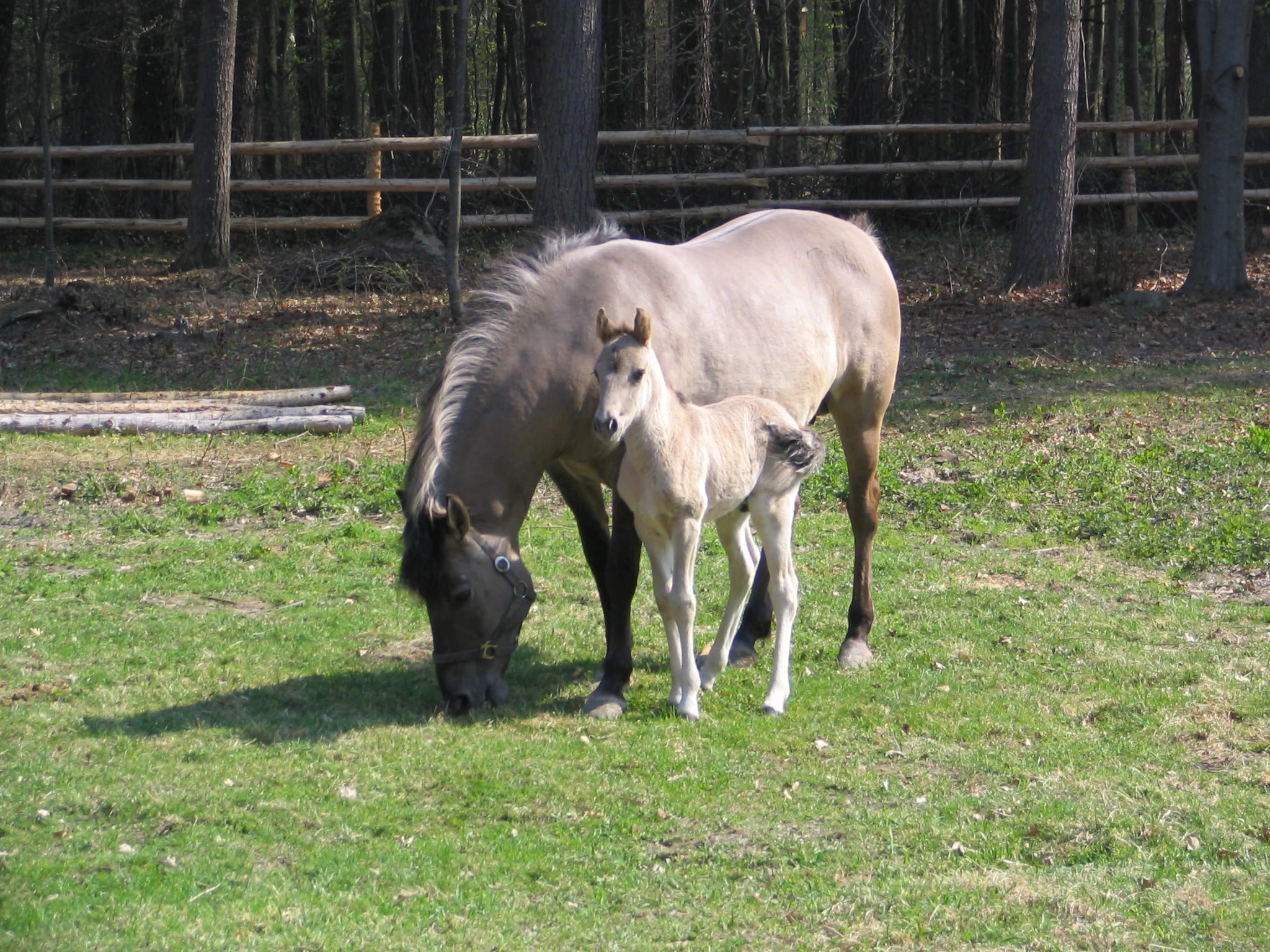
A Konik Polski horse and foal grazing on green grass near a wooden fence with trees in the background
Konik Polski horse and foal grazing in Roztocze National Park

Roztocze National Park history and protected-area timeline

The history of Roztocze National Park is inseparable from the Zamoyski family estate, one of Poland's great aristocratic landholdings established in 1589 with its headquarters at Zwierzyniec. The estate maintained a fenced hunting area, known as a zwierzyniec, spanning approximately 30 kilometers that encompassed what is now the Bukowa Góra strict protection zone. This historical game preserve protected elk, lynx, wild boar, wolves, European wildcats, and tarpans. Nature protection in the region began in 1934 with the creation of the Bukowa Góra Preserve, and in 1938 the Zamoyski estate issued Poland's first law protecting birds of prey. Following World War II, the area came under state forest management, and Roztocze National Park was formally established in 1974 from state forest lands that had been part of the historic Zamoyski holdings. Initially covering 48.01 km², the park was expanded to its current size. The park's administration is housed in the restored palace that once served as the Zamoyski estate administrator's residence. The region witnessed numerous military conflicts during the Polish January Uprising and both World Wars, with memorial sites in Zwierzyniec and surrounding areas commemorating these turbulent periods.

Roztocze National Park landscape and geographic character

The Roztocze landscape within the park represents one of Poland's most distinctive upland environments. The terrain consists of rolling hills and valleys formed through Cretaceous chalk and Tertiary bedrock, with Quaternary sands filling the valley floors. Elevation reaches a maximum of 350 meters above sea level. The Wieprz River, flowing from east to west through the park, has carved a broad valley that supports wetland habitats and riparian forests. Two smaller streams, the Szum (2.5 km) and the Świerszcz (7.5 km), originate within the park boundaries. The park's forest matrix contains remarkable old-growth elements, with some of Poland's tallest fir trees reaching 50 meters in height. The combination of steep valley sides, flat valley bottoms, and the river corridor creates a diverse physical landscape that supports varied ecological communities.
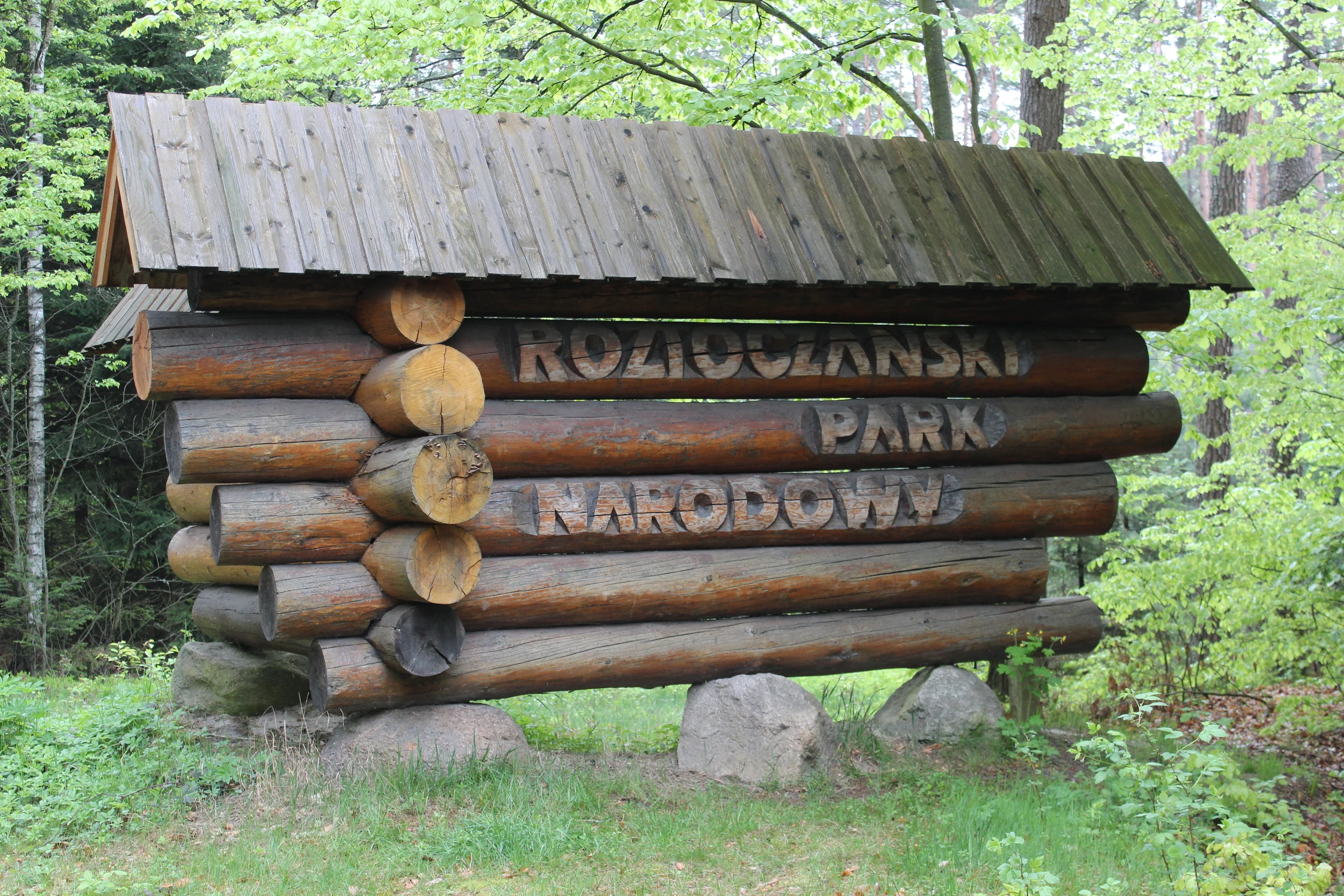
Wooden log sign with metal lettering 'ROZTOCZAŃSKI PARK NARODOWY' set in a forested area with green grass and trees
Wooden log entrance sign for Roztocze National Park in a forested setting

Roztocze National Park ecosystems, habitats, and plant life

Roztocze National Park represents a critical biogeographic crossroads where western European forest species meet eastern Carpathian elements. The park's 95.5% forest coverage makes it Poland's most forested national park, with approximately 20 distinct forest communities identified. The dominant forest type is the upland fir-beech mixed forest, covering nearly one-third of the park area, followed by Carpathian beech forest. The park supports significant populations of fir, beech, sycamore maple, lime, spruce, and yew—species representing the western European forest boundary. Rich hornbeam-oak forests grow on the most fertile soils, while pine forests occupy sandy valley terraces. Wetland forests, alder carrs, and raised bogs occur in poorly drained areas, preserving glacial and subarctic relicts including dwarf birch, northern greenberry, and cord grass. The vascular plant flora comprises approximately 750 species, including such notable species as the large-flowered anemone, European black cohosh, soft-haired lungwort, and yellow scabious. Atlantic-influenced species such as intermediate sundew, brown beak sedge, and rigid sedge reach their eastern distribution limits here.
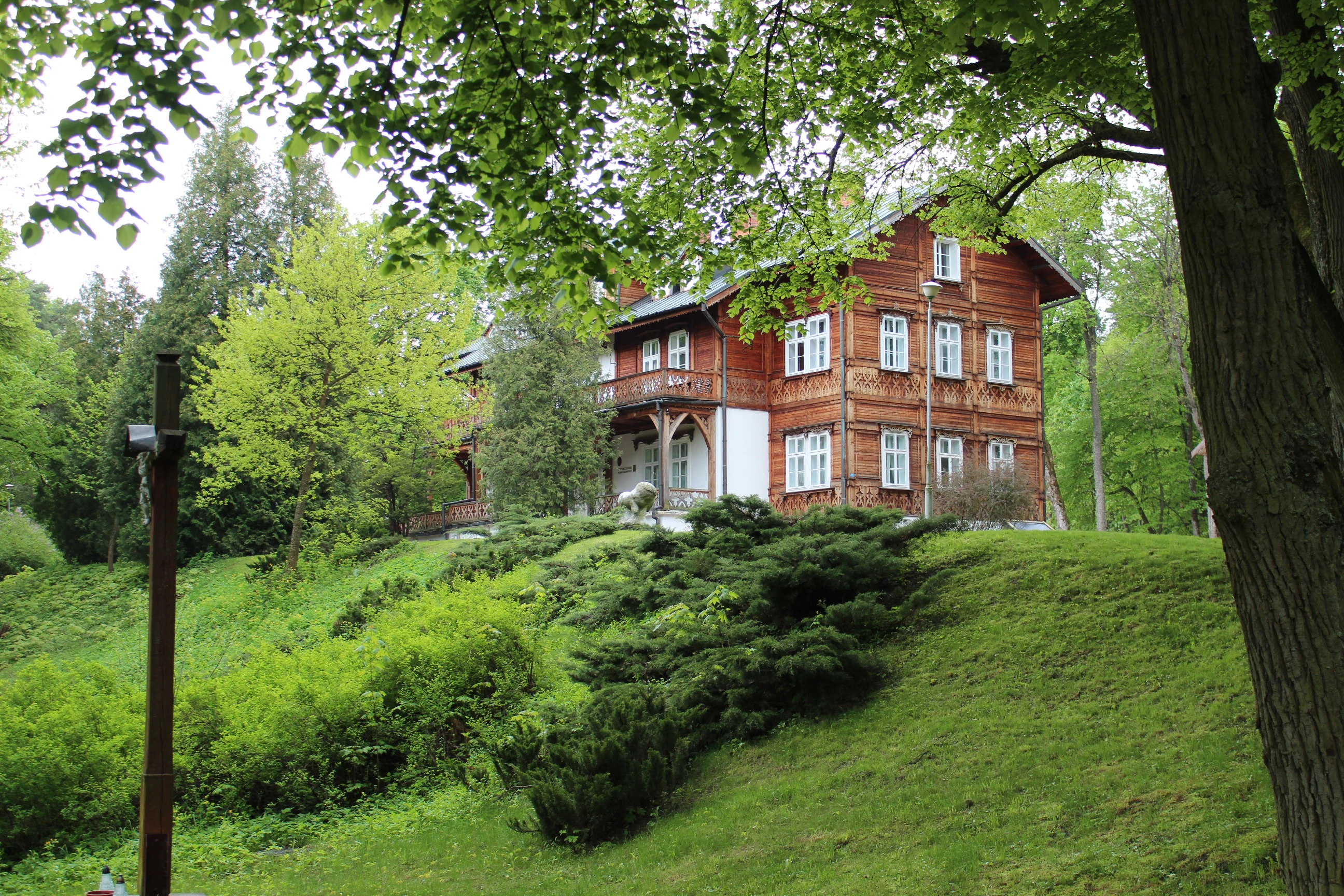
Red wooden house on a grassy hill with green trees and shrubs in a national park setting
Wooden house on a grassy hill surrounded by greenery in Roztocze National Park

Roztocze National Park wildlife and species highlights

The mammalian fauna of Roztocze National Park includes red deer, roe deer, wild boar, red fox, grey wolf, and Eurasian badger. European beavers, reintroduced in 1979, have established thriving colonies along the Wieprz valley and now represent a successful conservation story. Polish konik ponies, a heritage breed descended from the extinct tarpan, were introduced in 1982 and now roam freely in a 180-hectare conservation area near Echo Ponds and Biała Góra, living without human intervention except for winter supplemental feeding. Bird diversity is exceptional, with approximately 190 species recorded, of which about 130 regularly nest within the park. Notable species include the lesser spotted eagle, common buzzard, black stork, white-backed woodpecker, grey-headed woodpecker, and thrush nightingale. The reptile community includes the European pond terrapin (a protected species), common adder, grass snake, and lizards. The invertebrate fauna is extraordinarily rich, with over 2000 insect species documented, particularly notable for beetles in the Carabidae and Cerambycidae families, as well as diverse populations of snails, millipedes, arachnids, and orthopterans.
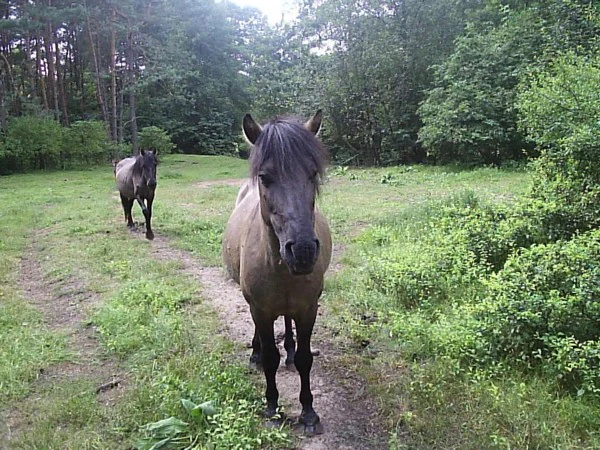
Two Konik horses standing on a dirt trail amidst green grass and trees.
Konik horses on a dirt path in a grassy forest area of Roztocze National Park.

Roztocze National Park conservation status and protection priorities

Roztocze National Park plays a vital role in conserving Poland's forest biodiversity and serves as a flagship for the broader Roztocze region. The park's strict protection zones—Bukowa Góra, Czerkies, Jarugi, Międzyrzeki, and Nart—preserve old-growth forest ecosystems that have become rare in lowland Poland. The protection of ancient trees, including over 400 designated nature monuments, maintains ecological continuity and habitat for specialized species. The reintroduction of European beavers demonstrates successful conservation management, while the Polish konik pony breeding program preserves genetic diversity of this heritage breed. The Wieprz River, maintained in good water quality, supports aquatic and riparian ecosystems. The park's buffer zone of approximately 381 km² extends protection into the surrounding landscape, maintaining ecological connectivity. The park also serves as a living laboratory for forest ecology research and environmental education, with dedicated facilities in Zwierzyniec and Florianka.

Roztocze National Park cultural meaning and human context

The Roztocze landscape has been shaped by centuries of human presence, most notably through the Zamoyski family estate established in 1589. The town of Zwierzyniec served as the administrative center for this vast landholding, which maintained a protected game preserve—a zwierzyniec—enclosing the core of what is now the national park. This historical hunting ground represented an early form of wildlife protection, preserving large mammals including elk, lynx, and tarpans. The current park headquarters occupy the restored palace of the former estate administrator, connecting modern conservation to this aristocratic heritage. In 1990, part of the park (24 hectares) was incorporated into Zwierzyniec when the settlement gained town status. The Polish konik pony has become the park's symbolic animal, representing both the region's cultural heritage and successful conservation breeding programs.

Top sights and standout views in Roztocze National Park

Roztocze National Park stands as Poland's most forested protected area, with ancient fir forests reaching 50 meters in height. The park preserves over 400 monument trees and supports the only wild population of Polish konik ponies, a heritage breed descended from the extinct tarpan. The Wieprz River valley provides habitat for reintroduced European beavers, while the forest supports grey wolf packs and over 190 bird species. Five strict nature reserves protect old-growth forest communities, and the park serves as a biogeographic crossroads where western European and eastern Carpathian species meet. The historical connection to the Zamoyski family estate and the restored administrator's palace add cultural depth to the natural landscape.

Best time to visit Roztocze National Park

The park offers distinct seasonal experiences throughout the year. Spring brings forest wildflower blooms and active wildlife as species emerge from winter, making April and May excellent for botanical observation and birdwatching. Summer offers warm conditions ideal for hiking the five marked trails, with lush green forest coverage and longer daylight hours. Autumn transforms the forests with color changes, particularly in the beech-dominated areas, and offers excellent mushroom foraging opportunities while quieter visitor numbers persist. Winter provides a different perspective on the landscape, though some trails may have limited accessibility. The Polish konik ponies are most easily observed in their designated areas during spring and summer when they graze openly. The park's educational center in Zwierzyniec operates year-round and provides orientation regardless of season.
Monthly climate preview

Track monthly temperature ranges and precipitation patterns across the representative point.

Roztocze National Park Climate Normals and Annual Temperature Rhythm

Roztocze National Park exhibits a measured annual temperature span ranging from winter minimums below freezing to warm summer maximums alongside steady monthly precipitation records. Examining the complete twelve-month climatological profile provides deeper insight into long-term meteorological averages across the protected terrain.
Annual mean8 °C
-4 °C20 °C
Jan-4°
Feb-2°
Mar
Apr
May15°
Jun18°
Jul20°
Aug20°
Sep14°
Oct
Nov
Dec-2°
Warmest month
July

20.4 °C

Coolest month
January

-4 °C

Wettest month
July

2.7 mm/day

Driest month
January

1.2 mm/day

Park location guide

Geography guide, regional context, and park location map for Roztocze National Park

Roztocze National Park park geography, regions, and map view in Poland

Understand where Roztocze National Park sits in Poland through a broader geographic reading of the surrounding landscape, nearby location context, and its mapped position within the national park landscape.

How Roztocze National Park fits into Poland

Poland, officially the Republic of Poland, is a Central European country spanning from the Baltic Sea in the north to the Carpathian Mountains in the south. It borders Germany, Czech Republic, Slovakia, Ukraine, Belarus, Lithuania, and Kaliningrad Oblast. The country has a temperate climate, diverse landscapes, and is known for its rich history, cultural heritage, and strong economic position within the EU.

Wider geography shaping Roztocze National Park in Poland

Poland occupies 312,696 km2 in Central Europe, extending from the Baltic Sea coast in the north to the Sudetes and Carpathian Mountains in the south. It borders Germany to the west, Czech Republic and Slovakia to the south, Ukraine and Belarus to the east, and Lithuania and Kaliningrad Oblast to the northeast. The landscape includes lowland plains, uplands, and mountain ranges.

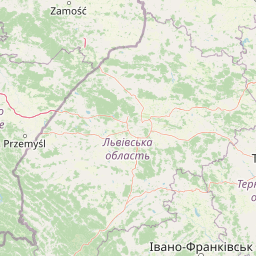
Map view of Roztocze National Park

Use this park location map to pinpoint Roztocze National Park in Poland, understand its exact geographic position, and read its mapped placement within the surrounding landscape more clearly.

Pigeon | © OpenStreetMap contributors

Location context for Roztocze National Park

Lublin Voivodeship
Natural feature types

Browse the Geographic Natural Features of Roztocze National Park

Continue your research into the physical geography and protected landforms of the region. This MoriAtlas collection offers a detailed perspective on the diverse natural entities, valley systems, and ancient forest monuments that characterize the landscape of Roztocze National Park.

Visual exploration of old-growth forests, river valleys, and upland terrain

Roztocze National Park Photos and Protected Landscape Scenery

Visual records capture the distinctive upland terrain, towering old-growth fir trees, and river valley habitats defining the protected environment of Roztocze National Park. Examining photographic documentation helps researchers and visitors understand the dense forest cover, heritage wildlife populations, and physical geography shaping this Polish conservation region.

A Konik Polski horse and foal grazing on green grass near a wooden fence with trees in the background

Lake surrounded by forest with reflections of trees and sky

Wooden log sign with metal lettering 'ROZTOCZAŃSKI PARK NARODOWY' set in a forested area with green grass and trees

Red wooden house on a grassy hill with green trees and shrubs in a national park setting

Two Konik horses standing on a dirt trail amidst green grass and trees.

A large wooden house with white trim and multiple windows, situated on a grassy area with a pathway and trees in the background

Park atlas

Compare regional upland terrain, old-growth forests, and adjacent conservation landscapes.

Explore Other Parks Near Roztocze National Park and Surrounding Protected Areas

Continue browsing nearby national parks and protected areas to compare regional forest ecosystems, river valleys, and upland terrain. Expanding the geographic view helps trace broader ecological corridors across the surrounding region.
Watercolor painting of a tranquil wetland landscape with a river flowing through lush green trees and soft, rolling hills in the background.
National parkLublin Voivodeship
Park boundaries overlap#1 closest

Northeast

Roztoczański Park Narodowy: Mapping the Protected Upland Ridges and Forest Ecosystems

Geographic overview of the Lublin Voivodeship wilderness zone.

The Roztoczański Park Narodowy preserves a vital expanse of temperate mixed forest across the Roztocze upland. This protected area features a unique intersection of Western and Eastern European flora, sheltered within a landscape of geological ridges, winding river valleys, and rare peat bogs. The park represents a key study in regional conservation through its strictly managed forest reserves and the restoration of the Polish konik horse.

Area
84.83 km²
Established
1974
Visitors
134K annual
Relief
Upland
Nature reservePoland
0.9 km away#2 closest

East

Uroczyska Puszczy Solskiej: Protected Forest and Peatland Landscape in Eastern Poland

Natura 2000 nature reserve encompassing diverse lowland forest mosaics

Uroczyska Puszczy Solskiej spans over 34,000 hectares of eastern Poland, forming a vital protected mosaic of raised bogs, transitional mires, and varied forest communities. This area provides a crucial reference for peatland and wetland ecology, supporting a wide range of forest-dependent species within a landscape shaped by glacial and fluvial processes.

Area
346.715 km²
Established
2009
Relief
Lowland
Climate
Temperate
Nature reservePoland
About 4.6 km away#3 closest

Northeast

Rezerwat przyrody Debry Nature Reserve: Geography, Forest Ecology, and Protected Boundaries

Exploring the Carpathian-linked landscapes of the Polish Roztocze

Rezerwat przyrody Debry stands as a significant nature reserve in eastern Poland, known for protecting a mosaic of upland fir and fertile beech forest communities. The landscape features deep, characteristic erosional incisions that host a rich array of montane plant species. This area is essential for understanding the regional distribution of protected forest ecosystems and the complex relief of the Roztocze plateau.

Area
1.796 km²
Established
1983
Relief
Upland
Climate
Temperate
Protected landscapeLublin Voivodeship
About 7.7 km away#4 closest

Northeast

Szczebrzeszyński Park Krajobrazowy: Protected Area Mapping in the Lublin Voivodeship

Highland forests, loess gullies, and protected peatland habitats

The Szczebrzeszyński Park Krajobrazowy forms a critical part of the regional Roztocze protected network. Its geography combines high-altitude forested hills, the deeply carved Piekiełko ravine system, and open bog woodland, providing a comprehensive mapped overview of the Western Roztocze highlands.

Area
193.71 km²
Established
1991
Relief
Upland
Climate
Temperate
Protected areaPoland
15 km away#5 closest

Northwest

Uroczyska Lasów Janowskich: Protected Forest and Wetland Geography in Eastern Poland

Mapping the extensive Natura 2000 lowland forest and peatland complexes

Spanning the Biłgoraj Plain and San River valley, Uroczyska Lasów Janowskich is a notable lowland forest complex in Poland. Its terrain integrates mature oak-hornbeam woods with diverse peatland systems, offering a clear look at how layered conservation strategies protect rare European habitats within a single continuous geographic block.

Area
345.443 km²
Established
2009
Relief
Lowland
Climate
Temperate
Nature reserveLublin Voivodeship
About 23 km away#6 closest

North

Kacze Błota Nature Reserve: Mapping the Protected Peatland Landscapes of Lublin Voivodeship

A study of high bogs and sandy dune forest terrain.

Kacze Błota is a protected nature reserve in Poland known for its sequence of transition mires and boggy coniferous woods. Positioned on the northern slopes of the Roztocze region, this site preserves unique plant species within its waterlogged depressions and acid-soil sandy ridges. The area remains a crucial example of historical landscape preservation in the Lublin Voivodeship, bridging the gap between upland forests and lowland river basins.

Area
1.679 km²
Established
1988
Relief
Lowland
Climate
Temperate
Nature reservePoland
About 29 km away#7 closest

East

Rezerwat przyrody Minokąt Nature Reserve: Geography, Forest Terrain, and Mapping

Protected Carpathian forest within the Roztocze landscape

Located in the Narol commune, Rezerwat przyrody Minokąt protects a rare, mature Carpathian fir-beech forest ecosystem. The reserve provides a critical study in regional geography, characterized by rolling upland terrain and fertile woodland soils that anchor the broader Roztocze Protected Landscape Area and regional conservation efforts.

Area
0.231 km²
Established
1996
Relief
Upland
Scope
Terrestrial
Protected areaPodkarpackie Voivodeship
36 km away#8 closest

East

Uroczyska Roztocza Wschodniego: Protected Area and Forested Ridge Geography

Extensive forest sanctuary in the Podkarpackie Voivodeship

Uroczyska Roztocza Wschodniego comprises vast, compact forest tracts on the Eastern Roztocze, defined by high-value woodland communities including beech and oak-hornbeam forests. The area functions as a critical protected landscape that supports diverse fauna and complex hydrological corridors within a significant regional conservation network.

Area
58.1 km²
Established
2011
Relief
Upland
Climate
Temperate

Common questions about visiting, size, designation, and location context for Roztocze National Park

Roztocze National Park FAQs for park facts, access, geography, and protected area context

Find quick answers about Roztocze National Park, including protected-area facts, park geography, trail and visitor context, and how the park fits into its surrounding country and regional landscape.
MoriAtlas Explorer

Continue Your Protected Areas Search Across the Global Atlas

Deepen your exploration by continuing the structured search for national parks and protected areas worldwide. Utilize the comprehensive filtering capabilities to compare different conservation landscapes and refine your understanding of global park geography. Discover more about the distribution and characteristics of protected natural areas.

Global natural geography