
Why Ryšovy stands out
The hill is best known for its limestone-influenced forest flora, a botanical character typical of the broader Strakonice limestone area. Within this relatively small woodland, a remarkable concentration of protected and regionally uncommon plants has been documented, including multiple orchid species such as dark red helleborine, white and red helleborines, and bird's-nest orchid, alongside rare gentians and other thermophilous wildflowers tied to calcareous substrates.
Ryšovy history and protected-area timeline
Ryšovy was declared a protected natural monument on 19 March 1990 by the then-existing District National Committee of Strakonice. Its designation came at a moment when the post-1989 Czech nature protection system was being reorganized and many smaller sites of distinctive botanical or geological value were being formally secured under the modern protected-area categories.
The choice of this hill reflects long-standing recognition of the Strakonice area as a region of botanical interest linked to its limestone geology. The forest on Ryšová had likely been appreciated by regional botanists well before formal protection arrived, and its elevation to protected status essentially confirmed and conserved that prior understanding.
Since protection, the site has continued to function as a small but valuable botanical reserve under the management of the Czech Agency for Nature Conservation and Landscape Protection. The area is referenced in the published inventory of protected areas of the Czech Republic within the Českobudějovicko volume, indicating its inclusion in the broader national documentation of small-scale natural monuments.
Ryšovy landscape and geographic character
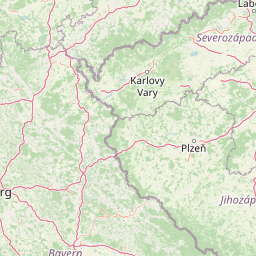
The landscape of Ryšovy is shaped by a single low hill named Ryšová, whose summit reaches about 527 meters above sea level while lower parts of the protected area begin around 445 meters. The hill is not dramatic in scale, but it rises clearly above the surrounding agricultural lowland of the Strakonice basin and creates a defined forested elevation within an otherwise open countryside.
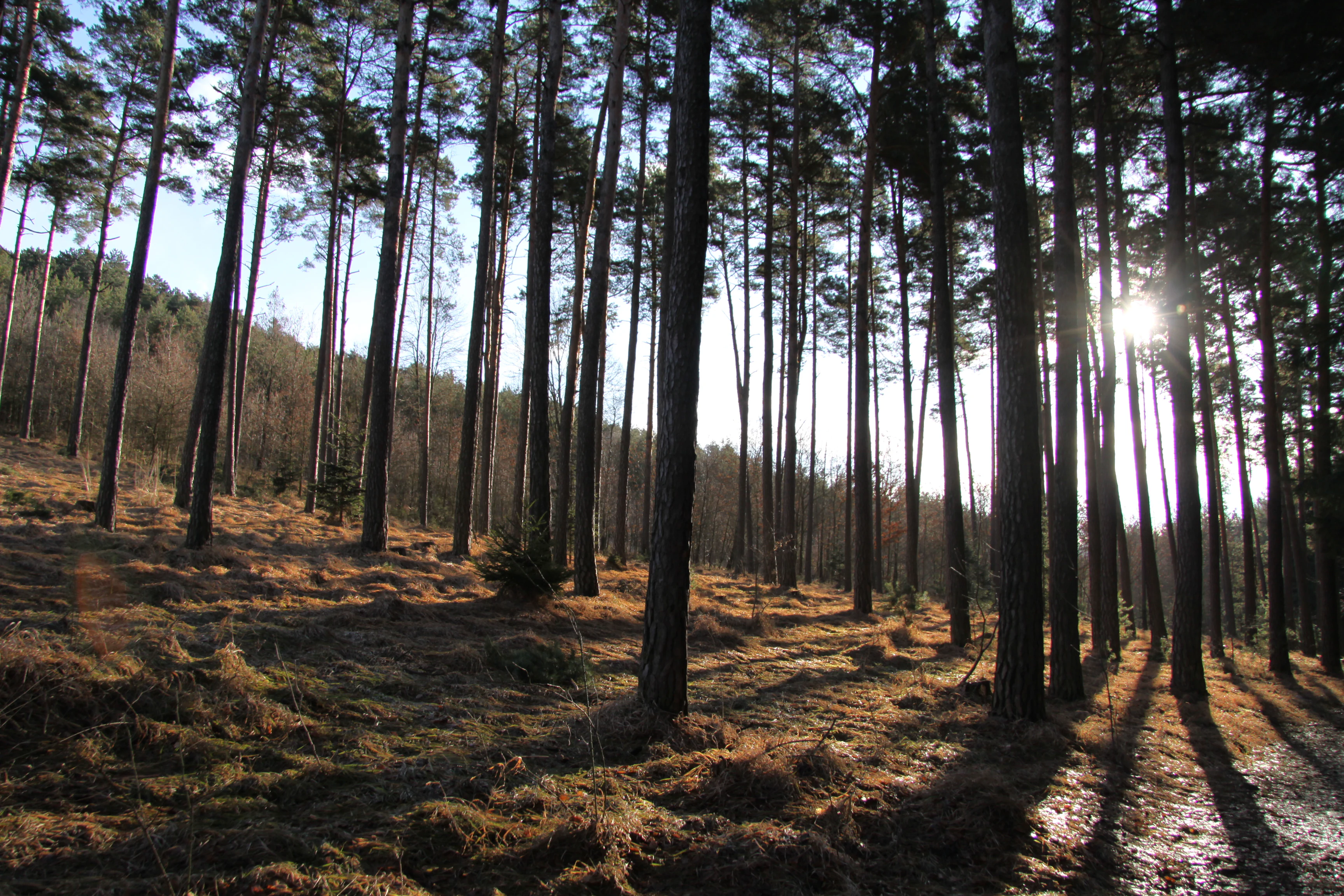
The terrain is characterized by a mix of woodland, scattered clearings, and grassy summit areas, with the slopes showing a typical pattern of varying exposure. North-facing slopes tend to retain more continuous forest cover, while warmer, sun-exposed slopes support lighter woodland and herb-rich ground vegetation that benefits from the calcareous bedrock.
The wider setting is typical of the Strakonice area, a transitional landscape between the South Bohemian plains and the foothills leading toward the Šumava, with a long human history of forestry and agriculture that has helped shape the mosaic of woodland patches and open ground visible from Ryšová today.
Ryšovy ecosystems, habitats, and plant life
Ecologically, Ryšovy is essentially a botanically exceptional forest reserve built on calcareous bedrock. The defining feature is the high diversity of the herb layer, which has developed in response to the limestone-influenced soils of the Strakonice area and the mosaic of light conditions created by the forest structure. The site demonstrates how relatively small woodland patches on suitable substrates can accumulate significant botanical richness.
Habitats within the reserve include closed-canopy deciduous and mixed forest on the cooler slopes, more open thermophilous woodland and rocky-edge vegetation on the warmer exposures, and small grassy openings near the summit. This combination supports a layered flora that includes spring ephemerals, summer-flowering grassland species, and shade-tolerant woodland plants.
The botanical value is heightened by the presence of several orchid species, each of which tends to indicate stable habitat conditions and successful conservation management. Beyond orchids, the herb layer includes numerous species associated with calcareous woodland, making the site a useful natural reference point for this habitat type in the region.
Ryšovy wildlife and species highlights
Faunal interest at Ryšovy is secondary to the site's botanical importance, and the protected area is best understood as a plant-focused reserve rather than a wildlife-focused one. The complex herb layer and the small biodiversity-friendly woodland clearings nevertheless provide habitat for typical forest-dwelling invertebrates and small vertebrates associated with these habitats.
Among specifically documented fauna, the slow worm (Anguis fragilis), a legless lizard sometimes mistaken for a snake, has been recorded at the site and is among the specially protected animal species noted in connection with Ryšovy. The presence of such species reinforces the value of maintaining the woodland structure and the warmer microhabitats along forest edges and clearings.
The wider forested area supports typical woodland birdlife and small mammal communities expected from similar sites in the Strakonice region, although specific faunal inventories are not the focus of the protection designation.
Ryšovy conservation status and protection priorities
Ryšovy is classified as a natural monument and assigned to IUCN Category IV, meaning its designation is aimed at managing a particular habitat or species of conservation interest rather than protecting a large ecosystem in its entirety. In practice, the conservation goal here is to safeguard the calcareous-influenced woodland flora and the conditions that maintain its diversity.
The site's conservation value rests on several factors: the persistence of a rich native herb layer, the presence of multiple protected and regionally rare plant species, the relative stability of the woodland over time, and the underlying limestone substrate that distinguishes it from surrounding more acidic habitats. These qualities together justify the formal protection status despite the small area involved.
Management is overseen by the Czech Agency for Nature Conservation and Landscape Protection, which is responsible for maintaining favorable conditions for the protected features. Conservation relevance is also indicated by the reserve's documentation in regional inventories of protected areas, including its inclusion in the Českobudějovicko volume of the protected areas of the Czech Republic series published in 2003.
One conservation concern noted in connection with the site is the unauthorized introduction of Dictamnus albus to a grassy clearing near the summit, an example of the kinds of small-scale disturbance or alteration that natural monuments of this size must guard against to preserve their natural character.
Top sights and standout views in Ryšovy
Ryšovy's defining strength lies in the surprising concentration of rare and protected plant species packed into a small forested hill. The presence of multiple orchid species within a few dozen hectares is a clear botanical highlight, while the broader herb layer extends that richness well beyond orchids, encompassing rare gentians, thermophilous wildflowers typical of calcareous substrates, and historically documented populations of species such as creeping lady's tresses in the pine stands.
Another standout feature is the woodland structure itself, which mixes denser canopy cover on cooler slopes with sun-exposed openings near the summit, allowing contrasting microhabitats to coexist within a compact area. This structural variation is what enables the site's unusually diverse flora to persist.
Finally, the location makes the reserve an accessible natural point near Strakonice, illustrating how the broader Strakonice limestone region continues to produce small but scientifically valuable flora strongholds even at the margins of South Bohemian towns.
Best time to visit Ryšovy
Late spring through early summer is generally the most rewarding period for visitors interested in the botanical character of Ryšovy. This is when the majority of the orchid species are in flower, alongside broader woodland wildflowers such as martagon lily and mezereon. Visiting in late May to mid-June is most likely to coincide with peak flowering across the herb layer.
Late summer and early autumn can still be informative visits, particularly for those interested in the woodland structure, the grassy summit opening, and seed-set of wildflowers, although the visual peak of flowering has usually passed by then. Winter visits offer a quieter experience focused on woodland and landscape rather than flora, but the site's main conservation interest is seasonal.
Practical access details and site-specific visitor regulations are not documented in the source material, so seasonal guidance here is general rather than operational.