Mori Atlas logo
Protected areaSenne mit Teutoburger Wald

Examining the ecological transition from sandy lowland heath to beech-dominated mountain forest

Senne mit Teutoburger Wald: A Comprehensive Atlas of North Rhine-Westphalia Protected Landscapes

(EU-Vogelschutzgebiet Senne mit Teutoburger Wald)

Senne mit Teutoburger Wald encompasses a major protected network within North Rhine-Westphalia, defined by the striking contrast between open sandy dunes and mature broadleaf woodland. Spanning 154 square kilometres, this area integrates vital heathland, bog formations, and near-natural streams into a contiguous protected habitat. The geography reflects a complex glacial legacy, creating a layered terrain that supports an important assemblage of breeding and migratory bird species, raptors, and woodland specialists.

bird sanctuaryheathlandwet heathbogbeech forestdune landscape

Senne mit Teutoburger Wald

Protected area

Park overview

Structured park overview, official facts, and landscape profile for Senne mit Teutoburger Wald

Senne mit Teutoburger Wald park facts, protected area profile, and essential visitor context

Review the core facts for Senne mit Teutoburger Wald, including designation, size, terrain, visitor scale, habitats, and operating context in one park-focused overview.

About Senne mit Teutoburger Wald

Senne mit Teutoburger Wald is a major European Bird Protection Area in eastern North Rhine-Westphalia, in northwestern Germany. Spanning roughly 154 square kilometres across three districts and forming two separate partial areas, the site is most strongly associated with the Senne landscape, a distinctive sandy lowland characterised by extensive heaths, dune systems, wet bogs, and formerly military-used terrain. Its eastern boundary meets the slopes of the Teutoburg Forest, with the wildlife-rich closed forest and heath complex lying primarily within the Truppenübungsplatz Senne.

The ecological identity of the area lies in the close contact between a large closed forest rich in beech and one of the most significant heathland areas in North Rhine-Westphalia. The heaths include both dry heaths on dune ridges and wet heaths linked to bog formations, complemented by nutrient-poor grassland, near-natural streams, and structurally rich margins and transitions between forest and open land.

Designated in March 2001 under the European Birds Directive and administered by the Regierungspräsidium Detmold, the site plays an important role in conserving species associated with semi-open cultural landscapes, mature broadleaf and mixed forests, bogs, heaths, and watercourses. The combination of habitats present here supports an exceptional regional diversity of breeding and migratory bird species, including many species listed under Annex I of the EU Birds Directive. As a Natura 2000 component, this area is part of the wider European network for the protection of wild birds and their habitats.

Quick facts and research context for Senne mit Teutoburger Wald

Senne mit Teutoburger Wald is a European Bird Protection Area (Vogelschutzgebiet) with the official code DE-4118-401 and the Natura 2000 designation DE4118401. It was designated in March 2001 by the Regierungspräsidium Detmold and is administered under that authority. The site covers approximately 154 square kilometres, spans parts of three districts (Gütersloh, Lippe, and Paderborn), and consists of two separate partial areas. The majority of the protected area lies within the Truppenübungsplatz Senne military training zone, with the Teutoburg Forest forming its eastern boundary.

Protection and recognition

Documented terrestrial protection scope, designation framework, and registry details

Senne mit Teutoburger Wald Protection Status and Conservation Records

Senne mit Teutoburger Wald holds a documented terrestrial protection status with established registry records within the global protected area network. Conservation researchers utilize these structured management and designation parameters to analyze regional environmental safeguarding efforts.

Protection details

Protection scope
Terrestrial
Transboundary protection
No
WDPA ID
555537479
Park context

Deeper park guide and search-rich context for Senne mit Teutoburger Wald

Senne mit Teutoburger Wald history, landscape, wildlife, and travel context

Explore Senne mit Teutoburger Wald through its history, landscape character, ecosystems, wildlife, conservation priorities, cultural context, and seasonal travel timing in a structured park guide built for atlas discovery and search intent.

Why Senne mit Teutoburger Wald stands out

The area is best known for the combination of a large, beech-dominated forest complex adjoining the most important heathland landscape in North Rhine-Westphalia. This juxtaposition of closed woodland, dry sandy heath, wet heath, bog formations, nutrient-poor grassland on dune systems, and near-natural streams creates exceptionally diverse bird habitats. Alongside its landscape character, the site is recognized as one of the state's most significant areas for bird protection, hosting an outstanding regional assemblage of breeding and migratory bird species, including several rare and ecologically demanding woodland, heathland, and raptor species.
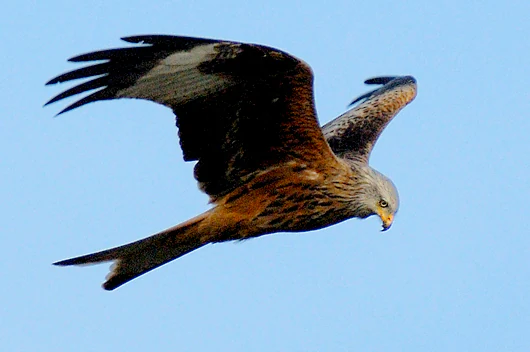
A red kite seen in side profile while flying against a clear blue sky, showing its characteristic deeply forked tail and brownish plumage.
A red kite in flight over the Senne landscape.

Senne mit Teutoburger Wald history and protected-area timeline

Senne mit Teutoburger Wald was formally designated as a European Bird Protection Area (EU-Vogelschutzgebiet) in March 2001 through a regulation issued by the Regierungspräsidium Detmold, the regional authority responsible for protected areas in this part of North Rhine-Westphalia. The site carries the official identification code DE-4118-401 and is registered in the European Natura 2000 network as DE4118401.

The designation was issued under the European Birds Directive, which governs the conservation of wild bird species naturally occurring in the territory of EU member states and regulates the protection, management, and control of these birds, their eggs, and their habitats. As part of this framework, the area's significance for bird protection has been formally recognized on the basis of its habitat composition, its landscape history, and the comprehensive set of Habitats Directive habitat types concentrated within it.

The long-standing use of much of the Senne as a military training ground has, over decades, contributed to the persistence of open heath and sand landscapes within the protected area, shaping the present mosaic of habitats that forms the basis of the site's importance today.

Senne mit Teutoburger Wald landscape and geographic character

The Senne, the core landscape of the protected area, is a sandy lowland in eastern North Rhine-Westphalia, shaped by glacial and post-glacial processes that left behind a distinctive system of sand dunes and flat sandy outwash plains. These dune ridges support dry heath and nutrient-poor grassland communities, while depressions and low-lying zones hold wet heath, bog formations, and peat-influenced soils.

To the east, the protected area connects with the Teutoburg Forest, a low mountain range running in a northwest-to-southeast orientation, whose slopes and valleys bring topographic relief, deeper soils, and a more closed forest character. The transition between the open sandy Senne and the wooded ridge creates a striking ecological gradient within a relatively compact geographical area.

Running through the landscape, near-natural streams and small watercourses, plus the mosaic of bog, wet heath, and dry heath, give the protected area a layered structure of open and semi-open habitats. The result is a landscape where patches of heathland, bracken, bog edges, dune ridges, and beech-rich woodland constantly alternate rather than forming uniform zones.

Senne mit Teutoburger Wald ecosystems, habitats, and plant life

Ecologically, the area is dominated by the dynamic contact zone between a large, beech-rich forest complex and one of the most significant contiguous heathland areas in North Rhine-Westphalia. The beech forests form extensive closed woodland tracts with mature stands, old trees, deadwood, and structural transitions at the forest edges. The light, sandy soils of the dunes support dry heaths, nutrient-poor grasslands, and scattered stands of pioneer vegetation, while moisture-retaining depressions carry wet heaths and bog communities typical of the Senne.

Streams running through the area are described as near-natural, with intact banks, natural dynamics, and associated gallery or wet woodland fringes. Mosaics of bog, wet heath, dry heath, dune grassland, and broadleaf forest create high local habitat diversity over short distances. The presence of both extensive open landscape and large mature forest means that the area simultaneously supports species dependent on open ground, semi-open cultural landscapes, and mature woodland.

Because the Senne includes relict heath systems and large undisturbed forest tracts, the site also retains habitats that have become rare elsewhere in western Germany, such as dune-bound dry heaths, raised and transitional bogs, and old beech-dominated forests with high proportions of standing and lying deadwood.

Senne mit Teutoburger Wald wildlife and species highlights

The combination of heathland, bog, mature forest, and near-natural watercourses makes the area one of the most bird-rich landscapes in North Rhine-Westphalia. The protected area's conservation objectives explicitly target a wide range of breeding and migratory bird species, reflecting both the diversity of habitats and the importance of the site at the European level.

Among the breeding bird species tied to woodland habitats are several rare owls and woodpeckers, including the Eurasian eagle-owl, the boreal owl, the Eurasian pygmy owl, the grey-headed woodpecker, the middle spotted woodpecker, the black woodpecker, and the black stork. Heathland and open-ground breeders include the tawny pipit, the woodlark, the nightjar, the whinchat, the European stonechat, the northern wheatear, the great grey shrike, the red-backed shrike, the meadow pipit, and the Eurasian curlew. Raptors and larger birds of conservation concern include the red kite, the hen harrier, the western marsh harrier, the common crane, the hobby, the honey buzzard, and the white-tailed eagle. Migratory species encountered in the area also include the European turtle dove, the common redstart, the golden oriole, the green sandpiper, and the little grebe.

Beyond the bird assemblages, the structural diversity of heath, bog, and forest also provides habitat for the typical Senne mammal, reptile, and invertebrate communities associated with sandy open ground and mature deciduous forest, though the site's conservation framework is primarily focused on bird protection targets.

Senne mit Teutoburger Wald conservation status and protection priorities

Senne mit Teutoburger Wald has been formally protected as an EU Bird Protection Area since March 2001, designated under the European Birds Directive by the Regierungspräsidium Detmold. As a Natura 2000 component, the site contributes to the European Union's goal of ensuring the long-term survival of wild bird species and their habitats across member states, and it is registered in both the World Database on Protected Areas and the Natura 2000 network.

The conservation value of the area lies in the exceptional overlap between habitats of high European concern: dry and wet heath on former dune systems, peat bogs and bog margins, mature beech forests with abundant deadwood, near-natural streams, and large-scale open landscapes associated with the military training zone. This combination is rare at the regional level and motivates the site's primary role as a sanctuary for breeding and migratory species associated with all of these habitat types.

The conservation framework emphasizes not only habitat preservation but also the maintenance of habitat quality, including retention of old trees and deadwood, protection from hazards such as unprotected power lines and wind turbines, preservation of near-natural hydrology in bogs and wet heaths, and the minimization of disturbance at breeding, roosting, and feeding sites during sensitive periods of the year.

Senne mit Teutoburger Wald cultural meaning and human context

The Senne landscape has been shaped for decades by the presence of the Truppenübungsplatz Senne, a large military training area that occupies most of the protected site. Long-term military use has contributed to the persistence of open heath, sand, and dune landscapes that might otherwise have been afforested or converted to agricultural land elsewhere in the region.

Local human history also touches the area through traditional land use forms that survive at its margins, including heath farming, grazing on nutrient-poor grassland, and the management of small-scale orchards, meadows, and field structures typical of the surrounding cultural landscape of eastern Westphalia. These traditional cultural landscape elements continue to provide habitat edges and transitions that benefit many of the bird species targeted by the conservation framework.

Top sights and standout views in Senne mit Teutoburger Wald

Senne mit Teutoburger Wald combines one of the most significant heathland landscapes in North Rhine-Westphalia with adjacent large beech-dominated forest and the slopes of the Teutoburg Forest. Spread across roughly 154 square kilometres, the area brings together dry heath on dune ridges, wet heath, bog formations, nutrient-poor grassland, near-natural streams, and structurally rich broadleaf woodland within a single protected network.

The site is a stronghold for a long list of rare breeding species, including woodpeckers such as the grey-headed, middle-spotted, and black woodpecker, owls such as the boreal owl, Eurasian pygmy owl, and eagle-owl, heathland specialists such as the nightjar, woodlark, whinchat, and grey shrike, and raptors such as the red kite and honey buzzard. The combination of habitat diversity, landscape history, and limited disturbance makes it one of the state's most important bird-protection areas.

Best time to visit Senne mit Teutoburger Wald

The most rewarding periods for exploring the area's birdlife are spring and early summer, when breeding activity peaks across both the heathland and the forest. Spring is notable for the presence of many migrant breeders, including ground-nesting heathland birds and arriving forest raptors, while early mornings and evenings offer the most active bird song and display.

Late spring and early summer are also the best times to experience the contrast between flowering heath, fresh green broadleaf foliage, and the still-open dune landscapes of the Senne. Autumn can bring visible migration movements, especially of larger species such as cranes and raptors, while winter tends to offer quieter conditions and a clearer view of the underlying heath-forest mosaic.
Monthly climate preview

Measured monthly temperature ranges and precipitation averages from NASA data

Senne mit Teutoburger Wald Climate Normals and Monthly Weather Records

Historical records for Senne mit Teutoburger Wald outline a representative annual rhythm spanning freezing winter minimums to warmer summer maximums alongside steady precipitation rates. Detailed monthly normals provide deeper insight into long term temperature variations and multi month climate patterns across the protected landscape.
Annual mean9 °C
1 °C18 °C
Jan
Feb
Mar
Apr
May13°
Jun16°
Jul18°
Aug18°
Sep14°
Oct
Nov
Dec
Warmest month
July

18.1 °C

Coolest month
January

0.5 °C

Wettest month
December

2.6 mm/day

Driest month
April

1.6 mm/day

Park location guide

Geography guide, regional context, and park location map for Senne mit Teutoburger Wald

Senne mit Teutoburger Wald park geography, regions, and map view in Germany

Understand where Senne mit Teutoburger Wald sits in Germany through a broader geographic reading of the surrounding landscape, nearby location context, and its mapped position within the national park landscape.

How Senne mit Teutoburger Wald fits into Germany

Germany is a federal republic in Western and Central Europe with a population of over 83 million across sixteen constituent states. It is Europe's largest economy by nominal GDP and a major global exporter and importer. The capital is Berlin, and the country borders Denmark, Poland, Czech Republic, Austria, Switzerland, France, Luxembourg, Belgium, and the Netherlands.

Wider geography shaping Senne mit Teutoburger Wald in Germany

Germany is located in Western and Central Europe, spanning 357,022 km². It borders Denmark to the north, Poland and the Czech Republic to the east, Austria and Switzerland to the south, and France, Luxembourg, Belgium, and the Netherlands to the west. The country has coastlines on the Baltic Sea and North Sea to the north, with the Alps located in the southern region.

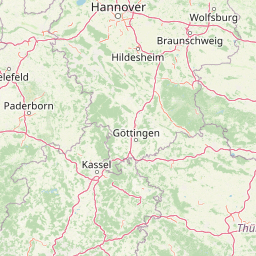
Map view of Senne mit Teutoburger Wald

Use this park location map to pinpoint Senne mit Teutoburger Wald in Germany, understand its exact geographic position, and read its mapped placement within the surrounding landscape more clearly.

Pigeon | © OpenStreetMap contributors

Location context for Senne mit Teutoburger Wald

Nordrhein-Westfalen

Visual reference for heathland habitats, beech forests, and protected terrain

Senne mit Teutoburger Wald Photos and Mapped Landscape Scenery

Visual records illustrate the contrasting habitats and sandy terrain across Senne mit Teutoburger Wald. Detailed landscape photography reveals the ecological transition between open heathland and closed forest.

A red kite seen in side profile while flying against a clear blue sky, showing its characteristic deeply forked tail and brownish plumage.

A dirt path leading into a forest with autumn foliage and grasses.

Park atlas

Discover related protected areas and regional nature reserves in surrounding districts

Parks Near Senne mit Teutoburger Wald: Compare Protected Landscapes

Compare Senne mit Teutoburger Wald with other protected landscapes and regional nature reserves across the surrounding German terrain. This geographic continuation helps trace connected habitat types, sandy lowlands, and woodland corridors throughout North Rhine-Westphalia.
A horizontal watercolor painting depicting a soft-toned landscape with scattered evergreen trees and undulating, sandy terrain under a light sky.
Nature reserveNordrhein-Westfalen
About 5.5 km away#1 closest

West

Moosheide Nature Reserve: Mapping the Ancient Inland Dune Landscapes of Nordrhein-Westfalen

Protected heathland and spring-fed habitat geography.

Moosheide provides a focused look at the geomorphology of the western Senne region. This reserve protects some of the oldest inland dunes in northwestern Germany, alongside a rare juxtaposition of dry sandy grasslands and groundwater-dependent stream valleys that support high species diversity.

Area
4.427 km²
Established
1994
IUCN
IV
Relief
Lowland
A watercolor painting showing a stylized landscape with gentle, rolling hills in soft green, yellow, and purple tones, with simple evergreen trees in the midground.
Nature reserveNordrhein-Westfalen
About 9.1 km away#2 closest

Northeast

Hohe Warte Nature Reserve: Sandstone Landscapes of the Teutoburg Forest

Protected heath and woodland mosaic in Nordrhein-Westfalen

Hohe Warte stands as a significant protected nature reserve, encompassing a diverse mosaic of heather, birches, and dry sandstone terrain. This area at the edge of the Teutoburg Forest illustrates the ongoing transition between open pasture landscapes and regenerating woodland. The site provides a valuable look into small-scale habitat management and the geological features shaping the local Nordrhein-Westfalen environment.

Area
0.06 km²
Established
2006
IUCN
IV
A watercolor painting of a wetland landscape with soft green hills, trees, and a winding waterway.
Nature reserveNorth Rhine-Westphalia
About 9.7 km away#3 closest

Northwest

Kipshagener Teiche Nature Reserve: A Protected Wetland Sanctuary in North Rhine-Westphalia

Geographic analysis of historic bogs and managed wetland habitats

Kipshagener Teiche is a small but essential nature reserve in the Senne region, characterized by a distinct mosaic of ponds, transitional bog, and wet heath. Originally protected in 1937, the site serves as a vital record of wetland biodiversity and recovery in western Germany. Its varied topography, featuring dune-based pine plantations and swamp forest, offers a precise look at the intersection of conservation and landscape management in a human-influenced region.

Area
0.113 km²
Established
1970
IUCN
IV
A horizontal watercolor painting showing a small winding river flowing through a lush green forest with soft pink and yellow meadow areas in the foreground.
Nature reserveKreis Gütersloh
About 11 km away#4 closest

West

Holter Wald Nature Reserve: Mapping the Protected Woodland and Senne Landscape of Kreis Gütersloh

A major contiguous forest block on the eastern edge of the Westfälische Bucht

Situated in the district of Kreis Gütersloh, Holter Wald is a significant protected area defined by its sandy Senne soils and network of parallel brook valleys. The forest provides a critical lowland habitat for diverse flora and fauna, serving as a rare, large-scale woodland anchor within a largely agricultural region. Explore the terrain characteristics and ecological structure of this key North Rhine Westphalia site.

Area
6.13 km²
Established
2008
IUCN
IV
Relief
Lowland
Nature reserveNordrhein-Westfalen
About 11 km away#5 closest

South

Lippeniederung zwischen Bad Lippspringe und Mastbruch: A Protected Floodplain Landscape

Nature reserve geography and river valley conservation in Paderborn, Germany.

Lippeniederung zwischen Bad Lippspringe und Mastbruch encompasses a specialized floodplain corridor along the Lippe river. This site highlights the importance of managing small-scale riverine meadows and aquatic transition zones within the broader, heavily used agricultural geography of North Rhine-Westphalia.

Area
1.59 km²
Established
1966
IUCN
IV
Relief
Lowland
Nature reserveNorth Rhine-Westphalia
About 11 km away#6 closest

East

Hohlsteinhöhle Nature Reserve: Karst Geography and Subterranean Habitat Maps in North Rhine-Westphalia

Protected limestone fissure caves in the Eggegebirge range

Hohlsteinhöhle stands as a significant protected site within the northern Eggegebirge uplands. Known for its distinct Upper Cretaceous marl-limestone fissures and role as a crucial winter refuge for sensitive bat species, this nature reserve offers a detailed look at the karst-driven geological character of the region, emphasizing the conservation of restricted subterranean environments.

Relief
Mountain
Climate
Temperate
Access
Highly restricted
Scope
Terrestrial
Protected landscapeKreis Paderborn
About 13 km away#7 closest

Southwest

Landschaftsschutzgebiet Delbrücker Rücken Protected Landscape Map and Regional Context

A rural ridge mosaic in the Kreis Paderborn district

This protected landscape in the Kreis Paderborn district features a characteristic mix of deciduous forests, field hedgerows, and agricultural zones on a gentle Westphalian ridge. Its geographic layout provides a clear example of rural land protection integrated into the local environmental buffer system, showcasing a distinct mosaic of terrain that stretches across the lands north and east of Delbrück.

Area
16.1 km²
Established
1970
Relief
Lowland
Climate
Temperate
A watercolor painting showing a green landscape with a winding river and distant hills under a light pink sky.
Protected landscapeKreis Paderborn
About 14 km away#8 closest

South

Landschaftsschutzgebiet Fließgewässer und Auen: Regional Protected Landscape Overview

Riverine floodplain corridors and valley habitats in Paderborn

This protected landscape in Kreis Paderborn sustains essential habitat connectivity along river valleys including the Lippe and Beke. Its design features a fragmented network of sixteen sub-areas, showcasing how floodplain vegetation, wet meadows, and riparian corridors function within an urban-adjacent environment.

Area
9.583 km²
Established
1999
Relief
Lowland
Scope
Terrestrial

Common questions about visiting, size, designation, and location context for Senne mit Teutoburger Wald

Senne mit Teutoburger Wald FAQs for park facts, access, geography, and protected area context

Find quick answers about Senne mit Teutoburger Wald, including protected-area facts, park geography, trail and visitor context, and how the park fits into its surrounding country and regional landscape.
MoriAtlas Explorer

Continue Your Protected Areas Search Across the Global Atlas

Deepen your exploration by continuing the structured search for national parks and protected areas worldwide. Utilize the comprehensive filtering capabilities to compare different conservation landscapes and refine your understanding of global park geography. Discover more about the distribution and characteristics of protected natural areas.

Global natural geography