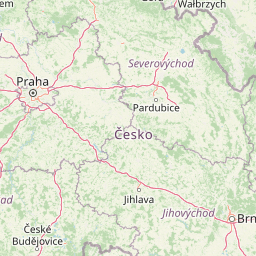

Why Skalsko Natural Monument stands out
Skalsko Natural Monument is best known for its surviving wet meadow ecosystems on the Říčany Plateau, particularly the populations of protected plant species such as Dactylorhiza majalis (the May orchid) and Iris sibirica. These species, along with a community of other rare wetland plants, give the site its distinctive conservation importance. The monument is equally recognized for the amphibian and insect fauna tied to its damp meadow habitats, including Hyla arborea (the European tree frog) and the rare butterflies Phengaris nausithous and Phengaris teleius. Together, these elements make Skalsko a representative example of a managed, species-rich Central Bohemian wetland mosaic.
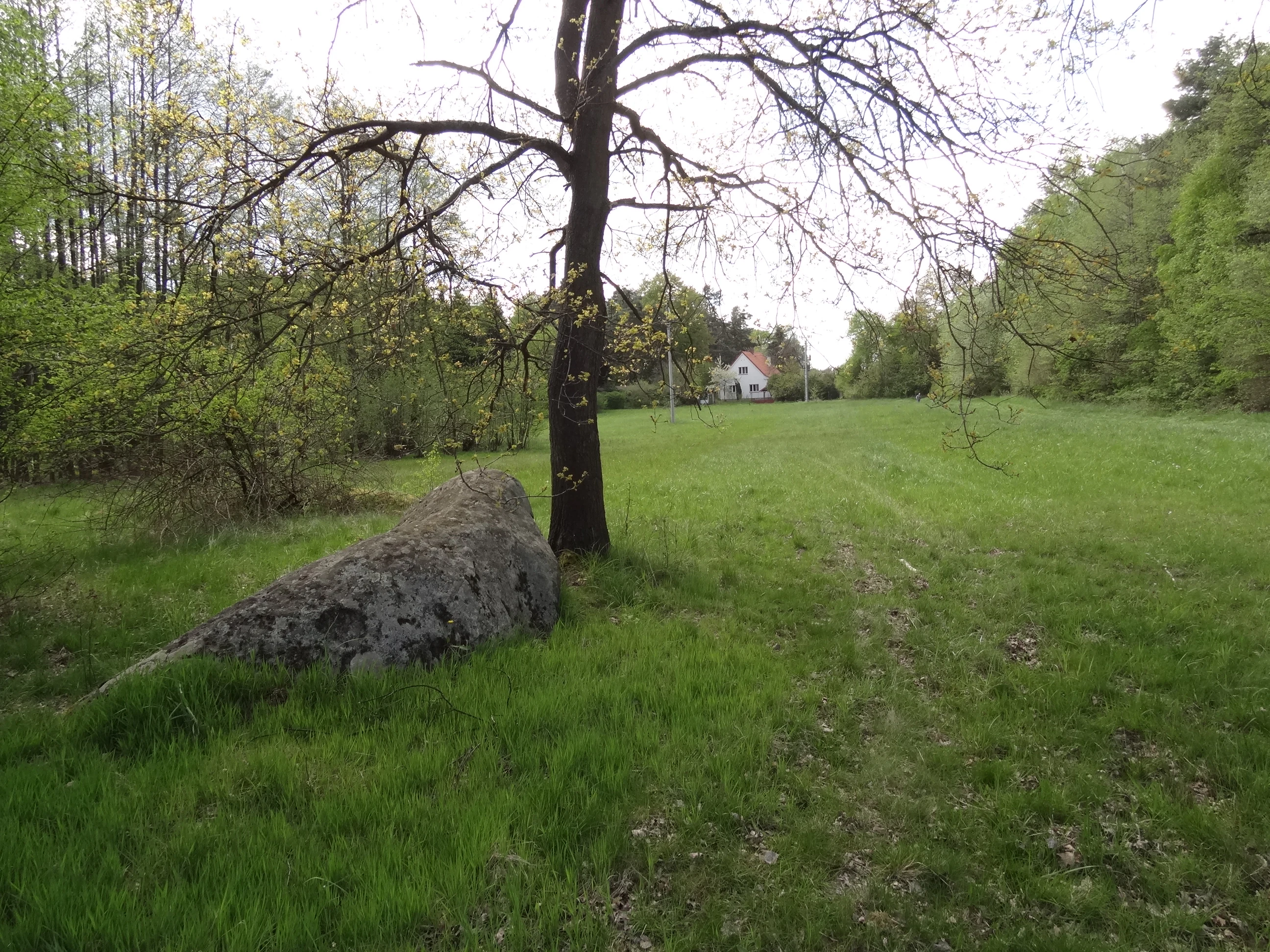
Skalsko Natural Monument history and protected-area timeline
The formal history of Skalsko Natural Monument is relatively recent. The area was officially designated as a přírodní památka, a category of small-scale natural monument used in the Czech system for particularly valuable localized natural features, on 22 February 2008. The declaration was issued by the Regional Authority of the Central Bohemian Region (Krajský úřad Středočeského kraje).
The protection was established specifically in response to the presence of wetland communities harboring specially protected plant and animal species, and to the desire to preserve a representative fragment of the historic landscape character of the Říčany Plateau. Since its designation, the site has been managed as a habitat and species management area under IUCN Category IV, with active interventions such as mowing and removal of invasive shrubs forming part of its ongoing conservation regime.
Skalsko Natural Monument landscape and geographic character
Skalsko lies within the gently undulating terrain of the Benešovská pahorkatina, a geomorphological unit that forms part of the broader Central Bohemian uplands. The local landscape is built on pre-Variscan intrusive rocks of the Bohemian Massif, and the wider countryside is dotted with granodiorite boulders released by long-term frost weathering. These scattered stones are a subtle but characteristic surface feature of the region.
The specific subunit containing the monument, the Jílovská vrchovina within the Dobříšská pahorkatina, is shaped as an erosion and denudation surface that has been cut by the deep valleys of tributaries flowing toward the Sázava River. Although Skalsko itself sits on relatively level ground at around 426 to 438 meters in elevation, its surroundings combine open plateau-like country with incised valleys, producing the diverse hydrological conditions that allow wet meadows to persist alongside drier slopes and woodland edges.
Skalsko Natural Monument ecosystems, habitats, and plant life
The ecological core of Skalsko Natural Monument is its system of wet meadows, a habitat type that has become increasingly rare in modern Central Bohemia. These meadows are maintained through active management, including regular mowing to suppress expansion of tall grasses such as Phragmites australis and the removal of woody invaders that would otherwise close the open canopy.
The soils of the site are classified as modal cambisols, supporting a vegetation pattern that mixes wet-tolerant grasses, sedges, and a range of herbaceous flowering plants. The meadows grade into adjacent drier slopes and small woodland patches, creating a transitional habitat mosaic typical of the historic Říčany Plateau landscape. This combination of open wetland vegetation and surrounding structural diversity provides niches for both plant and animal species adapted to moist, sun-exposed conditions.
Skalsko Natural Monument wildlife and species highlights
Although Skalsko is small, its combination of open wet meadow and adjacent habitat structures supports a notable variety of protected animal species. Among amphibians, the European tree frog (Hyla arborea) is recorded here, a species strongly tied to traditional, well-managed wet meadow environments with suitable breeding ponds.
The meadows also harbor populations of rare butterflies, including the dusky large blue (Phengaris nausithous) and the scarce large blue (Phengaris teleius), both of which depend on specific host plant communities in damp grasslands. Other protected or rare vertebrates and invertebrates have been recorded in the broader habitat mosaic, contributing to the site's significance for invertebrate conservation in the Central Bohemian Region.
Skalsko Natural Monument conservation status and protection priorities
Skalsko Natural Monument was established with a clearly defined conservation objective: the protection of wetland communities that host specially protected plant and animal species, and the preservation of a representative fragment of the traditional landscape of the Říčany Plateau. The designation places the site in IUCN Category IV, recognizing it as a habitat and species management area where targeted intervention is required to maintain ecological values.
Key targets for conservation include the persistence of species such as Dactylorhiza majalis, Iris sibirica, and Carex hartmanii, alongside rarer plants like Trollius altissimus, Thalictrum lucidum, Carex flava, and Valeriana dioica. Management practices focus on regular mowing to control expansionist species like Phragmites australis and on cutting back invasive woody growth. These efforts are essential in a region where surviving wet meadow habitat has become increasingly fragmented by agricultural intensification and land use change.
Top sights and standout views in Skalsko Natural Monument
The defining strength of Skalsko Natural Monument lies in its compact but highly representative concentration of protected Central Bohemian wetland biodiversity. The site combines rare meadow flora, including orchids and irises, with a documented amphibian and butterfly fauna that depends on carefully maintained open wet conditions. Granodiorite boulder fields, erosion-shaped plateau terrain, and managed meadow mosaics give the site both ecological and landscape character.
Its accessibility, with a blue-marked tourist trail running along the northern boundary between Těptín and Jílové u Prahy, also makes Skalsko a working example of how small protected areas can fit into the everyday rural landscape around Prague while still delivering meaningful conservation outcomes.
Best time to visit Skalsko Natural Monument
Skalsko's most charismatic features are its flowering meadows and active amphibian and butterfly communities, which are most expressive from late spring into early summer. By early May, the meadows typically show their first flush of protected flowering species, including Dactylorhiza majalis and Iris sibirica, and wet meadow conditions continue to support amphibians and butterflies into the warmer months.
Late spring and early summer visits are therefore particularly rewarding for anyone interested in the botanical and ecological character of the site, while the broader Central Bohemian climate also makes late spring through early autumn broadly suitable for walking the surrounding trails under open, mild conditions.