Why Trójmiejski Park Krajobrazowy stands out
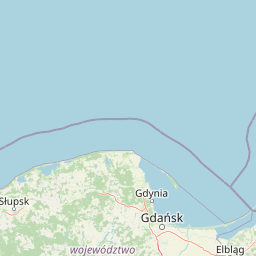
Trójmiejski Park Krajobrazowy is known for its exceptional combination of glacial geomorphology and intact lowland forest, set directly behind the Tri-City metropolis. The park's terrain was shaped by the Scandinavian ice sheet between roughly 13,000 and 15,000 years ago, leaving behind deeply incised valleys, large erratic boulders, kettle lakes, peat bogs, and the steep edge of the Kashubian moraine upland that drops dramatically toward the coast. The forested plateau, dominated by Scots pine, beech, and oak, harbors more than 850 vascular plant species, including rare relic and mountain taxa such as spiny quillwort, wood sweet-grass, ribbed spleenwort, and mountain speedwell. Ten strict nature reserves protect particularly sensitive fragments such as the spring-fed valley of stream Ewa, the old-growth yew grove at Cisowa, and the deeply eroded Samborowo and Strzyża valleys. The park is also famous for the Gruby Dąb, a more than 350-year-old pedunculate oak considered the oldest tree in the area.
Trójmiejski Park Krajobrazowy history and protected-area timeline
Trójmiejski Park Krajobrazowy was established on 3 May 1979 by resolution of the Provincial National Council in Gdańsk, with an initial area of 20,104 hectares. The decision was part of the late-1970s expansion of Poland's regional landscape park network and created a protected buffer for the rapidly growing Tri-City conurbation.
The park's boundaries and status were revised twice in the years that followed. In 1994 (effective from 1995) the park's area was increased to 20,312 hectares through the addition of forests south of Słowackiego Street in Gdańsk and the inclusion of communal woodlands, and a protective buffer zone was formally designated to mark fifteen years of operation. Then in 1998 the rural enclave of the village of Łężyce was excised from the park, reducing its core area to the current 19,930 hectares.
Over the decades, the park's internal protection system has grown significantly. The first four nature reserves were established in 1983, followed by additional reserves in 1988, 1990, 1999, 2005, and 2007, bringing the total to ten. The park also accumulated roughly 170 natural monuments, twenty ecological use areas, three Natura 2000 sites, and a protected landscape complex along the Strzyża and Jasień streams, reflecting a gradual intensification of habitat-focused conservation within the broader landscape-protection framework.
Trójmiejski Park Krajobrazowy landscape and geographic character
The terrain of Trójmiejski Park Krajobrazowy is the product of a single decisive event in its geological history: the advance and retreat of the Scandinavian ice sheet between roughly 13,000 and 15,000 years ago. Glacial scouring and deposition sculpted the park into two clearly distinct landscape zones.
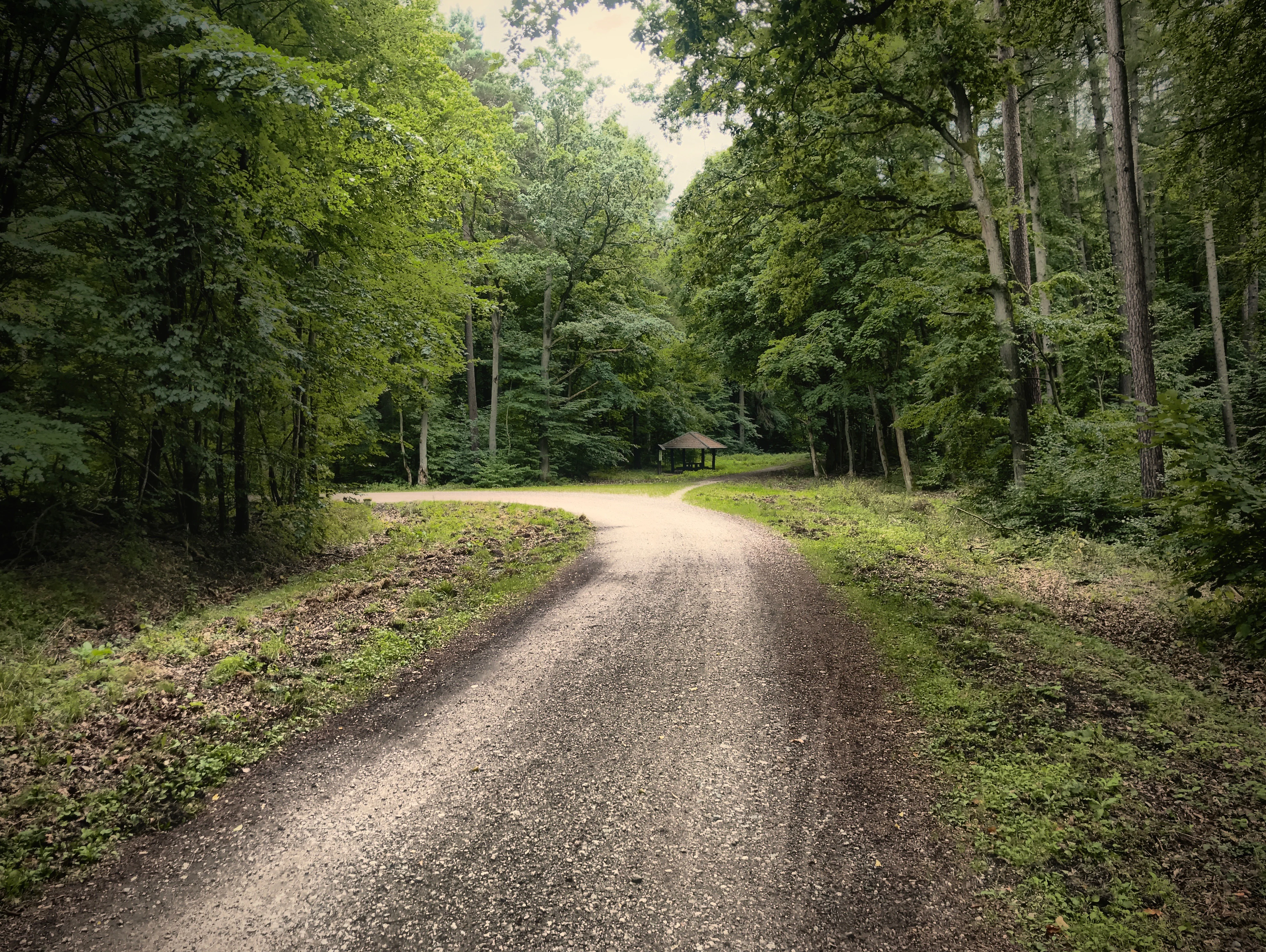
The western portion of the park is dominated by gently undulating ground moraine, locally broken by small ridges of terminal moraine. Within this mosaic one finds sandur plains, meltwater channels filled with lake water, and small kettle hollows, often hosting peat bogs and small lakes. This landscape is typical of the broader Kashubian Lake District and gives the park much of its characteristic open-forest character.
The eastern zone, by contrast, includes the steep edge of the Kashubian upland, where erosional landforms become pronounced. Deeply incised valleys cut by post-glacial streams expose slopes with denivelations of up to 80 meters and inclinations of as much as 40 percent, with the Lasy Oliwskie north of Gdańsk representing the most dramatic example. Throughout the park, scattered erratic boulders, glacial lakes, peatlands, and small streams reveal the underlying pattern of glacial and post-glacial processes that continue to define the visual and ecological character of the protected area. Notable elevations include Cieniawa, Głowica, Góra Dantyszka, Ślimak, Wiecha, and Wzgórze Pachołek, which offer viewpoints over the forested upland and, from the eastern edge, glimpses toward the Bay of Gdańsk.

Trójmiejski Park Krajobrazowy ecosystems, habitats, and plant life
The ecological identity of Trójmiejski Park Krajobrazowy is rooted in the close interplay between glacial soils, varied moisture regimes, and the long continuity of forest cover across most of its surface. The dominant habitat is a mosaic of dry coniferous forest on sandy outwash and moraine ridges, mixed deciduous forest on richer brown soils, and humid valley forests along streams and around lakes. Scots pine forms the prevailing canopy, accompanied by common beech, sessile and pedunculate oak, silver and downy birch, black alder, aspen, and goat willow.
The park's flora is unusually rich for a lowland protected area, with roughly 850 vascular plant species currently recorded. Among these, 49 species are under strict protection and 17 are under partial protection, while a significant share consists of rare, relict, or upland taxa that are normally found much farther south or in montane environments. Notable examples include spiny quillwort, wood sweet-grass, ribbed spleenwort, and mountain speedwell, along with bryophyte and lichen communities that contribute to the biological interest of old-growth forest patches and rock outcrops.
Alongside its vascular flora, the park harbors significant populations of mosses, roughly 200 species of macrofungi, and about 50 species of saxicolous lichens. The combination of acidic pine forest, base-rich beech and oak stands, spring mires, and peatlands means that markedly different plant communities are able to coexist within a relatively compact geographic frame, supporting both specialist woodland species and the more generalist flora and fauna of the Polish lowlands.
Trójmiejski Park Krajobrazowy wildlife and species highlights
The wildlife of Trójmiejski Park Krajobrazowy reflects its position as a forested lowland refuge embedded in an urbanized coastal region. Among the larger mammals, the park holds stable populations of wild boar, roe deer, and red deer, while moose appear as occasional visitors and give the area a touch of northern wilderness character. Smaller mammals include European hare, European rabbit, red squirrel, red fox, and European badger, with bat species such as the common noctule and the greater mouse-eared bat recorded in older forest stands and built structures.
Birds of prey and other forest birds form one of the most distinctive elements of the park's fauna. White-tailed eagles soar over the lakes and forested valleys, accompanied by goshawks and common buzzards in the canopy, while three owl species, the boreal owl, long-eared owl, and tawny owl, occupy old forest patches. The deciduous and mixed woodlands additionally support both black and green woodpeckers, indicators of mature, structurally diverse forest. Surveys have also documented eight amphibian species and five reptile species, a sign of the habitat diversity provided by lakes, peatlands, streams, and sun-exposed slopes within the park.
The combination of strictly protected reserves, mature forest, and lake-edge habitats means that even though the park is surrounded by urban development, it retains a functioning lowland fauna that includes regionally important raptor species and forest-dependent mammals. The presence of Natura 2000 sites underscores the area's role in maintaining viable populations and migratory routes for several of these species.
Trójmiejski Park Krajobrazowy conservation status and protection priorities
Trójmiejski Park Krajobrazowy is a key conservation node for the Pomeranian region, bridging urbanized northern Poland and the more extensive protected landscapes of the Kashubian Lake District. Its landscape-park designation protects a broad mosaic of glacial landforms, forests, and wetlands from intensive development while still allowing traditional forest management under the Gdańsk Forest District across most of the wooded area.
The park's stricter conservation backbone is provided by ten nature reserves, ranging from the spring mires of the Ewa valley and the peat-rich Łęg nad Swelinią to old-growth beech- and yew-dominated forests at Cisowa and the steep, geomorphologically significant ravine of Wąwóz Huzarów. Additional protection is afforded by roughly 170 natural monuments, mainly ancient trees, tree groups, and erratics; twenty ecological-use areas; and three Natura 2000 sites that together ensure the long-term survival of specific habitats and species assemblages.
From a broader perspective, the park safeguards populations of regionally rare and relict plant species, provides a refuge for large forest mammals and raptor birds in an otherwise densely populated coastal region, and protects a connected chain of spring mires and stream valleys whose water quality and hydrology underpin the ecological character of the Tri-City area. Its conservation value lies as much in this connective function, linking coastal and inland habitats, as in the individual species or sites it shelters.
Trójmiejski Park Krajobrazowy cultural meaning and human context
Trójmiejski Park Krajobrazowy is closely intertwined with the cultural and historical identity of Pomerania. Beneath its forest canopy lies the historic Kalwaria Wejherowska, one of the oldest Passion of Christ sanctuaries in Poland and the second after Kalwaria Zebrzydowska. This religious landscape, with its chapels, paths, and devotional stations, links the natural environment with centuries of regional pilgrimage tradition.
Beyond the Calvary, the park overlays a mosaic of Kashubian villages such as Gniewowo, Zbychowo, Nowy Dwór Wejherowski, Reszki, and Bieszkowice. These agricultural enclaves preserve the rural, Kashubian-influenced character of the area, providing continuity between the forested landscape and the long-standing patterns of small-scale farming and settlement in the hinterland of Gdańsk and Gdynia. The mix of woodland, fields, historic religious sites, and traditional villages gives the park a distinctly regional cultural fabric.
Top sights and standout views in Trójmiejski Park Krajobrazowy
Standing out within Trójmiejski Park Krajobrazowy are its deeply incised glacial valleys, especially the steep, forested ravines of Lasy Oliwskie, which combine dramatic relief with old-growth beech and oak. The Gruby Dąb, a more than 350-year-old pedunculate oak in the Samborowo valley protected as a natural monument, anchors the park's sense of deep natural history.
Equally notable are the ten nature reserves, from the spring mires of Źródliska w Dolinie Ewy and the yew-rich forests of Cisowa to the erosional landscape of Wąwóz Huzarów and the peatland of Łęg nad Swelinią. Together with the historic Kalwaria Wejherowska, the network of long-distance hiking and cycling trails, and rare relic plant species, these features make the park a compact but richly layered destination for landscape, ecology, and regional heritage.
Best time to visit Trójmiejski Park Krajobrazowy
Trójmiejski Park Krajobrazowy is accessible as an outdoor destination throughout much of the year, but spring and early autumn tend to offer the most rewarding conditions for landscape and nature visitors. In spring, the deciduous forests of Lasy Oliwskie and the lower valleys come alive with fresh green beech and oak foliage, wildflowers, and active birdlife, while the lakes and mires around the western lakes begin to thaw.
Early autumn brings a different character: changing leaf colors across the mixed forests, cooler temperatures suitable for longer hikes on routes such as the Trójmiejski or Kartuski trails, and seasonal visibility of mushrooms in the coniferous stands, of interest to those exploring roughly 200 recorded species of macrofungi. Winter brings snow cover that highlights the relief of the morainic upland and the steep eastern edge of the park, while summer remains the most popular period for casual hikers and cyclists, though busier on the well-known routes close to the Tri-City urban core.