
Why Vápenické jezero stands out
Vápenické jezero is best known as one of the key Czech sites for the fire-bellied toad, a strongly endangered species whose presence triggered the area's formal protection. The site is also notable for its combination of spring-fed pond habitat and large bulrush stands, which together support a distinctive wetland community. On a broader level, the reserve stands out as a representative example of the smaller, ecologically rich lowland pond systems of central Bohemia. Its overlap with a European Site of Community Importance highlights its role within the EU Natura 2000 network, particularly for the conservation of amphibians and associated wetland habitats.
Vápenické jezero history and protected-area timeline
Vápenické jezero was formally declared a Czech natural monument (přírodní památka) on 30 August 2013 by the Regional Authority of the Central Bohemian Region, which remains the administrative body responsible for the site. The designation was prompted by the area's ecological value, particularly its importance for endangered wetland species.
Although the formal protection of the site is recent, the pond itself is part of a much older cultural landscape. The wider cluster of ponds around the village of Vápenice, often referred to as the Vápenice Lakes, is traditionally believed to have been established in the 16th century by the celebrated Bohemian fishpond builder Jakub Krčín of Jelčany and Sedlčany, who shaped many of the most important artificial water bodies of southern and central Bohemia.
Over time, what began as a man-made hydrological feature evolved into a biologically rich wetland. The gradual spread of bulrush beds and the accumulation of protected flora and fauna eventually gave the site the ecological profile that justified its inclusion in the Natura 2000 network as a European Site of Community Importance, and ultimately its designation as a national natural monument in 2013.
Vápenické jezero landscape and geographic character
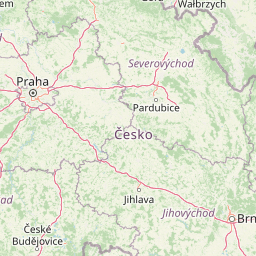
Vápenické jezero lies in the Sedlčany Basin, a broader structural depression within the Benešov Hills geomorphological region of central Bohemia. The surrounding terrain is gently rolling, typical of this part of the Czech landscape south of Prague, with elevations in the reserve itself ranging between roughly 404 and 407 meters above sea level.
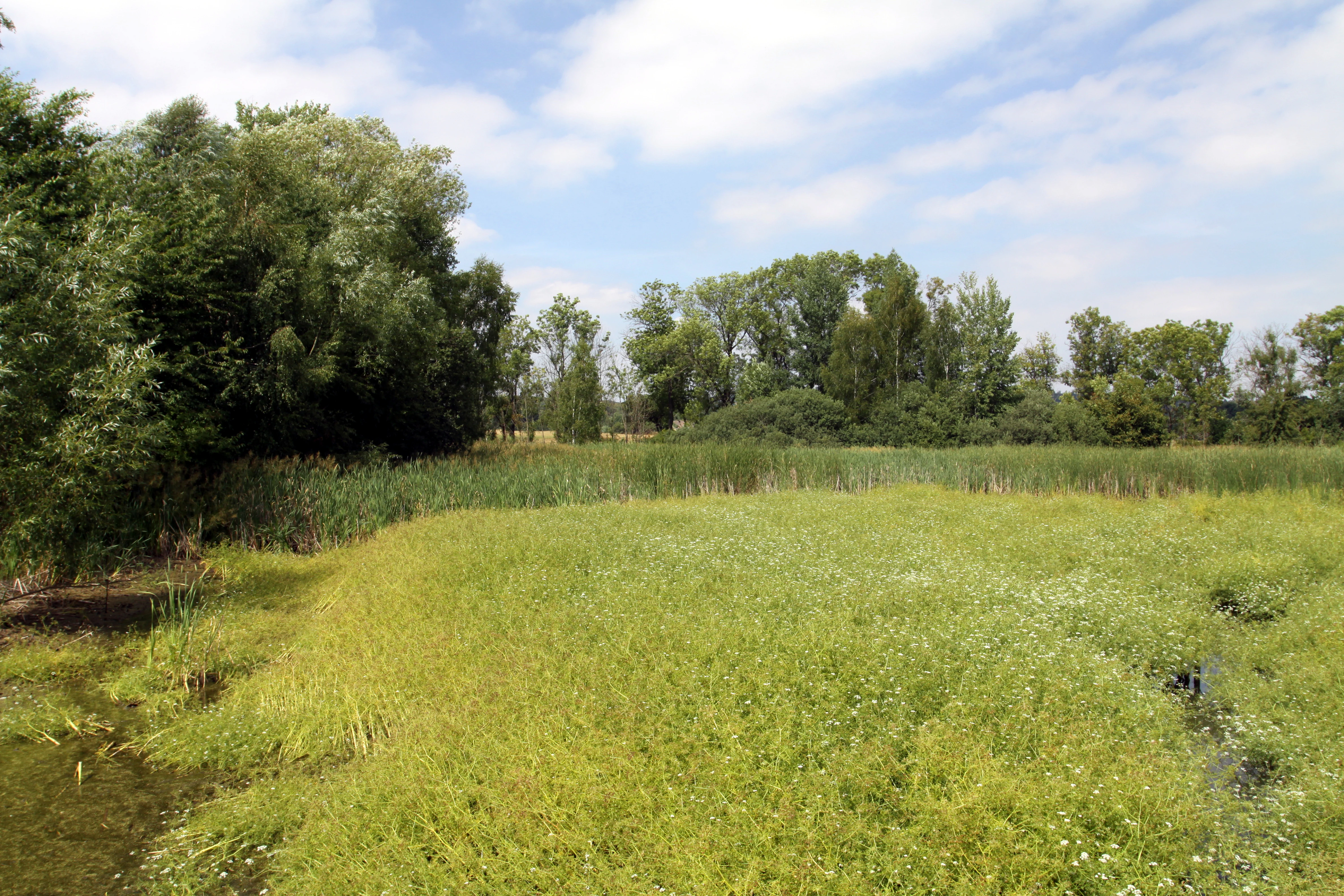
The defining landscape feature of the site is the central pond, which occupies the lowest part of the local topography. The pond has a sandy bottom and measures about 2.5 hectares, with water input dominated by groundwater springs and supplemented by a small local surface stream. Outflow from the pond feeds the neighbouring Olešný pond, linking Vápenické jezero into an active network of small water bodies.
Vegetation strongly shapes the visual character of the site. Approximately two thirds of the pond's surface is covered by dense stands of bulrush, creating a patchwork of open water, reedbeds, and wet margins. Away from the water, the broader landscape retains the character of the Central Bohemian countryside, with mixed land use around the historic village of Vápenice.
Vápenické jezero ecosystems, habitats, and plant life
The natural character of Vápenické jezero is defined by its spring-fed pond ecosystem and the dense emergent vegetation that has developed around it. The combination of stable groundwater input, sandy substrate, and extensive bulrush stands creates habitat conditions that support both submerged aquatic plants and the animal communities dependent on shallow, vegetated freshwater.
The site's flora is remarkable for including the critically endangered common bladderwort (Utricularia vulgaris), which grows here relatively abundantly along with tussock sedge (Carex cespitosa) and bogbean (Menyanthes trifoliata). These species are typical indicators of nutrient-poor, spring-influenced wetland conditions, and their presence reflects the relatively undisturbed hydrological character of the site.
Ecologically, the reserve functions as a stepping stone in the wider Central Bohemian freshwater network. The shore zones, open water patches, and reedbeds each host different groups of organisms, giving the small site a layered habitat structure. This mosaic of microhabitats is what makes it valuable not only for a single flagship species, but for a broader wetland community.
Vápenické jezero wildlife and species highlights
The wildlife significance of Vápenické jezero centres on its amphibian population, particularly the fire-bellied toad, a strongly endangered species in the Czech Republic and the principal reason for the site's conservation designation. Several other amphibian species also occur in and around the pond, contributing to a rich frog and toad community supported by the shallow, well-vegetated water.
Reptile presence is also documented. The sand lizard (Lacerta agilis), grass snake (Natrix natrix), and slow worm (Anguis fragilis) have all been recorded at the locality, taking advantage of the warm, open margins around the water body. Such reptile records reinforce the site's value as a mosaic habitat combining wet and dry microconditions.
The reedbeds and open water attract a characteristic assemblage of wetland birds. Among the species observed are the great reed warbler (Acrocephalus arundinaceus), Savi's warbler (Locustella luscinioides), common kingfisher (Alcedo atthis), marsh harrier (Circus aeruginosus), great crested grebe (Podiceps cristatus), and grey heron (Ardea cinerea). Signs of the Eurasian otter (Lutra lutra) have also been documented, indicating the functioning of the broader pond network as a corridor for larger wetland mammals.
Vápenické jezero conservation status and protection priorities
From a conservation perspective, Vápenické jezero is significant because it combines national-level nature protection with European-level recognition. The site is simultaneously a Czech natural monument, declared in 2013, and part of a European Site of Community Importance under the Natura 2000 network, both bearing the name Vápenické jezero. This dual designation reflects the site's transboundary ecological importance.
The core conservation goal is the protection and continued presence of the fire-bellied toad, a strongly endangered amphibian species. Protecting the surrounding pond habitats, springs, and bulrush stands is essential to maintaining viable breeding conditions, not only for the toad itself but for the wider wetland community.
Beyond the flagship amphibian, the reserve conserves a network of rare or threatened plants, reptiles, and birds whose long-term survival depends on the integrity of the spring-fed hydrology and the relatively undisturbed shoreline vegetation. Maintaining the natural water regime and limiting habitat disturbance remain the central management priorities for this small but ecologically dense site.
Vápenické jezero cultural meaning and human context
The cultural context of Vápenické jezero is closely tied to the long tradition of fishpond construction in southern and central Bohemia. The pond is part of a wider system of historic water bodies around the village of Vápenice, often referred to as the Vápenice Lakes, which are traditionally attributed to the work of Jakub Krčín of Jelčany and Sedlčany, a prominent 16th-century fishpond engineer whose influence shaped much of the region's water landscape.
This historical pond-building heritage gives the site a dual identity: it is simultaneously a cultural artefact of medieval and early modern landscape management, and a modern-natural wetland of recognized ecological importance. The surrounding villages, including Vápenice and the nearby Vysoký Chlumec, form the rural Central Bohemian setting within which the protected area is embedded.
Top sights and standout views in Vápenické jezero
Vápenické jezero offers a compact but unusually rich combination of natural features: a spring-fed pond with a sandy bottom, extensive bulrush growth covering roughly two thirds of its surface, and a protected status at both national and European levels. Its most distinctive attribute is the presence of the fire-bellied toad, supported by a broader community of amphibians, reptiles, and wetland birds.
The site is also notable for its layered identity. It is both a heritage of 16th-century Bohemian pond-building and a contemporary Natura 2000 site, illustrating how centuries-old human-made water features can evolve into ecologically valuable natural habitats. The result is a small reserve with an unusually strong concentration of conservation, ecological, and cultural significance.
Best time to visit Vápenické jezero
Vápenické jezero is fundamentally a wetland and amphibian-focused site, so the richest experience of its ecological character comes in the warmer half of the year. Late spring and early summer, when amphibians are active in and around the pond and bulrush stands are fully developed, offer the most vivid sense of its wetland biodiversity.
Bird activity is also highest from late spring through summer, when reedbed-nesting warblers, marsh harriers, kingfishers, and grebes are present. Outside of this period, the open water and surrounding countryside of the Benešov Hills still retain their gentle, rural character, though much of the site's wildlife interest is reduced in the colder months.