Why Vogelfreistätte Jastorfer See stands out
The reserve is best known for its waterbird life, supported by a combination of open lake surface, shallow-water margins, wooded shoreline, and adjacent alder swamp forest. Together these features create a productive wetland refuge in an otherwise cultivated landscape along the Ilmenau valley.
Vogelfreistätte Jastorfer See history and protected-area timeline
Vogelfreistätte Jastorfer See has been protected since the late 1970s. The nature reserve designation was established on 16 November 1977, although related documentation refers to a setup date of 19 October 1977, reflecting the formal process of administrative establishment in that year. The designation has been in force continuously since then, administered by the district of Uelzen as the responsible lower nature conservation authority.
The lake itself owes its existence to the construction of the Elbe-Seitenkanal in this part of Lower Saxony. Material extraction and water management associated with the canal created the Jastorfer See as a Baggersee, or gravel pit lake. Once it became clear that the lake had developed into a valuable habitat for waterbirds and amphibians, regional authorities placed the western part of the lake, together with adjoining woodland and swamp forest, under formal protection.
Since 1984 the entire lake and the protected area within it have been actively looked after by the Uelzen district group of the Naturschutzbund Deutschland, Germany's largest nature conservation organization. This long-running local stewardship has shaped the reserve's management, including the maintenance of the lake's shallow-water and deep-water zones, which were deliberately created to enhance habitat diversity.
Vogelfreistätte Jastorfer See landscape and geographic character
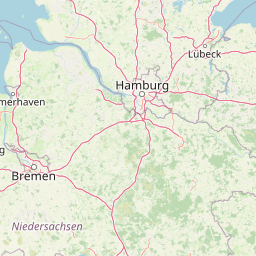
Vogelfreistätte Jastorfer See lies in the gently undulating lowland country of the Lüneburg Heath, on the floor of the Ilmenau river valley. The reserve sits at only about 32 to 33 meters above sea level, placing it firmly within the broader north German plain. Surrounding land use is dominated by agriculture, but the Ilmenautal landscape protection area provides a continuous buffer of protected countryside around the reserve.
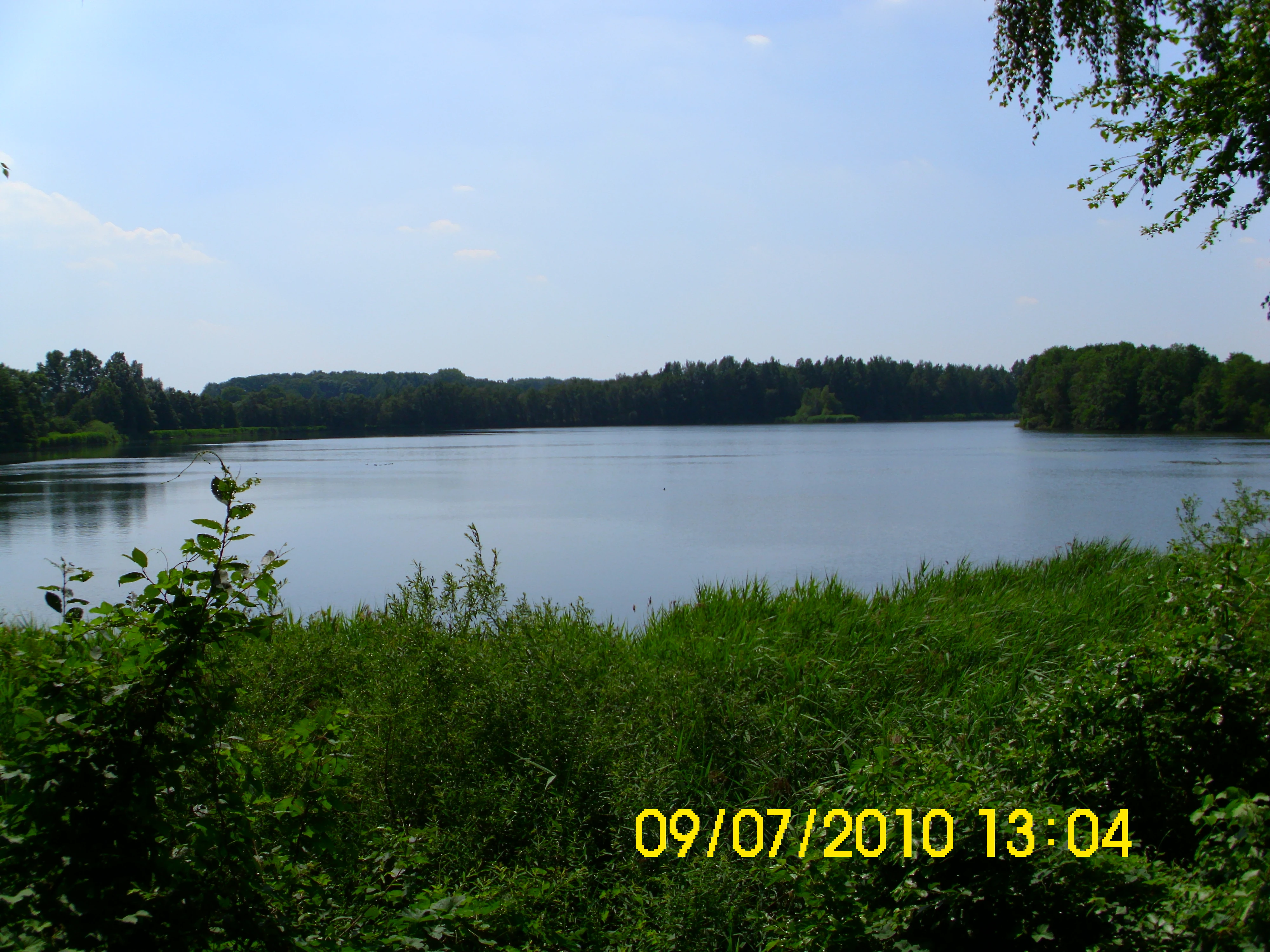
The most distinctive landscape feature of the reserve is the Jastorfer See itself. The lake was created as a Baggersee, essentially an artificial gravel pit lake, and includes both deeper open-water basins and deliberately shaped shallow-water margins. These differing depth zones create a varied shoreline that transitions from open water to reed beds and then to wooded banks.
Alongside the open water, the reserve protects a stretch of Erlenbruchwald, a wet alder swamp forest typical of poorly drained lowland floodplains in northern Germany. The combination of open water, woodland fringe, and alder swamp gives the reserve a layered landscape profile, despite its compact 16.5-hectare footprint. Outside the protected core, a viewing platform on the northern shore allows visitors to look across the wider lake and observe its wildlife.
Vogelfreistätte Jastorfer See ecosystems, habitats, and plant life
Ecologically, Vogelfreistätte Jastorfer See represents a small but characteristic example of a northern German lowland wetland complex. The lake habitats range from open water to shallow margins, while the surrounding vegetation includes wooded shorelines dominated by various native tree species and an Erlenbruchwald of alder that thrives in the wet, peaty soil typical of the Ilmenau floodplain.
The combination of standing water, marshy shore, and swamp forest supports a layered ecological community. The aquatic zone provides habitat for fish and amphibians, the reeds and shallow margins shelter invertebrates and nesting waterbirds, and the alder swamp filters water and stabilizes the shoreline while hosting its own suite of woodland species. The wider Ilmenautal landscape protection area extends this ecological context well beyond the reserve itself, helping link Jastorfer See into a broader network of wetland and meadow habitats in the valley.
Vogelfreistätte Jastorfer See wildlife and species highlights
Wildlife is the central focus of the Vogelfreistätte Jastorfer See reserve, and birds in particular dominate its conservation value. The lake supports numerous waterfowl species, with a range of ducks using the open water and fringing vegetation. Grebes are also strongly associated with the site, including both great crested grebes and little grebes, which favor the mix of open water and emergent vegetation.
Among the more notable breeding and visiting species, the reserve records marsh harrier, a raptor adapted to wetland habitats, and bittern, a secretive heron dependent on extensive reed beds. Kingfisher occurs along the wooded shoreline, where it can fish in the clear water. The reserve is also home to a cormorant colony, adding a colonial breeding element to the site's bird interest.
Beyond birds, amphibians form an important part of the reserve's fauna, using the shallow water zones and margins of the lake for breeding. The diversity of habitats, from open water through marsh to alder swamp, allows a wide range of water-associated and woodland species to coexist on a very small footprint, making the site a productive area for both resident wildlife and seasonally visiting species.
Vogelfreistätte Jastorfer See conservation status and protection priorities
Vogelfreistätte Jastorfer See is classified at the international level as an IUCN Category IV Habitat/Species Management Area, reflecting its role in actively managing habitats and species rather than simply preserving untouched wilderness. The reserve is recorded in the World Database on Protected Areas under the WDPA ID 82799 and is registered domestically under the German nature reserve code NSG LÜ 036.
Conservation of the site is the responsibility of NLWKN, the Lower Saxon agency for water management, coastal protection, and nature conservation, while the lower nature conservation authority of the Uelzen district handles day-to-day administration. Since 1984 practical management has been carried out in partnership with the Uelzen district branch of the Naturschutzbund Deutschland, one of Germany's principal conservation NGOs. This partnership has focused particularly on maintaining the lake's open-water and shallow-water zones, which were deliberately shaped to provide diverse habitat conditions.
The reserve is also fully embedded in a wider conservation landscape, being entirely enclosed by the Ilmenautal landscape protection area. This nested protection means that the small core area benefits from a much larger buffer of regulated land use in the surrounding valley, supporting both habitat connectivity and ecological resilience in the Ilmenau lowlands.
Vogelfreistätte Jastorfer See cultural meaning and human context
The Vogelfreistätte Jastorfer See reserve sits in a region shaped by both traditional Low German rural land use and the grand engineering projects of the twentieth century. The lake itself is an indirect product of canal construction, and its transformation over recent decades from a working gravel pit in the Elbe-Seitenkanal system into a protected wildlife refuge illustrates a broader shift in northern Germany from resource extraction toward conservation-oriented management of industrial landscapes.
The reserve also reflects the strong tradition of volunteer-based nature protection in Germany, having been actively managed by the Uelzen district group of NABU since 1984. This long-running local engagement links the reserve to the wider civic nature conservation movement that has shaped much of the country's protected-area network.
Top sights and standout views in Vogelfreistätte Jastorfer See
The reserve's strongest highlight is the combination of a former canal-related gravel pit lake with carefully designed shallow-water zones, a wooded shoreline, and an adjacent Erlenbruchwald, all packed into a single small protected area. Within this compact setting it supports an unusually rich waterbird community, including grebes, ducks, marsh harrier, bittern, kingfisher, and a cormorant colony, alongside an important amphibian presence.
Equally notable is the reserve's conservation framework, which links active habitat management by NLWKN with more than four decades of NABU stewardship, and embeds the site within the broader Ilmenautal landscape protection area for landscape-scale protection.
Best time to visit Vogelfreistätte Jastorfer See
Vogelfreistätte Jastorfer See is at its most rewarding for waterbird observation during the breeding and migration seasons, when grebes, ducks, marsh harrier, bittern, and cormorants are most active around the lake and its fringing vegetation. Spring and early summer typically offer the richest mix of breeding behavior and song from wetland and woodland birds, while migratory waterfowl can boost interest during the early and late seasons. Late autumn and winter can also produce gatherings of ducks and other waterbirds on the open water, depending on ice conditions. The viewing platform on the northern shore is the principal vantage point for experiencing the lake.