Mori Atlas logo
National parkWaterton Lakes National Park

Trace the mapped park boundaries and natural terrain of this Alberta national park.

Waterton Lakes National Park: Canada's Protected Landscape in Alberta's Geography

Waterton Lakes National Park stands as a significant protected landscape within the province of Alberta, Canada. This atlas-focused entry delves into its precise geographic scope, revealing the distinct natural terrain and mapped boundaries that define this national park. Understand its place within the broader regional geography of Western Canada, offering a foundation for structured exploration of protected areas and their landscape context.

Rocky MountainsTransboundary protected areaWorld Heritage SiteBiosphere reserveMountain-prairie transitionGlacial landscape

Waterton Lakes National Park

National park

Park overview

Structured park overview, official facts, and landscape profile for Waterton Lakes National Park

Waterton Lakes National Park park facts, protected area profile, and essential visitor context
Review the core facts for Waterton Lakes National Park, including designation, size, terrain, visitor scale, habitats, and operating context in one park-focused overview.

About Waterton Lakes National Park

Waterton Lakes National Park represents one of Canada’s most significant protected areas, combining remarkable geological heritage, ecological diversity, and historical importance. Located in the southwest corner of Alberta, the park occupies a transitional landscape where the imposing Rocky Mountains descend toward the flat prairie regions, creating a unique convergence of ecosystems. The park’s creation in 1895 marked a pivotal moment in Canadian conservation history, as it became the fourth national park in the country’s growing system of protected wilderness areas. The naming of the park after Waterton Lake, which itself honors the English naturalist Charles Waterton, reflects the Victorian-era fascination with preserving wild landscapes for their scenic and scientific value.

The park’s defining characteristic is its remarkable ecological variety, spanning four distinct ecoregions within a relatively compact area. The foothills parkland, which comprises approximately ten percent of the park and occupies a narrow band along the eastern edge of the Alberta foothills, is particularly significant as Waterton is the only Canadian national park containing this ecoregion. Montane, subalpine, and alpine zones complete the ecological mosaic, supporting an extraordinary range of plant and animal life. This diversity is further enhanced by the park’s status as part of the Waterton-Glacier International Peace Park, a transboundary protected area that bridges Canada and the United States and was recognized as a World Heritage Site in 1995 for its distinctive climate, physiographic setting, and mountain-prairie interface.

The human history of Waterton is equally rich, with the landscape shaped by Indigenous peoples long before European settlement. The proposal to protect the area originated in the late nineteenth century through the efforts of Dominion Land Surveyor William Pearce and local rancher Frederick William Godsal, whose advocacy led to the park’s establishment. The construction of the Prince of Wales Hotel in 1927 added a significant architectural landmark, built by the Great Northern Railway as an attempt to attract American tourists during the U.S. prohibition era. The hotel’s naming reflected hopes that the Prince of Wales would stay during his 1927 Canadian tour, though he ultimately stayed at his nearby ranch instead.

Quick facts and research context for Waterton Lakes National Park

Waterton Lakes National Park covers 505 square kilometers in southwest Alberta, straddling the boundary between the Rocky Mountains and the Canadian Prairies. The park ranges in elevation from 1,290 meters at the Waterton townsite to 2,910 meters at Mount Blakiston. It was the fourth Canadian national park, created in 1895, and is part of the transboundary Waterton-Glacier International Peace Park that spans Canada and the United States. The park encompasses four distinct ecoregions, making it ecologically diverse, and contains geological features dating back 1.5 billion years, including ancient stromatolite formations. The Prince of Wales Hotel, a grand railway hotel constructed in 1927, stands as a significant historical landmark within the park.

Park context

Deeper park guide and search-rich context for Waterton Lakes National Park

Waterton Lakes National Park history, landscape, wildlife, and travel context
Explore Waterton Lakes National Park through its history, landscape character, ecosystems, wildlife, conservation priorities, cultural context, and seasonal travel timing in a structured park guide built for atlas discovery and search intent.

Why Waterton Lakes National Park stands out

Waterton Lakes is renowned for its dramatic mountain-prairie transition zone, a rare landscape where two major ecological regions meet. The park is distinguished by the Lewis Overthrust, a geological phenomenon where ancient Proterozoic rocks sit atop younger Cretaceous formations, a rare occurrence in geology. Its position as the only Canadian national park containing the foothills parkland ecoregion sets it apart ecologically. The park is also famous for the Prince of Wales Hotel, the only grand railway hotel in Canada built by an American railway company. The transboundary peace park concept originated here in 1932, making Waterton-Glacier the first international peace park in the world.

Waterton Lakes National Park history and protected-area timeline

The establishment of Waterton Lakes National Park emerged from a gradual recognition of the area’s exceptional natural and scenic value during the late nineteenth century. Dominion Land Surveyor William Pearce first suggested creating a park in the vicinity of Waterton Lakes in his 1886 annual report, though the government took no immediate action. In 1893, Frederick William Godsal, a rancher residing north of the lakes, revisited Pearce’s proposal and directly suggested the area be transformed into a park reserve, noting the land’s minimal value for agriculture and limited grazing potential. Minister of the Interior Thomas Mayne Daly reviewed the proposal and directed the creation of a park reserve, leading to the May 30, 1895 establishment of a 140-square-kilometer unnamed forest park under the Dominion Lands Act.

Following its creation, the park faced significant pressure from oil and gas development. Oil seeps had been discovered in the area since the late 1880s, and by 1898 the government began approving land reservations for oil exploration. In 1902, the first oil exploration well in Alberta was drilled near Cameron Creek, though neither this nor subsequent attempts resulted in commercial production. The well site later became a National Historic Site of Canada in 1965. By 1905, more than half of the park’s land had been sold or reserved for oil exploration, prompting Frederick William Godsal to request expansion of the park reserve for scenic and recreational purposes.

The 1911 Dominion Forest Reserves and Parks Act enabled the designation of forest reserves as dominion parks, and in 1911, 35 square kilometers of the Waterton Lakes Forest Reserve became a dominion park, though this was far smaller than anticipated. Significant expansion came in 1914 under Minister William James Roche, who increased the park to 1,096 square kilometers. The 1920s brought additional development, including the construction of the Prince of Wales Hotel between 1926 and 1927, built by the Great Northern Railway of the United States as the only American-built grand railway hotel in Canada. The hotel was designated a National Historic Site of Canada in 1992.

A landmark moment came in 1932 with the formation of the Waterton-Glacier International Peace Park, the first of its kind in the world, dedicated to promoting goodwill between Canada and the United States and highlighting the international nature of wilderness protection. In 1979, Waterton became Canada’s second biosphere reserve and the first Canadian national park to join the UNESCO Man and the Biosphere Programme. The park achieved World Heritage status in 1995 as part of the transboundary Waterton-Glacier site. In September 2017, a significant forest fire forced evacuation of the townsite and park, burning approximately 200 square kilometers, destroying the visitor center and stables, and severely damaging trails and forest habitat.

Waterton Lakes National Park landscape and geographic character

Waterton Lakes National Park presents a dramatic landscape shaped by hundreds of millions of years of geological processes and more recent glacial activity. The park contains some of the oldest rocks in Canada, with marine sediments dating back 1.5 billion years composing the ancient bedrock. These Precambrian formations include limestone, dolomite, and igneous rocks, with fossilized sea beds and salt pseudomorphs providing evidence of the park’s ancient maritime origins. The most remarkable geological feature is the Lewis Overthrust, a tectonic phenomenon that pushed massive sheets of Proterozoic rock horizontally over younger Cretaceous rocks dating from approximately 70 million years ago, creating the rare situation where older rocks rest atop younger formations.

The park’s topography reflects the powerful legacy of glaciation during the Wisconsin ice age. Though no glaciers remain today aside from small patches of perpetual snow, the landscape displays extensive glacial landforms including U-shaped glacial troughs, hanging valleys, cirques, kames, and eskers. The Cameron and Blakiston rivers have created alluvial fans at their mouths since the last ice age, adding to the park’s varied terrain. Elevation ranges dramatically from 1,290 meters at the Waterton townsite to 2,910 meters at Mount Blakiston, creating diverse microclimates and habitat zones. The landscape transitions from prairie grasslands at lower elevations through montane forest to subalpine and alpine zones at higher elevations, with the convergence of these zones creating the park’s distinctive character.

Waterton Lakes National Park ecosystems, habitats, and plant life

The ecological diversity of Waterton Lakes National Park is extraordinary, with four distinct ecoregions represented within its boundaries: foothills parkland, montane, subalpine, and alpine. This variety, combined with the park’s position at the mountain-prairie interface, creates a mosaic of habitats supporting remarkable biodiversity. The foothills parkland ecoregion is particularly significant, as Waterton is the only Canadian national park containing this ecosystem, which comprises approximately ten percent of the park and occupies a narrow band along the eastern edge of the Alberta foothills extending from Calgary southward into parts of the United States.

The park supports over 1,000 species of vascular plants, including more than twenty species endemic to Waterton such as Lewis’ mock-orange and white-veined wintergreen. The park is also home to small ferns called moonworts, with the Waterton moonwort endemic to the area. Over fifty plant species found in the park are considered rare in Canada, including Bolander’s quillwort, Lyall’s scorpionweed, and Brewer’s monkeyflower. The biosphere reserve designation, established in 1979 alongside Glacier National Park in the United States, preserves the interconnected mountain, prairie, lake, and freshwater wetland ecosystems that characterize this region, providing a framework for research into sustainable human-environment interactions.

Waterton Lakes National Park wildlife and species highlights

Waterton Lakes National Park supports an impressive array of wildlife, with large mammals being particularly prominent. The park provides habitat for bighorn sheep, mountain goats, elk, moose, white-tailed deer, and mule deer, while predators including timber wolves, cougars, lynxes, and bobcats maintain ecological balance. Both grizzly bears and black bears inhabit the park, along with smaller mammals such as wolverines, foxes, coyotes, beavers, river otters, snowshoe hares, pikas, and hoary marmots. Bison, once widespread across the region, still roam parts of the park.

Birdlife is equally abundant, with bald eagles being among the most iconic species nesting in the park. Waterfowl including Canada geese frequent the park’s lakes and wetlands, while numerous songbird species such as orange-crowned warblers and MacGillivray’s warblers nest or migrate through the area. The combination of diverse habitats, from prairie grasslands to alpine meadows, supports this rich fauna, making Waterton an important region for wildlife viewing and ecological study.

Waterton Lakes National Park conservation status and protection priorities

Waterton Lakes National Park holds exceptional conservation significance at multiple levels, from national recognition to international designation. The park’s inclusion in the Waterton-Glacier International Peace Park, designated as a UNESCO World Heritage Site in 1995, recognizes its outstanding universal value through distinctive climate, physiographic setting, and the unique mountain-prairie interface. This transboundary protection model, pioneered in 1932 as the world’s first international peace park, demonstrates pioneering approaches to conserving ecological systems that transcend political boundaries.

The park’s designation as a biosphere reserve in 1979, Canada’s second and the first national park in the country to join the UNESCO Man and the Biosphere Programme, further underscores its importance as a model for sustainable conservation. Biosphere reserves aim to achieve better understanding of the relationship between humans and the natural environment, integrating conservation, sustainable development, and research. The park’s four ecoregions and the presence of rare and endemic species contribute to its conservation value, while the 2017 fire, which burned approximately 200 square kilometers and affected up to 70 percent of the forested area, has provided opportunities for studying ecological recovery and forest regeneration in a protected context.

Waterton Lakes National Park cultural meaning and human context

The landscape of Waterton Lakes has been home to Indigenous peoples for thousands of years, though the Wikipedia source provides limited detail on specific Indigenous connections. The establishment of the park in 1895 marked a significant shift in the relationship between the land and its human inhabitants, as traditional uses were progressively incorporated into the protected area framework. The naming of the park after Waterton Lake, itself named for Charles Waterton, reflects the European Victorian approach to naming wild places after naturalists and conservationists who championed the preservation of wilderness.

The construction of the Prince of Wales Hotel in 1927 represents a distinct chapter in the park’s cultural history, reflecting the era of grand railway hotels designed to attract tourists from the United States during prohibition. The hotel’s connection to the attempted visit of the Prince of Wales in 1927, and his ultimate choice to stay at his nearby ranch in Pekisko rather than the hotel, adds historical intrigue to the site. The park also contains the site of Alberta’s first oil exploration well, designated as a National Historic Site of Canada in 1965, representing another dimension of human interaction with the landscape.

Top sights and standout views in Waterton Lakes National Park

Waterton Lakes National Park stands out for its rare combination of geological, ecological, and historical significance. The Lewis Overthrust provides a one-of-a-kind geological feature where billion-year-old rocks rest atop formations tens of millions of years younger. The park’s position at the mountain-prairie interface, combined with four distinct ecoregions, creates extraordinary ecological diversity within a relatively compact area. As the only Canadian national park with foothills parkland, Waterton offers ecological communities found nowhere else in the national park system. The Prince of Wales Hotel remains a distinctive historical landmark, the only grand railway hotel in Canada built by an American railway company. The park’s pioneering role as the world’s first international peace park, established alongside Glacier National Park in 1932, continues to symbolize the importance of transboundary conservation cooperation.

Best time to visit Waterton Lakes National Park

Waterton Lakes National Park is open year-round, though the main tourist season centers on July and August when warm weather allows full access to hiking trails and outdoor activities. The summer months offer the most comprehensive visitor experience, with the park’s scenic trails, including the popular Crypt Lake trail, fully accessible. The shoulder seasons of spring and fall provide opportunities for fewer crowds and different landscape experiences, though trail conditions may vary. Winter transforms the park into a snowy wonderland, though access to higher elevation areas is limited and visitors should be prepared for cold temperatures and variable conditions. The park experiences a humid continental climate with heavy snowfall averaging over 480 centimeters annually, creating substantial winter snowpack that affects accessibility and wildlife behavior throughout the year.
Park location guide

Geography guide, regional context, and park location map for Waterton Lakes National Park

Waterton Lakes National Park park geography, regions, and map view in Canada
Understand where Waterton Lakes National Park sits in Canada through a broader geographic reading of the surrounding landscape, nearby location context, and its mapped position within the national park landscape.

How Waterton Lakes National Park fits into Canada

Canada is a federal parliamentary constitutional monarchy spanning North America from the Atlantic to the Pacific and Arctic Oceans. With a population of over 41 million, it is officially bilingual in English and French at the federal level. The country gained independence from the United Kingdom through a gradual process culminating in 1982.

Wider geography shaping Waterton Lakes National Park in Canada

Canada occupies the northern portion of North America, sharing its longest international border with the United States. The country extends from the Atlantic Ocean to the Pacific Ocean and northward into the Arctic Ocean, giving it the longest coastline of any nation.

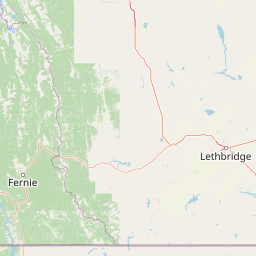
Map view of Waterton Lakes National Park

Use this park location map to pinpoint Waterton Lakes National Park in Canada, understand its exact geographic position, and read its mapped placement within the surrounding landscape more clearly.

Pigeon | © OpenStreetMap contributors

Location context for Waterton Lakes National Park

Alberta
Park atlas

Browse the regional spread of mountain-prairie transition zones, glacial features, and transboundary conservation landscapes.

Compare Protected Areas: Discover National Parks and Landscapes Near Waterton Lakes National Park
Explore a curated list of national parks and protected areas geographically connected to Waterton Lakes National Park, spanning diverse Rocky Mountain and prairie ecosystems. Compare unique landscapes, geological features like the Lewis Overthrust, and significant conservation efforts across this distinct North American region.
National parkMontana

Glacier National Park: A Montana National Park with Distinct Protected Landscape Geography

Explore its mapped boundaries and regional natural terrain.

Glacier National Park represents a significant national park entity within Montana, providing a unique lens for understanding protected landscapes and regional geography. As a key component of the US protected areas network, it offers valuable insights into mapped park boundaries and the surrounding natural terrain. This page serves as a gateway to exploring the specific geographic context and landscape identity of Glacier National Park.

Area
4,100.77 km²
Established
1910
IUCN
II
Visitors
2.9M annual
National parkBritish Columbia

Kootenay National Park: National Park Protected Landscape and Geographic Context

Explore Kootenay National Park's mapped terrain and regional geography.

Kootenay National Park is a protected national park located in British Columbia, Canada. This dedicated detail page provides an atlas-style exploration of its geographic identity, focusing on its mapped boundaries and the surrounding natural terrain. Understand how Kootenay National Park fits into the larger regional geography, offering rich context for protected landscape discovery and analysis.

Area
1,406 km²
Established
1920
IUCN
II
Visitors
574.1K annual
National parkCanada

Banff National Park: Exploring Canada's Iconic National Park Protected Landscape and Geography

Mapped park boundaries and regional geographic context for Banff National Park.

Gain a structured understanding of Banff National Park as a key protected area within Canada. This resource details its identity as a national park, providing insights into its geographic setting and mapped landscape. It serves as a vital point for atlas-based discovery, helping to contextualize Banff National Park's significance within Canada's protected lands and natural terrain.

Area
6,641 km²
Established
1885
IUCN
II
Visitors
4.1M annual
National parkColumbia-Shuswap Regional District

Glacier National Park: A National Park within Canada's Protected Landscape Atlas

Explore its mapped boundaries and regional geography.

Glacier National Park represents a significant protected area entity within the broader Canadian geography. This page offers an atlas-oriented perspective on its identity as a national park, focusing on its mapped geographic spread and role as a conservation landscape. Users can explore the park's place within the Columbia-Shuswap Regional District and understand its distinct contribution to the national protected area framework.

Area
1,349 km²
Established
1886
IUCN
II
Visitors
4M annual
National parkBritish Columbia

Mount Revelstoke National Park: Explore Protected Landscape Geography and Mapped Boundaries

British Columbia's National Park Atlas Entry

Delve into the protected landscape of Mount Revelstoke National Park, a critical national park located in British Columbia. This entry provides a detailed look at its mapped geographic extent and protected area identity, offering valuable context for regional atlas exploration. Understand the park's distinct contribution to the mapped natural landscapes of Canada.

Area
260 km²
Established
1914
IUCN
II
Visitors
775.2K annual
National parkSaskatchewan

Grasslands National Park: Saskatchewan Protected Landscape Atlas

Discover its mapped boundaries and regional geographic context.

Grasslands National Park represents a vital component of protected lands in Saskatchewan, Canada, offering rich opportunities for atlas-based geographic exploration. This detail page provides specific insights into the park's mapped boundaries, its natural terrain, and its role as a national park within the broader regional geography. Understand how this protected landscape fits into the larger atlas of Canadian conservation areas and discover its unique geographic identity.

Area
907 km²
Established
1981
IUCN
II
Visitors
19.7K annual
National parkAlberta

Jasper National Park National Park: Mapped Protected Landscape and Alberta Geography

Explore Alberta's regional park context and natural terrain.

Jasper National Park is a key protected national park in Alberta, Canada, offering extensive natural landscapes. This park page details its precise geographic location, outlines its protected boundaries, and provides context within the regional geography of Western Canada. Discover the mapped terrain and the park's significance as a protected area within a broader atlas perspective.

Area
10,878 km²
Established
1907
IUCN
II
Visitors
2.4M annual
National parkAlberta

Elk Island National Park: National Park Protected Landscape and Alberta Geography

Discover the mapped terrain and protected boundaries.

Elk Island National Park, a designated national park in Alberta, Canada, offers a distinct protected landscape for geographic exploration. This detail page focuses on its mapped boundaries, regional setting within Western Canada, and the specific natural terrain that constitutes its protected area. Users can gain a structured understanding of Elk Island National Park's role as a conserved natural entity, ideal for atlas-based discovery and geographic context.

Area
194 km²
Established
1913
IUCN
II
Visitors
401.9K annual

Common questions about visiting, size, designation, and location context for Waterton Lakes National Park

Waterton Lakes National Park FAQs for park facts, access, geography, and protected area context
Find quick answers about Waterton Lakes National Park, including protected-area facts, park geography, trail and visitor context, and how the park fits into its surrounding country and regional landscape.
MoriAtlas Explorer

Continue Your Protected Areas Search Across the Global Atlas

Deepen your exploration by continuing the structured search for national parks and protected areas worldwide. Utilize the comprehensive filtering capabilities to compare different conservation landscapes and refine your understanding of global park geography. Discover more about the distribution and characteristics of protected natural areas.

Global natural geography