
Why Whakanewha Regional Park stands out
Whakanewha is best known for its combination of mature and regenerating native forest and a significant freshwater wetland within a compact island setting. The park's broadleaf and podocarp stands, including taraire, pūriri, kahikatea, and tānekaha, are notably healthy in ecological terms, partly because of the absence of possums on Waiheke Island. The south-west wetland is a defining feature, supporting secretive native birdlife such as the New Zealand bittern, banded rail, and fernbird. Together with its bay-facing streams and ridgeline setting, this mix of wetland, forest, and coastal headwaters gives Whakanewha its distinctive place among Auckland's regional parks.
Whakanewha Regional Park history and protected-area timeline
Whakanewha has deep Tāmaki Māori roots, with archaeological evidence of long-term settlement in the form of large shell middens and a pā site within what is now the park. The name itself, which can be interpreted as "shading eyes from the setting sun," reflects the area's longstanding cultural and geographical meaning. Iwi and hapū with continuing association to the land include Ngāti Pāoa, Ngāi Tai ki Tāmaki, and Te Ākitai Waiohua.
During the 1850s, Māori communities including Ngāti Pāoa grew large quantities of fruit and vegetables on eastern Waiheke Island to supply Auckland, and Whakanewha was part of this productive landscape. Around 1855, Samuel Wood purchased part of the land without consultation with its Māori residents, leading to dispute and the burning of Wood's house in response. The Crown later confirmed his title in 1858, after which the property changed hands and passed to the O'Brien family, who ran the area as a sheep farm through the late nineteenth and twentieth centuries.
The park's modern history began in 1994, when the land was purchased with the intention of developing it as a regional park. After years of restoration and planning, Whakanewha Regional Park was formally opened to the public in February 2007. Since then, Auckland Council has managed the site as a protected landscape, allowing former pastures to regenerate into native shrubland and forest, while also addressing environmental pressures such as stream sedimentation that have affected freshwater habitat within the park.
Whakanewha Regional Park landscape and geographic character
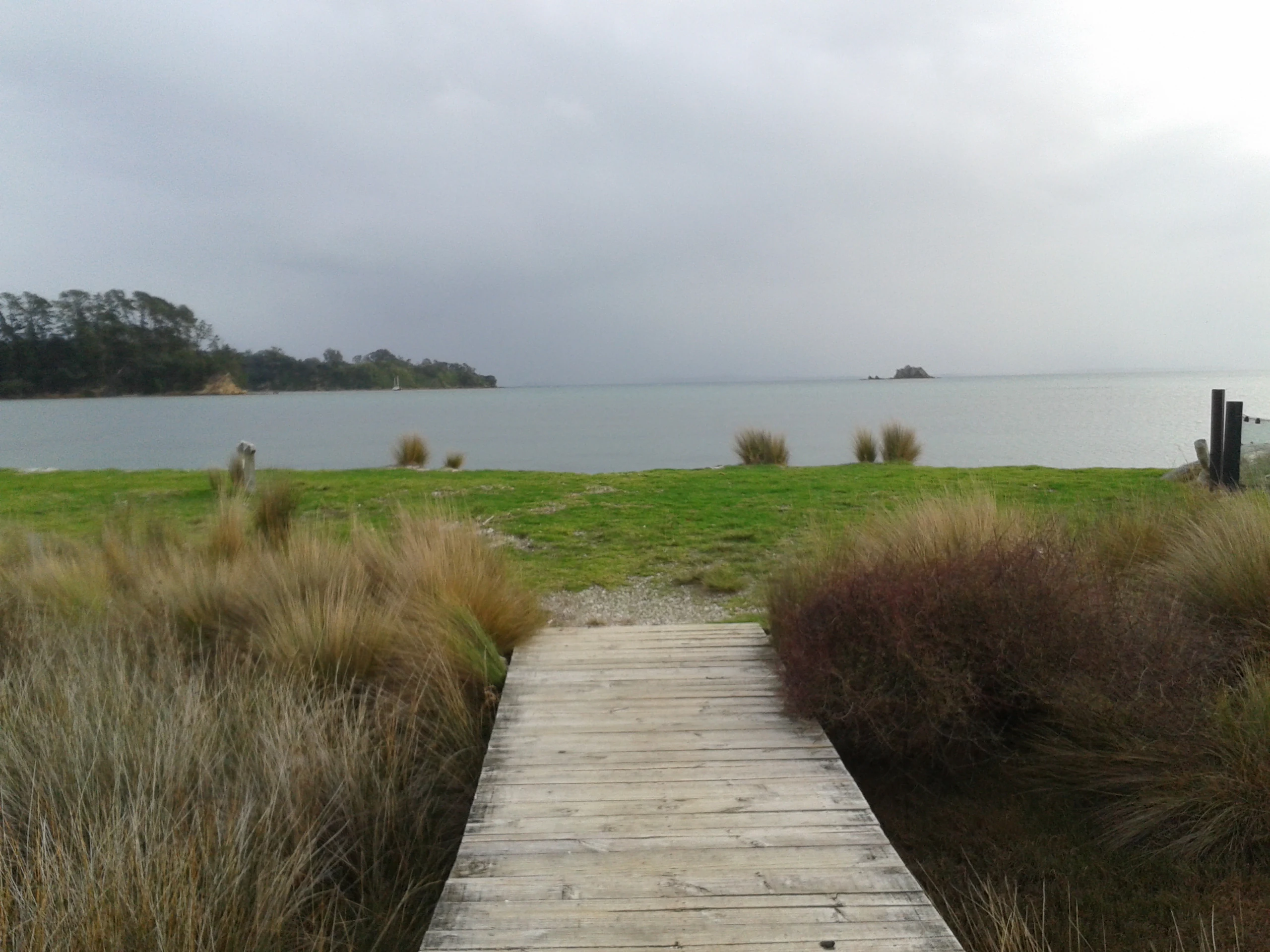
The physical character of Whakanewha is shaped by the central spine of Waiheke Island and the way its southern slopes drain toward the coast. The park extends from the main ridgeline downward to Rocky Bay, also known as Whakanewha Bay, taking in ridgeline, mid-slope, valley, and coastal-edge environments in a relatively continuous sweep.
Three streams form the backbone of the park's hydrology, their catchments carving shallow valleys and feeding the bay. Along these watercourses, flatter ground accumulates moisture and supports wetland vegetation, most visibly in the large wetland occupying the south-west portion of the park. The combination of ridgeline, stream valleys, wetland flats, and bay-facing slopes gives the park a layered and varied topography within a compact area.
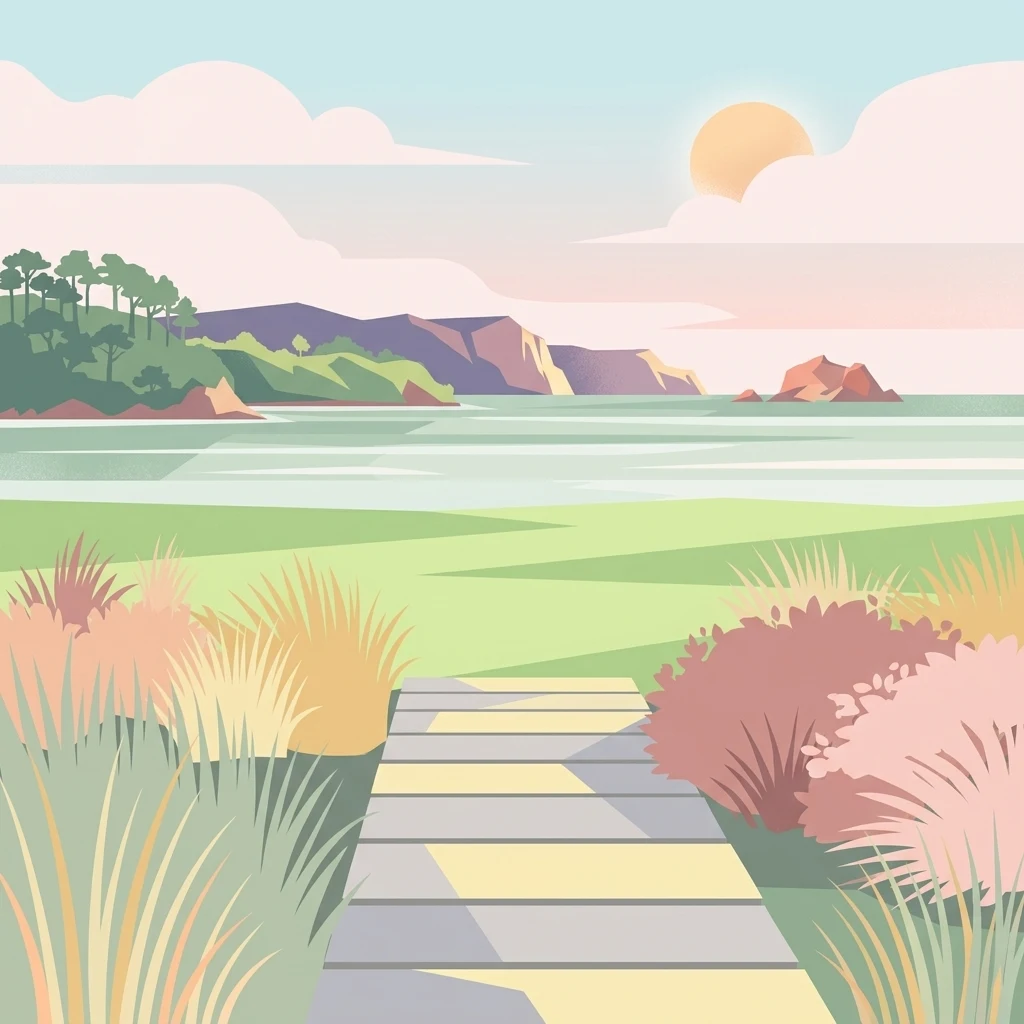
The lower edges of the park meet the rocky southern shoreline of Waiheke Island, tying the terrestrial landscape to the Hauraki Gulf. Even where human land use once dominated, much of the visible terrain today reads as a mosaic of regenerating shrubland, regenerating and mature forest, and open wetland margins, providing a striking contrast to the more developed parts of eastern Waiheke.
Whakanewha Regional Park ecosystems, habitats, and plant life
Ecologically, Whakanewha reflects what the Hauraki Gulf's islands can offer when invasive mammal pressures are reduced and land is allowed to recover. The park's forests are dominated by broadleaf species such as taraire and pūriri, together with podocarp trees including kahikatea and tānekaha. These species form a multilayered canopy structure typical of northern New Zealand lowland forest, enriched locally by the favorable conditions of an island environment.
Across large parts of the park, the older forest is interspersed with and increasingly replaced by regenerating mānuka and kānuka shrublands. This regrowth is gradually recolonizing areas that were once cleared for farming, creating a transitional vegetation pattern where early-successional shrubland grades into older broadleaf/podocarp associations. Without possums, which are absent from Waiheke Island, native tree species here have been able to establish and persist with greater success than on many comparable mainland sites.
The south-west wetland is perhaps the park's most ecologically distinctive habitat. It supports wetland-dependent birdlife and ties the park's forested interior to its stream systems and ultimately to the Hauraki Gulf. The wetland, along with the three stream catchments that converge on Rocky Bay, plays an important role in freshwater and estuarine habitat continuity in this part of the gulf.
Whakanewha Regional Park wildlife and species highlights
The wildlife profile of Whakanewha is shaped by its combination of mature forest, regenerating shrubland, streams, and wetland. The park provides habitat for several bird species that have become uncommon or threatened on the mainland. The south-west wetland is a particularly important area, supporting secretive wetland birds such as the New Zealand bittern, the buff-banded rail, and the New Zealand fernbird.
Forest and shrubland habitats across the rest of the park host typical northern New Zealand forest birds, supported by the abundance of broadleaf and podocarp vegetation and the relatively healthy state of the understory. The absence of possums on Waiheke Island has been linked to the better-than-expected condition of forest foliage, which in turn benefits invertebrates, fruit-eating birds, and the wider forest food web.
Freshwater wildlife has also been part of Whakanewha's profile. In the 1990s, the cascade stream and the poukaraka wetland were known habitat for giant kōkopu, a native fish. Stream sedimentation linked to an unsealed road upstream of the park has since degraded parts of this habitat, and Auckland Council has been considering options for reintroducing giant kōkopu to suitable stretches of stream within the park.
Whakanewha Regional Park conservation status and protection priorities
Whakanewha's significance for conservation lies in what it preserves within a heavily populated island landscape just a short distance from central Auckland. By protecting roughly 270 hectares of native and regenerating habitat, the park maintains a sizeable refuge for forest and wetland communities that have been lost or reduced across much of the Auckland region.
Its wetland habitat is particularly important: large wetlands of this character have become increasingly rare in northern New Zealand, and they support some of the country's most range-restricted and threatened bird species. The park's stream catchments also protect freshwater links between forested uplands and the Hauraki Gulf, with corresponding benefits for downstream estuarine habitat.
The island setting gives Whakanewha an additional conservation edge. Lacking possums, Waiheke provides conditions in which native vegetation can regenerate more freely, and the park demonstrates how this can translate into healthier forest structure and richer birdlife. At the same time, the park faces its own pressures, including stream sedimentation that has degraded habitat for giant kōkopu and prompted active management discussions around restoration.
Whakanewha Regional Park cultural meaning and human context
Whakanewha sits within a landscape of long Māori settlement and use, and the cultural presence in the park is tangible rather than symbolic. The presence of large shell middens and a pā site points to sustained occupation by Tāmaki Māori over generations, and the park's Māori name, translated as "shading eyes from the setting sun," reinforces the deep place-based meaning of the land.
Multiple iwi and hapū maintain association with this area, including Ngāti Pāoa, Ngāi Tai ki Tāmaki, and Te Ākitai Waiohua. In the mid-nineteenth century, members of Ngāti Pāoa cultivated fruit and vegetables at Whakanewha and elsewhere on eastern Waiheke to supply the growing city of Auckland, placing the park within an important regional food-supply history.
The mid-nineteenth-century Crown purchase of part of the park by Samuel Wood, undertaken without consultation with Māori residents and followed by retaliation and eventual Crown confirmation of title, also marks the area as part of the broader story of contested land transactions in nineteenth-century New Zealand. Its identity today as a regional park continues to develop alongside this layered Māori and non-Māori heritage.
Top sights and standout views in Whakanewha Regional Park
Whakanewha stands out for the way it concentrates so many distinct environments within a small island footprint: ridgeline, mature broadleaf and podocarp forest, regenerating mānuka and kānuka shrubland, a sizeable freshwater wetland, three stream valleys, and a rocky southern bay shoreline, all connected in a single landscape.
Its combination of high-quality native forest and a significant wetland gives the park a conservation profile that is unusual so close to Auckland, while its shell middens and pā site make it one of Waiheke Island's most culturally layered landscapes.
Best time to visit Whakanewha Regional Park
Spring and early summer tend to bring the park's wetland and forest into particularly active periods, with birdsong and visible breeding activity across both habitats. Warmer months also offer easier walking conditions along the park's coastal and ridgeline edges, making it a natural time to explore the connection between forest, stream, and bay.
Autumn and winter bring their own character: cooler, wetter conditions refresh the wetland, sustain stream flow through the three catchments, and emphasize the green density of the regenerating forest. These seasons can be rewarding for those interested in the park's quieter ecological rhythms, though conditions on the southern coast of Waiheke can be changeable.