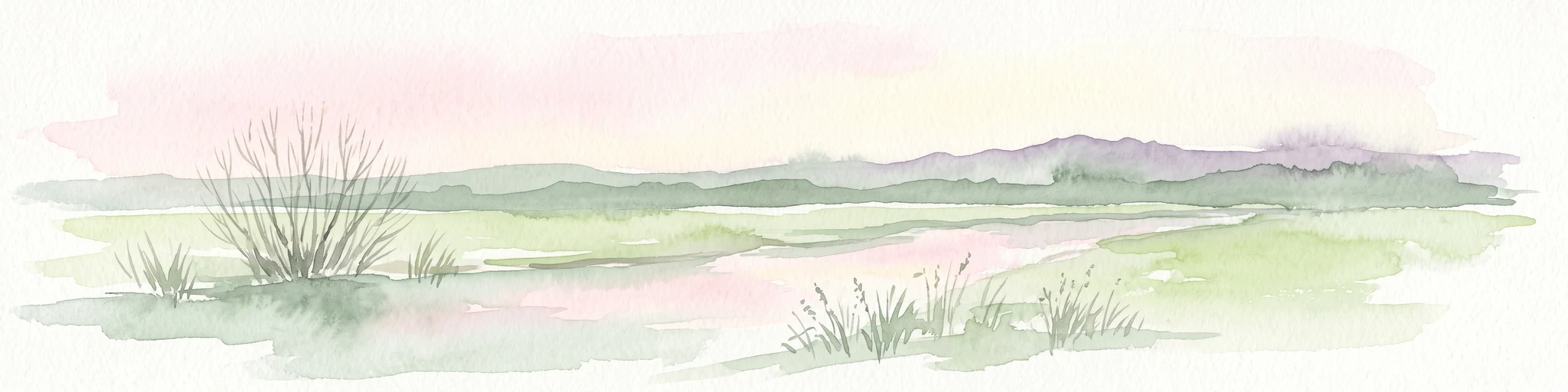

Why Wümmeniederung mit Rodau, Wiedau und Trochelbach stands out
The reserve is best known for its long, near-natural meandering sections of the Wümme and its tributaries, interspersed with species-rich wet meadows, fens and reedbeds. Equally distinctive are the relict raised bogs, transitional mires and bog woodlands with birch and Scots pine in the upper Wümme valley. Sand dunes, juniper heaths and dry grassland fringe the floodplain, giving the reserve a rare combination of wet and dry lowland habitats within a single protected area.
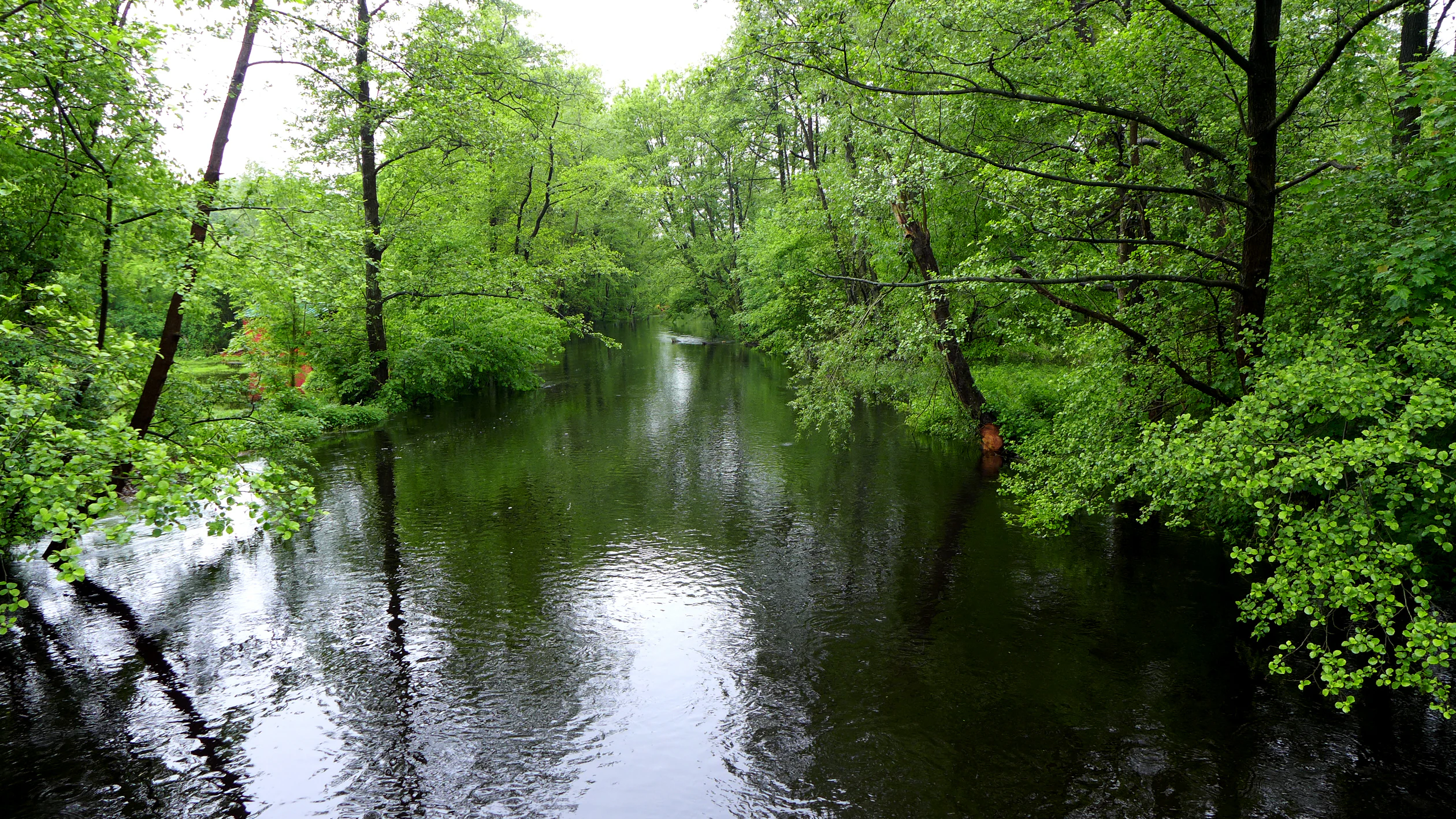
Wümmeniederung mit Rodau, Wiedau und Trochelbach history and protected-area timeline
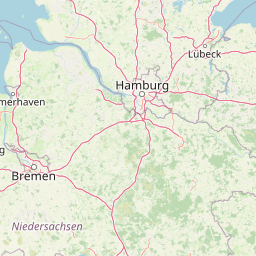
The contemporary Wümmeniederung mit Rodau, Wiedau und Trochelbach reserve is the product of a long process of consolidating earlier, smaller protected areas in the Wümme floodplain. It was formally established on 1 August 2020 under the designation NSG LÜ 355, bringing together the former nature reserves Ekelmoor, Fährhof and Voßberge, as well as large parts of the landscape protection areas Obere Wümmeniederung and Wümmeniederung unterhalb Rotenburg, plus the Vareler Wacholdergebiet, the Untere Rodau- und Wiedauniederung and the Hastedter Wacholder- und Stechginstergebiet. Portions of the older landscape protection areas Hastedter Schnuckenheide and Dünenlandschaft am Wehrmeistersee were also absorbed.
The new reserve was created to give cohesive protection to the Wümme floodplain system and its tributaries, much of which was already recognised at the European level. The great majority of its area lies within the FFH (Habitats Directive) site Wümmeniederung, and a small southern section belongs to the EU Birds Directive site Moore bei Sittensen, embedding the reserve in the wider Natura 2000 network. Administration is shared between the Landkreis Rotenburg (Wümme) as the lower nature conservation authority and the Niedersächsischer Landesbetrieb für Wasserwirtschaft, Küsten- und Naturschutz (NLWKN) at the state level.
Wümmeniederung mit Rodau, Wiedau und Trochelbach landscape and geographic character
The landscape of the reserve is shaped by the slow, meandering lowland rivers that cut through a broad sandy valley. Over most of their length, the Wümme, Rodau, Wiedau and Trochelbach flow in near-natural channels, with old meander loops and oxbow waters still visible along the floodplain. Their banks are lined with reedbeds, sedge beds and tall herb communities, while strips of trees border the Wümme over long stretches. The Scheeßeler Mühle weir marks one of the few interruptions to the otherwise intact hydrological connectivity of the Wümme within the protected area.
Beyond the wet river corridor, the terrain alternates between flat, often waterlogged floodplain meadows and gently rising, drier land. In the upper reaches of the Wümme, the river passes through open bog and bog woodland, an unusually well-preserved feature in this part of Lower Saxony. Along the edges of the valley and on inland sand dunes, the ground becomes markedly drier, supporting juniper heath, heather and grass-rich dry grassland stands perched above the floodplain.
Wümmeniederung mit Rodau, Wiedau und Trochelbach ecosystems, habitats, and plant life
Ecologically, the reserve functions as a large, connected lowland river system in which truly aquatic, wet, boggy and dry habitats all occur in close proximity. The watercourses carry submerged aquatic vegetation, while the floodplain hosts a gradient of grasslands from damp meadows to drier pasture, including communities of mat-grass and purple moor-grass that depend on traditional, low-intensity use. Reedbeds, sedges and tall herb fringes line the channels, and small still waters such as ponds and moor pools add further structural diversity.
The wooded element of the reserve is unusually rich. Along the Wümme, gallery-like floodplain forests of alder, ash and elm grow alongside more extensive oak, oak-hornbeam and beech-mixed forests. Many of these stands contain significant amounts of old and dead wood, supporting saproxylic invertebrates, woodpeckers and forest bats. The bog sections add a very different set of woodland communities dominated by birch and Scots pine, while the dunes support low juniper and heather vegetation with patches of lichen-rich dry grassland. Together these habitats give the reserve a layered ecological structure unusual for the region.
Wümmeniederung mit Rodau, Wiedau und Trochelbach wildlife and species highlights
The reserve hosts an unusually complete set of species associated with lowland river landscapes. The Wümme and its tributaries provide habitat for fish such as eel, pike, sea trout, bullhead, minnow, bitterling, weatherfish and stone loach, and the three European lampreys, while the larger mammals beaver and otter use the river corridor with its quiet backwaters and dense bank vegetation. Dragonflies are exceptionally well represented, including the green river hawker, green mosaic hawker and delicate whiteface in flowing waters, and the large whiteface in the bog pools.
Bats thrive in the combination of old woodland, barns and water, with species such as greater mouse-eared bat, Bechstein's bat, both barbastelles, serotine, common and soprano noctules, Nathusius's pipistrelle, common pipistrelle, Daubenton's bat and pond bat recorded. Amphibians find breeding sites in the still waters and bog pools, including moor frog and garlic toad. Reptiles such as the smooth snake occur on the dry dunes and heaths.
The bird life is one of the reserve's strongest features. Breeding and visiting birds include crane, black stork, eagle owl, hobby, red kite, cuckoo, lapwing, snipe, green sandpiper, nightjar, black woodpecker, middle spotted woodpecker and great spotted woodpecker, as well as red-backed shrike, golden oriole, common redstart, woodlark, whinchat, common stonechat, bluethroat, marsh warbler and grasshopper warbler. Ducks such as Eurasian teal, garganey and gadwall use the wet habitats, while migrating and wintering visitors include little ringed plover, greenshank, woodcock, great grey shrike, greylag goose and tufted duck.
Wümmeniederung mit Rodau, Wiedau und Trochelbach conservation status and protection priorities
The reserve's conservation significance lies in its scale and ecological coherence. By joining several older protected areas, it safeguards a long, functioning stretch of the Wümme and its tributary floodplains, with their full sequence of wet meadows, mires, bog woodlands, floodplain forests and dry heaths. Most of the area is part of the EU Natura 2000 network through the FFH site Wümmeniederung, and a smaller southern part falls within the Birds Directive site Moore bei Sittensen, anchoring it within European habitat and species protection frameworks.
The designation as a Naturschutzgebiet under the German Federal Nature Conservation Act gives the area a strong legal protection status. Management, overseen by the Landkreis Rotenburg (Wümme) and supported by the NLWKN, focuses on preserving the hydrological and hydrochemical conditions of the streams, mires and floodplain grasslands, maintaining near-natural river dynamics, retaining substantial deadwood in the deciduous and bog forests, and sustaining the open heath and dune communities through appropriate grazing and disturbance regimes.
Wümmeniederung mit Rodau, Wiedau und Trochelbach cultural meaning and human context
The Wümme valley carries cultural layers typical of the north-west German lowlands. The river itself and its tributaries historically drove water mills such as the Scheeßeler Mühle, and the floodplain meadows and heaths reflect long traditions of grazing with sheep and cattle, including the regional Heidschnucke sheep associated with the Lüneburg Heath culture that surrounds the area. Juniper heath, broom heaths and sheep-grazed dry grassland within the reserve are heirs to those centuries-old land uses, and the Nordpfade long-distance walking routes now follow historical paths through this working cultural landscape.
Top sights and standout views in Wümmeniederung mit Rodau, Wiedau und Trochelbach
Wümmeniederung mit Rodau, Wiedau und Trochelbach brings together four interconnected strengths: near-natural meandering rivers with associated floodplain meadows; extensive bog and bog woodland remnants in the upper Wümme valley; large, structurally rich floodplain and oak-hornbeam forests with abundant deadwood; and dry inland dune and juniper heath communities on the valley margins. The combination of habitats supports a strikingly diverse fauna, from lampreys and otters in the rivers, through rare dragonflies and amphibians in the bogs, to a rich forest and meadow bird community that includes crane, black stork, black woodpecker and eagle owl.
Best time to visit Wümmeniederung mit Rodau, Wiedau und Trochelbach
Late spring and early summer are generally the most rewarding period, when wet meadows, fens and heaths are in full bloom and woodland birds are actively singing. Early mornings at this time of year offer the best chance to encounter secretive species such as nightjar, woodlark and crakes along the valley edges. Autumn brings its own appeal with migrating cranes overhead, while winter can offer quiet views of the open floodplain and large numbers of waterfowl on remaining wet areas, though some paths may be wet underfoot.