
Trip Timing Fundamentals
When Is the Best Time to Visit Yellowstone National Park?
Navigating the Annual Rhythm of Yellowstone
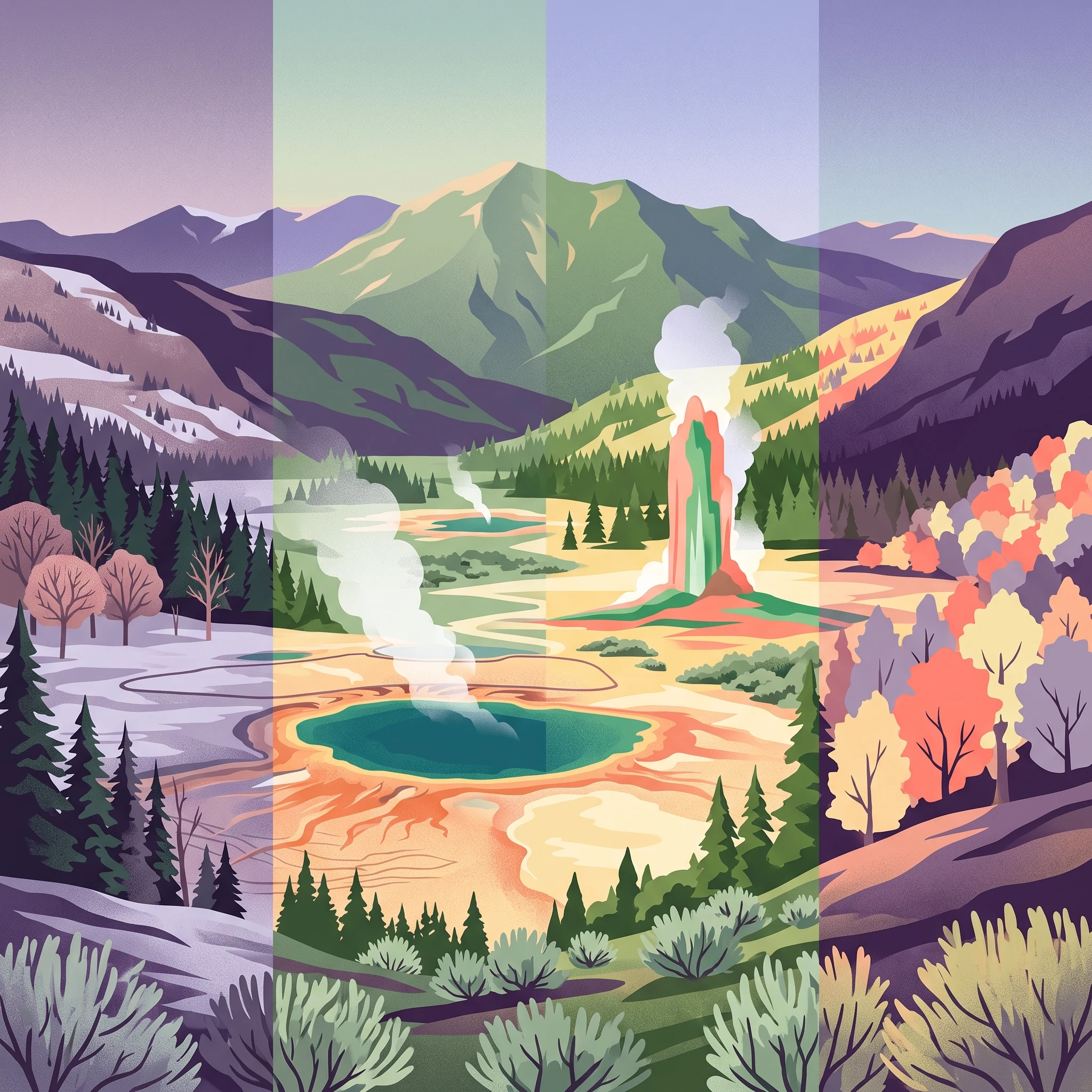
Deciding on the best time to visit Yellowstone National Park requires a fundamental compromise between the desire for full, unrestricted access to the park’s vast road network and the pursuit of solitude in a landscape defined by dramatic environmental shifts. There is no single ideal time for every traveler, as the experience is fundamentally dictated by the park’s high-altitude climate, which exerts a dominant influence over both physical accessibility and the behavior of the resident megafauna.
The core of the decision lies in the interplay between seasonal temperature extremes and the park’s operational cycle. Because Yellowstone sits atop a massive caldera at a significant elevation, the window for what is traditionally considered pleasant weather,characterized by daytime temperatures that remain firmly above freezing,is remarkably narrow. Travelers prioritizing warm days, open roads, and high-intensity exploration generally find that the period spanning July and August offers the most reliable conditions. During these months, the daily mean temperature rises to its peak, providing the most stable window for traversing the park's interior; however, this reliability comes with the highest visitor densities and increased competition for essential infrastructure.
Balancing Access Against Crowds
Those looking to observe Yellowstone’s iconic wildlife,grizzlies, wolves, and bison,often find that the shoulder months of late spring and early autumn provide a more intimate encounter with the landscape. While these periods introduce a higher risk of volatile weather and limited road accessibility due to lingering or early-season snow, they avoid the peak-season rush. The environmental trade-off is stark: one must be prepared for potential road closures and rapidly shifting conditions that can turn a sunny afternoon into a sub-freezing event. In Yellowstone, the weather does not merely affect comfort; it acts as a gatekeeper for the park’s features.
Defining the Seasonal Constraints
When evaluating when to go, consider how elevation and climate patterns intersect. The park’s geography,spanning forests, meadows, and volcanic terrain,means that conditions at one geyser basin may differ significantly from higher-elevation mountain passes. The transition periods in spring and autumn are characterized by atmospheric instability, where snow remains a constant possibility even as valley temperatures begin to climb. This unpredictability is an inherent feature of the ecosystem rather than a seasonal anomaly. By accepting that every window of time involves a trade-off,whether it is the logistical ease of mid-summer or the quiet, frost-edged beauty of the cooler months,visitors can better align their expectations with the park’s natural rhythm. Preparing for a visit here is less about searching for a perfect month and more about understanding which set of environmental conditions aligns with your specific goals for witnessing volcanic activity and North American wildlife.
Seasonal Planning
Best Months to Visit Yellowstone: A Scannable Seasonal Comparison
Peak Summer Accessibility: July and August
For travelers prioritizing consistent road access and the full range of visitor amenities, July and August represent the most reliable window. During these months, average maximum temperatures hover near 26-27°C, providing the warmest conditions for high-altitude hiking and exploration. This period offers the longest days, with daylight hours peaking at over 15 hours in July, allowing for extended time in the field. The primary trade-off for these favorable conditions is the intensity of visitor traffic and the necessity of managing expectations regarding accommodation availability and crowd density at popular geyser basins.
The Wildlife Window: May, June, and September
Those whose primary motivation is wildlife viewing,particularly observing bison, elk, and bear activity,often find the shoulder months more rewarding. May and early June offer the spectacle of newborn wildlife, while September brings the cooler, crisp mornings of the elk rut. While temperatures are significantly lower than in mid-summer,with mean temperatures in September around 8.5°C and a higher risk of overnight frost,the reduction in traffic provides a quieter environment for spotting megafauna. Visitors choosing these months must be prepared for dynamic weather, as snow remains a possibility even as late as June or as early as September.
The Transition Periods: October and April
October and April serve as significant transitional phases where the park shifts between seasonal states. These months are characterized by highly variable conditions where freezing temperatures are common and daylight hours contract or expand rapidly. For those interested in the stark, dramatic beauty of the caldera landscape without the summer crowds, these shoulder periods are ideal. However, the compromise here is profound: significant infrastructure, including many secondary roads and seasonal facilities, is often in the process of closing down or yet to open. Travelers during these months must prioritize flexibility and independent preparation, as the volatile climate can cause sudden shifts in park conditions that require immediate itinerary adjustments.
Comparing Timing by Travel Priority
To align your trip with specific goals, consider how these windows impact your experience:
- For optimal hiking and park-wide exploration: Focus on the stability of July and August.
- For peak wildlife observation with lower visitor density: Target the cool, active mornings of September or the spring activity of June.
- For solitude and photography in changing landscapes: Look to the transitional window of October, acknowledging that road access will be limited compared to the peak summer season.
Regardless of your chosen dates, the park's elevation means that conditions can vary drastically between the valley floors and the higher mountain passes. Visitors should view monthly climate normals as indicators of potential conditions rather than guaranteed weather, as the park’s high-latitude and high-altitude geography frequently produces localized, unpredictable weather events.
Climate Conditions
Annual Temperature and Weather Patterns in Yellowstone National Park
The High-Altitude Reality of Yellowstone’s Climate
Visitors to Yellowstone often underestimate the impact of the park’s elevation, which averages approximately 2,437 meters above sea level. This elevation dictates a climate characterized by long, severe winters and a brief, compressed summer season. While regional temperatures fluctuate significantly across the vast caldera landscape, the climate normals provide a baseline for the environmental shifts that visitors encounter throughout the calendar year.
The Transition from Bitter Cold to Seasonal Thaw
The annual cycle is dominated by a prolonged winter, with mean temperatures remaining below freezing from November through April. January and December are the coldest months, featuring average minimum temperatures that often drop below -27°C. During this period, the park experiences high relative humidity and consistent wind, creating conditions where temperature alone does not fully capture the intensity of the cold. As spring begins in April and May, the average maximum temperatures shift rapidly from sub-zero levels to double digits, reaching toward 18°C by the end of May. This period is marked by significant day-to-day variability, as lingering winter systems often clash with increasing solar intensity.
Summer’s Peak and the Narrow Window of Warmth
True summer in the park is condensed into a relatively short window spanning July and August. These are the only months where mean temperatures rise firmly above 10°C. July typically marks the transition into the park’s driest period, with precipitation dropping to its annual low of roughly 1.3 mm per day. Daytime highs during these two months often reach 26°C to 27°C, providing the most reliable window for temperate conditions. However, even in the height of summer, nighttime temperatures frequently hover near or below freezing. This persistent diurnal range,where daytime highs can be warm but nights remain sharp and cold,is a constant factor for anyone planning overnight stays or early-morning wildlife excursions.
Autumnal Cooling and the Return of Winter
By September, the climate shifts noticeably. While early September can maintain the warmth of the summer, the average minimum temperatures drop below freezing, signaling the return of the extended winter season. October acts as a secondary shoulder month, bridging the gap between autumn and the onset of winter. Daylight hours, which peak at over 15 hours in June, decline rapidly through October, dropping to approximately 10 hours. As daylight shortens and the sun angle decreases, the park experiences a steady decline in temperature and an increase in relative humidity, often preceded by the first significant snowfalls that mark the return of the cold season.
Interpreting Climate Normals vs. Current Conditions
The data provided represents long-term climate normals for the specified elevation and does not function as a predictive tool for a specific travel date. Yellowstone’s unique geological and topographical diversity means that weather conditions can be highly localized. A clear, sunny afternoon in the Lamar Valley may coincide with a localized blizzard in the higher-elevation mountain passes. Consequently, while these climate patterns offer a reliable framework for understanding the seasonal rhythms of the park, they are not a substitute for checking current weather forecasts, road status, and official park alerts prior to departure. Always prioritize current, hyper-local information over long-term averages when planning logistics.
Seasonal Dynamics
Understanding Seasonal Transitions and Weather Cycles in Yellowstone
The Compression of Yellowstone’s Annual Cycle
Yellowstone’s climate does not adhere to a standard four-season model. Due to its high elevation,averaging over 2,400 meters,the park’s weather is dominated by a prolonged, intense winter that dictates the rhythm of the entire year. Rather than predictable transitions, the park experiences a compressed growing season sandwiched between two extended periods of cold. Visitors should think of the year in three distinct phases: the Deep Winter and Shoulder Freeze, the High-Alpine Summer, and the Rapid Autumn Transition.
The Extended Winter and Shoulder Freeze
Winter in this high-altitude ecosystem is a dominant force, typically claiming nearly half the year. From November through April, the park remains in a state of suspended animation. Average daytime highs during the heart of this period often hover near or below freezing, while overnight lows frequently drop well into the negative twenties Celsius. This phase is characterized by extreme temperature diurnal swings and consistent, heavy snow accumulation.
What many perceive as spring,the months of April and May,is better understood as a 'Shoulder Freeze.' While daylight increases, ground temperatures remain volatile, and snow remains a constant possibility. April, in particular, acts as a bridge where average maximums creep toward 9°C but nighttime temperatures continue to plummet well below freezing. This period is defined more by the melting of winter’s remnants and saturated ground than by the arrival of true spring warmth.
The Short, High-Alpine Summer
True summer in Yellowstone is famously brief, centered almost entirely in July and August. This is the only phase where average mean temperatures consistently rise above 14°C. July often sees the warmest daytime maximums, frequently reaching 26°C or higher, yet the high-elevation factor ensures that evenings remain crisp, often dipping near the freezing point even in mid-summer. This period is notable not just for the heat, but for the drastic reduction in precipitation compared to the winter months, offering the park’s most stable window for exploration. However, the lack of widespread humidity,with averages dipping toward 53% in August,can cause rapid changes in localized weather, including intense, quick-moving afternoon thunderstorms that mirror the rapid thermal fluctuations of the volcanic landscape.
The Rapid Autumn Transition
September acts as a critical pivot point, marking the swift transition from the stable, warm days of summer back toward the impending winter. While daytime highs can still reach 24°C, the average minimums drop sharply, falling back below freezing as early as September. By October, the climate shifts into a pre-winter state; the average mean temperature collapses toward zero, and the relative humidity begins a steady climb back toward the saturation levels seen in the winter months. Unlike the slow crawl of spring, the onset of autumn is aggressive, often characterized by a noticeable shortening of daylight hours and the return of consistent overnight frosts, signaling that the window of relative warmth has closed for the year. Travelers should prepare for the possibility of winter-like conditions at any point during these shoulder months, as the boundary between fall and the return of winter is often porous and unpredictable.
Annual Experiences
What Visiting Yellowstone National Park is Like Throughout the Year
Geothermal Sightseeing and Seasonal Thermal Dynamics
Visiting the park’s famous hydrothermal features is a primary driver for travel, but the experience changes significantly based on the time of year. During the summer months, boardwalks near Old Faithful and Grand Prismatic Spring are fully accessible, allowing for a standard visitor experience. However, the experience of these thermal features is arguably most dramatic in the colder months, when the contrast between the boiling water and the frigid air creates visible plumes of steam that are absent or significantly muted during the warmth of July and August. While the boardwalks remain the primary way to view these features, visitors must account for icy conditions and limited parking access during the transitional spring and autumn months.
Wildlife Viewing Cycles and Habitat Movement
Yellowstone’s megafauna, including grizzly bears, wolves, elk, and bison, follow natural seasonal movements driven by food availability and climate constraints. Viewing opportunities are not static throughout the year; they are dictated by ecological rhythms. Early morning and late evening remain the most productive hours for spotting wildlife, as these are the animals' primary feeding periods. During the spring, bison and elk are often found in lower-elevation meadows, sometimes with newborn calves. As summer temperatures rise, many species migrate to higher altitudes to escape the heat and search for forage, making them less visible from the main loop roads. Autumn marks a period of heightened activity, particularly for elk during the rut, when they move back into more accessible valleys. Visitors should note that specific trails, such as those in the Pelican Valley or near Bridge Creek, are frequently closed during parts of the year specifically to minimize human-wildlife conflict while bears are active and feeding.
Backcountry Access and Trail Conditions
Experience in the backcountry is heavily dependent on the calendar. Overnight backpacking requires permits, and the availability of these permits is constrained by environmental readiness. Because of deep snowpack and muddy conditions, high-country trails and backcountry campsites often remain inaccessible or closed until mid-summer. Those hoping for a true wilderness experience must prioritize July, August, and September. Attempting to access these regions earlier in the year risks encountering unsafe trail conditions, impassable water crossings, and seasonal closures designed to protect both the user and the recovering range. Always check current ranger reports, as the transition from winter snow to summer trail conditions varies annually depending on the severity of the previous winter's snowfall.
Visitor Priorities
Choosing the Best Time to Visit Yellowstone Based on Your Personal Priorities
Balancing Milder Temperatures and Open Access
For travelers who prioritize physical comfort and avoiding the park’s most extreme cold, the window of July and August offers the most reliable conditions. With average maximum temperatures hovering around 26°C to 27°C, these months provide the only period where daytime freezing is statistically unlikely. This is the optimal window for visitors who want to avoid the risks of sudden snowstorms or ice-covered trails that can persist into early summer. However, the trade-off is the intensity of the sun at high elevation and the potential for mid-day heat, which can make strenuous outdoor activities feel more taxing than the moderate ambient temperatures suggest. If your priority is a predictable, temperate climate for walking or touring geyser basins, this brief window is the only timeframe that consistently avoids the park’s severe temperature volatility.
Prioritizing Longer Daylight for Extensive Exploration
If your primary goal is maximizing time spent outdoors, June and July offer the greatest amount of daylight, with June averaging 15.31 hours and July 14.98 hours. This extra light provides a significant advantage for those who want to cover more ground, minimize driving in the dark, or complete longer day hikes without the pressure of an early sunset. The compromise for this extended light is that these months, particularly June, often coincide with the tail end of the wet season and lingering trail conditions that may still be impacted by early-season snowmelt. Visitors prioritizing daylight often find that they must accept wetter, more unpredictable ground conditions compared to the drier, shorter days of August and September.
Seeking Drier Conditions and Stable Ground
Visitors whose activities,such as backcountry trekking or wildlife observation in meadows,require dry ground should look to the late summer and early autumn period. July and August show the lowest precipitation levels, often falling below 1.3 mm per day. By September, the precipitation remains relatively low (1.61 mm per day) while the temperatures begin a sharp, crisp transition. This makes September a preferred period for those who find the mid-summer heat excessive but still desire the dry conditions necessary for backcountry access. The trade-off is the suddenness of the shift toward winter; while the days are dry, nighttime temperatures drop rapidly, requiring a more robust layering strategy than is necessary in the peak of July.
Coordinating Wildlife Viewing with Activity Patterns
Wildlife viewing preferences often dictate a departure from the warmest, driest windows. While peak summer offers the easiest access to the entire park, the animals themselves are frequently less active during the heat of the day. Those specifically prioritizing photography or wildlife observation often favor the cooler transition months like late May or September. During these times, temperatures are lower, which may encourage megafauna to remain active during more convenient viewing hours. The trade-off here is the significant risk of limited infrastructure access; many trails and specific areas, such as those near spawning creeks, may be closed during these shoulder periods to minimize human-wildlife conflict. Choosing this timeframe requires a high degree of flexibility, as the primary benefit,wildlife visibility,is tied to the very conditions that lead to restricted site access and lower ambient temperatures.
Access & Logistics
Seasonal Road Access and Operational Planning for Yellowstone National Park
Managing Seasonal Operational Transitions
Yellowstone National Park operates on a highly variable schedule governed by significant elevation and extreme winter conditions. While the park is technically accessible year-round, road access fluctuates dramatically between the summer peak and the winter closure periods. Most internal park roads are closed to private automobiles for much of the year, transitioning into snow-covered routes that accommodate only specialized over-snow transport during the winter months. Because these transitions depend on snowpack, plowing progress, and spring thaw conditions, travelers should not rely on calendar dates for planning specific route access. Always check the official park status page for current road openings and real-time alerts before finalizing travel itineraries.
Oversnow Travel and Winter Logistics
Access during the winter season is fundamentally different from the rest of the year. Between mid-December and mid-March, private vehicles are restricted from most internal park roads. During this period, visitors can explore the park's interior primarily via commercial snowcoaches or guided snowmobile tours. These services require advance planning, as there are daily capacity limits on entries. Visitors must verify current requirements regarding Best Available Technology (BAT) standards and permit processes through the official park service website. Because private, unguided oversnow travel is prohibited, coordinating with licensed commercial providers is a required logistical step for anyone planning a winter visit.
Planning for Variable Accessibility
Beyond road closures, facility availability,including visitor centers, campgrounds, and food services,tends to mirror the shifting seasonal cycles. Many facilities remain shuttered through the shoulder months, only coming online as staffing levels increase during the peak summer season. Travelers planning a visit during the transitional periods of late spring or mid-autumn may find limited options for infrastructure and services within the park. This environment makes it essential to confirm the operating status of specific amenities for your intended dates. Relying on historical patterns can lead to planning errors; instead, consult the park’s official website for confirmed service schedules and current facility hours of operation. If your visit depends on specific services, such as backcountry permits or gear rentals, verify the availability and booking lead times directly with park authorities or authorized partners well in advance.
Safety and Preparation
Weather Expectations and Seasonal Safety in Yellowstone National Park
Managing High-Elevation Temperature Volatility
Because Yellowstone spans significant elevation ranges, weather conditions can shift dramatically over short distances and within very brief timeframes. Even during the peak summer months of July and August, when mean temperatures reach their annual high, nighttime temperatures frequently dip toward or below freezing. Preparation should focus on this extreme diurnal swing rather than relying on daytime highs. Regardless of the season, dressing in layers is the most effective approach to managing these shifts, as it allows for rapid adjustments when moving between the sun-warmed valleys and higher, cooler elevations.
Preparing for Variable Precipitation and Wind
While late summer typically offers the driest conditions, precipitation remains a constant factor in the high-altitude climate. Sudden rain showers are common throughout the year, and at higher elevations, these can transition into snow even outside of winter. Visitors should always carry reliable, wind-resistant, and water-repellent outer layers. Wind speeds remain relatively consistent across the year, and these breezes can significantly increase the chill factor, particularly when combined with the lower humidity levels found in the warmer months. Because conditions in the backcountry or on exposed lake shores can change from calm to severe in minutes, travelers should prioritize adaptability in their clothing and equipment choices.
Essential Safety Precautions in Geothermal and Wildlife Areas
Safety in Yellowstone is intrinsically linked to respecting the park’s natural boundaries. In geothermal basins, staying strictly on established boardwalks is the only way to avoid the hazards posed by boiling water and fragile, unstable ground. These features are highly unpredictable, and the mineral-rich mist can damage gear, including lenses and eyeglasses, so protecting sensitive optical equipment is a practical necessity.
When exploring the park's wildlife-rich areas, such as the Lamar or Hayden Valleys, preparation involves maintaining the mandatory distance from animals,at least 100 yards for bears and wolves, and 25 yards for all other large mammals. Odor management is critical for anyone camping or spending extended periods in the backcountry; all scented items, including toiletries, must be secured in accordance with current park regulations to avoid attracting wildlife.
Navigating Connectivity and Self-Reliance
Mobile phone service is unreliable or entirely unavailable across much of the park, making digital dependency a potential safety risk. Preparation for any excursion should include a physical map and the knowledge of how to use it. When heading into the backcountry, ensure you are equipped with the standard essentials for navigation, first aid, and emergency signaling. Always verify current weather forecasts, trail status reports, and official safety alerts on the National Park Service website immediately before your trip, as these offer the only accurate snapshot of local conditions compared to broad seasonal averages.
Final Decision Framework
Selecting Your Ideal Window for a Yellowstone National Park Visit
Choosing your travel dates for Yellowstone involves balancing the reality of its high-elevation environment against your specific interests. Because no single month offers the perfect combination of full access, mild weather, and solitude, your decision hinges on identifying which trade-off you are most willing to accept. If your priority is unfettered movement between park regions and the warmth of the peak summer season, your window is firmly fixed in July and August. These months offer the most consistent weather conditions, though they coincide with the highest visitor volumes and the most active traffic patterns on the park’s road loops.
For those who prioritize wildlife viewing and quieter road experiences, the shoulder months of May and September provide a compelling alternative. While you must accept the increased likelihood of sudden temperature drops and potentially lingering spring snow or early autumn flurries, these periods allow for a more contemplative observation of the park’s megafauna. The trade-off here is clear: you gain a distinct experiential advantage in terms of crowd density, but you lose the reliability of summer-like temperatures and full accessibility to all high-country trails.
If you find yourself gravitating toward the solitude of the transition seasons in late spring or late autumn, be prepared to manage expectations regarding facility access and weather volatility. The park’s infrastructure undergoes significant changes during these times, and you should rely on official updates to navigate road closures or service limitations. Whatever your final selection, recognize that the park’s climate is defined by unpredictability rather than stable seasonal patterns. Because daily temperatures can swing dramatically regardless of the time of year, your preparations must include versatile layering regardless of when you plan to arrive.
Ultimately, there is no universal best time to visit. Your ideal window is simply the period where your tolerance for cold and your desire for access intersect. Before finalizing your travel dates, verify the most current weather forecasts and operational status through official park channels, as historical climate data provides a guide for what to expect, not a guarantee of the conditions you will encounter during your specific visit.