
Mori Atlas logo
Nature reserveZiegenberg

A compact mosaic of limestone slopes and riparian floodplains in the Paderborn district

Ziegenberg Nature Reserve: Mapped Protected Landscapes and Geographic Features in North Rhine-Westphalia

(Naturschutzgebiet Ziegenberg)

Ziegenberg functions as a vital protected area in the Borchen municipality, defined by its sharp topographic contrast between deciduous slope forest and the alluvial corridor of the Lohne stream. This reserve features exposed limestone rock formations and specialized beech woodland, creating high ecological diversity within a limited geographic footprint. The landscape provides a critical refuge for flora and fauna, illustrating the complex intersection of geological formations and stream-side ecosystems in North Rhine-Westphalia.

nature reservedeciduous forestlimestone habitatbeech forestorchid-rich woodlandalluvial forest

Ziegenberg

Nature reserve

Park overview

Structured park overview, official facts, and landscape profile for Ziegenberg Nature Reserve (Borchen)

Ziegenberg Nature Reserve (Borchen) park facts, protected area profile, and essential visitor context

Review the core facts for Ziegenberg Nature Reserve (Borchen), including designation, size, terrain, visitor scale, habitats, and operating context in one park-focused overview.

About Ziegenberg Nature Reserve (Borchen)

Ziegenberg is a compact nature reserve on the eastern edge of the municipality of Borchen, just southwest of the city of Paderborn. Despite occupying only about 2.8 hectares, it is notable for compressing a remarkable range of habitats into a very small area, which is precisely why it has been formally protected under German nature conservation law since 1984.

The reserve sits in a varied landscape shaped by two parallel influences: a forested limestone hillside and the floodplain of the Lohne stream, a right-bank tributary of the Alme river. The hillside carries the name Ziegenberg, and its exposed calcareous rock supports fissure vegetation that thrives in the cracks and crevices of the stone. This rocky slope rises above a floodplain mosaic that includes moist tall herb communities and alluvial forest, creating a sharp transition between dry calcareous woodland and wet riparian habitats within a short distance.

The site is framed by transport corridors: the A 33 autobahn runs along its eastern edge, while the L 755 and L 756 country roads lie to the northeast and west. Despite this setting, the reserve remains ecologically connected to the much larger neighboring nature reserve of Ziegenberg (Paderborn) just to the north, and together the two protected areas correspond broadly to the FFH (Fauna-Flora-Habitat) area also named Ziegenberg. This joint designation underscores the reserve's significance for habitat and species conservation well beyond its modest size, and it is the only nature reserve within the municipality of Borchen itself.

Quick facts and research context for Ziegenberg Nature Reserve (Borchen)

Ziegenberg is a Naturschutzgebiet (nature reserve) of about 2.8 hectares in the municipality of Borchen, Kreis Paderborn, North Rhine-Westphalia. It was first placed under formal nature protection in 1984 and has the official identifier PB-058. The site is part of the wider FFH area Ziegenberg and shares many of its habitats with the larger neighboring Ziegenberg reserve on Paderborn city territory. The reserve is classified under IUCN Category IV as a Habitat/Species Management Area.

Protection and recognition

Examine official designation records and verified protected area registry data.

Ziegenberg Protection Status and Official Protected Area Designation Records

Ziegenberg holds documented protection records within international environmental databases for geographic analysis. Structured registry entries provide verified administrative identifiers and baseline conservation context.

Protection details

WDPA ID
319364
Park context

Deeper park guide and search-rich context for Ziegenberg Nature Reserve (Borchen)

Ziegenberg Nature Reserve (Borchen) history, landscape, wildlife, and travel context

Explore Ziegenberg Nature Reserve (Borchen) through its history, landscape character, ecosystems, wildlife, conservation priorities, cultural context, and seasonal travel timing in a structured park guide built for atlas discovery and search intent.

Why Ziegenberg Nature Reserve (Borchen) stands out

The reserve is best known for its limestone rock vegetation, its orchid-rich and woodruff-type beech forests, and its small but species-rich stream floodplain. The combination of calcareous slope forest, alluvial woodland, and the plant-rich Lohne stream gives the site a level of ecological diversity that is unusually high for its very small size.
Ziegenberg Nature Reserve
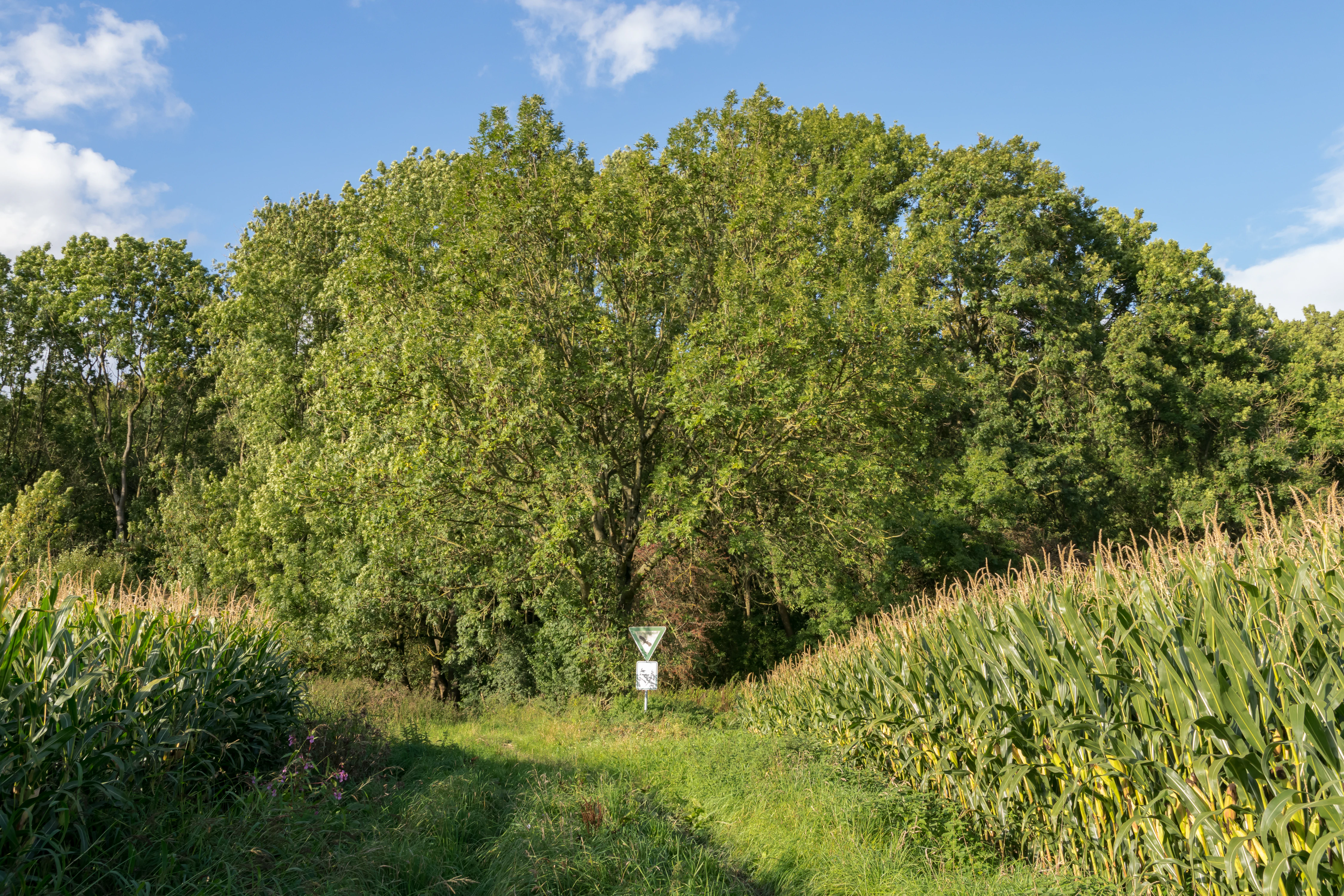
Ziegenberg nature reserve in Borchen, Paderborn district

Ziegenberg Nature Reserve (Borchen) history and protected-area timeline

Ziegenberg was placed under formal nature protection in 1984 under the designation PB-058, establishing it as the only nature reserve within the municipality of Borchen. A subsequent administrative update to the protection framework is recorded for 2004. The reserve's ecological relevance was later formally recognized through its integration into the FFH (Habitats Directive) area also named Ziegenberg, which links the Borchen site with its larger Paderborn counterpart into a single coherent European conservation unit.

Ziegenberg Nature Reserve (Borchen) landscape and geographic character

The landscape of Ziegenberg is shaped by a single, distinctive combination of features: a calcareous hillside with exposed limestone rock, and a narrow stream floodplain running along its foot. The Lohne stream, a small right-bank tributary of the Alme, flows through the southwestern part of the reserve, and its corridor of water, banks, and floodplain forms the soft counterpoint to the harder geology of the slope above.

The exposed limestone creates fissures and crevices that are biologically rich, supporting rock-crevice vegetation alongside the dry beech forest above and the wet alluvial habitats below. The relief, though modest, is ecologically decisive: it produces the sharp contrasts between dry woodland on the slope and moist or wet communities along the stream, which in turn support very different plant and animal communities in close proximity.

Ziegenberg Nature Reserve (Borchen) ecosystems, habitats, and plant life

Ecologically, the reserve packages an unusually high diversity of habitat types into a very small footprint. The hillside features forest communities typical of calcareous soils in central Germany, including woodruff beech forest and the more specialized orchid-bearing limestone beech forest. Along the stream, the vegetation shifts to alder, ash, and softwood alluvial woodland, interspersed with moist tall herb communities in the wetter parts of the floodplain.

The Lohne itself is a particular feature: within the reserve it carries a rich community of aquatic plants, supporting both submerged and emergent vegetation along its course. The juxtaposition of calcareous woodland, alluvial forest, herb-rich floodplain, and a plant-rich stream produces a layered habitat mosaic that amplifies the conservation value of a site whose total area is only about 2.8 hectares.

Ziegenberg Nature Reserve (Borchen) wildlife and species highlights

The stream fauna of the Lohne within the reserve includes both the European bullhead (Groppe) and the brook lamprey (Bachneunauge), two species strongly associated with clean, well-oxygenated small watercourses. Their presence is a strong indicator of the stream's ecological condition inside the protected area.

The reserve also supports a notable breeding bird community for such a small site, including the kingfisher, red-backed shrike, red kite, honey buzzard, black stork, and grey-headed woodpecker. The presence of woodland breeding species such as the black stork and grey-headed woodpecker alongside stream-dependent species such as the kingfisher reflects the close coexistence of forest and floodplain habitats within the reserve.

Ziegenberg Nature Reserve (Borchen) conservation status and protection priorities

Ziegenberg's conservation significance lies less in its size than in the unusually rich concentration of habitat types it contains. The combination of calcareous woodland types, limestone rock vegetation, alluvial forest, moist tall herb communities, and a plant-rich stream gives the reserve an ecological intensity that far exceeds what its 2.8 hectares would normally suggest.

Its formal protection status as a Naturschutzgebiet under German law, combined with its inclusion in the larger FFH area Ziegenberg together with the neighboring Paderborn reserve, places it within a wider European framework for the conservation of habitats and species. The site is classified under IUCN Category IV as a Habitat/Species Management Area, recognizing that active conservation of its specific habitat and species values is an explicit management objective.

Top sights and standout views in Ziegenberg Nature Reserve (Borchen)

The defining characteristic of Ziegenberg is the layered transition from calcareous forest on the slope to alluvial habitats along the Lohne stream, compressed into one of the smallest nature reserves in the area. The exposed limestone and its fissure vegetation, together with orchid- and woodruff-rich beech forests, provide most of the site's botanical distinction.

On the wildlife side, the combination of clean-stream species such as the bullhead and brook lamprey with a breeding bird community that includes the kingfisher, black stork, and grey-headed woodpecher gives the reserve an unusually rich faunal profile for a site of its scale.
Monthly climate preview

Long-term representative point measurements for Ziegenberg in North Rhine-Westphalia

Ziegenberg Climate Normals, Annual Temperature and Precipitation Rhythms

Ziegenberg records measured long-term monthly temperatures ranging from sub-zero winter lows to warm summer maximums alongside steady daily precipitation averages. Examining the complete twelve-month profile reveals detailed baseline climate normals and year-round meteorological trends at this coordinate.
Annual mean9 °C
0 °C18 °C
Jan
Feb
Mar
Apr
May12°
Jun15°
Jul18°
Aug18°
Sep14°
Oct
Nov
Dec
Warmest month
July

18 °C

Coolest month
January

-0.2 °C

Wettest month
July

2.6 mm/day

Driest month
April

1.7 mm/day

Park location guide

Geography guide, regional context, and park location map for Ziegenberg Nature Reserve (Borchen)

Ziegenberg Nature Reserve (Borchen) park geography, regions, and map view in Germany

Understand where Ziegenberg Nature Reserve (Borchen) sits in Germany through a broader geographic reading of the surrounding landscape, nearby location context, and its mapped position within the national park landscape.

How Ziegenberg Nature Reserve (Borchen) fits into Germany

Germany is a federal republic in Western and Central Europe with a population of over 83 million across sixteen constituent states. It is Europe's largest economy by nominal GDP and a major global exporter and importer. The capital is Berlin, and the country borders Denmark, Poland, Czech Republic, Austria, Switzerland, France, Luxembourg, Belgium, and the Netherlands.

Wider geography shaping Ziegenberg Nature Reserve (Borchen) in Germany

Germany is located in Western and Central Europe, spanning 357,022 km². It borders Denmark to the north, Poland and the Czech Republic to the east, Austria and Switzerland to the south, and France, Luxembourg, Belgium, and the Netherlands to the west. The country has coastlines on the Baltic Sea and North Sea to the north, with the Alps located in the southern region.

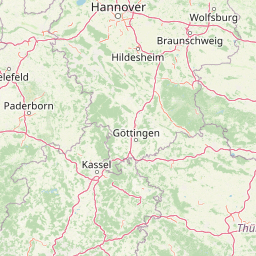
Map view of Ziegenberg Nature Reserve (Borchen)

Use this park location map to pinpoint Ziegenberg Nature Reserve (Borchen) in Germany, understand its exact geographic position, and read its mapped placement within the surrounding landscape more clearly.

Pigeon | © OpenStreetMap contributors

Location context for Ziegenberg Nature Reserve (Borchen)

North Rhine-Westphalia

Visualizing the limestone rock formations, beech forests, and stream valleys of Ziegenberg

Ziegenberg Photos and Visual Scenery: Exploring the Protected Landscape

Ziegenberg photography captures the dramatic contrasts between exposed calcareous slopes and the moist alluvial floodplains of the Lohne stream. Examining these protected habitats reveals the distinct ecological character and botanical diversity shaped by the regional terrain.

Ziegenberg Nature Reserve

Park atlas

Discover adjacent nature reserves and connected limestone landscapes across the region

Explore Protected Areas and Parks Near Ziegenberg for Regional Comparison

Compare Ziegenberg with other protected areas and nature reserves located throughout the surrounding district. Examine adjacent forest habitats and stream valleys to understand the broader ecological network of the region.
Nature reservePaderborn
About 0.8 km away#1 closest

North

Ziegenberg Nature Reserve: Protected Landscape Geography and Paderborn River Corridors

Mapping the forest ridges and floodplains of Paderborn district.

Discover the geographic composition of Ziegenberg, a nature reserve in Paderborn that blends riparian meadows with stony forest ridges. This protected site demonstrates the complex relationship between municipal expansion, river hydrology, and conservation within the German landscape.

Area
0.81 km²
Established
1980
Relief
Upland
Climate
Temperate
Protected landscapeKreis Paderborn
About 6 km away#2 closest

North

Landschaftsschutzgebiet Fließgewässer und Auen: Regional Protected Landscape Overview

Riverine floodplain corridors and valley habitats in Paderborn

This protected landscape in Kreis Paderborn sustains essential habitat connectivity along river valleys including the Lippe and Beke. Its design features a fragmented network of sixteen sub-areas, showcasing how floodplain vegetation, wet meadows, and riparian corridors function within an urban-adjacent environment.

Area
9.583 km²
Established
1999
Relief
Lowland
Scope
Terrestrial
Protected landscapeKreis Paderborn
About 8.6 km away#3 closest

Southeast

Landschaftsschutzgebiet Büren: A Detailed Look at the Protected Rural Mosaic of Kreis Paderborn

Mapped protected landscapes in the German Westphalian countryside

Landschaftsschutzgebiet Büren spans a wide, undulating terrain in the Kreis Paderborn district, characterized by its durable structure of woodland patches, hedgerows, and headwater springs. The area serves as a key case study in maintaining semi-natural ecological features within an active, working agricultural landscape. Access detailed geographic context on the patterns of this regional protected area and its role in the Westphalian landscape.

Area
142.95 km²
Established
1974
Relief
Mixed relief
Scope
Terrestrial
Nature reserveNordrhein-Westfalen
About 10 km away#4 closest

Northeast

Lippeniederung zwischen Bad Lippspringe und Mastbruch: A Protected Floodplain Landscape

Nature reserve geography and river valley conservation in Paderborn, Germany.

Lippeniederung zwischen Bad Lippspringe und Mastbruch encompasses a specialized floodplain corridor along the Lippe river. This site highlights the importance of managing small-scale riverine meadows and aquatic transition zones within the broader, heavily used agricultural geography of North Rhine-Westphalia.

Area
1.59 km²
Established
1966
IUCN
IV
Relief
Lowland
Protected landscapeKreis Paderborn
About 14 km away#5 closest

Northwest

Landschaftsschutzgebiet Delbrücker Rücken Protected Landscape Map and Regional Context

A rural ridge mosaic in the Kreis Paderborn district

This protected landscape in the Kreis Paderborn district features a characteristic mix of deciduous forests, field hedgerows, and agricultural zones on a gentle Westphalian ridge. Its geographic layout provides a clear example of rural land protection integrated into the local environmental buffer system, showcasing a distinct mosaic of terrain that stretches across the lands north and east of Delbrück.

Area
16.1 km²
Established
1970
Relief
Lowland
Climate
Temperate
Nature reserveNordrhein-Westfalen
About 14 km away#6 closest

East

Naturschutzgebiet Schmittwassertal: A Protected Nature Reserve in the Paderborn District

Mapping brook corridors and calcareous grassland landscapes in Westphalia.

Naturschutzgebiet Schmittwassertal represents a fragmented yet ecologically vital nature reserve in Nordrhein-Westfalen. The area encompasses 53.6 hectares of stream-cut valleys and limestone-influenced slopes. This atlas entry details the mosaic of habitats ranging from alder-lined brook corridors to nutrient-poor Borstgrasrasen and semi-dry calcareous grasslands, highlighting its function as a connected biological corridor.

Area
0.536 km²
Established
2014
Relief
Upland
Climate
Temperate
Protected landscapeKreis Paderborn
About 15 km away#7 closest

Southwest

Landschaftsschutzgebiet FFH-Gebiet Wälder bei Büren: Regional Protected Forest Landscapes

Geographic map and protected area context in Kreis Paderborn

Landschaftsschutzgebiet FFH-Gebiet Wälder bei Büren functions as a European-level habitat site defined by its interconnected beech forest mosaic. The area is characterized by a mix of woodruff and rough blue-grass beech woodland, interwoven with intermittent stream courses, source areas, and geological sinkholes that create varied microhabitats within the North Rhine-Westphalia landscape.

Area
28.045 km²
Established
2007
Relief
Upland
Climate
Temperate
Nature reserveGermany
About 18 km away#8 closest

Southeast

Marschallshagen und Nonnenholz mit oberem Altenautal Protected Nature Reserve Map

Ecological landscape and forest geography in the Paderborn district

Covering approximately 1,943 hectares, this nature reserve is a major component of the regional conservation framework. The landscape creates a layered mosaic of closed beech forest, near-natural running water, and floodplain woodland, serving as a significant site for European bird protection programs.

Area
19.43 km²
Established
2002

Common questions about visiting, size, designation, and location context for Ziegenberg Nature Reserve (Borchen)

Ziegenberg Nature Reserve (Borchen) FAQs for park facts, access, geography, and protected area context

Find quick answers about Ziegenberg Nature Reserve (Borchen), including protected-area facts, park geography, trail and visitor context, and how the park fits into its surrounding country and regional landscape.
MoriAtlas Explorer

Continue Your Protected Areas Search Across the Global Atlas

Deepen your exploration by continuing the structured search for national parks and protected areas worldwide. Utilize the comprehensive filtering capabilities to compare different conservation landscapes and refine your understanding of global park geography. Discover more about the distribution and characteristics of protected natural areas.

Global natural geography