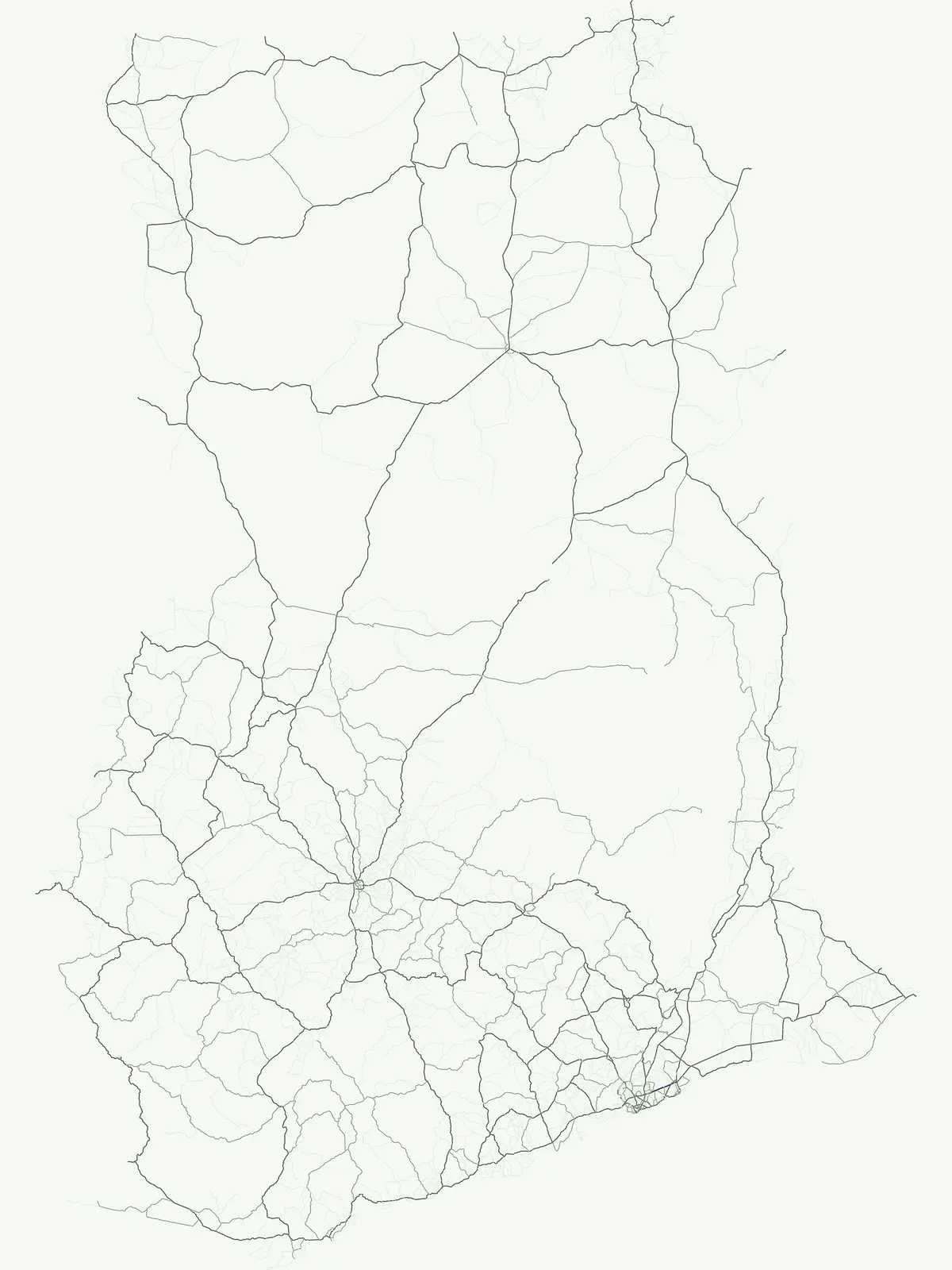
Discover the meaning of IUCN Category VI in Ghana's national geography and protected areas.
Ghana: Protected Area with Sustainable Use of Natural Resources Parks & Protected Landscapes
Explore Ghana's designated Protected Areas with Sustainable Use of Natural Resources, a specific IUCN category that integrates ecosystem conservation with the compatible, low-level use of natural resources. This route offers an atlas-style view of how these protected landscapes are mapped across Ghana, focusing on their unique management approach and geographic context within the nation's broader protected area system.

View the specific geographic contexts and conservation landscapes that exemplify this IUCN category across Ghana.
Explore Ghana's Protected Area with Sustainable Use of Natural Resources: A Curated Park List
Understanding the conservation role of sustainable resource use across Ghana's protected landscapes.
Protected Area with Sustainable Use of Natural Resources in Ghana: IUCN Category VI Parks
Matching parks
1
These parks and protected areas currently define how Protected Area with Sustainable Use of Natural Resources appears across Ghana.
Category focus
A generally large protected area that conserves ecosystems and cultural values while allowing compatible, low-level, non-industrial use of natural resources as part of its management approach.
Representative parks
Conservation with sustainable use
Protected Area with Sustainable Use of Natural Resources
Definition
A Protected Area with Sustainable Use of Natural Resources is a protected area that conserves ecosystems and habitats together with associated cultural values and traditional natural resource management systems. Such areas are generally large, mainly in a natural condition, with a proportion under sustainable natural resource management, and where low-level non-industrial natural resource use compatible with nature conservation is seen as one of the main aims. Under IUCN guidance, the primary management objective should apply to at least three quarters of the protected area, often referred to as the 75 per cent rule.
Key characteristics
Category VI areas are usually extensive and ecologically substantial, often including forests, marine areas, drylands, wetlands, savannas, river basins, or mixed landscapes where ecosystems remain broadly intact. They are not open-ended multi-use areas and are not meant to legitimize intensive industrial extraction under a conservation label. Their defining feature is that conservation and sustainable use are deliberately linked, usually through practices that are small-scale, traditional, community-based, or otherwise demonstrably compatible with maintaining biodiversity and ecosystem function over the long term. These areas often carry strong social and cultural dimensions, especially where local communities or indigenous peoples have long histories of stewardship tied to natural resource use.
Management focus
Management in Category VI requires balancing conservation outcomes with clearly bounded and ecologically compatible use. This often means zoning, harvest rules, customary governance, community agreements, species and habitat monitoring, restoration where needed, and limits on activities that would exceed ecological thresholds. Managers may support traditional livelihoods, non-timber forest product collection, small-scale fisheries, extensive pastoralism, or other locally adapted uses where these do not undermine the area's conservation purpose. The category demands active judgment and governance rather than simple permissiveness: sustainable use must remain subordinate to the area's primary conservation objective, and industrial-scale or ecologically damaging exploitation is inconsistent with the category.
Protection purpose
The purpose of Category VI is to conserve large natural areas and their biodiversity while recognizing that carefully governed, low-level, sustainable resource use can in some places contribute to long-term conservation, local stewardship, and social legitimacy.
Management objective
Typical objectives include maintaining ecosystems in a largely natural condition, conserving biodiversity and ecological processes at scale, supporting traditional and compatible natural resource management systems, preventing industrial or ecologically destructive uses, strengthening community and indigenous stewardship where appropriate, aligning livelihoods with conservation goals, applying zoning and monitoring to keep use within ecological limits, and ensuring that the protected area's primary function remains long-term nature conservation.

Wider background behind Protected Area with Sustainable Use of Natural Resources
Category history
Category VI reflects an important evolution in international conservation thinking. Earlier protected-area models often emphasized strict exclusion or visitor-oriented preservation, but many countries and communities argued for recognition of conservation systems in which biodiversity protection and sustainable use had long coexisted. The IUCN category system responded by creating a category that could accommodate large conservation areas managed for nature first, but with compatible and bounded use of natural resources as part of that conservation approach. This was especially significant in regions where community management, customary use, or extensive traditional economies played a major role in maintaining ecosystems. The category continues to be important in debates about equity, livelihoods, indigenous rights, and the governance of large conservation landscapes and seascapes.
Global examples
Examples commonly associated with Category VI include large forest reserves with community-based resource management, extensive marine or coastal conservation areas allowing regulated small-scale use, protected areas supporting traditional extraction of non-timber products, and landscapes where conservation is combined with long-established, low-intensity resource practices. Exact designations vary across national systems, but the category is generally applied to protected areas that remain mainly natural while allowing carefully governed use that is compatible with biodiversity conservation and long-term ecological integrity.
Compare Ghana's national park system, protected landscapes, and varied conservation designations.
Discover Ghana's Diverse IUCN Protected Area Categories and Conservation Classifications
IUCN category ii
National Park
A large natural or near-natural protected area managed to safeguard ecological processes, characteristic species, and ecosystems while also supporting education, recreation, and compatible visitor use.
Example parks
Kakum National Park, Mole National Park, Bui National Park, Kyabobo National Park, Nini-Suhien National Park, Bia National Park, Digya National Park, Muni-Pomadze Ramsar Site
IUCN category v
Protected Landscape/Seascape
A protected area where the long-term interaction of people and nature has created a distinct landscape or seascape with significant ecological, cultural, and scenic value.
Example parks
Boin Tano Forest Reserve, Mamiri Forest Reserve
Understand Ghana's protected area network, tracing the geographic distribution of its national parks and diverse conservation landscapes.
Ghana National Parks FAQ: Common Questions on Protected Areas and Geography
Continue Exploring Protected Landscapes Across Ghana's Geography
Deepen your understanding of Ghana's natural heritage by continuing to explore its national parks and protected areas. This country-level browse view offers essential geographic context and mapped details to support your atlas discovery, providing a clear pathway into the specific park details and their unique landscape characteristics across the Republic of Ghana.