Why Alte Elster und Rieke stands out
Alte Elster und Rieke is best known for preserving one of the last near-natural sections of the formerly extensive lowland floodplain of the Schwarze Elster. The reserve's combination of an old, cut-off river arm, the lower course of the Riecke tributary, oxbow features, small ponds, wet meadows, and floodplain forest makes it a textbook example of a surviving regulated-river refuge in the North German lowlands. It is also recognized for its role in safeguarding wetland species that depend on this kind of habitat, above all the Eurasian beaver, for which the area is explicitly mentioned as an important living space. Beyond that, it supports a notably rich diversity of breeding birds, amphibians, and aquatic plants in a region where most comparable floodplain wetlands have disappeared.
Alte Elster und Rieke history and protected-area timeline
The reserve's history is inseparable from the transformation of the Schwarze Elster during the twentieth century, when most of the river's natural floodplain sections were straightened and confined. As the main channel was regulated for flood control and land reclamation, older meanders and side arms were cut off, while the surrounding wet meadows were progressively drained and converted to farmland. What remained of the historic floodplain landscape was reduced to a scattering of smaller, disconnected wet areas.
Against this backdrop of regional habitat loss, the Alte Elster und Rieke area was recognized as a refuge that still held near-natural features: an old Elster arm, the lower course of the Riecke tributary, and the associated wet meadows and small waters. It was formally placed under nature protection by ordinance on 26 March 1981, establishing it as one of the early statutory nature reserves in what was then the GDR's southern Brandenburg landscape. A renewed ordinance on 1 July 2007 updated its protection framework and consolidated its role within Brandenburg's modern protected-area system.
In more recent decades the reserve has been integrated into the Natura 2000 network through management planning for the middle course of the Schwarze Elster, joining the broader effort to maintain and gradually restore floodplain functions along this heavily modified lowland river.
Alte Elster und Rieke landscape and geographic character
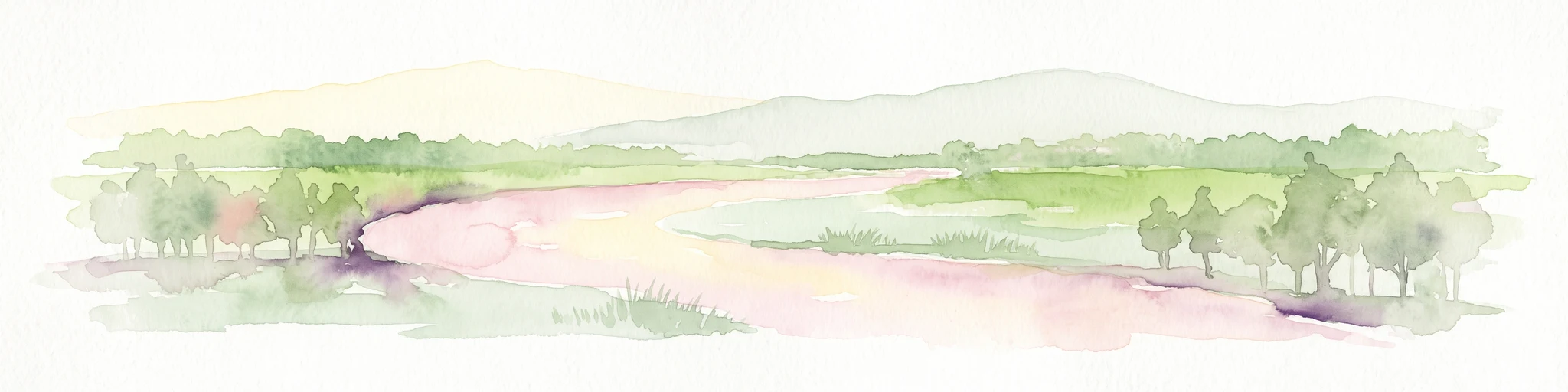
The landscape of Alte Elster und Rieke is defined by a lowland river valley at the southern edge of the North German plain. The terrain is flat to gently undulating, organized around the shallow valley of the Schwarze Elster and the lower course of its small tributary Riecke. There are no dramatic landforms; the scenery is shaped instead by the interplay of water surfaces, soft banks, and open wet grassland.
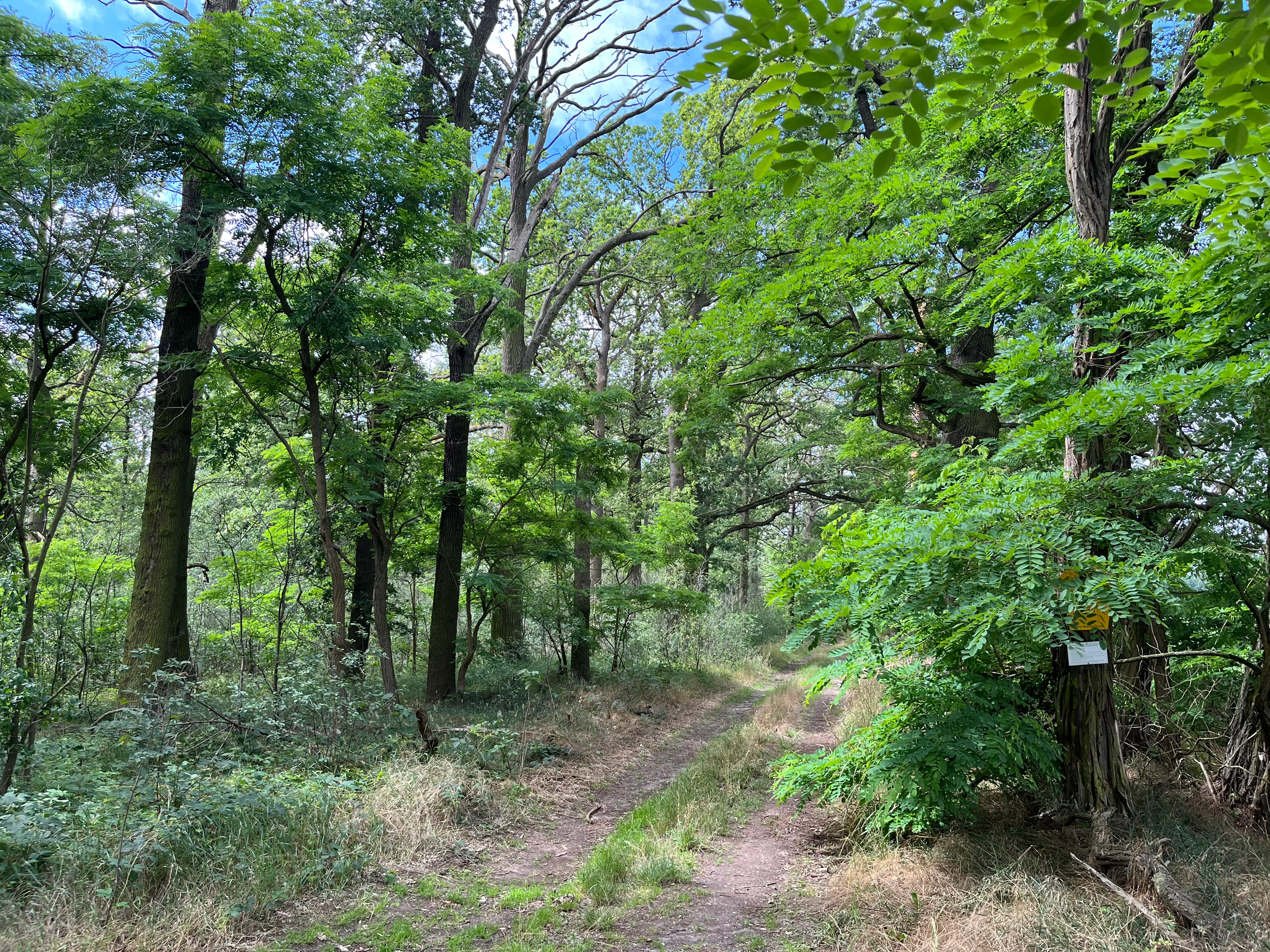
Within this gentle setting, the reserve preserves an old, partially cut-off arm of the Schwarze Elster, the near-natural lower reaches of the Riecke, and a network of small standing waters and shallow margins. Reed beds, sedge stands, and wet meadows fringe these waters, giving way to patches of floodplain and riparian woodland along the more stable banks. The surrounding agricultural land uses the higher, drained parts of the former floodplain, against which the protected wetland stands out as a clearly delineated green corridor.
Alte Elster und Rieke ecosystems, habitats, and plant life
Ecologically, Alte Elster und Rieke belongs to the lowland riparian and wetland systems characteristic of the middle course of the Schwarze Elster. The protected area is built around a small but complete suite of floodplain habitats: a near-natural stream course, old river arms, oxbow-like features and backwaters, small ponds and pools, reed- and sedge-dominated wet zones, moist meadows, and the transitional fringes of floodplain forest.
These habitats together support over 400 recorded plant species, a striking diversity for an area of its size. Characteristic wetland plants include marsh trefoil (Fieberklee), marsh gentian (Lungen-Enzian), burnet saxifrage relatives such as the Sumpf-Brenndolde, the aquatic Krebsschere, and the Wasserfeder, an indicator of clean, calcareous-influenced wetland waters. Their presence underlines the reserve's ecological value as one of the few places along the regulated Schwarze Elster where such a full range of wetland vegetation still occurs.
For animals, the value of the site lies in its structural complexity at a small scale. Old arms, side channels of the Riecke, reed beds, and wet meadows offer breeding, feeding, and sheltering conditions that have largely disappeared elsewhere in the valley. This makes the reserve a key local stronghold for wetland-dependent fauna in southern Brandenburg, including species whose regional status has become precarious since the original floodplain was fragmented.
Alte Elster und Rieke wildlife and species highlights
Alte Elster und Rieke supports a remarkably rich fauna for its size, reflecting the diversity of its wetland habitats. Among mammals, the Eurasian beaver is a flagship species and a central reason for the reserve's protection; the Eurasian otter is also recorded here. Both species depend on exactly the kind of intact riparian and wetland mosaic that the reserve preserves.
The reserve is particularly notable for its birdlife, with around 82 breeding bird species documented, including several of conservation concern such as the great reed warbler (Drosselrohrsänger), the Eurasian woodcock (Waldschnepfe), the penduline tit (Beutelmeise), the ortolan bunting (Ortolan), and the whinchat (Braunkehlchen). Their presence in a relatively small area underscores how the combination of reed, wet meadow, scrub, and woodland edges creates breeding niches that the broader, drained landscape can no longer provide.
Amphibians and reptiles are also well represented, with eight amphibian species and five reptile species recorded. Among them, the European pond turtle (Sumpfschildkröte) was last documented in 1990, marking it as a locally lost but historically characteristic wetland species. In the waters themselves, roughly 20 fish species occur, including the brook lamprey (Bachneunauge), an indicator of relatively undisturbed small watercourses. The site also hosts numerous moths, dragonflies, and beetles, adding an important invertebrate layer to its ecological identity.
Alte Elster und Rieke conservation status and protection priorities
The conservation significance of Alte Elster und Rieke lies in what it still retains of a once widespread landscape. During the twentieth century, the Schwarze Elster was regulated on a large scale: its meanders were cut off, its floodplain was narrowed, and many of its wet meadows were drained and farmed. Today only a handful of near-natural floodplain remnants remain, and Alte Elster und Rieke is one of them.
The reserve's stated purpose is the preservation and development of this floodplain area as habitat, with its near-natural stream course, old river arms, small standing waters, and wet meadows. Particular emphasis is placed on the Eurasian beaver as a target species, and on the lower course of the Riecke with its sedimentation zones and accompanying floodplain forest. The reserve thus acts as a refugium for plant and animal species that are endangered regionally or even nationally, especially those tied to wetland and floodplain conditions.
In administrative terms, the site is protected as a statutory nature reserve (Naturschutzgebiet) under the ordinances of 26 March 1981 and 1 July 2007, and is classified at the international level as an IUCN Category IV Habitat/Species Management Area. It is also integrated into Natura 2000 through the management plan for the middle course of the Schwarze Elster, which links its local conservation efforts to the broader aim of maintaining and where possible restoring floodplain functions along the river.
Top sights and standout views in Alte Elster und Rieke
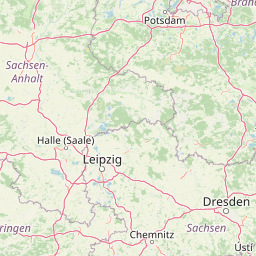
Alte Elster und Rieke's strongest points of distinction are all tied to its floodplain character. It preserves a near-natural stream course and old river arms of the Schwarze Elster, the lower course of the small tributary Riecke with its sedimentation zones, and a coherent mosaic of wet meadows, small ponds, and floodplain forest on roughly 175 hectares in southern Brandenburg.
Within this landscape, the reserve concentrates an unusual density of regionally important species, from beaver and otter to about 82 breeding bird species, eight amphibians, five reptiles, around 20 fish species, and more than 400 plant species. Its formal protection status as a statutory nature reserve under both 1981 and 2007 ordinances, its IUCN Category IV classification, and its integration into Natura 2000 management of the middle Schwarze Elster together give it lasting conservation weight.
Best time to visit Alte Elster und Rieke
The reserve is a wetland landscape whose character shifts with the seasons rather than with formal opening times. Late spring into early summer is generally the period when wetland vegetation is most expressive, when reed beds and wet meadows are green, and when breeding birds are most actively present around the old river arms and along the Riecke.
In autumn, the area takes on softer tones as meadows and floodplain forest change color, and beaver and other mammals are often more visible along the quieter water edges. Winter, when the vegetation thins and the open water stands out, can make it easier to read the wider landscape structure of arms, meadows, and woodland patches, though conditions on the wet ground can be demanding.