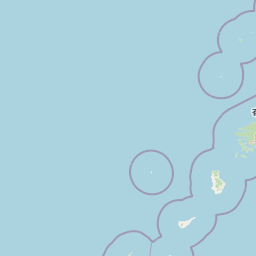
Why Amami Guntō National Park stands out
Amami Guntō National Park is best known for its remarkable concentration of endemic species and diverse subtropical ecosystems spanning both land and sea. The park protects the Amami rabbit, a primitive rabbit species found only on Amami Ōshima and Tokunoshima, as well as the Ryukyu spiny rat. Its marine environments feature extensive coral reef systems and mangrove forests that support complex coastal ecosystems. The park encompasses multiple island landscapes including the karst topography of Tokunoshima with its natural sea caves, the coastal terraces of Kikai, and the coral-surrounded coast of Yoron. The Amami Wildlife Center serves as an educational and research facility managed by Japan's Ministry of the Environment to support conservation of the islands' unique natural heritage.
Amami Guntō National Park history and protected-area timeline
Amami Guntō National Park traces its origins to February 15, 1974, when the Amami Guntō Quasi-National Park was established, initially covering areas on Amami Ōshima. This quasi-national park status provided a baseline level of protection for the islands' natural environments while recognition of their ecological importance continued to develop. On March 7, 2017, the area was elevated to full national park status, becoming Amami Guntō National Park and expanding to encompass parts of eight islands across multiple municipalities including Amagi, Amami, China, Isen, Kikai, Setouchi, Tatsugō, Tokunoshima, Uken, Wadomari, Yamato, and Yoron.
The designation as a national park was part of a broader conservation initiative that also included Yanbaru National Park in Okinawa. Together, these protected areas form the core of an effort to have Amami-Oshima Island, Tokunoshima Island, the northern part of Okinawa Island (Yanbaru), and Iriomote Island inscribed on the UNESCO World Heritage List. The Amami Wildlife Center, operated by Japan's Ministry of the Environment, serves as a key facility for research, education, and conservation efforts targeting the park's unique species and ecosystems.
Amami Guntō National Park landscape and geographic character
The landscape of Amami Guntō National Park is defined by its island setting and the dramatic contrast between mountainous interior terrain and coastal environments. The park's islands feature diverse geological formations that create varied scenery across relatively short distances. Tokunoshima stands out for its karst topography, characterized by limestone outcrops, sinkholes, and underground drainage systems, along with natural sea caves formed by coastal erosion. The island of Mt. Inokawa is noted for its treasure trove of endemic plants including numerous fern species.
Kikai Island displays prominent coastal terraces that mark ancient shoreline positions, while Hyakunodai Park preserves a plateau where coral reef formations have developed in what is now terrestrial terrain. Okinoerabujima features large cave systems including Shoryu Cavern and notable sea cliffs in the Minamata and Kunigamizaki areas. Yoron Island has nearly its entire coastline included within the park boundaries, surrounded by coral reefs that create exceptional underwater visibility and marine habitat complexity. The park also encompasses smaller islands including Uke Island, Kakeromajima, and Yoroshima, each contributing to the overall diversity of the island group.
Amami Guntō National Park ecosystems, habitats, and plant life
The nature of Amami Guntō National Park centers on its subtropical island ecosystems that have developed in isolation, resulting in high levels of endemism. The park encompasses three primary habitat types that together create a complex ecological mosaic: coral reefs in the marine zones, mangrove forests along sheltered coastlines and river mouths, and tidal flats that serve as crucial feeding grounds for diverse species. The terrestrial environments support subtropical hardwood forests that provide habitat for the park's endemic fauna.
The vegetation on Amami Ōshima and Kakeromajima features valuable subtropical hardwood forests dominated by species such as Castanopsis sieboldii and Neolitsea aciculata. These forests occur on slopes and in valleys, transitioning to coastal zones where mangrove species become established in the estuarine environments. The marine environments feature coral reef development that supports fish communities and other marine organisms, while the mangrove forests and tidal flats provide nurseries for juvenile fish and feeding habitat for shorebirds.
Amami Guntō National Park wildlife and species highlights
The wildlife of Amami Guntō National Park is distinguished by a high proportion of endemic species that evolved in isolation on these subtropical islands. The park protects two particularly notable mammalian species: the Amami rabbit (Pentalagus furnessii), a primitive rabbit species found only on Amami Ōshima and Tokunoshima that represents a ancient lineage separate from mainland rabbit species, and the Ryukyu spiny rat, which is also restricted to these islands.
The park supports significant bird populations including Lidth's jay, also known as Amami's jay, and the Ryukyu robin, both of which are endemic to the Amami Islands. Among reptiles and amphibians, the park is home to the Habu snake (a pit viper species), Ishikawa's frog, the Japanese warty newt (also called Anderson's crocodile newt), and the Ryūkyū scops owl. This combination of endemic mammals, birds, reptiles, and amphibians makes the park exceptionally important for biodiversity conservation in Japan and East Asia.
Amami Guntō National Park conservation status and protection priorities
Amami Guntō National Park represents a significant conservation achievement for Japan, protecting some of the nation's most biodiversity-rich island ecosystems. The park's designation as a candidate for UNESCO World Heritage status reflects international recognition of the outstanding universal value of these islands and their endemic species. The park's dual terrestrial and marine protection, encompassing 42,181 hectares of land and 33,082 hectares of sea area, provides comprehensive coverage of island ecosystems from mountain forests to coral reefs.
The Amami Wildlife Center operated by Japan's Ministry of the Environment plays a central role in conservation efforts, conducting research, public education, and species management programs. The park's establishment in 2017 marked the culmination of decades of conservation effort that began with the quasi-national park designation in 1974. Conservation challenges include managing the impacts of development pressure on these islands while maintaining the connectivity between terrestrial and marine habitats that many endemic species depend upon.
Amami Guntō National Park cultural meaning and human context
The Amami Islands have a distinct cultural identity that reflects their position between the Japanese main islands and Okinawa. The islands have historically been influenced by both Ryukyuan and mainland Japanese cultures, creating a unique regional heritage. The landscape of Amami Guntō National Park exists within this cultural context, as the protected areas span municipalities that have maintained traditional communities tied to the land and sea.
Local communities on these islands have historically depended on fishing, agriculture, and maritime activities that shape both the human landscape and the coastal environments included in the park. The relationship between island communities and their natural surroundings has evolved over generations, creating cultural practices that are intertwined with the islands' ecosystems. While the park focuses on ecological protection, this human dimension provides important context for understanding the islands' overall character and the significance of the landscapes being preserved.
Top sights and standout views in Amami Guntō National Park
The highlights of Amami Guntō National Park include its exceptional biodiversity with numerous endemic species, the diversity of island landscapes from karst terrain to coral reefs, and the comprehensive protection of both terrestrial and marine environments. The park provides opportunities to observe the rare Amami rabbit and other endemic species in their natural habitats, explore sea caves and geological formations on Tokunoshima, and experience coral reef ecosystems around Yoron. The Amami Wildlife Center offers educational programs about the islands' unique natural heritage. The park's recent establishment in 2017 and its UNESCO World Heritage candidate status underscore its significance as a conservation priority in East Asia.
Best time to visit Amami Guntō National Park
Amami Guntō National Park can be visited throughout the year due to its subtropical climate, though the summer months from June through September bring higher temperatures and increased humidity along with the potential for typhoons. Spring and autumn generally offer more comfortable conditions for outdoor exploration, with milder temperatures and lower typhoon risk. The marine environments are accessible for snorkeling and diving during the warmer months when water temperatures are suitable, though year-round interest exists in the islands' terrestrial trails and forest environments. Visitors interested in wildlife observation should consider that different species may be more active during different seasons, though the park's endemic species can be encountered throughout the year in appropriate habitats.