Why Ancón Reserved Zone stands out
The Ancón Reserved Zone is best known for the unusual meeting of coastal desert and Pacific marine ecosystems along the Bay of Ancón. Its protected landscapes highlight the specialized ecological adaptations of plants and animals living where aridity meets the sea, making it a concentrated example of central Peruvian coastal ecology.
Ancón Reserved Zone history and protected-area timeline
The Ancón Reserved Zone was formally established on May 10, 2013, through Ministerial Resolution No. 140-2013-MINAM. Its creation reflected growing attention to the ecological importance of the central Peruvian coast, an environment that, despite its proximity to the capital, had remained underrepresented in the national system of protected natural areas.
By classifying the area as a Reserved Zone under SERNANP oversight, the Peruvian government set in motion a framework for ongoing management, scientific study, and conservation of the Bay of Ancón's desert and marine environments. The relatively recent date of its establishment means that much of the reserve's history is still being written through baseline research, monitoring programs, and developing management plans.
Ancón Reserved Zone landscape and geographic character
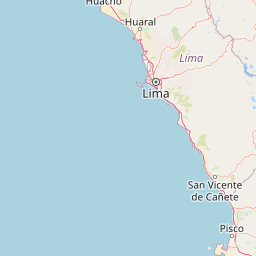
The landscape of the Ancón Reserved Zone is defined by its position along the Bay of Ancón, where the arid coastal plains of central Peru meet the waters of the Pacific Ocean. The terrain consists of dry coastal desert, characterized by sparse vegetation, exposed rock and sand surfaces, and the hazy, fog-tinged atmosphere typical of this stretch of the Peruvian coast.
Inland from the shoreline, the reserve extends across low-lying coastal landforms shaped by the interplay of dry climate and marine influence. The bay itself shapes the local scenery, providing a calm marine setting that contrasts with the barren land behind it. The combination of open sea, curving coastline, and desert hinterland gives the area a quiet, transitional character that defines much of the visitor experience.
Ancón Reserved Zone ecosystems, habitats, and plant life
Ecologically, the Ancón Reserved Zone sits at the intersection of two starkly different environments: the coastal desert biome of central Peru and the productive marine ecosystem of the Pacific. This interface is known for supporting plant and animal communities with specialized adaptations to aridity, salt spray, and nutrient-rich but cool ocean waters.
The terrestrial portion of the reserve includes vegetation and small fauna typical of the lomas and coastal desert formations found along Peru's central coast, where seasonal moisture from coastal fog can briefly transform the landscape. The marine portion, centered on the Bay of Ancón, encompasses nearshore habitats that support a variety of marine life and contribute to the broader productivity of the Humboldt Current system along the South American Pacific.
Ancón Reserved Zone wildlife and species highlights
Wildlife in the Ancón Reserved Zone reflects the dual character of its ecosystems. On land, the dry coastal environment supports specially adapted species, including plants and small animals adapted to limited rainfall, coastal fog, and saline conditions. Along the shoreline and in the bay, the marine environment provides habitat for fish, invertebrates, and seabirds that depend on the nutrient-rich waters typical of the Peruvian coast.
The combination of desertadapted terrestrial species and marine fauna interacting with the bay gives the reserve a particular scientific interest, as it allows researchers to observe how wildlife functions at the boundary between two very different ecosystems. Seabird activity along the coast and the presence of marine life in the bay are among the most visible expressions of the reserve's biodiversity.
Ancón Reserved Zone conservation status and protection priorities
From a conservation perspective, the Ancón Reserved Zone addresses the long-standing underrepresentation of Peru's central coastal ecosystems within the country's system of natural protected areas. By protecting both the desert and marine components of the Bay of Ancón, the reserve contributes to preserving ecological processes and species that are otherwise vulnerable to urban expansion, industrial activity, and resource extraction along the heavily populated central coast.
Its designation as a Reserved Zone, administered by SERNANP, places it within a national framework aimed at conserving representative samples of Peru's ecosystems. Beyond direct protection, the reserve is valued as a site for scientific research and environmental education, helping to deepen understanding of the unique biotic components of Peru's coastal desert and marine habitats and to communicate their importance to a broader public.
Ancón Reserved Zone cultural meaning and human context
The Bay of Ancón has long been part of the everyday coastal landscape of the Lima Region, with the Ancón district being a recognized seaside area for residents of greater Lima. The surrounding communities have historical ties to fishing, small-scale trade, and seasonal beach use, giving the coast a strong local cultural identity.
The creation of the Ancón Reserved Zone intersects with this cultural setting by formalizing the protection of an environment that has traditionally been used and appreciated by nearby residents. The reserve therefore carries both ecological and social significance, representing a shared responsibility to care for a coastal space that is woven into local life.
Top sights and standout views in Ancón Reserved Zone
A defining highlight of the Ancón Reserved Zone is the close coexistence of two contrasting ecosystems: coastal desert and Pacific marine habitat. Within a compact area, visitors and researchers can observe how life adapts to aridity on land and richness at sea.
Equally notable is the reserve's accessibility from Lima, which gives it strong educational potential. Its designation under SERNANP and its focus on research and outreach distinguish it as a small but meaningful node in Peru's network of protected natural areas.
Best time to visit Ancón Reserved Zone
As a coastal reserve on the central Peruvian coast, the Ancón Reserved Zone is shaped by a generally mild, dry climate influenced by the Pacific Ocean and coastal fog. Conditions tend to be more comfortable when coastal temperatures are moderated by the marine influence, and the cooler, clearer months of the southern hemisphere's dry season are often considered favorable for coastal activity and wildlife observation.
Seasonal changes in fog and humidity can also affect the appearance of the desert landscape, occasionally allowing brief pulses of greenery in vegetation adapted to capture moisture. Visitors interested in the reserve's natural character may find that periods with stable, mild weather offer the most rewarding experience of both the desert and the bay.